
There is something undeniably beautiful about a well-styled shelf. It can make a room feel finished, sophisticated, personal, and thoughtfully designed without requiring a complete renovation. But creating shelves that look expensive is not simply about filling every available space with decorative objects. The secret is knowing what to display, how to layer it, where to leave empty space, and how to create visual balance.
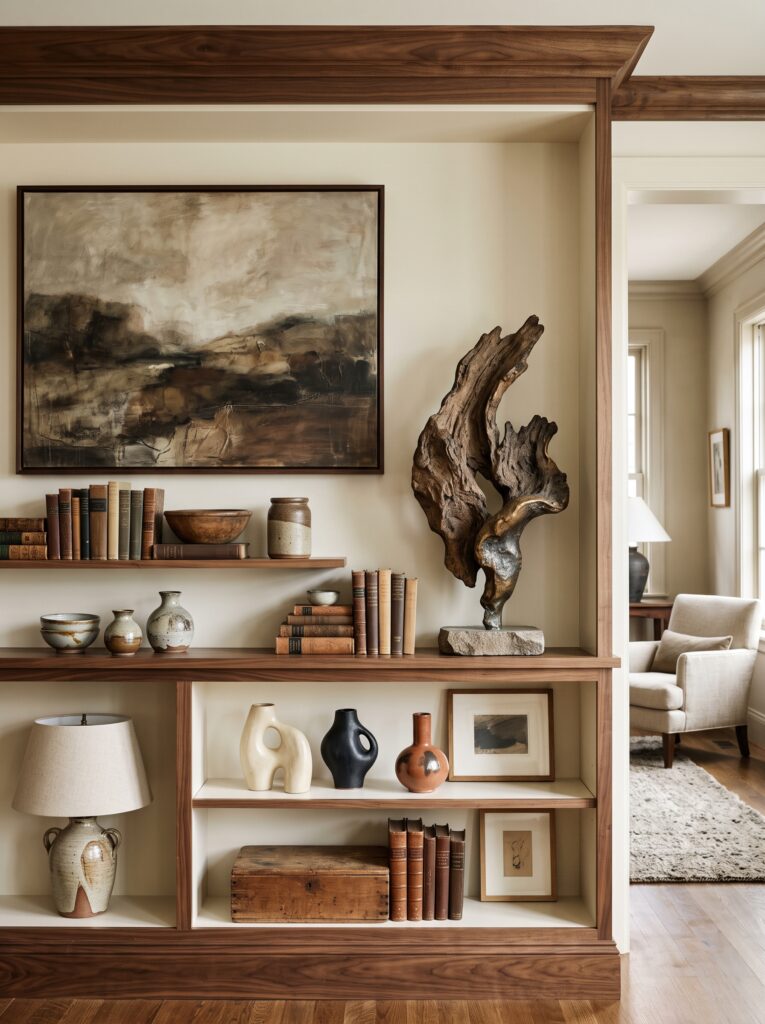
The latest approach to elevated shelf styling is all about creating what can be called a “Shelf Wealth” aesthetic—a curated look that combines beautiful objects, vintage-inspired details, books, artwork, natural materials, and meaningful pieces in a way that feels collected rather than overly coordinated.
For homeowners and apartment dwellers across the United States, this is an especially practical home decor idea because shelves are already part of many homes. Whether you have built-in bookshelves, open kitchen shelving, a living room bookcase, bedroom shelving, a console display, or a small apartment storage unit, you can transform the entire appearance of the space simply by changing how you style it.
The best part? You don’t need to spend thousands of dollars on designer accessories.
What Is the “Shelf Wealth” Look?
The Shelf Wealth look is based on the idea that a home should feel collected over time rather than decorated all at once.
Instead of purchasing an entire matching set of accessories, you combine different textures, heights, materials, colors, and shapes. A stack of beautiful books might sit next to a handmade ceramic vessel. A framed piece of artwork can lean casually against the wall while a small sculptural object occupies the space beside it.
The result is sophisticated without looking overly perfect.
This style works particularly well with popular interior aesthetics such as:
- Quiet luxury
- Organic modern
- Warm minimalism
- Traditional interiors
- Vintage-inspired decor
- European-inspired interiors
- Transitional design
- Modern classic interiors
- Collected home decor
The goal isn’t to make your shelves look expensive simply because the objects themselves are expensive. The goal is to make the entire composition feel intentional.
Why Shelf Styling Can Transform a Room
Shelves occupy a significant amount of visual space. When they are cluttered, the entire room can feel chaotic. When they are completely empty, the room may feel unfinished.
Thoughtfully styled shelves create a visual bridge between furniture, walls, artwork, and accessories.
A beautifully styled bookshelf can:
- Add personality to a neutral room
- Create a focal point
- Introduce color without repainting
- Add warmth through wood and natural materials
- Display meaningful objects
- Make inexpensive furniture look more sophisticated
- Give a room a designer-inspired appearance
- Create additional visual interest
- Make an apartment feel more personalized
This is why shelf styling is such a powerful decorating tool for homeowners who want an elevated look without undertaking a major home makeover.
1. Start With One Large Anchor Piece
One of the biggest mistakes people make when decorating shelves is starting with dozens of tiny accessories.
Instead, begin with one or two larger pieces.
A large framed artwork, oversized vase, sculptural object, vintage mirror, woven basket, or architectural piece can act as an anchor.
Place the largest item slightly off-center rather than automatically positioning it in the middle.
This creates a more relaxed and sophisticated composition.
For example, on a living room bookshelf, you might place a large framed artwork toward one side of the top shelf. On another shelf, you could use a large ceramic vessel. On the lower shelf, a stack of books or a woven basket can provide visual weight.
The important thing is to create variation rather than symmetry everywhere.
2. Use Books as Decorative Foundations
Books are one of the easiest ways to make shelves feel sophisticated.
But instead of simply lining every book vertically, experiment with different arrangements.
Try:
Vertical stacks:
Use several books standing upright to create height.
Horizontal stacks:
Place two or three books flat and use them as a pedestal for a small decorative object.
Mixed arrangements:
Combine vertical and horizontal books throughout the shelving unit.
Coffee-table books, art books, architecture books, photography books, and vintage-looking hardcover books can all contribute to an elevated aesthetic.
If you don’t have a large personal library, you don’t need to purchase dozens of books. Start with a small collection and mix them with ceramics, artwork, and natural objects.
3. Introduce Sculptural Objects
Another important element of expensive-looking shelf decor is shape.
If every item is rectangular, the shelves can feel visually flat.
Add objects with curves and organic silhouettes.
Consider:
- Ceramic sculptures
- Stone objects
- Decorative bowls
- Abstract figures
- Wooden sculptures
- Wavy vases
- Architectural models
- Small handmade pottery
- Sculptural candleholders
These pieces create visual movement.
The trick is to avoid using too many sculptural objects at once. One distinctive object can often have more impact than five small decorative pieces competing for attention.
4. Mix Materials Instead of Matching Everything
Luxury interiors rarely depend on one material.
Instead, they combine several materials to create depth.
For shelf styling, consider combining:
- Natural wood
- Ceramic
- Glass
- Stone
- Brass
- Linen
- Rattan
- Woven fibers
- Marble
- Metal
- Paper
- Aged finishes
Imagine a shelf with a walnut frame, cream ceramic vase, brass object, linen-covered book, and small stone sculpture.
Even if none of these pieces are extremely expensive, the combination creates a richer visual experience.
5. Add Something Natural
Natural elements can instantly soften shelving.
A small branch in a ceramic vase, dried flowers, an olive branch, a small indoor plant, or a simple botanical arrangement can add life without overwhelming the space.
For a sophisticated American home, low-maintenance greenery is especially useful because it adds texture and color while maintaining a clean aesthetic.
If your shelves are already filled with neutral objects, a small amount of greenery can prevent the display from feeling too sterile.
6. Create Negative Space
This may be the most important rule of expensive-looking shelf styling.
Don’t fill every inch.
Empty space gives decorative objects room to breathe.
When every shelf is completely packed, individual pieces lose their importance. The eye doesn’t know where to look.
Instead, allow some areas to remain intentionally empty.
You might have three objects on one shelf and only one large object on another.
This unevenness creates a more natural, collected appearance.
Remember:
Luxury often looks edited rather than crowded.
7. Use Different Heights
A shelf filled with objects that are all the same height can appear flat.
Create visual rhythm by combining:
- Tall objects
- Medium objects
- Short objects
- Horizontal stacks
- Vertical pieces
- Low bowls
- Small sculptures
For example, a tall vase can sit beside a medium-sized artwork while a small ceramic bowl occupies the space in front.
This creates layers that make the shelving visually interesting.
8. Try the Rule of Three
Groups of three are especially useful when styling shelves.
Instead of displaying five unrelated objects together, create a small group of three connected pieces.
For example:
A ceramic vase + two books + a small sculpture
or
A framed photograph + brass object + small bowl
The objects don’t need to match perfectly.
They simply need to share something visually—perhaps color, material, shape, or scale.
9. Mix New Pieces With Vintage Finds
One of the easiest ways to make shelves feel personal is to combine contemporary objects with vintage pieces.
A vintage brass candlestick can sit beside a modern ceramic vase.
An antique-looking frame can be layered with a contemporary photograph.
A traditional decorative box can sit on top of modern coffee-table books.
This creates contrast.
For US homeowners who enjoy thrift shopping, antique markets, flea markets, estate sales, or secondhand shopping, this approach can also make shelf styling much more affordable.
You don’t need every object to come from the same store.
In fact, having everything perfectly coordinated can make a space feel more like a showroom than a home.
10. Display Meaningful Objects
Beautiful shelves should tell a story.
Instead of using only generic decorative accessories, incorporate objects that mean something to you.
Consider displaying:
- Travel souvenirs
- Family photographs
- Handmade ceramics
- Heirloom objects
- Vintage books
- Artwork
- Collected pieces
- Small sculptures
- Special gifts
These details make a home feel authentic.
The goal is not to create shelves that look like a furniture catalog. The goal is to create shelves that look like your home.
11. Choose a Controlled Color Palette
You don’t necessarily need completely neutral shelves to create an expensive look.
However, having a controlled color palette can make the display feel more cohesive.
Warm neutral palettes work particularly well:
- Cream
- Ivory
- Beige
- Taupe
- Camel
- Warm brown
- Walnut
- Soft black
- Muted green
- Terracotta
If your room is already colorful, repeat one or two colors from the room throughout your shelving.
This creates visual connection.
12. Style Different Types of Shelves Differently
The same styling technique doesn’t have to be used everywhere.
Living Room Bookshelves
Focus on books, artwork, ceramics, and sculptural objects.
Kitchen Shelves
Use beautiful everyday objects such as pottery, cutting boards, bowls, glassware, and cookbooks.
Bedroom Shelves
Keep the styling softer with books, framed photographs, candles, ceramics, and personal objects.
Entryway Shelves
Use fewer pieces and prioritize a strong first impression.
Home Office Shelves
Combine books, artwork, storage boxes, plants, and a few decorative pieces.
This allows the Shelf Wealth aesthetic to work throughout the entire home without making every room look identical.
13. Don’t Forget Lighting
Beautiful shelf styling can become even more dramatic when paired with thoughtful lighting.
If possible, consider:
- Small picture lights
- Integrated shelf lighting
- Table lamps
- Warm LED lighting
- Wall sconces
- Battery-powered accent lights
Warm lighting can make wood, brass, ceramics, and textured fabrics appear richer.
It also creates an especially cozy atmosphere in the evening.
14. Affordable Ways to Get the Look
You don’t need a designer budget to create sophisticated shelves.
Try shopping at:
- Thrift stores
- Estate sales
- Antique markets
- Flea markets
- Local artisan markets
- Secondhand furniture stores
- Vintage shops
- Discount home stores
Look for pieces that have interesting shapes, textures, or finishes rather than focusing only on brand names.
A beautiful vintage bowl can have more visual impact than an expensive generic accessory.
15. The Biggest Shelf Styling Mistakes to Avoid
Too Many Tiny Objects
Small objects can quickly create visual clutter.
Everything Matches
Matching accessories often make shelves look predictable.
No Negative Space
Crowded shelves don’t allow individual pieces to stand out.
Everything Is the Same Height
Variation is necessary for visual rhythm.
Too Much Symmetry
Perfect symmetry can make a display feel artificial.
No Personal Items
Without meaningful pieces, the shelves may look staged.
Too Many Colors
A controlled palette usually creates a more sophisticated appearance.
How to Create a Shelf Wealth Look on a Budget
Start by removing everything from your shelves.
Yes—everything.
Then place your items into categories:
Keep:
Pieces you genuinely love.
Move:
Items that might work better elsewhere.
Donate/Sell:
Objects that no longer fit your style.
Layer:
Books, artwork, ceramics, and decorative objects that can work together.
Once your shelves are empty, begin with your largest pieces.
Then add books.
Next, introduce medium-sized objects.
Finally, add a few small details.
Step back after every shelf.
If something immediately catches your eye for the wrong reason, move it.
This editing process is often more important than buying new decor.
How to Make Cheap Shelves Look Custom
Even inexpensive shelving can look significantly better with thoughtful styling.
Use larger artwork to create visual impact.
Add baskets to hide practical storage.
Choose decorative objects in natural materials.
Introduce warm wood tones.
Use cohesive colors.
Avoid overfilling.
And most importantly, style the shelves as part of the entire room rather than as an isolated feature.
The furniture, lighting, curtains, artwork, rugs, and shelving should all feel like they belong to the same visual story.
Conclusion
Creating a “Shelf Wealth” look is less about spending more and more about styling with intention. By combining books, artwork, ceramics, vintage finds, natural materials, sculptural objects, and carefully chosen personal pieces, you can transform ordinary shelves into an elegant focal point. The key is to create balance, vary heights and textures, and leave enough negative space so every beautiful piece can stand out. Whether you’re styling built-in bookshelves, open kitchen shelving, an entryway display, or a small apartment bookcase, thoughtful shelf styling can make your entire home feel more collected, sophisticated, and expensive. Ultimately, the most beautiful shelves are not the ones filled with the most decor—they are the ones that tell your story while making your home feel effortlessly polished and uniquely yours.
- Moody Blue Room Ideas for a Sophisticated Cozy Home
- White Oak and Black Kitchen Ideas for a Modern Timeless Home
- The Garden Patio Ideas That Make Outdoor Spaces Feel Magical
- Dark Cottagecore Kitchen Ideas With Timeless Charm
- Warm Wood Kitchen Ideas That Make a Home Feel Instantly Expensive