
A dining room should be more than a place where people sit down to eat.
It can be a space for long conversations, family dinners, weekend brunches, celebrations, quiet morning coffee, and evenings spent with friends. Because the dining room often sits between other important areas of the home, its design can also have a major influence on the overall personality of the house.
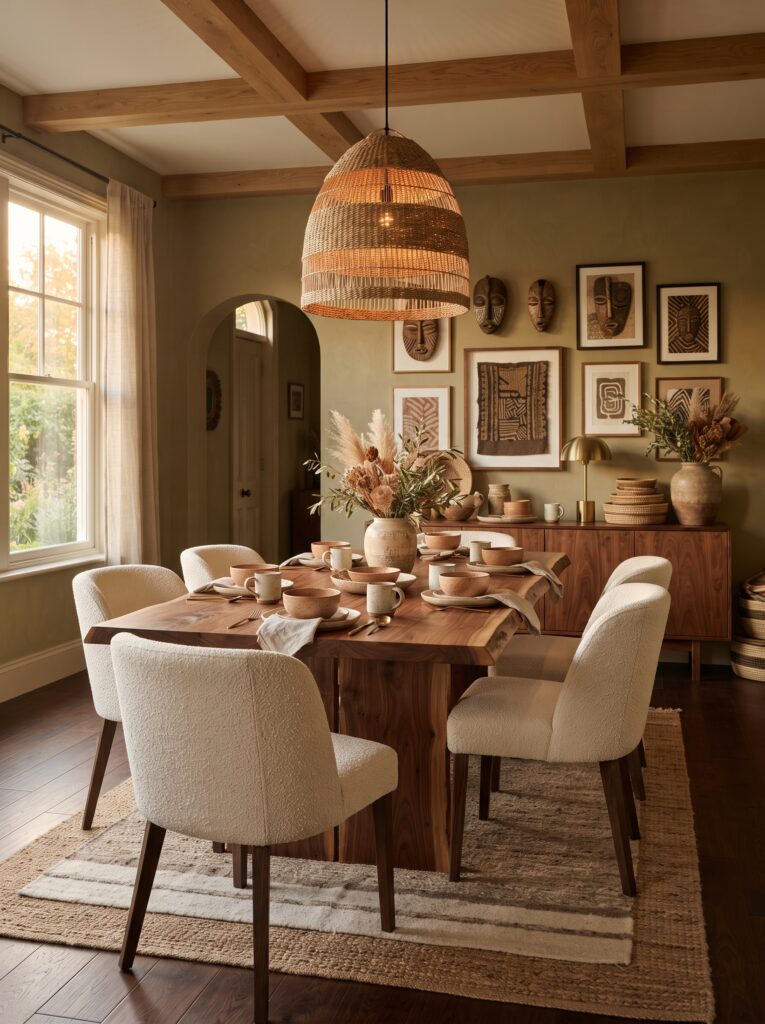
If you want a dining space that feels warm, artistic, layered, and personal, Afrohemian decor offers an especially interesting direction.
Afrohemian interiors combine natural materials, earthy colors, handcrafted details, expressive artwork, woven textures, organic shapes, and collected objects. The result can feel relaxed and welcoming while still looking sophisticated.
Rather than relying on a single decorating style, Afrohemian interiors often create beauty through a combination of textures, patterns, materials, and cultural influences.
For US homeowners, this style can work particularly well in modern, transitional, contemporary, bohemian, and organic-modern homes.
Pinterest’s 2026 trend reporting has identified Afrohemian Decor as an emerging home trend, with searches increasing around Afrobohemian home decor, Adire fabric, and rattan accent chairs.
The key is to approach the aesthetic thoughtfully and authentically, using natural materials and meaningful design details rather than turning the room into a collection of disconnected themed decorations.
What Is Afrohemian Decor?
Afrohemian decor combines African-inspired design elements with relaxed bohemian styling.
It often includes:
- Natural wood
- Woven textures
- Rattan
- Handmade ceramics
- Earthy colors
- Textured fabrics
- Sculptural furniture
- Botanical elements
- Expressive artwork
- Artisan-inspired objects
- Layered patterns
The style can be bold or subtle.
You do not need to decorate an entire room in strong patterns or dramatic colors.
A modern dining room can incorporate Afrohemian influences through just a few carefully selected elements.
For example:
Natural wood dining table + woven pendant + textured chairs + sculptural ceramics + expressive artwork
This creates the feeling without overwhelming the room.
Why Afrohemian Dining Rooms Feel So Inviting
Dining rooms benefit from warmth and texture.
A room filled with perfectly smooth surfaces can sometimes feel formal.
Natural materials soften that feeling.
Wood adds warmth.
Woven materials add texture.
Ceramics add craftsmanship.
Textiles introduce softness.
Artwork adds personality.
Together, these elements create a room that encourages people to stay longer.
The dining table becomes more than furniture.
It becomes the center of the room.
1. Start With a Natural Wood Dining Table
The dining table is usually the largest visual element in the room.
For an Afrohemian-inspired dining room, natural wood is an excellent starting point.
Consider:
- Walnut
- Oak
- Reclaimed wood
- Natural teak
- Medium-toned wood
Look for visible grain and natural variation.
The table does not need to look perfectly polished.
In fact, some imperfections can make it feel more authentic and welcoming.
2. Choose a Sculptural Dining Table
If your home has a contemporary design, a sculptural table can introduce a more modern interpretation of Afrohemian style.
Consider a table with:
- Rounded edges
- Thick legs
- Pedestal base
- Organic silhouette
- Interesting wood grain
A strong table can become the foundation of the entire dining room.
Keep the surrounding furniture relatively simple so the table remains visually important.
3. Mix Dining Chairs
You do not necessarily need six identical chairs.
Mixing materials can make the room feel more collected.
For example:
Upholstered chairs + woven end chairs
or:
Wood chairs + rattan accent chairs
or:
Neutral fabric chairs + one or two sculptural wooden seats
Keep some consistency in color or shape so the arrangement still feels cohesive.
4. Introduce Rattan and Woven Materials
Woven textures are especially effective in Afrohemian interiors.
They can appear through:
- Dining chairs
- Pendant lights
- Baskets
- Wall decor
- Placemats
- Decorative objects
Rattan can soften the appearance of darker wood and stronger colors.
A woven pendant above a wooden dining table is one of the simplest ways to introduce texture.
5. Make the Pendant Light a Focal Point
Lighting can completely change a dining room.
A large woven or sculptural pendant can become the centerpiece above the table.
Choose a fixture that is proportional to the dining table.
If the table is large, a tiny light fixture may feel lost.
If the room is small, avoid choosing something so oversized that it dominates the entire space.
Natural fiber lighting works particularly well because it creates beautiful shadows when illuminated.
6. Use Earthy Colors
Afrohemian interiors often work beautifully with earthy color palettes.
Consider:
- Terracotta
- Clay
- Warm beige
- Cream
- Chocolate brown
- Burnt orange
- Muted olive
- Sand
- Deep rust
- Charcoal
You do not need all of these colors.
Choose two or three as accents and keep the larger surfaces relatively neutral.
7. Create a Neutral Afrohemian Dining Room
If you prefer minimal interiors, you can create a softer version.
Use:
Cream walls + natural wood + woven textures + black accents + handmade ceramics
This creates a quiet and sophisticated interpretation.
The room still has character without relying on bright colors.
8. Create a Richer, More Dramatic Version
For a moodier dining room, introduce deeper colors.
Try:
Chocolate brown + terracotta + walnut + cream
or:
Charcoal + rust + natural wood + brass
Use darker colors on artwork, textiles, or accent furniture rather than covering every surface.
This keeps the room balanced.
9. Add Expressive Artwork
Artwork can become one of the most important elements in an Afrohemian dining room.
Consider artwork that features:
- Abstract forms
- Strong lines
- Earthy colors
- Human figures
- Botanical shapes
- Geometric patterns
- Textured surfaces
Choose artwork from artists and sources you genuinely appreciate.
The purpose is to create visual personality rather than simply adding something because it matches a trend.
10. Create a Gallery Wall
A dining room wall can become a gallery of artwork, photographs, or collected pieces.
Mix:
- Large artwork
- Small prints
- Textured pieces
- Photography
- Simple frames
- Sculptural wall decor
Avoid making every frame identical.
A slightly varied arrangement can create a more collected feeling.
11. Use Handmade Ceramics
Ceramics are perfect for the dining room because they are naturally connected to food and gathering.
Display:
- Handmade bowls
- Sculptural vases
- Ceramic pitchers
- Candleholders
- Serving pieces
Choose pieces with visible texture.
A handmade ceramic vase filled with simple branches can become an understated centerpiece.
12. Create a Natural Centerpiece
You do not need a huge floral arrangement.
Try a low centerpiece using:
- Branches
- Dried grasses
- Olive-style foliage
- Seasonal greenery
- Simple flowers
A natural centerpiece should not block conversation across the table.
Keep the arrangement low enough that people can comfortably see one another.
13. Layer the Dining Table
Table styling can reinforce the entire design.
Start with a natural foundation.
For example:
Wood table + linen runner + handmade ceramics + woven placemats
Add simple glassware and understated tableware.
The goal is to make the table look inviting rather than overly formal.
14. Add Textured Table Linens
Textiles are an easy way to introduce color and pattern.
Try:
- Linen runners
- Woven placemats
- Cotton napkins
- Textured tablecloths
If your artwork is bold, keep table textiles simple.
If the room is mostly neutral, textiles can introduce more personality.
15. Use Black for Contrast
Black can give an Afrohemian dining room a more contemporary edge.
Use it through:
- Lighting
- Chair frames
- Picture frames
- Tableware
- Decorative objects
Black works especially well with natural wood and earthy colors.
A few black accents can make a warm palette feel more defined.
16. Add Brass Accents
If you want a slightly more sophisticated or elevated appearance, introduce a small amount of brass.
For example:
- Brass candleholders
- Brass picture frames
- Brass light details
- Decorative bowl
Do not mix too many metallic finishes.
Choose one primary metal and repeat it subtly.
17. Create a Cozy Dining Room With Layers
A beautiful dining room should have multiple layers.
Think about the room from floor to ceiling.
Floor
Add a textured or patterned rug.
Furniture
Use wood and upholstery.
Walls
Add artwork.
Lighting
Choose a statement fixture.
Table
Layer ceramics and textiles.
Accessories
Use a few natural objects.
When these layers work together, the room feels complete.
18. Choose the Right Dining Room Rug
A rug anchors the dining table.
Make sure it is large enough that chairs remain on the rug even when pulled away from the table.
For Afrohemian interiors, consider:
- Vintage-inspired rugs
- Geometric designs
- Natural fiber rugs
- Muted tribal-inspired patterns
- Earth-tone patterns
If your artwork and chairs already have strong visual patterns, choose a simpler rug.
19. Create an Organic Modern Afrohemian Look
For a more contemporary American home, combine Afrohemian elements with organic-modern design.
Use:
- Cream walls
- Natural wood
- Sculptural furniture
- Black accents
- Stone
- Woven textures
- Greenery
Keep patterns minimal.
Let the materials provide the visual interest.
20. Add a Large Plant
Greenery can soften the dining room.
A large plant placed in an empty corner can add height.
Good locations include:
- Beside a sideboard
- Near a window
- In an empty corner
- Beside a console
Choose plants appropriate for your home’s light conditions.
21. Use Baskets as Decorative Storage
Woven baskets are both decorative and practical.
You can use them to store:
- Extra linens
- Tablecloths
- Throws
- Serving accessories
Place a large basket beside a sideboard or in an empty corner.
The texture adds warmth without requiring additional artwork.
22. Add a Sideboard
A sideboard can make the dining room more functional.
Use it to store:
- Tableware
- Glassware
- Napkins
- Serving dishes
The top can also become a styling surface.
Add:
Artwork + ceramic vase + decorative bowl
Keep the arrangement simple.
23. Style a Dining Room Sideboard
Avoid covering the entire sideboard.
Create one strong arrangement.
For example:
A large artwork centered above the sideboard.
A ceramic vase on one side.
A small sculptural object on the other.
This creates balance without looking overly symmetrical.
24. Mix Old and New
A room can feel more personal when modern and vintage-inspired pieces coexist.
For example:
Modern dining table + vintage artwork
or:
Contemporary chairs + antique-style sideboard
or:
Modern lighting + handmade ceramics
This prevents the dining room from looking like it was purchased from a single furniture collection.
25. Use Architectural Details
If your home has interesting architecture, let it remain visible.
Details such as:
- Arched doorways
- Wood beams
- Plaster walls
- Built-ins
- Large windows
can provide the foundation for the style.
Do not cover beautiful architectural features with excessive decoration.
26. Create a Small Afrohemian Dining Area
You do not need a formal dining room.
An apartment or smaller home can use the style through a compact dining setup.
Try:
Round wood table + two woven chairs + small pendant + artwork
A round table is particularly useful in small rooms because it improves circulation.
27. Design an Open-Concept Dining Area
In an open-concept home, the dining room should connect with nearby spaces.
Repeat colors and materials.
For example:
Living room:
Cream + walnut + olive
Dining room:
Cream + walnut + terracotta
The shared neutral and wood tones create continuity while the accent color gives the dining area its own identity.
28. Make the Dining Room Feel Expensive Without Overspending
A sophisticated dining room is often about styling rather than price.
Focus on:
Lighting
A distinctive pendant can have a major visual impact.
Artwork
One large artwork can create more impact than many small decorations.
Table
Choose a table with beautiful natural material.
Textures
Use linen, rattan, ceramics, and wood.
Editing
Avoid filling every surface.
These details can create a premium appearance without requiring a luxury budget.
29. Shop Your Home First
Before buying new decor, look around your existing home.
You may already have:
- A ceramic vase
- A woven basket
- A small plant
- Wooden objects
- Artwork
- Books
- Decorative bowls
Move pieces between rooms and experiment.
Sometimes a room feels completely different simply because existing objects are rearranged.
30. Avoid Over-TheMing the Room
One of the most important principles when working with a culturally inspired design direction is restraint and respect.
The goal should not be to fill the room with stereotypical or disconnected “theme” pieces.
Instead, create a sophisticated interior using:
- Natural materials
- Artisan craftsmanship
- Thoughtful artwork
- Meaningful objects
- Appropriate patterns
- Quality textures
If you use cultural artwork or textiles, learn about their origin and context where possible, and consider supporting artists or makers directly.
This creates a more thoughtful approach to the aesthetic.
31. Use Patterns Strategically
Patterns can add energy to an Afrohemian dining room.
Use them through:
- Rug
- Curtains
- Cushions
- Artwork
- Table linens
But avoid putting strong patterns everywhere.
A patterned rug paired with neutral chairs and simple artwork may be enough.
32. Combine Different Textures
Texture is one of the strongest tools in this style.
Combine:
Smooth stone
with
Rough ceramic
with
Natural wood
with
Woven fiber
with
Soft linen
The contrast creates depth.
Even a neutral color palette can look rich when the textures vary.
33. Choose the Right Curtains
If your dining room has windows, curtains can soften the architecture.
For a relaxed Afrohemian aesthetic, consider natural fabrics and warm neutral colors.
Linen-look curtains can create an airy appearance.
For more drama, use a deeper earth tone that complements the artwork or rug.
34. Add Candles for Evening Ambiance
Dining rooms naturally benefit from warm evening lighting.
Candles can create a relaxed atmosphere during dinner.
Use simple candleholders in materials such as:
- Brass
- Ceramic
- Stone
- Wood
Keep them at a comfortable height so they do not block conversation.
35. Create a Weekend Brunch Atmosphere
A well-designed dining room should work during the day as well as at night.
For a relaxed weekend brunch:
- Open the curtains
- Use natural table linens
- Add fresh greenery
- Bring out handmade ceramics
- Keep the table relatively simple
The room should feel welcoming rather than formal.
36. Make the Dining Room Family-Friendly
Beautiful design does not have to mean fragile design.
If you have children or frequently host guests, choose materials that can handle everyday use.
For example:
- Durable upholstery
- Washable textiles
- Sturdy wood
- Easy-clean surfaces
- Practical storage
The best dining room is one that can actually be used.
37. Create a More Minimal Afrohemian Dining Room
You can keep the style very simple.
Use only:
- Natural wood table
- Four neutral chairs
- One woven pendant
- One large artwork
- One ceramic centerpiece
This creates a calm and modern interpretation.
The fewer elements you use, the more important proportion and material quality become.
38. Create a Maximalist Afrohemian Dining Room
If you prefer expressive interiors, increase the layers.
Add:
- Patterned rug
- Multiple artworks
- Decorative ceramics
- Rich textiles
- More plants
- Vintage furniture
- Stronger earthy colors
The key is to create relationships between the colors and materials.
Maximalism still needs visual organization.
39. Make the Dining Room Feel Collected
A collected home does not look as though everything was purchased on the same day.
Mix pieces from different sources.
For example:
Modern table + vintage sideboard + handmade ceramics + contemporary artwork + woven lighting
The result feels more personal.
40. Focus on Meaningful Details
The most memorable dining rooms often include small details that have a story.
A ceramic bowl from an artist you love.
A photograph from a meaningful trip.
A vintage piece inherited from family.
A textile purchased during travel.
These objects make the room feel like part of a home rather than a staged design concept.
41. A Simple Afrohemian Dining Room Formula
If you are unsure where to start, try this combination:
1 natural wood dining table
4–6 comfortable chairs
1 statement woven or sculptural light
1 large artwork
1 textured rug
2–3 handmade or natural accessories
1 greenery element
This creates a strong foundation.
You can then add or remove pieces depending on the room.
42. Afrohemian Dining Room Ideas for Different Home Styles
Modern Home
Use clean furniture silhouettes, cream walls, black accents, and sculptural artwork.
Traditional Home
Introduce natural wood, vintage furniture, woven accessories, and warm textiles.
Farmhouse Home
Combine rustic wood with handmade ceramics and natural woven materials.
Apartment
Use a small round table, compact chairs, wall artwork, and one statement pendant.
Organic Modern Home
Focus on neutral colors, stone, wood, curves, and minimal accessories.
43. How to Keep the Room Looking Elegant
Elegance comes from editing.
After decorating, remove anything that feels unnecessary.
Ask:
Does this object contribute to the room?
Does it have a purpose?
Does it add texture, color, or personality?
Does it work with the rest of the space?
If the answer is no, you may not need it.
A sophisticated room does not need to display everything you own.
44. The Importance of Authenticity
Afrohemian style can be visually beautiful, but the most meaningful interiors go beyond aesthetics.
When incorporating African-inspired art, textiles, patterns, or objects, consider their cultural background.
Support artists, makers, galleries, and businesses when possible.
Choose pieces because you genuinely appreciate their craftsmanship and story rather than treating cultural elements as disposable trends.
This approach can create a much richer and more personal home.
45. Make Your Dining Room Feel Like a Gathering Place
Ultimately, a dining room exists for people.
Do not sacrifice comfort for appearance.
Make sure chairs are comfortable.
Keep enough space around the table.
Choose lighting that creates a pleasant atmosphere.
Keep table styling practical.
Provide storage for items you use frequently.
A beautiful room becomes much more valuable when people actually enjoy spending time there.
Conclusion
Afrohemian dining room decor offers a beautiful way to create a home that feels warm, expressive, collected, and full of personality. The style does not require a dramatic transformation.
Start with natural materials such as wood and rattan. Add handmade ceramics, textured textiles, expressive artwork, earthy colors, and a few meaningful objects. Use lighting to create warmth and choose furniture that encourages people to sit, eat, talk, and stay awhile.
For a modern American home, the look can be adapted in many ways. A minimalist dining room might use only natural wood, cream, woven textures, and one strong piece of artwork. A more expressive space might introduce terracotta, patterned textiles, vintage furniture, and multiple layers of collected objects.
The most important thing is balance. Do not let every piece compete for attention. Allow natural materials to stand out. Give artwork enough space to breathe. Mix textures thoughtfully. Keep practical needs in mind. And when using culturally inspired elements, approach them with appreciation and context rather than simply treating them as decorative themes.
A dining room should ultimately feel like a place where people want to gather. When beautiful materials, meaningful objects, comfortable furniture, and warm lighting come together, the result can be much more than a fashionable interior.
It becomes a dining space with character—a room that feels relaxed enough for everyday meals, beautiful enough for entertaining, and personal enough to feel truly like home.
- Afrohemian Dining Room Ideas for a Warm, Collected and Sophisticated Home
- Warm Wood and Black Kitchen Ideas for a Timeless Designer Look
- Small Reading Nook Ideas That Turn Forgotten Corners Into a Cozy Luxury Retreat
- Curated Trinket Shelf Ideas: How to Create a Collected and Personal Home
- Neo Deco Entryway Ideas That Make Your Home Feel Instantly Expensive