
A sunroom can be one of the most charming spaces in an American home. With generous windows, abundant natural light, and a natural connection to the outdoors, it has the potential to become much more than an unused sitting area. Whether you have a spacious four-season sunroom, a small screened-in porch, or a bright corner surrounded by windows, thoughtful decorating can transform it into a peaceful retreat for reading, morning coffee, entertaining, or simply relaxing at the end of a busy day.
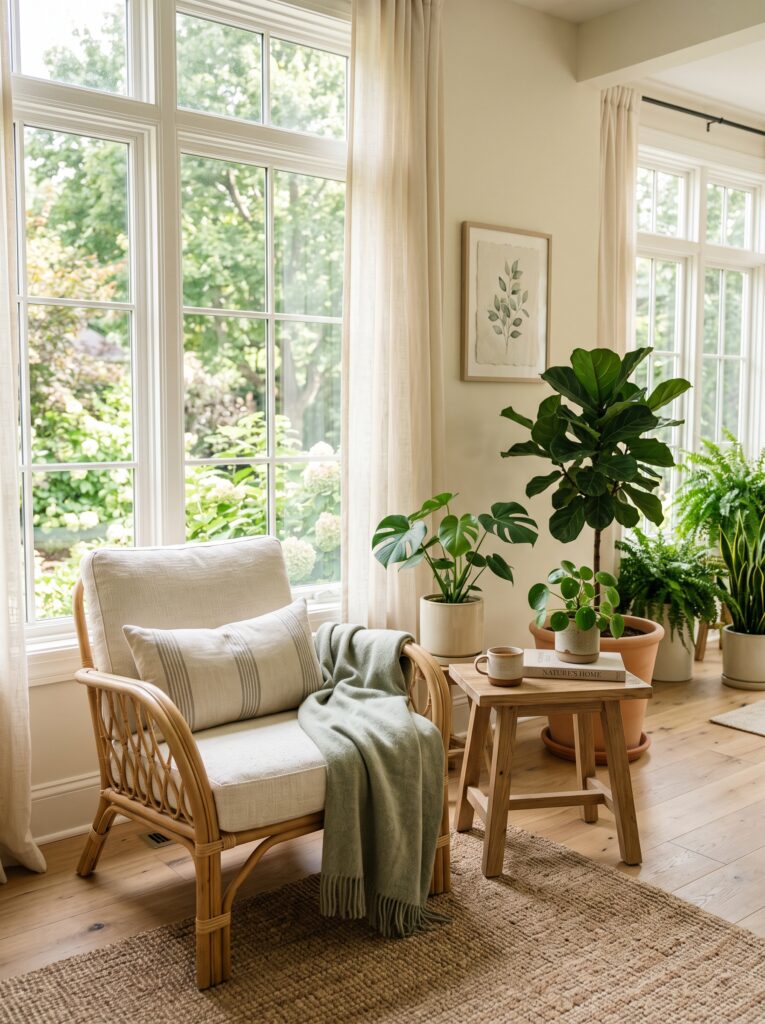
The best sunroom decorating ideas focus on comfort, natural materials, practical furniture, greenery, and a color palette that complements the sunlight entering the room. Rather than filling the space with too many decorative objects, the goal is to create an airy and welcoming environment where the architecture and natural light remain part of the design.
Why Sunrooms Are Becoming Such Desirable Home Spaces
American homeowners increasingly want their homes to feel comfortable, personal, and connected to nature. A sunroom naturally supports all three of these goals. It provides the feeling of being outdoors while offering protection from weather and the comfort of indoor furniture.
A well-designed sunroom can serve several purposes. It can become a cozy reading room, a breakfast nook, a plant-filled retreat, a casual conversation area, or even a peaceful home office. The flexibility makes it especially useful for homeowners who want to maximize every square foot of their house.
Instead of thinking of the sunroom as an extra room that needs to be decorated separately, consider it an extension of the home’s overall design. Materials, colors, and furniture should transition naturally from the surrounding rooms while allowing the sunroom to have its own relaxed personality.
Start With a Warm and Natural Color Palette
One of the easiest ways to create an elegant sunroom is to begin with a calm, nature-inspired color palette.
Warm whites, creamy beige, soft taupe, muted sage green, light brown, natural wood, and sandy tones work beautifully with abundant sunlight. These colors reflect light while creating a comfortable atmosphere.
If your sunroom receives intense afternoon sunlight, avoid relying entirely on stark white. Softer ivory or warm cream can make the space feel more inviting and can work particularly well with natural wood and woven furniture.
You can introduce darker accents through:
- Black or bronze window frames
- Small wooden side tables
- Woven baskets
- Dark green plants
- A patterned rug
- Decorative ceramics
- Picture frames
The combination of light foundational colors and darker natural accents creates depth without making the room feel visually heavy.
Choose Furniture That Encourages Relaxation
Furniture should be selected according to how you actually plan to use the sunroom.
If the primary purpose is reading, a comfortable lounge chair with a small side table may be all you need. If you regularly entertain guests, consider a small sofa paired with two accent chairs. For a breakfast-oriented space, a compact round dining table can create a beautiful casual dining area.
Rattan, cane, wicker, light oak, and other natural materials work especially well in sunrooms because they visually connect the interior with the outdoors.
For upholstery, choose fabrics in neutral or earthy shades. Linen-look textiles, cotton, performance fabrics, and washable covers are practical choices for a space that receives significant sunlight and may be exposed to dust or outdoor traffic.
Avoid overcrowding the room. One of the biggest mistakes in a sunroom is filling the available floor area with furniture simply because there is space available.
Leave enough room around the furniture for the room to breathe.
Add Indoor Plants for a Natural Connection
Plants are one of the easiest ways to enhance a sunroom.
Because these spaces typically receive more natural light than other rooms, they can be ideal for many houseplants. However, the amount and intensity of sunlight should determine which plants you choose.
Consider incorporating a mixture of:
- Tall floor plants
- Small tabletop plants
- Hanging plants
- Trailing vines
- Sculptural plants
- Herbs in small containers
Use planters made from terracotta, ceramic, stone, woven fibers, or natural wood to complement the room’s aesthetic.
Instead of placing plants randomly around the room, create visual groupings. For example, a tall plant beside a lounge chair can add height, while smaller plants on a side table can create a layered arrangement.
The goal is to make greenery feel like part of the interior design rather than an afterthought.
Use Natural Textures to Make the Room Feel Expensive
A sophisticated sunroom does not require expensive furniture. What often makes a room look elevated is the combination of different textures.
Try layering:
- Linen curtains
- Woven baskets
- Rattan furniture
- Jute or sisal rugs
- Ceramic accessories
- Wooden furniture
- Cotton cushions
- Soft throws
- Natural stone accents
Texture becomes particularly important when using a neutral color palette. Without texture, beige and cream interiors can appear flat. With texture, the same colors can look warm, sophisticated, and luxurious.
For example, a cream linen cushion placed on a woven chair will have considerably more visual interest than several cushions made from identical smooth fabrics.
Let Natural Light Be the Star
The natural light is probably the most valuable design feature in a sunroom, so avoid blocking it unnecessarily.
Instead of heavy curtains, consider lightweight linen or sheer window treatments. These can soften the sunlight while preserving the bright and airy character of the room.
If privacy is important, use shades that can be adjusted according to the time of day.
Furniture placement matters as well. Avoid positioning tall furniture directly in front of the largest windows unless there is a specific reason to do so.
Allowing light to move freely through the room can make even a small sunroom appear larger.
Create a Cozy Reading Corner
One of the most popular ways to use a sunroom is as a reading retreat.
You do not need a large library or complicated furniture arrangement. A comfortable chair, small side table, floor lamp, soft throw, and basket of books can create a beautiful reading corner.
Choose a chair that supports comfortable sitting for longer periods. A small ottoman can provide additional comfort without requiring much floor space.
Place a plant nearby and add a textured rug underneath the chair to visually define the area.
This small arrangement can transform an unused corner into one of the most enjoyable areas in your home.
Use Rugs to Define the Space
Rugs are particularly useful in large or open sunrooms because they help define different zones.
A large natural-fiber rug can anchor a seating arrangement and make the furniture feel connected. In smaller rooms, a compact rug beneath a chair and side table can establish a cozy reading zone.
Natural jute, woven cotton, flatweave, and subtle patterned rugs are excellent choices for relaxed sunroom interiors.
When selecting a rug, consider how much sunlight the area receives. Strong sunlight can gradually affect certain materials and colors, so practical and durable options are often preferable.
Add a Small Coffee or Side Table
Every comfortable sunroom needs a convenient place to put down a coffee cup, book, phone, or small plant.
Instead of using a large traditional coffee table, consider a small round table, nesting tables, or a narrow side table.
Round tables can work particularly well in compact rooms because they allow easier movement around the furniture.
Wood, stone, rattan, and ceramic-topped tables can all complement a natural sunroom aesthetic.
Keep the tabletop relatively uncluttered. A small tray, candle, ceramic object, or vase is often enough.
Make the Sunroom Functional for Every Season
If you live in an area with changing seasons, consider how the sunroom will function throughout the year.
During warmer months, lightweight textiles, fresh greenery, and breathable fabrics can keep the room feeling fresh.
During fall and winter, add:
- Chunky throws
- Textured pillows
- Warm rugs
- Lanterns
- Soft lighting
- Seasonal branches
- Cozy upholstery
A sunroom should not feel like a summer-only space. With thoughtful styling, it can become a year-round retreat.
For four-season sunrooms, also consider insulation, window treatments, and appropriate heating or cooling so the space remains comfortable.
Incorporate Soft Evening Lighting
Although natural daylight is the main attraction, artificial lighting becomes important once the sun goes down.
Instead of relying on one bright overhead fixture, use multiple sources of soft lighting.
A sunroom can benefit from:
- Table lamps
- Floor lamps
- Small lanterns
- Wall sconces
- Decorative candles
- Warm pendant lights
Layered lighting creates a more intimate atmosphere in the evening.
Choose warm-toned bulbs rather than very cool white lighting if your goal is a cozy, relaxing aesthetic.
Add Personality Through Artwork
Artwork can prevent a neutral sunroom from feeling generic.
Botanical prints, landscape artwork, abstract paintings, vintage-inspired illustrations, or photography can all work beautifully.
Consider selecting artwork that reflects the outdoor environment surrounding your home. For example, coastal artwork can complement a beach-area home, while botanical or landscape prints can suit a suburban or countryside setting.
You do not need to cover every wall. One large statement piece can have more impact than a collection of small decorative objects.
Decorate With a Few Meaningful Accessories
The most beautiful sunrooms usually do not feel overdecorated.
Instead of buying dozens of accessories, choose a few pieces that contribute to the overall atmosphere.
A ceramic vase, woven basket, vintage book, sculptural bowl, framed artwork, or handmade object can add personality.
Try grouping accessories in odd numbers and varying their heights. This creates a more natural composition.
For example, a small ceramic vase beside two stacked books can create a simple but visually balanced arrangement.
Small Sunroom Decorating Ideas
You do not need a large space to create a beautiful sunroom.
For a small sunroom, prioritize multifunctional furniture and avoid oversized pieces.
A few practical ideas include:
- Use a slim console instead of a bulky cabinet.
- Choose a small round side table.
- Use vertical plant stands.
- Install floating shelves.
- Choose furniture with visible legs to maintain visual openness.
- Use a light-colored rug.
- Keep window areas relatively unobstructed.
- Choose one statement chair rather than several large pieces.
Mirrors can also help reflect natural light and create the perception of additional space.
How to Create a Luxury Sunroom Without Overspending
Luxury is not necessarily about expensive furniture. It is often about restraint, quality-looking materials, consistency, and thoughtful styling.
For a more elevated appearance, concentrate your budget on one or two important pieces.
For example, you might invest in a beautiful lounge chair while using affordable woven baskets and simple ceramic accessories elsewhere.
Choose materials that visually appear natural and substantial. Warm wood, linen textures, stone finishes, woven fibers, and aged metal accents can create an expensive-looking atmosphere without requiring a designer budget.
Keep the color palette cohesive. A room with five or six unrelated colors can look less sophisticated than a room using three or four carefully coordinated shades.
Common Sunroom Decorating Mistakes to Avoid
Even beautiful furniture can look wrong if the room is not planned properly.
One common mistake is overcrowding. Sunrooms benefit from open floor space because openness reinforces their connection to the outdoors.
Another mistake is ignoring window exposure. Direct sunlight can affect furniture, rugs, artwork, and fabrics over time.
Avoid choosing every piece from the same furniture collection. A room can look more sophisticated when different materials and silhouettes are thoughtfully mixed.
Finally, do not forget the practical side of the room. Beautiful decor is much more successful when the furniture is comfortable and the storage solutions actually work for everyday life.
Conclusion
A thoughtfully decorated sunroom can become one of the most relaxing and memorable spaces in an American home. The key is to work with what makes the room special instead of trying to hide it. Let natural light take center stage, introduce comfortable furniture, layer warm natural textures, bring in greenery, and use a restrained palette of creams, warm woods, soft greens, and earthy neutrals.
Whether you are decorating a spacious four-season sunroom or a small window-filled corner, you do not need an enormous budget to create an elegant result. A comfortable chair, beautiful rug, natural materials, a few plants, soft lighting, and carefully selected accessories can completely change the atmosphere.
The best sunroom decorating ideas create a space that feels effortless rather than overly styled—a peaceful place where you can enjoy your morning coffee, read a book, entertain friends, or simply slow down and enjoy the natural light. By combining functionality with timeless design, your sunroom can become a true extension of your home and a retreat you will want to use every day.
- Afrohemian Dining Room Ideas for a Warm, Collected and Sophisticated Home
- Warm Wood and Black Kitchen Ideas for a Timeless Designer Look
- Small Reading Nook Ideas That Turn Forgotten Corners Into a Cozy Luxury Retreat
- Curated Trinket Shelf Ideas: How to Create a Collected and Personal Home
- Neo Deco Entryway Ideas That Make Your Home Feel Instantly Expensive