
Creating a beautiful home does not always require a large decorating budget. In fact, some of the most memorable and sophisticated interiors are built with a combination of new furniture, meaningful accessories, vintage pieces, and carefully selected thrift store finds. If you love the look of designer interiors but do not want to spend thousands of dollars on home accessories, thrifted home decor can be one of the smartest ways to create an expensive-looking space for less.
Thrift stores, flea markets, antique shops, estate sales, and secondhand marketplaces are full of unique decorating pieces that can add character and personality to a home. The key is knowing what to look for and, more importantly, understanding how to style those pieces so they look intentional rather than random.
Whether you live in a suburban house, city apartment, condo, townhouse, or small rental, incorporating carefully chosen secondhand decor can make your home feel more collected, layered, and individual. Instead of purchasing everything from the same furniture collection, you can mix different materials, periods, shapes, and textures to create an interior that feels personal and sophisticated.
Why Thrifted Decor Can Make a Home Look More Expensive
One of the biggest secrets behind beautiful interiors is that they rarely look as though everything was purchased at the same time from the same store. Designer-looking spaces often have a sense of history and layering.
This is exactly what vintage and thrifted decor can provide.
A room filled entirely with brand-new matching furniture can sometimes feel predictable. Adding an antique frame, an old ceramic vase, a vintage lamp, a carved wooden stool, or a secondhand piece of artwork immediately introduces visual interest.
Thrifted pieces also tend to have details that are difficult to find in mass-produced decor. Slightly aged finishes, unusual shapes, handcrafted textures, and traditional materials can give a room depth.
The goal is not to make your home look like an antique shop. Instead, think about using a few distinctive secondhand pieces alongside contemporary furniture.
That contrast is what creates a sophisticated collected-home aesthetic.
1. Look for Oversized Vintage Frames
One of the easiest thrift store decor finds to use in a home is a beautiful frame.
You do not necessarily need to love the artwork inside the frame. Sometimes the frame itself is the real treasure.
Look for:
- Large wooden frames
- Antique-style gold frames
- Carved frames
- Distressed frames
- Dark walnut frames
- Ornate vintage frames
- Simple aged frames
An oversized frame can instantly make an empty wall feel more substantial.
You can leave an interesting vintage print inside, replace the artwork with something more contemporary, or even use the empty frame as decorative wall art.
For a designer-inspired look, avoid hanging several unrelated small frames randomly. Instead, choose one or two larger frames and give them enough surrounding space to stand out.
This creates a more intentional visual statement.
2. Search for Sculptural Ceramic Vases
Ceramics are another excellent category to explore when thrift shopping for home decor.
Instead of searching only for traditional flower vases, look for pieces with interesting silhouettes.
A simple sculptural ceramic vessel can sit beautifully on:
- A console table
- Bookshelves
- A fireplace mantel
- A dining table
- A bedroom dresser
- A kitchen shelf
- A coffee table
Neutral ceramics are especially versatile because they work with many decorating styles.
Cream, beige, taupe, brown, charcoal, soft white, and muted green can complement both modern and traditional interiors.
Try combining different heights and shapes rather than displaying identical objects together.
For example, one tall ceramic vessel paired with a smaller rounded bowl and a stack of coffee-table books can create a simple but sophisticated arrangement.
3. Don’t Ignore Vintage Lamps
Vintage lighting can completely change the atmosphere of a room.
When browsing thrift stores, keep an eye out for interesting table lamps, floor lamps, and decorative lighting pieces.
Even if the lampshade is outdated, the base may have excellent potential.
Look for:
- Ceramic lamp bases
- Brass lamps
- Sculptural lamps
- Wooden lamps
- Glass lamps
- Vintage-inspired silhouettes
- Architectural lighting shapes
A beautiful lamp can become a focal point without requiring a major room makeover.
However, electrical safety should always come first. If a secondhand lamp has damaged wiring, exposed electrical components, or questionable modifications, have it professionally inspected or rewired before using it.
For the best visual effect, use warm-toned bulbs and combine several light sources throughout the room instead of depending entirely on overhead lighting.
4. Vintage Wooden Stools Add Instant Character
A small wooden stool might not look particularly exciting when you see it sitting in a thrift store, but it can become one of the most versatile decorative pieces in your home.
Use a vintage stool as:
- A plant stand
- A bedside table
- A bathroom accent
- A decorative pedestal
- A side table
- A spot for books
- A small entryway accent
Look for stools made from solid wood with interesting legs or naturally aged surfaces.
You do not always need to refinish them.
Sometimes scratches, slight color variation, and natural imperfections are what make a vintage piece look authentic.
If the stool is structurally sound, preserving some of its original character can make it more visually interesting than a perfectly restored version.
5. Hunt for Unique Secondhand Artwork
Artwork is one of the easiest ways to make a home feel personal.
Instead of purchasing generic wall art that thousands of other homes may have, look for interesting secondhand paintings, prints, sketches, botanical illustrations, landscapes, or vintage posters.
The artwork does not have to be expensive.
In fact, an inexpensive piece with an unusual composition can look far more interesting than expensive but generic decor.
When choosing secondhand artwork, pay attention to:
- Color palette
- Frame quality
- Scale
- Subject matter
- Condition
- Relationship to surrounding furniture
If your room is mostly neutral, a vintage landscape or muted abstract piece can add subtle color without overwhelming the space.
For a more modern interior, try pairing traditional artwork with contemporary furniture.
The contrast can make the entire room feel more sophisticated.
6. Use Old Books as Decorative Layers
Old books are another inexpensive thrift store find that can make a room feel collected.
Books work particularly well because they add both height and texture.
You can place them on:
- Coffee tables
- Console tables
- Nightstands
- Open shelves
- Cabinets
- Benches
- Desks
Stack two or three books horizontally and place a small decorative object on top.
You can also stand a few books vertically beside a ceramic vessel or framed photograph.
Avoid creating overly perfect stacks. A slightly relaxed arrangement often feels more natural.
The goal is to make the room look lived-in rather than staged.
7. Look for Baskets Made From Natural Materials
Natural textures are a major part of warm and sophisticated home decorating.
Thrift stores can be excellent places to find woven baskets made from:
- Rattan
- Seagrass
- Willow
- Cane
- Natural fibers
A basket can be both decorative and functional.
Use larger baskets for blankets, pillows, or towels. Smaller baskets can hold magazines, accessories, or everyday items.
Natural woven textures work beautifully with neutral interiors because they add warmth without introducing overwhelming color.
They also pair naturally with wood, linen, cotton, ceramic, and stone.
8. Don’t Overlook Vintage Mirrors
A good mirror can completely transform a room.
When thrift shopping, look beyond basic rectangular mirrors and search for unusual silhouettes.
Consider:
- Arched mirrors
- Round mirrors
- Antique gold mirrors
- Carved wood mirrors
- Decorative vintage mirrors
- Oversized mirrors
- Irregular-shaped mirrors
A vintage mirror can become the statement piece of an entryway, bedroom, dining room, or hallway.
If the mirror has an interesting frame but the finish feels dated, you can decide whether to preserve the original appearance or carefully update it.
Before buying, inspect the glass, frame stability, mounting hardware, and overall condition.
A mirror should not only look beautiful—it should also be safely mounted.
9. Mix Vintage Pieces With Modern Furniture
One of the most important rules when decorating with thrifted items is balance.
If every piece in a room is vintage, the space can begin to feel visually heavy or overly themed.
Instead, combine old and new.
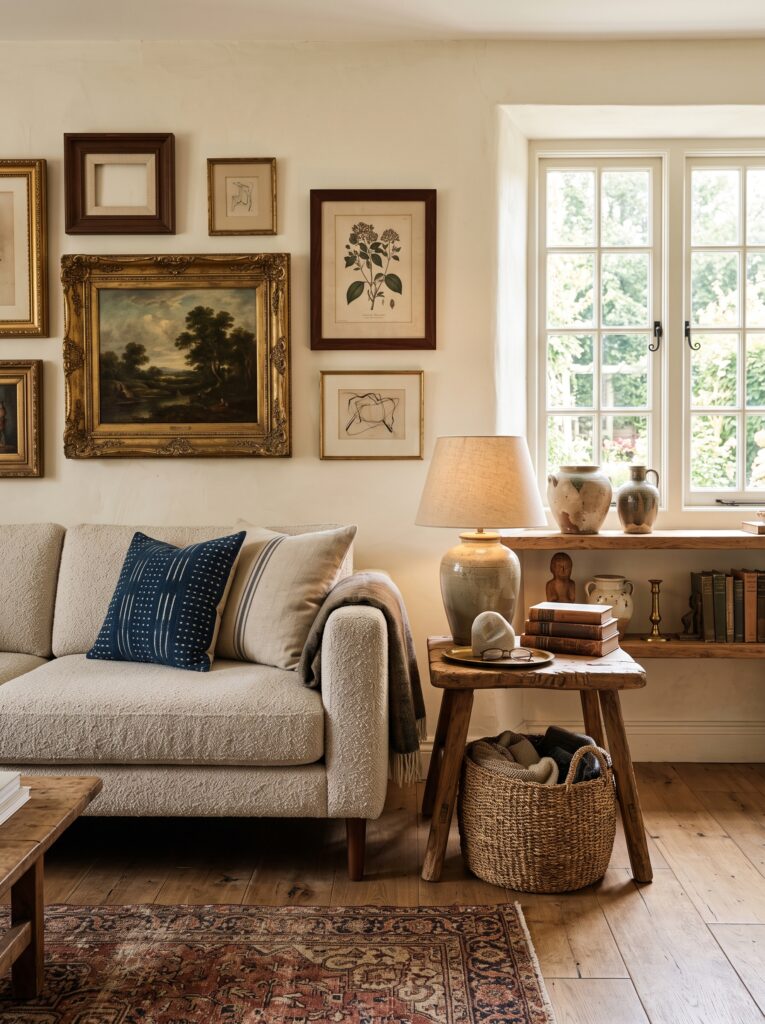
For example, imagine a contemporary cream sofa paired with:
- A vintage wooden side table
- A secondhand ceramic lamp
- Modern neutral cushions
- An antique-style framed painting
- A woven basket
The modern sofa keeps the room feeling fresh, while the vintage accessories give it personality.
This high-low, old-new combination is one of the easiest ways to create a designer-inspired interior without buying everything from a luxury furniture store.
10. Pay Attention to Shape Before Color
When thrift shopping, it can be tempting to choose an item simply because you love its color.
However, shape and proportion are often more important.
A beautifully shaped object in an imperfect color can potentially be updated or styled differently.
Look for:
- Sculptural silhouettes
- Interesting curves
- Architectural details
- Strong proportions
- Elegant handles
- Unusual bases
- Handmade details
A simple brown ceramic vase with a beautiful silhouette may ultimately look more expensive than a brightly colored decorative object with a generic shape.
Train yourself to notice form first.
11. Create a Collected Look Instead of a Matching Look
A designer-looking home does not have to be perfectly coordinated.
In fact, too much matching can make a space feel less personal.
Instead of buying every accessory in the same color and material, create subtle relationships between different objects.
For example, you might repeat warm wood in three different areas of a room.
You could also repeat brass, cream ceramics, woven textures, or dark brown accents throughout the space.
The objects do not need to match exactly.
They simply need to communicate with one another visually.
This creates cohesion without making the room feel overly decorated.
12. How to Know Whether a Thrifted Piece Is Worth Buying
Not every beautiful thrift store object belongs in your home.
Before buying something, ask yourself a few questions.
Does it have an interesting shape?
A distinctive silhouette can make an inexpensive object look special.
Is it useful?
Functional decor is often more valuable than something that simply takes up space.
Can you imagine at least two places where you could use it?
Versatile pieces are less likely to become clutter.
Does it work with your existing color palette?
If you cannot imagine styling it with your current home, think twice.
Is it structurally sound?
Check furniture, mirrors, lamps, and stools carefully before purchasing.
Would you still like it if it were not trendy?
This is an especially useful question when building a timeless home.
13. The Secret to Making Cheap Decor Look Expensive
Price does not automatically determine how sophisticated a piece looks.
Styling matters.
An inexpensive thrifted vase can look elevated when placed on a beautiful wooden console with a few carefully selected accessories.
A secondhand frame can look expensive when oversized and properly positioned.
A vintage stool can look intentional when paired with a large plant.
A thrifted lamp can look elegant when combined with warm lighting and neutral surroundings.
In other words, context changes perception.
Instead of filling a room with inexpensive decorative objects, choose fewer pieces and give them room to breathe.
This is one of the simplest ways to make budget-friendly decor feel more luxurious.
14. Try the One-of-a-Kind Rule
When decorating your home, try incorporating a few objects that feel impossible to duplicate.
These could be:
- Handmade ceramics
- Vintage artwork
- Antique frames
- Carved wooden objects
- Vintage mirrors
- Old architectural pieces
- Unique sculptures
- Handmade baskets
These pieces give your home personality.
They also help prevent your interior from looking like a showroom where everything came from the same catalog.
A home should feel like it has evolved over time.
15. Don’t Fill Every Empty Surface
One of the biggest mistakes people make with thrifted decor is buying too many small objects.
Because thrift stores can be inexpensive, it is easy to leave with several bags of decorative items.
But a sophisticated home usually benefits from editing.
Instead of putting something on every shelf, table, and corner, allow some surfaces to remain empty.
Negative space helps beautiful objects stand out.
For example, one sculptural vase can have more impact on a console table than seven unrelated accessories.
The same principle applies to bookshelves, mantels, dressers, and coffee tables.
16. Build Your Home Slowly
A beautiful collected home does not have to be completed in one weekend.
In fact, it may look better when it develops gradually.
Visit different thrift stores, flea markets, antique shops, estate sales, and secondhand marketplaces over time.
You may find one incredible mirror this month and a beautiful ceramic vessel several months later.
This slower approach helps you avoid impulse purchases and allows your home to develop a more authentic personality.
Instead of asking, “What can I buy to fill this empty space?” ask:
“What piece would genuinely make this room better?”
That small change in mindset can completely transform the way you decorate.
How to Style Thrifted Decor for a Modern American Home
For a modern American interior, balance is especially important.
Try combining:
Modern furniture + vintage accessories
This keeps the room current while adding character.
Neutral colors + aged materials
Cream, beige, taupe, brown, black, and soft gray can create a timeless foundation for vintage pieces.
Clean lines + organic shapes
Modern furniture provides structure while curved ceramics, wooden stools, baskets, and sculptural accessories soften the space.
Minimal styling + meaningful objects
Rather than displaying dozens of thrifted pieces, select a few favorites.
This creates a more elevated appearance.
Budget-Friendly Thrift Shopping Tips
If you want to decorate your home affordably, make thrift shopping part of your regular decorating strategy.
Create a short list of categories you are currently searching for instead of wandering through the store without a plan.
For example, your list might include:
- Large vintage frames
- Ceramic vessels
- Wooden stools
- Interesting lamps
- Baskets
- Mirrors
- Artwork
- Small side tables
Take measurements with you when shopping for furniture and mirrors.
For larger pieces, check whether they will actually fit through your doorway, staircase, elevator, or hallway before purchasing.
And remember that not every item needs to be transformed.
Sometimes the most beautiful thrift store finds are the pieces that already have the perfect patina.
Conclusion
Creating a designer-looking home is less about how much money you spend and more about how thoughtfully you choose and combine what you own. Thrifted home decor gives you an opportunity to introduce character, texture, history, and individuality into your space without relying entirely on expensive new furniture and accessories.
The best approach is to mix old and new, focus on beautiful shapes and natural materials, choose fewer but more distinctive objects, and give every piece enough space to make an impact. A vintage frame, sculptural ceramic, antique mirror, wooden stool, or secondhand artwork can become a surprisingly powerful design element when styled correctly.
Most importantly, don’t feel pressured to make your home look perfect or identical to a showroom. The most beautiful interiors often feel collected over time. They tell a story through the objects, textures, colors, and furniture inside them.
So the next time you walk into a thrift store, don’t just look for something cheap. Look for something special. That one unusual piece may be exactly what your home needs to feel more sophisticated, personal, and beautifully designed.
- Afrohemian Dining Room Ideas for a Warm, Collected and Sophisticated Home
- Warm Wood and Black Kitchen Ideas for a Timeless Designer Look
- Small Reading Nook Ideas That Turn Forgotten Corners Into a Cozy Luxury Retreat
- Curated Trinket Shelf Ideas: How to Create a Collected and Personal Home
- Neo Deco Entryway Ideas That Make Your Home Feel Instantly Expensive