
You don’t need a huge backyard to enjoy a beautiful outdoor space.
Even a small balcony, narrow patio, townhouse courtyard, apartment terrace, side yard, or unused outdoor corner can become a peaceful little escape with the right decorating choices. In fact, smaller outdoor spaces can sometimes feel even more inviting because they naturally encourage you to create a focused, intimate environment rather than trying to fill a large area.
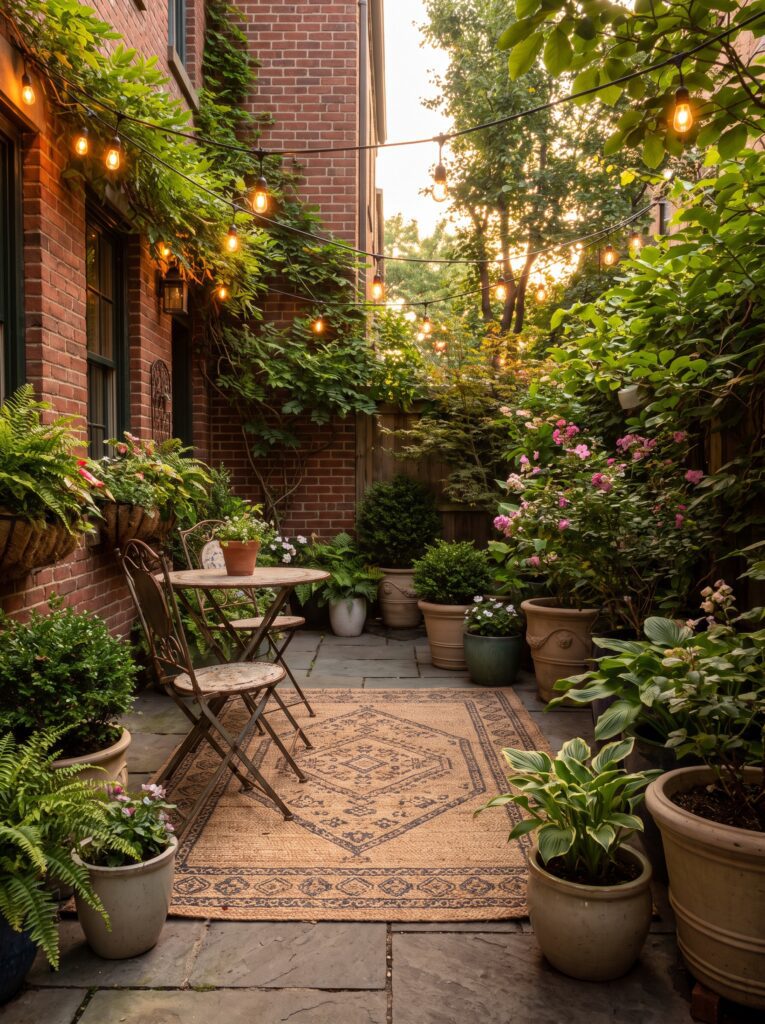
The secret is to stop thinking about a tiny outdoor space as a limitation.
Instead, think of it as a private garden retreat.
With layered plants, comfortable seating, warm lighting, natural materials, and a few carefully selected decorative elements, an ordinary outdoor area can become a place where you want to drink your morning coffee, read a book, enjoy dinner, or simply spend a quiet evening.
Whether you live in a city apartment or a suburban American home, these small garden ideas, patio decorating ideas, balcony garden ideas, and outdoor living ideas can help you make the most of every square foot.
Why Small Outdoor Spaces Are Worth Decorating
Outdoor areas often become an afterthought.
A patio may contain an old chair and a grill. A balcony may have a couple of unused pots. A small side yard might be completely empty.
But these spaces can add another layer of living space to your home.
Even a few square feet can become useful when you give the area a clear purpose.
A thoughtfully designed outdoor space can become:
- A morning coffee spot
- A reading retreat
- A small dining area
- A place for growing herbs
- A private garden
- An evening relaxation area
- A place to entertain one or two guests
- A quiet escape from the rest of the house
You don’t need to accomplish all of these things.
Choose one primary purpose and design around it.
1. Start With One Clear Purpose
Before buying plants or outdoor furniture, decide how you want to use the space.
Do you want a place to:
Read?
Create a comfortable chair surrounded by greenery.
Eat?
Use a small bistro table with two chairs.
Relax?
Prioritize a comfortable lounge chair or compact loveseat.
Garden?
Use vertical planters and layered pots.
Entertain?
Create flexible seating with a small table for drinks and snacks.
A small space becomes difficult to decorate when you try to give it too many functions.
One clear purpose usually creates a much more beautiful result.
2. Use Plants to Create a Private Atmosphere
Plants are one of the most effective ways to transform a small outdoor area.
They don’t simply add greenery.
They can also create privacy, height, texture, and visual separation.
For example, tall planters positioned around a seating area can make the space feel more enclosed.
You can combine:
- Tall plants
- Trailing plants
- Small potted plants
- Herbs
- Flowering plants
- Climbing greenery
- Ornamental grasses
The variation in height creates a layered garden effect.
Instead of placing all your pots on the ground at the same level, use plant stands, shelves, railings, and raised containers.
3. Think Vertically
When floor space is limited, look upward.
Vertical gardening allows you to add greenery without sacrificing valuable walking or seating space.
Try:
- Wall-mounted planters
- Hanging baskets
- Vertical garden panels
- Trellises
- Climbing plants
- Tiered plant stands
- Hanging pots
A simple vertical arrangement can make a tiny patio feel much more like a garden.
This technique is particularly useful for apartment balconies where every inch of floor space matters.
4. Create a Green Privacy Screen
If your outdoor area is overlooked by neighbors, privacy can completely change how comfortable the space feels.
Instead of installing a visually heavy permanent structure, consider using plants.
Tall planters, climbing vines, bamboo-inspired screens, trellises, or dense foliage can create a natural boundary.
You don’t necessarily need to block every view.
Sometimes partial screening is better because it creates privacy while still allowing light and airflow.
A green privacy screen can also make the outdoor space feel like a hidden garden rather than an exposed patio.
5. Choose Compact Furniture
Oversized outdoor furniture can quickly overwhelm a small space.
Instead, look for pieces designed with smaller proportions.
Good choices include:
- Bistro tables
- Folding chairs
- Slim benches
- Compact lounge chairs
- Small loveseats
- Stackable chairs
- Narrow outdoor consoles
Furniture with visible legs and an open structure can also make a small patio feel less crowded.
Avoid placing furniture directly against every wall simply because you’re trying to maximize seating.
You still need enough breathing room to move comfortably.
6. Make a Small Bistro Table the Centerpiece
A tiny café-style table can instantly turn an unused balcony or patio into a destination.
A round bistro table is particularly useful because it doesn’t have sharp corners and can be easier to move around.
Pair it with two comfortable chairs and surround the area with plants.
Suddenly, you have a charming place for:
- Morning coffee
- Breakfast
- Evening drinks
- Casual meals
- Reading
- Conversation
It doesn’t take much space, but it gives the outdoor area a clear purpose.
7. Add Outdoor Lighting
Lighting can completely change an outdoor space after sunset.
During the day, plants and furniture may be the main focus.
At night, lighting becomes the atmosphere.
Consider:
- String lights
- Lanterns
- Solar pathway lights
- Wall sconces
- Small table lamps designed for outdoor use
- Candle-style lanterns
- Subtle ground lighting
Avoid making every corner equally bright.
A few pools of warm light can create a much more intimate environment.
Think of outdoor lighting as a way to create layers, just as you would indoors.
8. Use Warm Lighting for Evening Ambiance
Cool, harsh lighting can make an outdoor area feel functional rather than relaxing.
Warm-toned illumination tends to create a softer atmosphere.
Place lighting near:
- Seating
- Planters
- Walkways
- Dining areas
- Walls
- Architectural features
You can also highlight a particularly beautiful plant or tree with subtle lighting.
The goal is not to turn your patio into a brightly lit backyard.
It’s to make the space feel welcoming after dark.
9. Add Texture With an Outdoor Rug
A rug can visually define a small outdoor seating area.
It helps distinguish the sitting zone from the rest of the patio or balcony.
Choose an outdoor-friendly material designed to withstand the conditions in your climate.
Neutral patterns can create a sophisticated appearance, while stripes or geometric designs can introduce personality.
For a small space, don’t choose a rug that’s so large that it makes the entire area feel crowded.
It should help define the furniture arrangement rather than dominate it.
10. Bring in Natural Materials
Natural textures work beautifully outdoors.
Consider incorporating:
- Wood
- Rattan
- Woven materials
- Stone
- Terracotta
- Ceramic
- Metal with an aged finish
- Natural-fiber-inspired textiles
These materials help the space feel connected to its surroundings.
A simple combination of terracotta pots, weathered wood, woven furniture, and green foliage can create a relaxed garden aesthetic without requiring elaborate landscaping.
11. Create a Small Container Garden
If you don’t have a traditional garden, containers can give you the same experience on a smaller scale.
Use different-sized pots to create visual depth.
You might grow:
- Herbs
- Lavender
- Small flowers
- Tomatoes
- Peppers
- Lettuce
- Ornamental plants
The specific plants should be selected based on your local climate, sunlight, and growing conditions.
One advantage of container gardening is flexibility.
You can rearrange the pots whenever you want to change the appearance of the space.
12. Use a Cohesive Pot Collection
You don’t have to buy every planter in exactly the same style.
However, having some visual connection between them can make a small garden look more intentional.
For example, choose a limited palette of:
- Terracotta
- Cream ceramic
- Aged stone
- Dark metal
You can vary the shapes and sizes while keeping the materials visually related.
This creates variety without chaos.
13. Don’t Forget the Walls
In a small outdoor area, walls are valuable decorating opportunities.
A blank exterior wall can become:
- A vertical garden
- A trellis
- An outdoor art display
- A backdrop for lighting
- A place for hanging planters
- A decorative privacy feature
You can also use a beautiful outdoor mirror carefully in a suitable sheltered location to visually expand the space.
The key is to make sure anything installed outdoors is appropriate for the weather conditions.
14. Create a Cozy Reading Retreat
A tiny patio can become a wonderful reading spot.
All you really need is:
- One comfortable chair
- Small side table
- Soft outdoor cushion
- A few plants
- Good lighting
Place the chair where you can enjoy the best view or morning/evening light.
Add a small table for coffee, tea, or books.
Suddenly, the space has a purpose.
And because it’s small, it can feel wonderfully private.
15. Design a Small Outdoor Dining Area
If you love eating outside, don’t assume you need a large dining table.
A compact table for two or four people can work beautifully.
Choose furniture that can be moved when necessary.
You can also use a folding table or extendable option if you occasionally need more surface area.
Add simple table styling such as:
- Ceramic plates
- Small vase
- Outdoor-safe glassware
- Linen-inspired napkins
- Small lantern
Keep the arrangement simple so the limited space remains functional.
16. Use One Statement Plant
You don’t necessarily need dozens of plants.
One dramatic plant can become the focal point of a small outdoor area.
Look for a plant that suits your climate and available sunlight.
A large container with an architectural plant can provide height and create a strong visual anchor.
Then surround it with smaller plants.
This gives the garden a hierarchy instead of making every plant compete for attention.
17. Use Curved Shapes to Soften the Space
Curved furniture can work beautifully in small outdoor areas.
A round table, curved chair, circular planter, or arched trellis can soften the straight lines of walls and flooring.
This is especially useful when your outdoor space is very architectural.
Curves introduce movement and can make the environment feel more relaxed.
18. Create a Cottage-Inspired Garden Feeling
You don’t need an enormous English-style garden to create a cottage-inspired atmosphere.
Use:
- Flowering plants
- Vintage-style pots
- Weathered wood
- Soft colors
- Climbing greenery
- Small garden accessories
The result can feel romantic and relaxed without requiring a large yard.
19. Try a Modern Garden Aesthetic
If traditional garden decor isn’t your style, keep everything clean and simple.
Choose:
- Large geometric planters
- Simple furniture
- Limited plant varieties
- Neutral colors
- Clean lighting
- Minimal accessories
A small modern courtyard can feel incredibly sophisticated when the materials and proportions are carefully selected.
20. Make a Tiny Space Feel Larger
There are several visual tricks that can help.
Use lighter surfaces where appropriate.
Keep furniture proportional.
Create vertical greenery.
Avoid filling every corner.
Use mirrors carefully in suitable sheltered areas.
Choose furniture with an open visual structure.
Keep a consistent color palette.
Most importantly, maintain a clear walking path.
A small space often feels even smaller when there is no visual or physical breathing room.
21. Create an Evening Garden Escape
Don’t design your outdoor area only for daytime use.
Think about what you want it to feel like at 8 p.m.
Warm lights, comfortable cushions, layered greenery, a small side table, and soft outdoor textiles can completely change the experience.
Imagine stepping outside after dinner with a cup of tea and sitting among softly illuminated plants.
That feeling is what turns a patio into a retreat.
22. Make Your Outdoor Space Seasonal
One advantage of outdoor decorating is that you can refresh it throughout the year.
Spring
Add fresh flowers, herbs, and lighter textiles.
Summer
Focus on lush greenery, outdoor dining, and comfortable seating.
Fall
Introduce warm-toned plants, lanterns, textured cushions, and seasonal containers.
Winter
Depending on your climate, use evergreen plants, weather-resistant lighting, and cozy decorative elements.
You don’t need to completely redesign the space every season.
A few small changes can keep it feeling fresh.
23. Don’t Overdecorate
This is especially important for small outdoor spaces.
Too many pots, accessories, cushions, lanterns, and decorative objects can quickly make a patio feel chaotic.
Choose a few pieces that have a purpose.
A beautiful planter is more effective when it has space around it.
A statement chair is more noticeable when it isn’t surrounded by twenty accessories.
The goal is lush but edited.
24. Make It Feel Like an Extension of Your Home
One of the best ways to create a sophisticated outdoor space is to connect it visually with the interior.
If your home uses warm wood, natural textures, and neutral colors, continue those ideas outside.
If your interior has black metal accents, introduce a small amount of black outdoor furniture or lighting.
This creates continuity.
The transition between indoor and outdoor spaces begins to feel intentional rather than accidental.
25. Small Outdoor Decor Doesn’t Have to Be Expensive
You can create a beautiful garden escape without buying luxury furniture.
Focus your budget on a few elements that matter most.
For example:
Prioritize:
Comfortable seating, healthy plants, good lighting, and quality planters.
Save on:
Small decorative accessories that can be changed seasonally.
You can also repurpose suitable containers, shop secondhand for outdoor furniture, grow plants from smaller starters, and gradually build your garden rather than purchasing everything at once.
A garden becomes more beautiful as it grows.
Conclusion
A small outdoor space doesn’t have to feel like an unused leftover area of your home.
With thoughtful planning, even a tiny balcony, patio, courtyard, or garden corner can become a private retreat filled with greenery, texture, and personality.
Start with one purpose.
Choose furniture that fits the scale of the space. Add plants at different heights. Create privacy where you need it. Introduce warm lighting for evenings. Use natural materials to bring texture into the design, and leave enough empty space for everything to breathe. Most importantly, don’t worry about making the space look perfect.
The best outdoor areas feel lived in. A few plants that grow a little wild, a comfortable chair that gets used every morning, a tiny table covered with coffee cups, and warm lights glowing after sunset can create more atmosphere than an expensive outdoor makeover ever could.
Your backyard, balcony, patio, or courtyard doesn’t need to be large to become your favorite place at home.
Sometimes the smallest outdoor spaces create the biggest sense of escape.
- Afrohemian Dining Room Ideas for a Warm, Collected and Sophisticated Home
- Warm Wood and Black Kitchen Ideas for a Timeless Designer Look
- Small Reading Nook Ideas That Turn Forgotten Corners Into a Cozy Luxury Retreat
- Curated Trinket Shelf Ideas: How to Create a Collected and Personal Home
- Neo Deco Entryway Ideas That Make Your Home Feel Instantly Expensive