
The ceiling is one of the most overlooked parts of a home. When people decorate a room, they usually think about the walls, furniture, flooring, lighting, rugs, and accessories first. The ceiling often receives nothing more than a coat of white paint and a standard light fixture.
But that is changing.
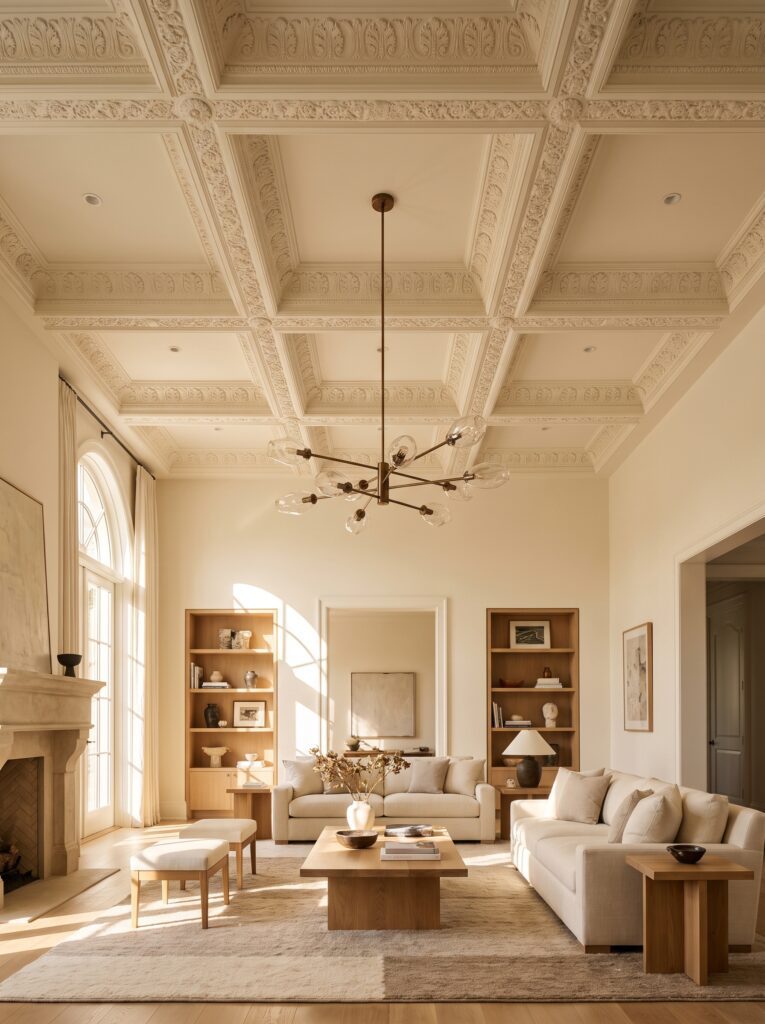
In 2026, designers and homeowners are paying much more attention to the ceiling as an important part of interior design. Often called the “fifth wall,” the ceiling can completely change the character of a room without taking away valuable floor space. Current design coverage is highlighting painted ceilings, wallpaper, beams, molding, wood details, sculptural lighting, and other architectural treatments as ways to give ordinary rooms more personality.
A thoughtfully designed ceiling can make a home feel more custom-built, sophisticated, warm, and intentional. Even better, you do not necessarily need a major renovation to create the effect.
Whether you live in a traditional American house, a modern townhouse, a suburban home, or a small apartment, there are plenty of statement ceiling ideas that can work with your existing architecture and decorating style.
What Is a Statement Ceiling?
A statement ceiling is a ceiling that has been intentionally designed as part of the room’s overall aesthetic rather than treated as a plain background.
It might feature:
- Decorative molding
- Coffered panels
- Wood beams
- Wallpaper
- Painted color
- Wood paneling
- Plaster texture
- Architectural trim
- Sculptural lighting
- Subtle patterns
- Decorative ceiling medallions
- Tray or vaulted details
The goal isn’t necessarily to make the ceiling extremely dramatic.
In fact, some of the most beautiful statement ceilings are surprisingly subtle.
A warm cream ceiling with delicate molding can look just as sophisticated as a deep blue painted ceiling. A natural wood treatment can create warmth without overwhelming the room, while a patterned wallpaper can bring personality to a small space.
The key is choosing a ceiling treatment that feels connected to the architecture and the rest of the room.
Why the Ceiling Matters So Much in Interior Design
A ceiling occupies a large visual surface, yet it is frequently ignored.
That makes it an interesting opportunity for homeowners who want their interiors to look different from standard, builder-basic spaces.
Designers increasingly describe the ceiling as a fifth wall because it can introduce color, texture, pattern, dimension, and architectural character just like the vertical walls do.
A well-designed ceiling can also influence how a room feels.
For example, a lighter ceiling can help maintain an airy appearance, while a darker color can make a large room feel more intimate. Wood can add warmth, molding can create traditional character, and wallpaper can introduce pattern without taking over every wall.
Current American home-design trends are also showing stronger interest in natural materials, warm neutrals, dimensional details, and architectural elements. NAHB’s 2026 design coverage specifically notes continued interest in dimensional features such as ceiling applications and beams, along with warm woods and earthy neutrals.
That makes ceiling design particularly useful for homeowners who want a home that feels elevated without simply buying more furniture or decorative accessories.
10 Elegant Statement Ceiling Ideas to Try
1. Add Classic Decorative Molding
One of the easiest ways to make a ceiling feel more architectural is with molding.
Instead of leaving the ceiling completely plain, consider adding simple rectangular panels, narrow trim, or a traditional grid pattern.
This works particularly well in:
- Dining rooms
- Home offices
- Entry spaces
- Formal sitting areas
- Primary bedrooms
- Transitional interiors
The beauty of ceiling molding is that it does not have to be extremely ornate.
For a modern American home, simple geometric molding painted in the same color as the ceiling can create an understated custom-home appearance.
If you prefer a more traditional look, slightly more detailed molding can complement antique furniture, classic lighting, and warm wood finishes.
Designer tip
Avoid making the ceiling treatment compete with every other element in the room.
If your furniture is already visually strong, keep the molding simple.
The goal is to make the architecture feel intentional—not crowded.
2. Try a Softly Painted Ceiling
You don’t always need architectural construction to create a statement ceiling.
Paint alone can completely change the appearance of a room.
Instead of automatically choosing bright white, consider:
- Warm ivory
- Soft beige
- Muted blue
- Sage
- Dusty green
- Warm taupe
- Deep brown
- Soft clay
- Muted plum
For a sophisticated look, select a ceiling color that relates to the walls rather than choosing a completely unrelated shade.
For example, a warm beige room could have a slightly deeper beige ceiling.
A pale blue room could have a soft blue-gray ceiling.
This creates continuity while still giving the ceiling its own identity.
For a luxurious effect
Try painting the walls and ceiling in related tones.
This can create a cocoon-like atmosphere and make the room feel intentionally designed rather than assembled piece by piece.
3. Bring in Wallpaper
Wallpaper isn’t just for walls.
A wallpapered ceiling can turn an otherwise ordinary room into something memorable.
According to recent design coverage, wallpapering the ceiling is gaining attention because it adds personality and visual interest without requiring every vertical wall to carry a bold pattern.
This idea works especially well in smaller or more intimate rooms.
Consider wallpaper for:
- Powder rooms
- Home offices
- Dining rooms
- Bedrooms
- Reading spaces
- Small sitting rooms
For a sophisticated American interior, look for subtle botanical patterns, small-scale geometric designs, textured grasscloth effects, or muted traditional prints.
If you’re nervous about committing to wallpaper, start with a smaller room.
A powder room, for example, can handle much more personality than a large open-plan space.
4. Use Natural Wood for Warmth
Wood ceilings are an excellent choice if you want a home to feel warm, architectural, and expensive without looking overly formal.
Natural wood can work with many design styles, including:
- Modern
- Transitional
- Organic modern
- Rustic luxury
- Contemporary
- Scandinavian-inspired
- Traditional
A light oak ceiling can make a room feel warm and airy.
A darker walnut tone can create a richer, more sophisticated atmosphere.
Wood beams can also visually define different areas in an open floor plan. NAHB’s 2026 design coverage specifically notes the continued presence of ceiling beams and dimensional ceiling applications in residential design.
Keep it balanced
If you use a strong wood ceiling, allow some of the other elements to remain quiet.
Cream upholstery, simple textiles, stone, and neutral walls can prevent the room from feeling visually heavy.
5. Create a Coffered Ceiling
Coffered ceilings are one of the classic ways to give a room a custom architectural appearance.
A coffered ceiling uses recessed panels separated by beams or trim.
The result can feel:
- Sophisticated
- Traditional
- Architectural
- Expensive
- Custom-built
It works particularly well in dining rooms, home offices, libraries, great rooms, and formal entertaining spaces.
You don’t necessarily have to use a dramatic contrast.
For a contemporary American home, an all-white or tonal coffered ceiling can look incredibly elegant.
The architectural detail provides visual interest without relying on bold color.
6. Use a Statement Light Fixture as Part of the Ceiling Design
Sometimes the ceiling treatment doesn’t have to be complicated.
A sculptural chandelier or oversized pendant can make the ceiling feel intentional.
Current design coverage continues to emphasize the relationship between ceiling architecture and lighting. Rather than treating lighting as an afterthought, designers are increasingly using lighting to reveal texture and architectural details.
Think about:
- Sculptural chandeliers
- Oversized pendants
- Linear dining chandeliers
- Clustered pendant lights
- Decorative flush mounts
- Architectural recessed lighting
The best result comes when the lighting and ceiling design feel like they belong together.
For example, a simple sculptural pendant can look beautiful beneath a softly textured plaster ceiling.
7. Add Subtle Plaster Texture
If you love quiet luxury and natural-looking interiors, textured plaster may be one of the most beautiful ceiling treatments to consider.
Instead of adding a strong pattern, plaster creates subtle variation across the surface.
It can give a ceiling:
- Depth
- Softness
- Movement
- Handcrafted character
- Organic texture
This works beautifully with natural stone, linen, wood, ceramics, and warm neutral colors.
It is particularly suited to the growing preference for interiors that feel tactile and authentic rather than overly polished.
For a sophisticated result, keep the color restrained.
Cream, warm white, sand, pale taupe, and soft beige can make the texture feel elegant rather than theatrical.
8. Use a Tray Ceiling to Create Depth
A tray ceiling can be especially effective in homes with standard-height ceilings.
Rather than having one flat plane, the central section is recessed or elevated, creating architectural layers.
This can make the ceiling feel more substantial and intentional.
You can enhance a tray ceiling with:
- Interior paint
- Wallpaper
- Cove lighting
- Decorative trim
- Wood accents
- A central chandelier
A subtle tray ceiling paired with warm ambient lighting can create a polished hotel-inspired atmosphere without making the room feel overly formal.
9. Choose a Moody Ceiling for a Cozy Atmosphere
Dark ceilings are not necessarily reserved for enormous rooms.
When used thoughtfully, a deep ceiling color can create an intimate and sophisticated feeling.
Consider:
- Chocolate brown
- Deep olive
- Charcoal
- Navy
- Plum
- Forest green
This approach can be particularly beautiful in dining rooms, libraries, studies, and cozy entertaining spaces.
The trick is to balance the darker ceiling with enough lighting and lighter materials below.
For example, a chocolate ceiling with creamy walls, warm wood furniture, brass accents, and soft linen upholstery can look incredibly sophisticated.
The result feels intentional rather than gloomy.
10. Combine Ceiling Design With Your Room’s Architecture
The most successful statement ceilings don’t look like decorations that were added at the last minute.
They feel like part of the architecture.
Before choosing a treatment, look at:
- Ceiling height
- Natural light
- Room proportions
- Existing molding
- Window placement
- Doorways
- Furniture scale
- Flooring
- Wall color
For example, a low ceiling might benefit from a light color and subtle detailing.
A tall ceiling may be able to handle beams, darker colors, or more substantial architectural features.
A small room might look beautiful with wallpaper overhead.
A large open-plan room could benefit from beams that visually define different zones.
How to Make a Statement Ceiling Look Expensive
You don’t need to use expensive materials to create an expensive-looking ceiling.
The difference usually comes from proportion, restraint, and coordination.
1. Choose quality-looking finishes
Even a simple paint color can look sophisticated when paired with beautiful lighting and carefully selected furniture.
2. Don’t mix too many competing features
If you have detailed molding, you may not also need a dramatic wallpaper and oversized chandelier.
Choose one primary feature and let the other elements support it.
3. Repeat materials
If your ceiling has warm wood, introduce that wood tone somewhere else in the room.
If you use brass lighting, repeat a small amount of brass in hardware or accessories.
This creates visual cohesion.
4. Think about lighting
A beautiful ceiling can disappear at night if it isn’t properly illuminated.
Use layered lighting instead of relying entirely on one overhead fixture.
5. Keep the room visually balanced
A statement ceiling should enhance the room—not become the only thing people notice.
Statement Ceiling Ideas for Different American Home Styles
Modern Home
Try:
- Smooth architectural panels
- Minimal molding
- Light wood
- Sculptural lighting
- Soft neutral paint
Traditional Home
Try:
- Coffered ceilings
- Decorative molding
- Classic wallpaper
- Ceiling medallions
- Warm white paint
Transitional Home
Try:
- Simple rectangular molding
- Soft beige ceilings
- Natural wood accents
- Elegant chandeliers
- Tonal color combinations
Organic Modern Home
Try:
- Natural wood
- Limewash-inspired finishes
- Soft plaster
- Warm white
- Natural textures
Small Apartment
Try:
- Light ceiling colors
- Subtle wallpaper
- Narrow molding
- A beautiful flush mount
- Tonal paint
You don’t need a huge house to experiment with the fifth wall.
Small-Budget Statement Ceiling Ideas
If a complete architectural renovation isn’t realistic, start small.
Paint the ceiling
This is usually one of the simplest ways to change the room visually.
Add removable wallpaper
This can be useful for renters or homeowners who aren’t ready for a permanent commitment.
Install simple trim
Even basic molding can create a more finished appearance.
Upgrade the light fixture
Sometimes the ceiling needs nothing more than a beautiful focal-point light.
Use wood-look materials strategically
Instead of covering an entire ceiling, consider a smaller architectural section.
Try a ceiling medallion
In a traditional or transitional home, a decorative medallion around a chandelier can add character without changing the entire ceiling.
Common Statement Ceiling Mistakes to Avoid
Making the ceiling too busy
More detail doesn’t always mean better design.
A ceiling with molding, beams, wallpaper, multiple colors, and an oversized chandelier can quickly become overwhelming.
Ignoring room proportions
Always consider ceiling height before choosing a treatment.
Choosing a trend without considering the rest of the house
A ceiling should feel connected to your home’s overall style.
Using poor lighting
Even a beautiful ceiling can feel flat when the lighting is harsh or poorly positioned.
Forgetting maintenance
Some finishes require more upkeep than others. Consider how practical the material will be for your household before committing.
How to Choose the Right Statement Ceiling for Your Home
Start by asking what your room is missing.
If the room feels cold, consider wood or textured plaster.
If it feels plain, try molding or wallpaper.
If it feels too large, consider a darker ceiling or architectural beams.
If it feels short, keep the ceiling light and use subtle vertical architectural details.
If it feels generic, a distinctive ceiling treatment can introduce character without replacing all your furniture.
Most importantly, don’t choose a ceiling treatment simply because it is trending.
Choose something that works with your home’s architecture and the way you actually live.
Current 2026 design coverage is increasingly emphasizing personalized, layered interiors rather than spaces that look identical to every other home.
That is exactly why the fifth wall is such an interesting design opportunity.
Conclusion
A beautiful home isn’t always created by buying more furniture or adding more decorations. Sometimes the biggest transformation comes from noticing a surface that has been ignored for years.
The ceiling is one of those surfaces.
Whether you choose classic molding, warm wood, elegant wallpaper, subtle plaster, a moody paint color, or simply a sculptural light fixture, a thoughtfully designed ceiling can give your home a more finished and custom appearance.
The best statement ceiling ideas don’t necessarily scream for attention. They quietly make the entire room feel more intentional.
If you’re refreshing your American home in 2026, consider looking up before you start replacing everything below. Your fifth wall may be the missing detail that makes the entire space feel complete.
- Garden Room Ideas That Turn Your Backyard Into a Private Retreat
- Neo Deco Decor Ideas for a Glamorous 2026 Home
- Sculptural Wall Ideas That Give Your Home a High-End Architectural Look
- Skirted Furniture Ideas for a Softer, More Elegant Home
- Statement Ceiling Ideas That Make Your Home Look Custom-Designed