
A plain wall doesn’t have to stay plain.
For years, homeowners have relied on paint, framed artwork, mirrors, and traditional accent walls to bring personality to their interiors. But a newer approach is becoming increasingly appealing to people who want their homes to feel more architectural, artistic, and custom-designed: sculptural wall treatments.
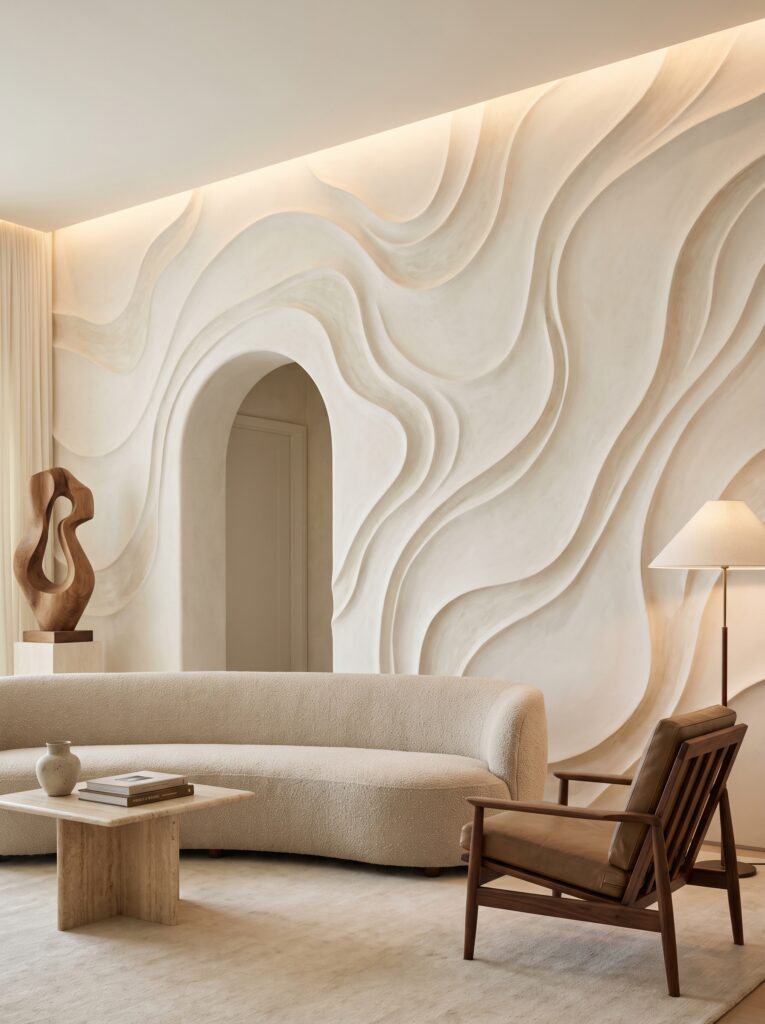
Instead of simply adding something onto a wall, sculptural design changes the surface itself.
Think raised plaster details, dimensional panels, carved textures, curved forms, fluted surfaces, geometric relief, limewash-inspired finishes, and handcrafted architectural details. These treatments create shadows and depth that change throughout the day as natural and artificial light moves across the surface.
The result can be incredibly sophisticated without requiring a wall to be filled with decorative objects.
For homeowners in the United States who want a high-end interior with personality, sculptural walls offer an exciting alternative to conventional wall decor.
What Is a Sculptural Wall Treatment?
A sculptural wall treatment is a decorative or architectural technique that gives a wall three-dimensional depth and texture.
Instead of looking completely flat, the surface has areas that project outward, recede inward, curve, overlap, or create a tactile pattern.
Common examples include:
- Plaster relief
- Dimensional wall panels
- Decorative molding
- Fluted panels
- Carved wood
- Textured plaster
- Geometric relief
- Curved wall details
- Ribbed surfaces
- Architectural niches
- 3D paneling
- Hand-applied wall finishes
Some treatments are highly dramatic, while others are almost invisible until the light hits them.
That subtle interaction with light is one of the biggest reasons sculptural walls can make a room feel expensive.
Why Sculptural Walls Are Becoming So Popular
Modern interiors are increasingly moving toward texture.
Instead of relying entirely on bold colors or large amounts of decoration, designers are using materials and architectural surfaces to create visual interest.
This creates a more sophisticated environment because the room has something interesting to discover without being visually cluttered.
Three-dimensional wall treatments can provide:
- Texture
- Depth
- Architectural character
- Visual movement
- Warmth
- Personality
- A custom-home feeling
Current interior design coverage is also pointing toward more tactile and dimensional surfaces, with designers exploring walls as architectural elements rather than simply backgrounds for furniture and artwork.
That makes sculptural wall design particularly interesting for homeowners who want something beyond the standard painted accent wall.
12 Sculptural Wall Ideas for an Elegant American Home
1. Create a Subtle Plaster Relief Wall
One of the most sophisticated approaches is a plaster relief wall.
Rather than adding a bright color or busy pattern, use a similar tone across the entire surface.
The design can be created through:
- Organic curves
- Soft arches
- Abstract shapes
- Geometric lines
- Raised patterns
- Hand-applied texture
The beauty comes from the shadows.
When sunlight moves across the surface, the relief becomes more visible. At night, warm wall lighting can create an entirely different effect.
For a luxury American interior, try warm white, ivory, limestone, or soft beige.
2. Try Three-Dimensional Wall Panels
3D wall panels are a practical way to introduce architectural texture without constructing an entirely custom wall.
Panels are available in many different designs, including:
- Geometric patterns
- Waves
- Vertical lines
- Organic forms
- Repeating arches
- Abstract relief
- Ribbed textures
For a sophisticated look, avoid choosing the most complicated pattern simply because it looks dramatic online.
Instead, choose a design that works with your furniture and architectural style.
A subtle dimensional pattern painted in the same color as the wall can look much more expensive than a highly contrasting design.
3. Add Fluted Wall Texture
Fluted surfaces have become a popular way to add vertical dimension to interiors.
The repeating grooves create a rhythm that can make a wall visually interesting while maintaining a relatively clean appearance.
Fluted details can be created using:
- Wood
- MDF panels
- Plaster
- Composite materials
- Decorative wall systems
Natural wood fluting can add warmth.
Painted fluting can feel more contemporary.
Stone-inspired or plaster fluting can create a more architectural appearance.
Where does it work best?
Consider using fluted texture on:
- A dining room feature wall
- A home office wall
- A hallway
- A fireplace surround
- A media wall
- A kitchen-adjacent feature
- A bedroom accent wall
4. Use Curved Architectural Details
Curves can soften the appearance of a room dominated by straight lines.
Instead of creating a conventional rectangular accent wall, introduce curved architectural details.
You might use:
- Arched niches
- Rounded wall panels
- Curved plaster relief
- Half-circle details
- Rounded shelving
- Soft arch molding
Curved forms work particularly well with contemporary and organic-modern interiors.
Pair them with rounded furniture, soft upholstery, natural stone, and warm lighting for a cohesive appearance.
5. Create a Textured Neutral Wall
You don’t need a complicated pattern to make a wall sculptural.
Sometimes texture alone is enough.
A softly textured wall in a warm neutral color can create the feeling of a handmade plaster surface.
Consider shades such as:
- Warm ivory
- Sand
- Beige
- Mushroom
- Taupe
- Pale clay
- Soft stone
The result is understated and sophisticated.
This approach works particularly well for homeowners who love neutral interiors but don’t want their spaces to feel flat.
6. Add Architectural Wall Niches
Wall niches can combine beauty and function.
Instead of hanging another piece of artwork, create a recessed architectural area where you can display carefully selected objects.
A niche can hold:
- A ceramic vase
- Sculptural art
- Books
- Small plants
- Candles
- Collected objects
For a luxury appearance, avoid filling every inch.
One beautiful object with enough negative space around it can be much more effective.
You can also illuminate the niche with subtle warm lighting.
7. Use Carved Wood for Natural Warmth
Wood is an excellent material for sculptural walls because it combines texture with natural warmth.
Carved wood panels can feature:
- Abstract patterns
- Geometric relief
- Organic lines
- Vertical grooves
- Repeating motifs
Choose natural wood tones when you want the room to feel warm and organic.
For a more contemporary look, consider painted wood in a tonal shade.
Pair carved wood with stone, linen, ceramics, and understated metal accents.
8. Create a Statement Wall With Layered Relief
Instead of using one repeated pattern, consider combining different depths.
A layered relief wall can include:
- Recessed areas
- Raised sections
- Curved forms
- Narrow trim
- Architectural shadows
This can create a more artistic appearance.
However, restraint is important.
The wall should have one clear visual idea rather than several unrelated patterns competing with one another.
9. Try a Sculptural Fireplace Wall
If your home has a fireplace, the surrounding wall provides a natural opportunity for architectural texture.
Instead of adding a traditional painted accent wall, consider:
- Textured plaster
- Vertical wood panels
- Fluted stone
- Curved plaster
- Large-format textured tile
- Architectural molding
The fireplace automatically becomes the focal point, so the wall treatment should support it.
A warm plaster fireplace wall paired with natural wood furniture and soft lighting can create an exceptionally inviting atmosphere.
10. Use Sculptural Texture in a Dining Room
Dining rooms are perfect for architectural wall treatments because they often contain fewer large pieces of furniture than living spaces.
A sculptural wall can become the main visual feature.
Imagine:
A textured plaster wall + large wooden dining table + elegant chandelier + upholstered chairs + minimal artwork.
You don’t need much more.
The wall itself becomes the artwork.
This approach can make a dining room feel like a boutique restaurant or high-end design hotel while still remaining comfortable for everyday meals.
11. Create a Tactile Home Office Wall
Home offices don’t have to feel corporate.
A sculptural wall can make the workspace feel more creative and sophisticated.
Consider a wall behind the desk with:
- Vertical wood texture
- Subtle geometric relief
- Warm plaster
- Architectural molding
- Fluted panels
Keep the rest of the room relatively simple.
A beautiful desk, comfortable chair, warm lamp, and one or two carefully selected accessories may be enough.
The textured wall provides the personality.
12. Experiment With Dimensional Hallway Walls
Hallways are often overlooked when decorating a home.
Because they don’t usually contain large furniture pieces, they are ideal for experimenting with architectural walls.
A narrow hallway can look beautiful with:
- Vertical molding
- Fluted texture
- Soft plaster
- Arched niches
- Recessed lighting
- Tonal paneling
The goal is to make the hallway feel intentional instead of treating it as a simple passage between rooms.
How Sculptural Walls Create a Luxury Look
Luxury interiors are not necessarily about expensive decorations.
They often rely on materials, proportions, texture, craftsmanship, and restraint.
This is why sculptural wall treatments can have such a powerful effect.
A simple room with a beautifully textured plaster wall may feel more sophisticated than a room filled with expensive decorative accessories.
The wall introduces visual complexity without creating clutter.
This is particularly useful for homeowners who prefer a minimalist or quiet-luxury aesthetic.
The Importance of Lighting
Lighting is one of the most important parts of sculptural wall design.
A textured surface can look completely different depending on where the light comes from.
Natural Light
Sunlight creates constantly changing shadows.
A relief wall may look subtle in the morning and dramatically textured later in the day.
Wall Wash Lighting
Lighting directed across the surface can emphasize texture.
Sconces
Wall sconces can create pools of warm light while highlighting the surrounding architecture.
Recessed Lighting
Subtle recessed fixtures can emphasize architectural details without becoming the main attraction.
Warm Light
Warm lighting generally works beautifully with plaster, wood, stone, and other natural materials.
If you’re investing in a sculptural wall, don’t treat lighting as an afterthought.
The lighting is part of the design.
Best Colors for Sculptural Wall Treatments
Neutral colors are especially effective because they allow shadows to become the main visual feature.
Warm White
Fresh, sophisticated, and versatile.
Ivory
Soft and luxurious without feeling stark.
Beige
Works beautifully with natural wood and stone.
Taupe
Creates a richer, more sophisticated atmosphere.
Mushroom
A contemporary neutral with warmth.
Clay
Adds an earthy, handcrafted feeling.
Muted Green
A subtle way to introduce color while maintaining a natural atmosphere.
Deep Brown
Ideal for dramatic interiors where you want the wall to feel rich and intimate.
How to Make a Sculptural Wall Look Expensive
Keep the Palette Controlled
A monochromatic or tonal color scheme allows the texture to become the focus.
Choose One Main Pattern
Too many patterns can make the wall look inexpensive rather than luxurious.
Use High-Quality Lighting
Texture needs light to be properly appreciated.
Leave Breathing Room
Don’t place large amounts of furniture directly against every textured surface.
Repeat Materials
If the wall uses natural wood, repeat a similar wood tone somewhere else in the room.
Balance Hard and Soft Elements
Pair sculptural surfaces with:
- Linen
- Wool
- Upholstery
- Curtains
- Soft rugs
- Natural textiles
This keeps the space comfortable.
Sculptural Walls on a Budget
A custom plaster wall can be expensive, but you don’t necessarily need a major construction project.
There are more accessible options.
Decorative Wall Panels
Pre-made panels can provide dimensional texture with less installation work.
DIY Molding
Simple geometric molding can create architectural depth without completely rebuilding the wall.
Paint
Sometimes tonal paint applied to architectural trim is enough to create a sophisticated result.
Removable Options
For renters, removable decorative panels or temporary wall treatments may provide a similar visual effect.
One Feature Wall
You don’t have to treat every wall.
Choosing one carefully selected wall can create a stronger impact while keeping the project more affordable.
Sculptural Walls for Different American Home Styles
Modern
Choose clean geometric panels, smooth plaster, and minimal furniture.
Transitional
Combine traditional molding with contemporary furniture and warm neutral colors.
Organic Modern
Use plaster, wood, stone, curves, and earthy colors.
Traditional
Try decorative molding, paneled relief, architectural niches, and classic proportions.
Contemporary Luxury
Use large-scale sculptural surfaces, dramatic lighting, stone, and sophisticated neutral palettes.
Minimalist
Choose one subtle textured surface and allow plenty of negative space.
Common Sculptural Wall Mistakes
Making Every Wall a Feature
A statement wall is powerful because it is a statement.
If every wall competes for attention, none of them feels special.
Choosing Texture Without Considering Lighting
A textured wall in a poorly lit room may look flat.
Always think about how daylight and evening lighting will interact with it.
Using Too Many Colors
Sculptural surfaces already have visual depth.
A restrained color palette usually looks more sophisticated.
Ignoring Furniture Placement
Don’t cover a beautiful architectural feature with oversized furniture.
Plan the wall and furniture together.
Going Too Trendy
Some highly specific patterns can date quickly.
If you’re investing in a permanent treatment, consider choosing timeless geometry, natural materials, or subtle organic textures.
How to Combine Sculptural Walls With Other Decor
A sculptural wall doesn’t mean you need to remove every decorative element.
The trick is choosing accessories that support rather than compete with the surface.
For example:
Textured plaster wall + sculptural ceramic vase
Fluted wood wall + linen furniture
Architectural niche + handmade pottery
Geometric paneling + simple contemporary artwork
Curved plaster wall + rounded furniture
These combinations create repetition without making the room feel overly coordinated.
Are Sculptural Walls Suitable for Small Homes?
Absolutely.
In fact, a small room can benefit significantly from a well-designed textured wall.
Because sculptural treatments create interest without requiring additional floor space, they can be particularly useful when decorating apartments, townhomes, and compact rooms.
Instead of filling a small room with shelves, artwork, accessories, and furniture, one architectural wall can provide much of the visual interest.
Keep the colors light and the pattern relatively restrained if the room is small.
How to Choose the Right Sculptural Wall for Your Home
Start with your home’s architecture.
Look at the existing:
- Ceiling height
- Windows
- Doors
- Flooring
- Trim
- Furniture
- Natural light
Then decide what the room needs.
If it feels too plain, consider dimensional panels.
If it feels cold, try natural wood or warm plaster.
If it feels too traditional, introduce a cleaner geometric treatment.
If it feels too modern, organic curves or handcrafted plaster can soften it.
If it feels too cluttered, choose a quiet monochromatic texture rather than adding more decorations.
The goal isn’t to make the wall impressive for its own sake.
The goal is to make the entire room feel more intentional.
Conclusion
Sculptural wall treatments offer a beautiful way to make an American home feel more architectural, personal, and sophisticated without relying on excessive decoration.
A textured plaster wall, curved niche, fluted panel, carved wood surface, or subtle dimensional pattern can completely change the way a room feels. The magic comes from depth and light: instead of seeing a flat background, you experience a surface that changes throughout the day.
If you love elegant interiors but don’t want your home to look generic, this is an especially worthwhile direction to explore.
Start small if necessary. Choose one wall, one texture, and one carefully considered color. Pair it with natural materials, comfortable furniture, warm lighting, and plenty of breathing room.
The result doesn’t need to shout for luxury.
The best sculptural walls create the feeling of luxury quietly—through texture, craftsmanship, proportion, and thoughtful design.
- Garden Room Ideas That Turn Your Backyard Into a Private Retreat
- Neo Deco Decor Ideas for a Glamorous 2026 Home
- Sculptural Wall Ideas That Give Your Home a High-End Architectural Look
- Skirted Furniture Ideas for a Softer, More Elegant Home
- Statement Ceiling Ideas That Make Your Home Look Custom-Designed