
A home bar can turn an overlooked corner into one of the most attractive and functional areas in a house. You do not need a huge entertaining room or a dedicated basement to create one. With thoughtful planning, even a small wall, unused alcove, or awkward corner can become a stylish beverage station that feels intentionally designed.
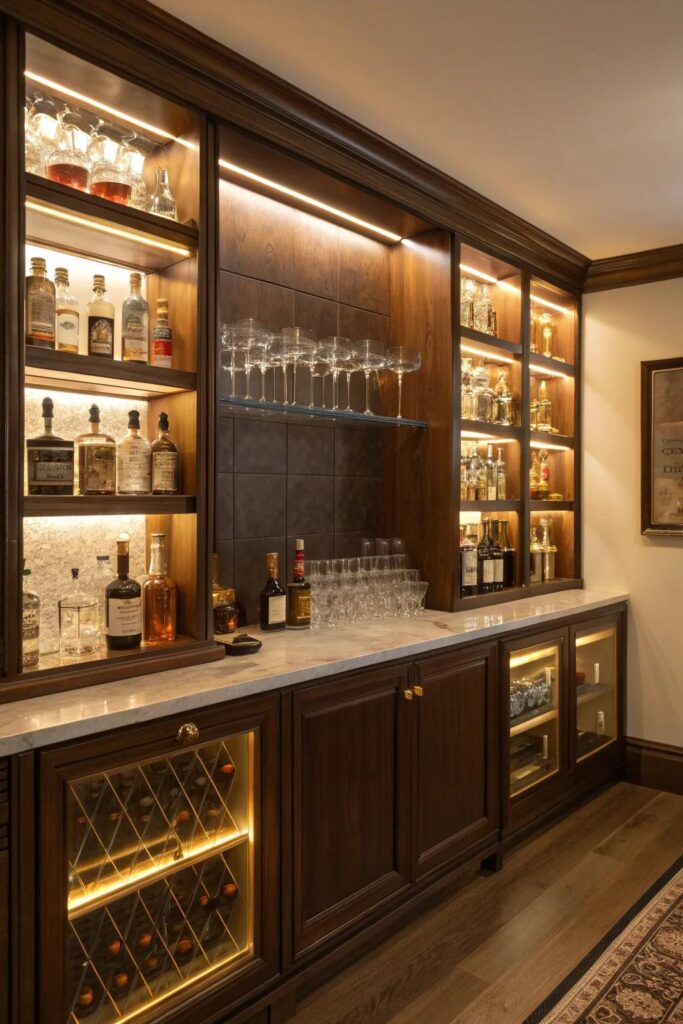
For homeowners searching for home bar ideas, the most appealing designs often combine beautiful cabinetry, practical storage, warm lighting, natural materials, and a small collection of carefully selected accessories.
A built-in home bar is especially useful because it can be designed around the exact dimensions of your space. Instead of trying to fit a large piece of furniture into an existing room, cabinetry can be planned around walls, corners, doors, and other architectural features.
Whether your goal is to create a sophisticated entertaining area, a compact beverage station, or a coffee-and-drink corner, there are plenty of ways to make the design feel polished without making it overwhelming.
What Is a Built-In Home Bar?
A built-in home bar is a beverage-serving area that is integrated into the architecture or cabinetry of a room.
Unlike a freestanding bar cart, a built-in design can include permanent cabinetry, countertops, shelving, lighting, and storage.
Depending on the space, a home bar might include:
- Lower cabinets
- Upper cabinets
- Open shelving
- A countertop
- Beverage storage
- Glassware storage
- A small sink
- Under-cabinet lighting
- Decorative backsplash
- Appliance storage
The size can range from a compact cabinet installation to a full entertaining area.
The most important consideration is that the design should suit the room rather than simply imitate a large commercial-style bar.
Why Small Home Bars Are Becoming So Popular
Not every homeowner has enough space for a dedicated entertainment room.
A compact built-in bar solves that problem by turning an unused area into something functional.
You might install one:
- Beside a dining room
- Near the kitchen
- In a living room
- Under a staircase
- In a hallway alcove
- Inside a butler’s pantry
- In a basement
- Near a home theater
- In a large home office
A small footprint can actually make the project easier because you need fewer materials and less cabinetry.
Choose a Strong Cabinet Color
Cabinetry is usually the visual foundation of a built-in home bar.
Deep colors can create a dramatic and sophisticated atmosphere.
Popular options include:
- Forest green
- Olive
- Navy
- Charcoal
- Espresso brown
- Warm walnut
- Deep blue-gray
- Soft black
If the surrounding room is already dark, consider using a lighter cabinet color and adding contrast through hardware or lighting.
For a more luxurious appearance, deep green cabinetry paired with warm brass and walnut can create a particularly rich combination.
Use Natural Walnut for Warmth
Wood can prevent a home bar from feeling too cold or overly formal.
Walnut is an excellent choice because it has a naturally rich appearance and pairs well with stone, brass, green, cream, and darker colors.
You could use walnut for:
- Open shelves
- Cabinet fronts
- Countertop accents
- A back panel
- Drawer interiors
- Decorative trim
You do not have to make the entire bar wood.
Even a single walnut shelf can introduce enough warmth to balance painted cabinetry.
Select a Durable Countertop
The countertop needs to be both attractive and practical.
A home bar countertop may be exposed to:
- Water
- Spills
- Glassware
- Food
- Heat from small appliances
- Frequent cleaning
Depending on your needs and budget, options may include natural stone, quartz, porcelain, or other durable surfaces.
A light stone countertop can create beautiful contrast against dark cabinetry.
For example:
Deep green cabinets + pale veined stone + brass hardware
creates a classic combination that works across several interior styles.
Add a Beautiful Backsplash
A backsplash is an opportunity to add personality.
Instead of using the same material throughout the room, you could introduce a slightly more decorative surface behind the bar.
Options include:
- Marble-look tile
- Handmade-look ceramic tile
- Stone slab
- Geometric tile
- Fluted tile
- Neutral textured tile
- Wallpaper where appropriate
If your cabinetry is dramatic, keep the backsplash relatively simple.
If your cabinets are understated, the backsplash can become the focal point.
Install Open Shelving
Open shelving can make a small bar feel lighter than a wall of closed cabinetry.
It is also practical for items you use frequently.
You can display:
- Glassware
- Coffee cups
- Serving bowls
- Small artwork
- Ceramic vessels
- Books
- Decorative objects
Wooden shelves can soften a dark cabinet color.
Glass shelves can create a more contemporary look.
The key to attractive open shelving is leaving enough empty space.
A shelf packed from end to end can make a compact home bar appear cluttered.
Use Integrated Lighting
Lighting can make an enormous difference in a built-in bar.
Under-shelf or under-cabinet lighting can illuminate glassware and countertops while creating a warm evening atmosphere.
You can also use:
- Small recessed lights
- Cabinet interior lighting
- Wall sconces
- Pendant lighting
- Backlit shelving
Warm lighting generally works well for entertaining areas.
If the bar is also used as a coffee station in the morning, make sure there is sufficient task lighting for practical use.
Always have electrical work completed according to local requirements and by a qualified professional when appropriate.
Choose Hardware That Complements the Room
Hardware provides a small but important opportunity to reinforce the design style.
For a traditional or transitional home bar, consider warm brass.
For a modern interior, matte black or brushed metal may work better.
For a vintage-inspired space, aged brass or bronze can create a more collected appearance.
You can also mix finishes carefully if the surrounding room already contains multiple metals.
The goal is coordination, not necessarily exact matching.
Add a Beverage Refrigerator if Needed
If you frequently entertain, a compact beverage refrigerator can be useful.
Before installing one, consider:
- Available cabinet dimensions
- Ventilation requirements
- Electrical requirements
- Door clearance
- Noise
- Maintenance access
Do not choose an appliance based solely on appearance.
Always check the manufacturer’s installation instructions and required clearances before building cabinetry around it.
Consider a Small Sink
If plumbing allows, a small sink can make a home bar significantly more functional.
It can be useful for:
- Washing glasses
- Filling water
- Cleaning small items
- Preparing beverages
However, a sink is not essential.
For a compact bar, you may prefer to use the available cabinet space for additional storage instead.
Create a Coffee and Beverage Station
A built-in home bar does not have to be used exclusively for entertaining.
It can also function as a sophisticated coffee station.
This makes the space useful throughout the day.
A coffee-and-beverage station might include:
- Coffee machine
- Coffee cups
- Tea
- Coffee beans
- Small refrigerator
- Water
- Serving trays
- Storage drawers
This approach can be especially practical when the bar is located near a dining room or kitchen.
Make an Awkward Corner Useful
Many homes have areas that are difficult to furnish.
An unused corner may be too small for a sofa but large enough for cabinetry.
A built-in bar can make such a space feel intentional.
Before planning the installation, carefully measure:
- Wall width
- Ceiling height
- Door swing
- Baseboards
- Electrical outlets
- Plumbing locations
- Appliance clearances
- Walking space
A professional measurement can prevent expensive mistakes.
Home Bar Under the Stairs
The area underneath a staircase is another location that can sometimes accommodate a compact beverage station.
The sloping ceiling naturally creates a custom architectural feature.
You could install:
- Lower cabinets
- A narrow countertop
- Small shelves
- Integrated lighting
- Glassware storage
Because the ceiling height varies, custom cabinetry or carefully planned modular pieces may work better than standard furniture.
Create a Dining Room Bar Cabinet
If you do not want permanent cabinetry, a furniture-style bar cabinet can provide a similar effect.
This can be especially useful for renters or homeowners who want flexibility.
Choose a piece with:
- Attractive doors
- Interior shelving
- Drawer storage
- A durable surface
- Enough room for your actual needs
You can style the cabinet with artwork or a mirror above it to create a finished appearance.
Use a Mirror to Add Depth
A mirror behind a small bar can reflect light and make the area feel more spacious.
Options include:
- Antique-style mirror
- Arched mirror
- Simple rectangular mirror
- Smoked glass
- Decorative framed mirror
If your bar already has strong visual elements, choose a simpler mirror.
If the cabinetry is understated, the mirror can become more decorative.
Keep the Styling Minimal
A home bar can quickly become cluttered because it often contains many small objects.
Avoid displaying everything you own.
Instead, choose a few pieces that are visually attractive.
For example:
- Three or four beautiful glasses
- One ceramic vessel
- A small tray
- One decorative object
- A framed print
- A small plant
Store the rest behind closed doors.
This creates the appearance of abundance without visual chaos.
Create a Luxury Look Without a Huge Budget
You do not need custom everything to create an elevated home bar.
Start with the most visible elements.
Upgrade the Lighting
Good lighting can make ordinary materials look much more polished.
Choose Attractive Hardware
Changing cabinet handles can dramatically change the appearance of existing cabinetry.
Add One Beautiful Shelf
A walnut or natural wood shelf can create contrast.
Use a Decorative Backsplash
Even a small amount of patterned tile can add personality.
Style the Countertop
Keep it clean and intentional.
Small Home Bar Ideas for Apartments
Apartment dwellers can create beverage stations without permanent renovations.
Consider:
- A slim bar cabinet
- A rolling cart
- A small console
- Floating shelves
- A compact coffee station
Choose pieces that fit the scale of the room.
A narrow console can sometimes function as a bar while taking up very little floor space.
Home Bar Ideas for Large Homes
Larger homes offer more opportunities for dedicated entertaining areas.
A larger home bar could include:
- Full-height cabinetry
- Wine storage
- Beverage refrigerator
- Sink
- Dishwasher drawer
- Multiple storage zones
- Large countertop
- Pendant lighting
- Seating
Even in a large room, resist the temptation to fill every surface.
A spacious bar often looks more sophisticated when there is enough breathing room around each element.
Use Artwork to Give the Bar Personality
Artwork can help the bar feel like part of the home’s interior rather than an appliance area.
Choose something that relates to the colors and materials in the room.
For example, a warm abstract print can complement walnut cabinetry.
A black-and-white photograph can work with a contemporary bar.
A colorful artwork can provide contrast against dark cabinets.
The artwork does not need to depict beverages or entertaining.
In fact, something unexpected can make the space feel more personal.
Create a Cohesive Color Palette
A simple palette can make even a compact home bar feel custom.
Try combinations such as:
Forest Green + Walnut + Brass
Warm, sophisticated, and classic.
Navy + Cream + Antique Brass
Traditional with a modern edge.
Charcoal + Oak + Black
Contemporary and understated.
Walnut + Beige + Bronze
Warm and relaxed.
Deep Blue + Marble + Brass
Elegant and dramatic.
Choose one dominant color, one supporting material, and one accent finish.
Think About Storage Before Decoration
Storage should be planned before you start styling the shelves.
Decide what needs to be stored.
For example:
- Glassware
- Coffee supplies
- Serving trays
- Napkins
- Small appliances
- Beverage supplies
- Cleaning products
Then divide the cabinets accordingly.
A beautiful bar that lacks useful storage can quickly become frustrating.
Make It Work With the Rest of Your Home
The home bar should feel like a natural extension of the surrounding room.
If your dining room has warm wood, repeat that material.
If your kitchen uses brass hardware, consider using brass in the bar.
If your living room has deep green accents, introduce a related green in the cabinetry.
Repeating materials creates visual continuity.
Common Built-In Home Bar Mistakes
Making the Bar Too Large
A bar should be proportional to the room.
Forgetting Appliance Ventilation
Built-in appliances often require specific ventilation and clearance.
Using Too Much Open Storage
Displaying everything can create clutter.
Ignoring Electrical Requirements
Plan appliance locations before finalizing cabinetry.
Choosing Materials Based Only on Appearance
Consider durability and maintenance as well.
Forgetting Lighting
A beautiful bar can look flat without appropriate illumination.
A Simple Formula for an Elegant Home Bar
If you want a straightforward starting point, use:
Rich cabinetry + natural wood + durable stone + warm metal + layered lighting.
For example:
Deep green cabinets + walnut shelves + light stone countertop + antique brass hardware + warm integrated lighting.
This combination can create a luxurious appearance while remaining appropriate for a normal residential interior.
How to Style the Finished Bar
Once the cabinetry and major finishes are complete, styling should be relatively simple.
Start with the largest items first.
Place your glassware or coffee equipment where it is easiest to access.
Then add one or two decorative objects.
Leave some countertop space empty.
Finally, introduce a small amount of greenery or artwork if the space needs softness.
Remember that negative space is part of the design.
Conclusion
A built-in home bar can transform an unused corner into a functional and visually memorable feature of your home. The best designs do not depend on having a huge room or an extravagant budget. Instead, they focus on proportion, thoughtful storage, beautiful materials, and practical details.
Whether you are designing a compact beverage station in an apartment, a dining room bar cabinet, an under-stair entertaining area, or a full built-in bar, start by considering how you actually use the space.
Choose cabinetry that complements your home, add one or two warm materials, introduce practical lighting, and keep the styling intentional.
For homeowners searching for built-in home bar ideas, small home bar designs, home bar cabinets, beverage station ideas, dining room bar ideas, and luxury home entertaining spaces, the most useful approach is to create a bar that looks beautiful while genuinely supporting the way your household lives and entertains.
A thoughtfully designed small corner can often have more character than an oversized entertainment room. With the right combination of storage, lighting, materials, and personal details, even an overlooked wall can become one of the most distinctive features in your home.
- Cozy Window Seat Ideas That Turn Unused Space Into a Dreamy Retreat
- Built-In Home Bar Ideas That Make Any Corner Feel Custom
- Afrohemian Home Decor Ideas for a Warm, Artful Breakfast Nook
- Beautiful Laundry Room Ideas That Make Everyday Chores Feel Luxurious
- Neo Deco Powder Room Ideas for a Luxe Small Bathroom