
Afrohemian decor is quickly becoming a beautiful choice for homeowners who want their interiors to feel warm, artistic, personal, and effortlessly sophisticated. Instead of following a perfectly coordinated decorating formula, this style celebrates natural materials, handcrafted details, rich textures, earthy colors, cultural inspiration, and thoughtfully selected statement pieces.
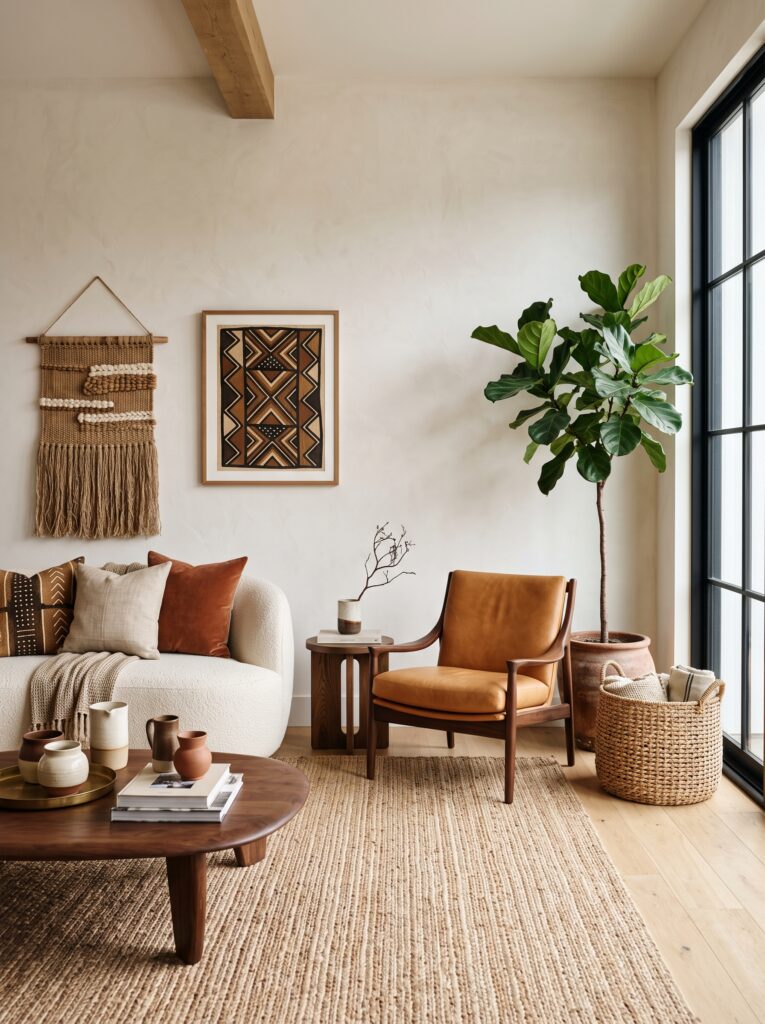
The result is a home that feels collected over time rather than decorated all at once.
For US homeowners, Afrohemian style can work beautifully in everything from a spacious suburban house to a small city apartment. You do not need to completely redesign your home to achieve the look. A few carefully chosen elements—such as woven accents, natural wood, sculptural ceramics, textured textiles, and expressive artwork—can instantly introduce the aesthetic.
If you love warm neutral interiors, organic modern design, boho home decor, earthy color palettes, natural textures, and sophisticated eclectic spaces, these Afrohemian decorating ideas can give your home a completely refreshed look.
What Is Afrohemian Decor?
Afrohemian decor combines elements of African-inspired design with the relaxed, layered character of bohemian interiors.
The style often features:
- Natural wood
- Woven baskets
- Rattan and cane
- Handcrafted ceramics
- Earthy colors
- Textured fabrics
- Sculptural accessories
- Artistic wall decor
- Organic shapes
- Vintage-inspired pieces
- Botanical elements
- Global-inspired patterns
However, Afrohemian interiors do not have to look heavily themed. The most sophisticated interpretation is usually more restrained.
Instead of filling a room with numerous decorative objects, focus on creating visual warmth through materials, texture, shape, and carefully selected artwork.
Think of the style as a meeting point between relaxed bohemian decorating and refined organic modern interiors.
1. Start With Warm Natural Wood
Natural wood is one of the easiest ways to establish an Afrohemian atmosphere.
Choose furniture with visible wood grain rather than pieces with highly glossy or artificial finishes. Walnut, oak, teak, mango wood, and other warm-toned woods can create an inviting foundation.
A wooden coffee table, console, sideboard, dining table, or accent chair can become the foundation around which the rest of the room is styled.
For a more elevated appearance, avoid matching every wooden piece perfectly. Slight variations in tone and texture can make the room feel more collected and authentic.
Pair warm wood with creamy upholstery, linen textiles, woven accessories, and handmade ceramics.
This combination creates the layered warmth that makes Afrohemian interiors so appealing.
2. Bring in Woven Textures
Woven decor is another essential element for creating an organic Afrohemian home.
Instead of relying exclusively on decorative objects, introduce texture through functional pieces.
Try adding:
- Large woven baskets
- Rattan storage
- Cane furniture
- Woven pendant lights
- Seagrass trays
- Natural fiber rugs
- Handwoven wall pieces
- Textured baskets for blankets
Woven materials add dimension without requiring bold colors.
This is especially useful if your home already has a neutral color scheme. A cream, beige, or white room can instantly feel warmer when layered with baskets, rattan, jute, and natural fibers.
For a sophisticated US home, choose fewer but larger woven pieces instead of filling every corner with small accessories.
3. Use an Earthy Color Palette
Afrohemian decor works particularly well with colors inspired by nature.
Consider building your palette around:
- Warm ivory
- Sand
- Camel
- Caramel
- Terracotta
- Clay
- Chocolate brown
- Olive green
- Muted ochre
- Deep rust
- Warm beige
You do not need to use all these colors at once.
A simple combination of cream + warm brown + muted terracotta can already create a beautiful foundation.
If you prefer a more modern interior, keep most of the room neutral and introduce one or two earthy accent colors through pillows, artwork, ceramics, or textiles.
This approach allows the room to feel sophisticated instead of overly colorful.
4. Add Sculptural African-Inspired Artwork
Artwork can completely change the personality of a room.
For an Afrohemian-inspired interior, consider expressive artwork featuring abstract forms, organic shapes, earthy pigments, or culturally inspired artistic elements.
Large-scale artwork can work particularly well above:
- A sofa
- A console
- A bed
- A dining sideboard
- A fireplace
- A reading chair
One large statement piece often looks more sophisticated than several tiny pieces scattered across the wall.
When selecting culturally inspired artwork, prioritize authentic artists, thoughtfully sourced pieces, and designs that are meaningful rather than simply decorative.
This helps create a home that feels personal and intentional.
5. Layer Handmade Ceramics
Handmade-looking ceramics are an easy way to make a room feel more artistic.
Look for pieces with imperfect shapes, matte finishes, organic silhouettes, and earthy colors.
A simple ceramic vase can be placed on a console. A sculptural bowl can sit on a dining table. Small pottery pieces can be grouped on open shelving.
The goal is not perfection.
Afrohemian interiors benefit from the beauty of variation. Slightly irregular shapes and handcrafted textures make a space feel warmer and less mass-produced.
For a modern interpretation, combine handmade ceramics with clean-lined furniture.
The contrast between contemporary furniture and organic accessories creates a beautiful balance.
6. Mix Textiles Instead of Matching Everything
One of the easiest ways to make an Afrohemian room feel layered is to mix textiles.
Instead of purchasing pillows, throws, curtains, and rugs from the same collection, combine different textures.
For example, a living room might include:
- A linen sofa
- A chunky woven throw
- Textured cotton pillows
- A natural fiber rug
- A patterned accent cushion
- A soft wool-style blanket
The colors should relate to one another, but the textures do not need to match.
This creates the relaxed, collected appearance associated with bohemian interiors while maintaining a polished aesthetic.
For US homeowners, this is also a practical way to refresh an existing room without replacing major furniture.
7. Incorporate Rattan and Cane Furniture
Rattan and cane furniture can instantly add an organic quality to a room.
A cane-front cabinet, rattan lounge chair, woven bench, or natural-fiber pendant can become a strong focal point.
However, using too many woven furniture pieces can make the room feel overly themed.
Instead, choose one or two statement pieces.
For example, a neutral bedroom could feature a cane nightstand or woven bench at the foot of the bed. A living room could use one rattan accent chair beside a modern sofa.
The combination of contemporary and handcrafted-looking furniture is what gives Afrohemian interiors their elevated character.
8. Use Plants to Bring the Look Together
Plants are an excellent finishing touch for Afrohemian interiors because they introduce another natural element.
Large leafy plants can soften corners and add height, while smaller plants can bring life to shelves and side tables.
Consider:
- Bird of paradise
- Fiddle leaf fig
- Rubber plant
- Snake plant
- Pothos
- Olive tree-style plants
- Dried grasses
The key is to avoid turning every surface into a plant display.
One large plant in a beautiful textured planter can have much more visual impact than numerous tiny pots.
Choose planters made from terracotta, stone, ceramic, or woven materials to maintain the natural aesthetic.
9. Create a Collected-Over-Time Feeling
Perhaps the most important principle of Afrohemian home decor is that the space should feel collected rather than overly coordinated.
Instead of buying an entire matching furniture set, combine different materials and silhouettes.
For example, pair a contemporary cream sofa with:
- A vintage-inspired wooden side table
- A sculptural ceramic lamp
- A woven basket
- An artistic wall hanging
- A textured rug
- A rattan accent chair
The pieces do not need to look identical.
They simply need to share a common visual language through color, texture, proportion, or material.
This is what creates an interior that feels individual and memorable.
How to Make Afrohemian Decor Look More Luxurious
Afrohemian does not have to mean cluttered or casual.
If you want a more luxurious interpretation, focus on quality over quantity.
Choose substantial furniture, natural materials, sophisticated lighting, and a limited color palette.
For example, instead of decorating a living room with twenty small accessories, select five or six beautiful pieces that have strong visual impact.
A large woven basket, oversized artwork, sculptural lamp, natural wood table, textured rug, and statement plant can create more impact than a room filled with inexpensive decorations.
Lighting is particularly important.
Use warm ambient lighting rather than relying entirely on bright overhead lights. Table lamps, floor lamps, wall sconces, and sculptural pendants can make natural textures look richer in the evening.
Afrohemian Decor for Small Apartments
You do not need a large home to embrace this style.
In a small apartment, concentrate on a few high-impact elements.
Try adding a woven basket for storage, a natural wood side table, textured pillows, one large artwork piece, and a compact rattan chair.
Multifunctional furniture is especially useful.
A woven storage ottoman can function as seating, storage, and a decorative accent. A narrow wooden console can provide storage without consuming too much floor space.
Keep the walls relatively simple and allow texture to provide most of the visual interest.
Afrohemian Bedroom Ideas
The bedroom is one of the best spaces for this aesthetic because natural textures can create a calm atmosphere.
Start with warm white or beige bedding and introduce layers through linen pillows, woven blankets, textured cushions, and a natural fiber rug.
A wooden bed frame or cane headboard can provide an organic focal point.
Complete the room with soft lighting, handmade ceramics, one large piece of artwork, and a natural basket for blankets.
Avoid excessive patterns if you want the bedroom to feel luxurious.
Instead, let texture do the work.
Afrohemian Living Room Ideas
For a living room, begin with a neutral foundation.
A cream, beige, or warm taupe sofa provides an excellent base. Add a natural wood coffee table, woven basket, textured rug, and one or two sculptural chairs.
Then introduce personality through artwork.
A large abstract piece with earthy colors can become the focal point without making the room feel busy.
Layering is especially important here.
Combine smooth wood, rough woven fibers, soft upholstery, matte ceramics, and natural greenery.
The contrast between materials gives the room depth.
Afrohemian Dining Room Ideas
An Afrohemian dining room can feel elegant and welcoming without being overly formal.
Choose a solid wood dining table as the foundation and pair it with chairs that have woven or natural-material details.
A statement pendant light can define the dining area.
For the table centerpiece, avoid complicated arrangements. A large ceramic vessel, branches, dried grasses, or a simple arrangement of greenery can look much more sophisticated.
Add one piece of expressive artwork to the wall rather than covering the entire space with decorations.
Common Afrohemian Decorating Mistakes to Avoid
Although Afrohemian decor is naturally layered, there are several ways to accidentally make it feel cluttered.
Too Many Patterns
Combining too many patterns can make the room visually overwhelming.
Choose one dominant pattern and let the remaining textiles remain relatively subtle.
Too Many Accessories
A room does not become more sophisticated simply because it contains more objects.
Give statement pieces room to breathe.
Ignoring Lighting
Even beautiful furniture can look flat under harsh overhead lighting.
Use multiple light sources to create warmth.
Matching Everything
Afrohemian style depends on variation.
Do not try to make every wood tone, textile, and accessory identical.
Using Cultural Elements Only as Trends
Culturally inspired decor should be approached thoughtfully. Learn about the origin and meaning of pieces when relevant, support artists and makers when possible, and avoid treating meaningful cultural objects as disposable styling accessories.
How to Create Afrohemian Decor on a Budget
You do not need to purchase expensive furniture to achieve this aesthetic.
Start by shopping for your own home.
Move existing wooden furniture into rooms where it can become more visible. Replace synthetic-looking accessories with natural-textured alternatives. Add a secondhand basket, vintage wooden stool, ceramic vase, or woven textile.
Thrift stores, vintage markets, estate sales, and local artisan markets can also be excellent sources for unique pieces.
The most important thing is not the price tag.
It is the combination of materials and the way the pieces are styled.
A simple room with carefully selected affordable accessories can look more sophisticated than an expensive room filled with unrelated items.
Conclusion
Afrohemian decor offers a beautiful alternative to overly predictable neutral interiors. By combining natural wood, woven textures, earthy colors, handcrafted details, expressive artwork, organic shapes, and thoughtfully selected furniture, you can create a home that feels warm, artistic, sophisticated, and deeply personal.
The secret is balance. You do not need to transform every room or fill your home with themed accessories. Start with a neutral foundation, introduce natural materials, layer a few meaningful textures, and finish with statement pieces that reflect your personality.
Whether you live in a modern American house, a small apartment, or a cozy suburban home, Afrohemian decorating can help create an interior that feels collected, comfortable, and elevated without looking overly designed.
Most importantly, let space evolve. The best Afrohemian interiors feel as though they were gathered naturally over time—with pieces that have texture, character, and a story behind them. That combination of warmth and individuality is what makes this aesthetic so visually compelling and so perfect for a Pinterest-worthy home.
- Afrohemian Dining Room Ideas for a Warm, Collected and Sophisticated Home
- Warm Wood and Black Kitchen Ideas for a Timeless Designer Look
- Small Reading Nook Ideas That Turn Forgotten Corners Into a Cozy Luxury Retreat
- Curated Trinket Shelf Ideas: How to Create a Collected and Personal Home
- Neo Deco Entryway Ideas That Make Your Home Feel Instantly Expensive