
Window treatments are often treated as a finishing detail, but they can completely change how a room looks and feels. One of the simplest ways to create a more elegant, spacious, and designer-inspired interior is to install ceiling-to-floor curtains.
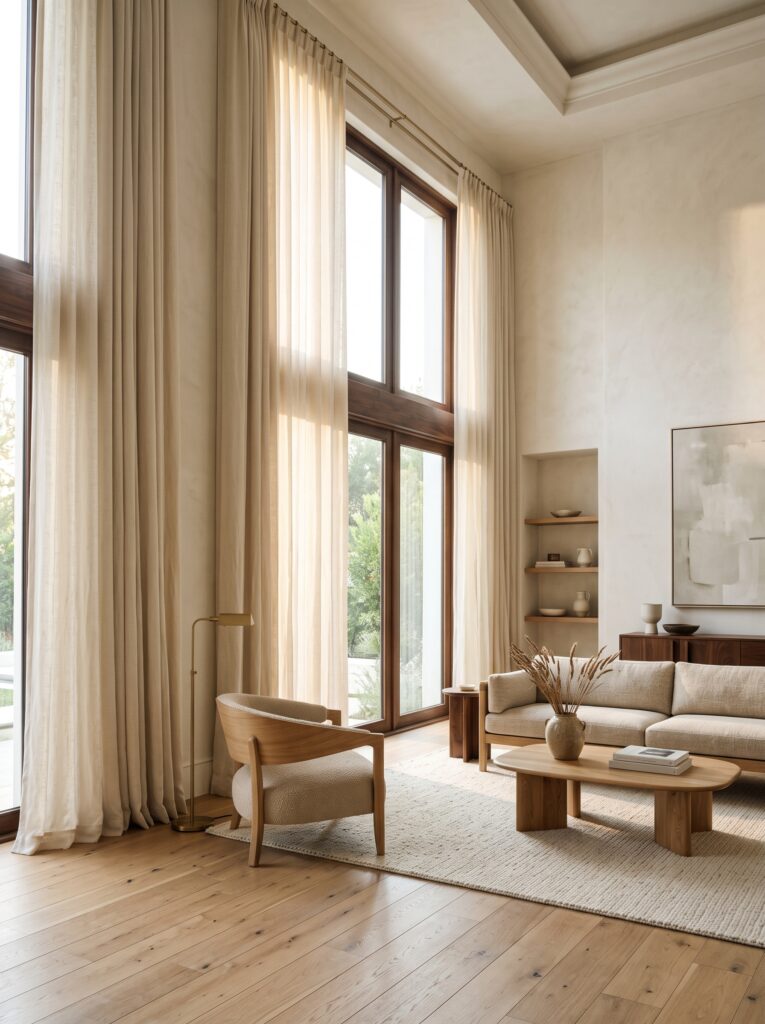
Instead of placing a curtain rod directly above the window, mounting the hardware closer to the ceiling and allowing the fabric to extend all the way to the floor creates long vertical lines throughout the room. This simple decorating technique can make windows appear larger, ceilings feel taller, and an ordinary room look significantly more polished.
For homeowners in the United States who want an affordable interior upgrade without replacing furniture or undertaking a major renovation, ceiling-height curtains are an especially useful design trick.
Why Ceiling-to-Floor Curtains Make Such a Difference
The human eye naturally follows vertical lines upward.
When curtains begin near the ceiling and continue uninterrupted toward the floor, they emphasize the full height of the wall rather than stopping at the window.
This can create the impression of:
- Taller ceilings
- Larger windows
- Longer walls
- More elegant proportions
- A more finished interior
Even a room with standard eight-foot ceilings can benefit from this approach.
The effect becomes especially dramatic in homes with nine- or ten-foot ceilings, vaulted spaces, or large windows.
Hang Curtains Higher Than the Window Frame
One of the most common curtain mistakes is mounting the rod immediately above the window.
Although this may seem logical, it can visually shorten the wall.
Instead, install the curtain hardware several inches below the ceiling or as high as the architecture allows.
In rooms with crown molding, work around the existing architectural details rather than covering them.
The goal is to create a strong vertical line from the upper part of the wall to the floor.
Let the Curtains Reach the Floor
For an elegant appearance, curtains should generally extend all the way to the floor.
Curtains that stop several inches above the floor can make a room feel unfinished.
There are several popular approaches to the bottom hem.
Clean Floor-Length Curtains
The fabric ends just at or slightly above the floor.
This creates a clean, tailored appearance and works especially well in modern and transitional interiors.
Slight Break
The curtain fabric touches the floor and creates a very small fold.
This provides a relaxed appearance without looking messy.
Dramatic Puddle
Extra fabric extends onto the floor and creates a more romantic, traditional look.
This works best in formal rooms where the curtains are not frequently opened and closed.
For everyday American homes, a clean floor-length or slight-break style is usually the easiest to maintain.
Choose the Right Fabric
The fabric dramatically affects the overall appearance of your curtains.
Linen
Linen is one of the most versatile options.
Its natural texture creates a relaxed and sophisticated appearance and works beautifully with:
- Coastal interiors
- Organic modern homes
- Modern farmhouse design
- Transitional interiors
- Minimalist spaces
Cotton
Cotton curtains are practical, lightweight, and available in many colors and patterns.
They are particularly useful for casual bedrooms, kitchens, and family spaces.
Velvet
Velvet creates a more dramatic and luxurious appearance.
It works beautifully in:
- Dining rooms
- Formal living spaces
- Bedrooms
- Moody interiors
Sheer Fabric
Sheer curtains allow natural light to pass through while providing softness and privacy.
They can also be layered underneath heavier curtains.
Layer Sheer and Blackout Curtains
One of the most functional approaches is layering two curtain types.
A sheer layer provides daytime privacy and filters sunlight.
A heavier outer curtain can provide:
- Better light control
- Privacy at night
- Insulation
- A more luxurious appearance
This combination is especially useful in bedrooms and street-facing rooms.
Use a double curtain rod or a properly designed track system to create separate layers.
Neutral Curtains for a Timeless Look
If you want your home to feel sophisticated and timeless, neutral curtains are an excellent choice.
Popular shades include:
- Warm white
- Ivory
- Cream
- Oatmeal
- Beige
- Taupe
- Soft gray
Neutral curtains can blend with a wide range of furniture and wall colors.
They also allow architectural details and artwork to remain the focus of the room.
Add Color With Curtains
Curtains can also be an opportunity to introduce personality.
Instead of painting an entire room, use curtains to bring in color.
Consider:
- Dusty blue
- Olive green
- Terracotta
- Chocolate brown
- Soft pink
- Deep navy
- Muted mustard
For a sophisticated result, choose colors that already appear elsewhere in the room.
For example, olive curtains can connect with a green accent chair or botanical artwork.
Patterned Curtains Can Transform a Room
If your furniture is relatively simple, patterned curtains can create a dramatic focal point.
Classic patterns include:
- Stripes
- Florals
- Checks
- Plaid
- Geometric prints
- Subtle botanical motifs
Vertical stripes can emphasize height even further.
However, if the room already contains several patterns, choose a simpler curtain design to prevent visual competition.
Use Curtain Hardware Strategically
Curtain hardware should support the design rather than distract from it.
Popular finishes include:
- Black
- Brass
- Antique brass
- Bronze
- Chrome
- Natural wood
For a traditional interior, antique brass can add warmth.
For a modern home, black hardware creates a crisp architectural appearance.
If you want the hardware to disappear, choose a finish that closely matches the wall or curtain color.
Ceiling-Mounted Curtain Tracks
For an especially clean and modern look, consider ceiling-mounted curtain tracks.
These allow the fabric to appear as though it is emerging directly from the ceiling.
The result is minimal and architectural.
Ceiling-mounted tracks work especially well in:
- Contemporary homes
- Minimalist bedrooms
- Large window walls
- Open-concept spaces
- Rooms with very tall ceilings
They can also be useful when conventional curtain rods would interfere with architectural details.
Make Small Rooms Feel More Spacious
Ceiling-to-floor curtains are particularly useful in smaller homes and apartments.
Because the fabric emphasizes vertical height, it can make a compact room feel more elongated.
Choose lightweight curtains in a light color and avoid extremely heavy patterns.
Keeping the curtain color relatively close to the wall color can also create a seamless appearance.
This reduces visual interruptions and makes the wall feel larger.
Use Curtains to Frame Large Windows
Large windows deserve equally thoughtful treatment.
Instead of covering the glass completely, extend the curtain panels beyond the window frame.
When the curtains are open, they should sit outside the window whenever possible.
This allows the full window to remain visible and makes it appear wider.
It also prevents fabric from unnecessarily blocking natural light.
Curtains for Bedrooms
In bedrooms, ceiling-to-floor curtains can create a soft and relaxing atmosphere.
Choose linen, cotton, or velvet depending on your desired style.
Layer blackout panels behind decorative curtains if you need better sleep-friendly light control.
Warm neutral colors work especially well because they create a calm visual environment.
You can coordinate the curtains with:
- Bedding
- Upholstered furniture
- Rugs
- Accent pillows
- Wall colors
The result is a cohesive bedroom rather than a collection of unrelated elements.
Curtains for Dining Rooms
Dining rooms are ideal for more dramatic window treatments.
Consider richer fabrics or subtle patterns to create a sophisticated entertaining environment.
Velvet, linen blends, and patterned cotton can all work beautifully.
Pair them with warm pendant lighting, wood furniture, and elegant artwork for a polished look.
Curtains for Living Areas
In large living spaces, curtains can soften architectural lines and make the room feel more welcoming.
Use oversized panels to frame windows and create a sense of scale.
If your living room has neutral furniture, curtains can introduce texture or color without requiring a major redesign.
For open-concept homes, coordinating curtains across multiple windows can help visually connect different areas.
Curtains in Rental Homes
Even renters can use this design technique.
If drilling into walls is not permitted, tension-based or removable curtain hardware may be an option depending on the window and lease requirements.
Another possibility is using tall freestanding curtain structures where appropriate.
Always check rental rules before installing permanent hardware.
Common Curtain Mistakes to Avoid
Avoid hanging curtains too low.
Avoid curtains that stop awkwardly above the floor.
Avoid choosing panels that are too narrow for the window.
Avoid placing the curtain rod exactly the same width as the window if there is enough wall space to extend it.
Also avoid selecting fabric solely because it looks attractive online. Texture, thickness, light filtration, and actual color can look very different in your room.
Whenever possible, order fabric samples before purchasing large curtain panels.
How Wide Should Curtains Be?
Curtain fullness matters.
A curtain panel that is too narrow can look flat and inexpensive even when the fabric itself is high quality.
For a fuller appearance, the total curtain width should generally provide enough extra fabric to create soft folds when closed.
The exact amount depends on the fabric and desired style.
Lightweight sheers usually benefit from more fullness than heavier fabrics.
How to Make Curtains Look More Expensive
You do not necessarily need luxury curtains to achieve a luxury appearance.
Focus on installation and proportions.
A moderately priced curtain can look significantly more expensive when:
- It is hung high
- It reaches the floor
- It has generous width
- The fabric has a good texture
- The hardware is appropriate
- The panels are properly steamed or pressed
Good installation often makes a bigger difference than choosing the most expensive fabric.
Conclusion
Ceiling-to-floor curtains are one of the easiest ways to create a more polished and sophisticated home without replacing your existing furniture. By extending the fabric from near the ceiling to the floor, you can emphasize vertical height, make windows appear larger, soften hard architectural lines, and give your rooms a beautifully finished appearance.
Whether you prefer relaxed linen, luxurious velvet, lightweight sheers, classic cotton, or subtle patterned fabric, the right curtains can completely change the atmosphere of a space.
For American homeowners looking for practical yet elegant window treatment ideas, this simple design upgrade is worth considering. Instead of treating curtains as an afterthought, use them as an architectural element that helps define the proportions, mood, and personality of the entire room.
- Afrohemian Dining Room Ideas for a Warm, Collected and Sophisticated Home
- Warm Wood and Black Kitchen Ideas for a Timeless Designer Look
- Small Reading Nook Ideas That Turn Forgotten Corners Into a Cozy Luxury Retreat
- Curated Trinket Shelf Ideas: How to Create a Collected and Personal Home
- Neo Deco Entryway Ideas That Make Your Home Feel Instantly Expensive