
Radiators are practical, but they are not always the most attractive feature in a home. Especially in older American houses, historic properties, apartments, and traditional interiors, a radiator can become an obvious visual interruption against an otherwise carefully decorated wall.
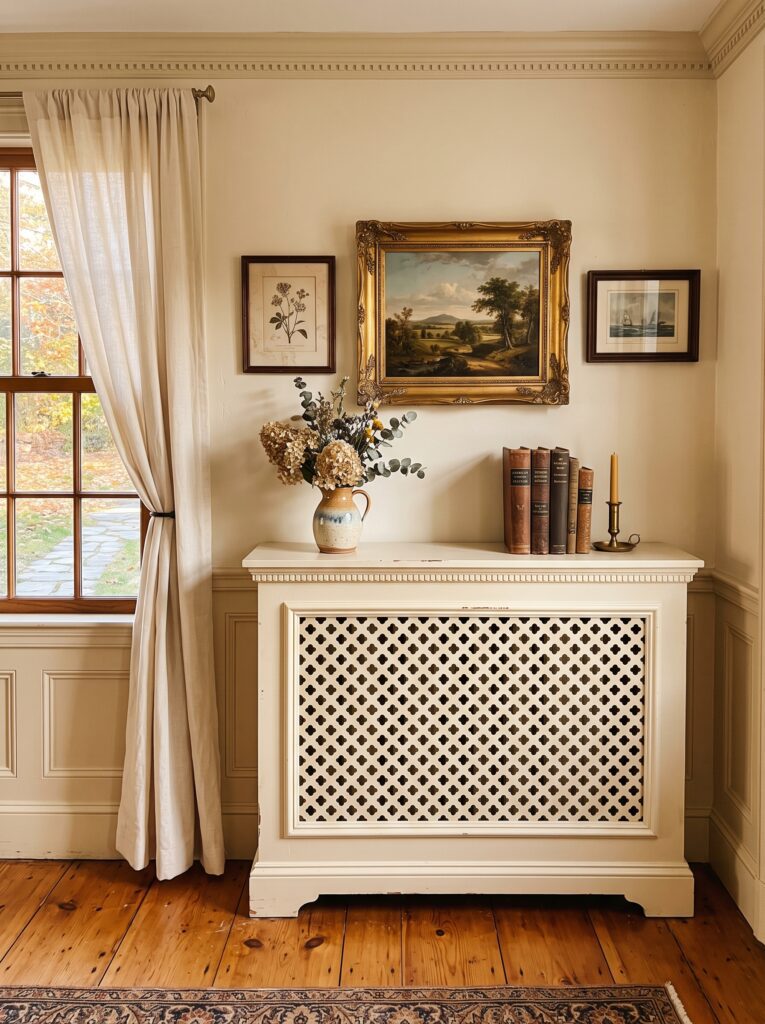
Instead of trying to hide it completely, homeowners can turn this functional element into part of the room’s design with a decorative radiator cover.
A thoughtfully designed radiator cover can make the feature look intentional while adding architectural character to the surrounding space. With the right material, pattern, color, and styling, an ordinary radiator can become an elegant detail that complements the home’s overall aesthetic.
What Is a Decorative Radiator Cover?
A decorative radiator cover is a ventilated enclosure designed to visually conceal a radiator while allowing heat to circulate appropriately.
Unlike simply placing furniture in front of a radiator, a properly designed cover can integrate the radiator into the architecture of the room.
Common styles include:
- Traditional lattice covers
- Geometric metal screens
- Cane panels
- Wood grille designs
- Painted MDF or wood covers
- Custom built-in designs
- Decorative perforated panels
The style you choose should complement the architecture and interior design of your home.
Why Radiator Covers Are Becoming a Design Opportunity
Interior design has increasingly moved toward making practical features feel intentional.
Instead of hiding everything, designers are finding ways to incorporate functional elements into the visual language of a home.
Radiator covers fit perfectly into this approach.
A well-designed cover can:
- Conceal an unattractive radiator
- Add architectural detail
- Create visual symmetry
- Provide a decorative surface
- Complement existing trim
- Make an older home feel more polished
However, the primary consideration should always be safe heat circulation and manufacturer requirements.
A radiator should never simply be enclosed in an improvised box without considering ventilation, clearances, and the type of heating system.
Traditional White Radiator Covers
One of the most timeless choices is a simple painted white radiator cover.
This works particularly well in traditional American homes with:
- White trim
- Crown molding
- Panel molding
- Classic doors
- Light-colored walls
A white cover can visually blend into the architecture.
Instead of drawing attention to the radiator, it makes the feature appear like part of the home’s original millwork.
Add a Decorative Grille
The grille is often the most visually important part of a radiator cover.
Traditional interiors can benefit from decorative lattice patterns, while contemporary spaces may look better with simple geometric openings.
Popular patterns include:
- Diamond
- Square
- Rectangular
- Circular
- Floral
- Repeating geometric designs
The grille should provide the necessary airflow while complementing the design of the room.
Cane Radiator Covers
Cane detailing can bring softness and texture to a radiator cover.
The natural woven pattern works beautifully with warm wood furniture, linen upholstery, woven baskets, and other organic materials.
A cane radiator cover can be especially attractive in:
- Organic modern interiors
- Transitional homes
- Cottage-inspired spaces
- Vintage interiors
- Warm minimalist rooms
Natural cane can also make a practical feature feel more decorative and handcrafted.
Wood Radiator Covers
Natural wood can create a more substantial architectural appearance.
Walnut, oak, maple, and painted wood can all be used depending on the interior.
Warm walnut can create a sophisticated traditional look.
Light oak works beautifully in organic modern spaces.
Painted wood can make the radiator cover blend into existing trim.
If your home already contains substantial woodwork, matching or coordinating the wood finish can create continuity.
Match the Existing Trim
One of the easiest ways to make a radiator cover look custom is to match it to the surrounding architectural details.
Look at the:
- Baseboards
- Door trim
- Window casing
- Built-in cabinets
- Wall molding
If these elements are painted white, a white radiator cover may disappear into the architecture.
If your home has dark stained wood trim, a coordinating wood finish may be more appropriate.
The objective is to make the radiator cover look as though it belongs in the original architecture.
Create a Built-In Look
A custom radiator cover can be incorporated into a larger wall design.
For example, a radiator could become part of a built-in arrangement featuring:
- Shelving
- Wall molding
- Cabinets
- Artwork
- Decorative panels
This approach works particularly well when the radiator is positioned along a large empty wall.
Rather than treating the radiator as an isolated object, integrate it into the entire wall composition.
Style the Wall Above It
The space above the radiator can become an important part of the design.
You could hang:
- A large painting
- Vintage artwork
- A mirror
- Botanical prints
- Family photographs
- A decorative wall panel
A large piece of artwork above the cover can create a strong focal point.
However, make sure decorative objects and artwork are positioned with appropriate clearance from the heating source.
Use a Mirror to Add Light
A mirror above a radiator cover can make the area feel brighter and more sophisticated.
This works particularly well in hallways, dining rooms, and smaller rooms.
Choose a mirror that complements the architecture.
For traditional interiors, an antique-style mirror can look beautiful.
For contemporary spaces, a simple rounded or rectangular mirror may be more appropriate.
Radiator Covers in Historic Homes
Older American homes often have architectural details that are difficult to reproduce.
Rather than replacing the radiator or trying to make it disappear completely, a custom cover can help preserve the historic character while making the room more visually cohesive.
Traditional grille patterns, painted finishes, and classic molding can work especially well in historic interiors.
The goal should be to complement the home’s original architecture rather than introduce a completely unrelated modern element.
Modern Radiator Cover Designs
Radiator covers do not have to look traditional.
Modern designs can use:
- Minimal geometric patterns
- Matte metal
- Simple wood slats
- Flat-panel construction
- Neutral finishes
- Clean architectural lines
A minimalist cover can visually disappear while still adding texture.
For a modern home, avoid overly ornate detailing unless it intentionally contrasts with the rest of the space.
Turn It Into a Decorative Feature
Another approach is to stop thinking about the radiator as something that needs to be hidden.
Instead, make the cover itself beautiful.
For example, a custom painted cover in a rich color can become a design feature.
Consider colors such as:
- Deep olive
- Warm taupe
- Navy
- Chocolate brown
- Soft black
- Muted blue
If the radiator cover matches the wall color, it becomes more architectural.
If it contrasts with the wall, it becomes more of a focal point.
Radiator Covers in Bedrooms
In bedrooms, radiator covers can help create a more polished appearance around heating units.
A simple painted cover can blend into the wall while maintaining a clean visual environment.
Pair it with soft textiles, natural wood, and simple artwork to keep the room calm.
Because bedrooms often contain textiles and furniture close to heating sources, appropriate safety clearances and airflow are especially important.
Radiator Covers in Dining Rooms
Dining rooms can benefit from decorative radiator covers because the walls are often visible from multiple angles.
A radiator beneath or near a window can be integrated into the overall composition with matching trim and artwork.
A classic grille paired with traditional dining furniture can create a beautiful cohesive look.
Radiator Covers in Hallways
Hallways are often narrow and difficult to decorate.
A radiator can make the space feel even more visually crowded.
A slim, custom radiator cover can create a cleaner appearance.
Pair it with a mirror, artwork, or narrow decorative wall treatment.
Avoid adding bulky furniture directly around the radiator because hallways need to maintain clear circulation.
Choosing the Right Color
The color of your radiator cover depends on the effect you want.
Match the Wall
This creates a seamless architectural appearance.
Match the Trim
This makes the radiator cover feel like part of the home’s millwork.
Use a Contrasting Color
This turns the radiator cover into a decorative feature.
Use Natural Wood
This adds warmth and texture.
Think about the entire room rather than selecting the color in isolation.
Safety Should Always Come First
A decorative radiator cover should never interfere with the safe operation of the heating system.
Before installing one, determine what type of radiator or heating system you have and follow the manufacturer’s guidance.
Important considerations can include:
- Required clearances
- Airflow
- Heat output
- Material suitability
- Access for maintenance
- Temperature around nearby materials
Never block vents or create an enclosure that could cause overheating.
If you are unsure about the design, consult a qualified professional familiar with your heating system.
Common Radiator Cover Mistakes
One common mistake is choosing a cover purely for appearance.
A beautiful cover that restricts airflow is not a good design solution.
Another mistake is making the cover too bulky for a small room.
You should also avoid placing highly heat-sensitive objects immediately on or near the radiator.
Finally, make sure the cover can be removed or opened if the radiator requires maintenance.
How to Make a Radiator Cover Look Expensive
You do not need an elaborate custom design to achieve a high-end appearance.
Focus on:
- Accurate proportions
- Quality materials
- Clean edges
- Coordinated colors
- Appropriate grille patterns
- Professional installation
A simple white cover with elegant detailing can look more sophisticated than an overly complicated design.
The surrounding styling also matters.
Pair the cover with thoughtful artwork, architectural trim, beautiful flooring, and appropriate lighting.
Conclusion
A radiator doesn’t have to be the visual problem in an otherwise beautiful room. With a carefully designed decorative radiator cover, this practical feature can become an intentional part of the home’s architecture.
Whether you prefer classic latticework, natural cane, warm wood, minimalist geometric patterns, or a simple painted finish, there are countless ways to make a radiator complement your interior.
The most successful designs balance beauty, proportion, ventilation, and practicality. Instead of simply hiding the radiator, think about how the cover can connect with the room’s existing trim, materials, colors, and architectural character.
For homeowners renovating an older American house or simply looking for a creative home improvement idea, a well-designed radiator cover can provide a surprisingly effective transformation—making an unavoidable functional feature feel like it was always meant to be there.
- Afrohemian Dining Room Ideas for a Warm, Collected and Sophisticated Home
- Warm Wood and Black Kitchen Ideas for a Timeless Designer Look
- Small Reading Nook Ideas That Turn Forgotten Corners Into a Cozy Luxury Retreat
- Curated Trinket Shelf Ideas: How to Create a Collected and Personal Home
- Neo Deco Entryway Ideas That Make Your Home Feel Instantly Expensive