
A staircase is often one of the first architectural features people notice when they enter a home, yet it is frequently overlooked when decorating. Instead of treating the staircase as simply a functional connection between floors, homeowners can turn it into a dramatic design feature that adds character, sophistication, and visual value to the entire house.
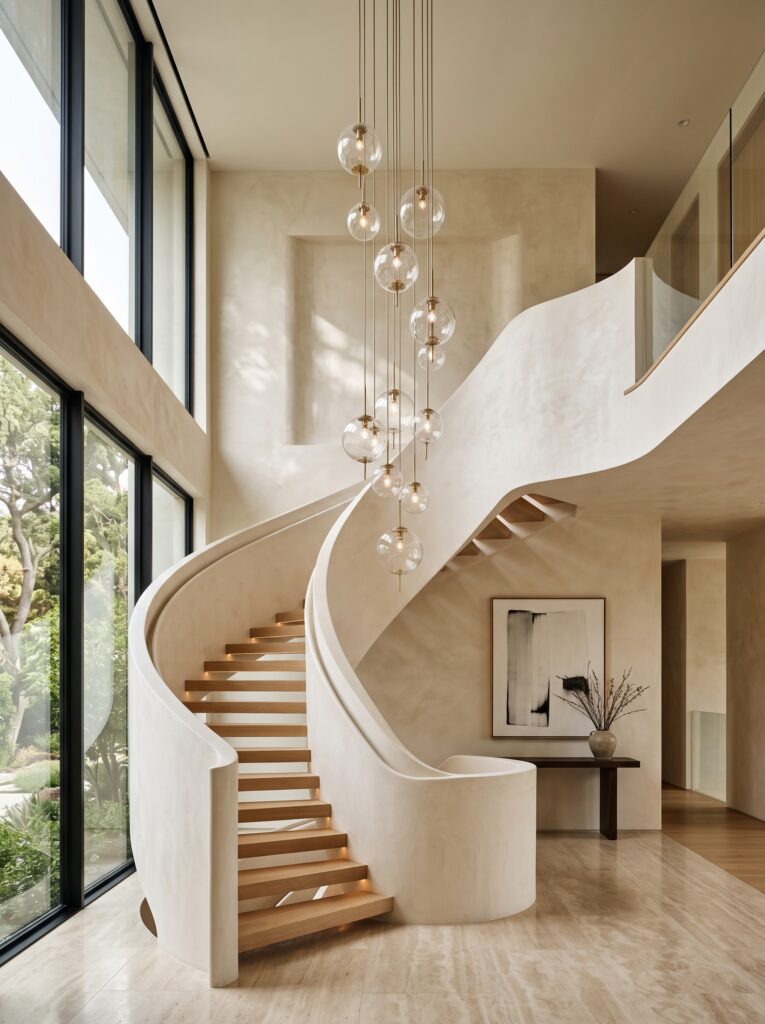
A statement staircase can completely transform an entryway, especially in homes with open floor plans, high ceilings, or visible staircases near the front door. From sculptural railings and natural wood steps to dramatic pendant lighting and textured walls, there are countless ways to make a staircase feel intentional and luxurious.
For homeowners searching for staircase ideas, entryway design ideas, luxury home inspiration, modern staircase designs, and interior architecture inspiration, these concepts offer practical ways to create a staircase that looks custom-designed while remaining connected to the overall style of the home.
Why the Staircase Matters in Home Design
The staircase occupies a surprisingly large visual area.
Because it connects multiple levels, it naturally draws the eye upward and can influence how the entire entryway feels. A beautifully designed staircase can make a home appear taller, brighter, more architectural, and more sophisticated.
This is particularly important in open-concept American homes where the staircase may be visible from the entryway, living room, or dining area.
Instead of adding random decorations around the staircase, consider the staircase itself as part of the home’s architecture.
The railing, steps, lighting, walls, and surrounding flooring should work together to create a cohesive composition.
Choose Natural Wood Stair Treads
Natural wood is one of the most timeless materials for staircase design.
Oak, walnut, white oak, and other warm wood finishes can bring depth and character to an otherwise neutral interior.
For a contemporary home, simple floating or open-riser steps can create a light architectural appearance. In more traditional homes, solid wood stair treads paired with painted risers can provide a classic look.
The important factor is coordination.
Choose a wood tone that complements the flooring or other wood elements throughout the home rather than introducing an unrelated finish.
Make the Railing a Design Feature
The railing can completely change the personality of a staircase.
A traditional staircase might feature turned wood spindles, while a modern design may use slim metal balusters, glass panels, or a sculptural curved railing.
For a luxury contemporary aesthetic, a minimalist railing can be especially effective.
A curved plaster or wood handrail can create a softer architectural appearance, while slim black metal can introduce contrast.
If the staircase is already visually impressive, keep the railing relatively simple so that the architecture remains the focal point.
Consider a Sculptural Curved Staircase
Curved staircases can create an especially dramatic entrance.
Their flowing shape naturally draws attention and can make a large foyer feel more elegant.
A curved staircase works particularly well in homes with high ceilings because it fills vertical space without appearing heavy.
If a complete staircase renovation is not practical, you can borrow the curved aesthetic through a rounded handrail, curved wall treatment, or arched architectural opening nearby.
This can create a softer, more contemporary appearance without completely rebuilding the staircase.
Add a Dramatic Pendant Light
Lighting can make an enormous difference in staircase design.
A dramatic pendant or chandelier hanging over the stairwell can create a beautiful focal point, especially in a two-story entryway.
Look for sculptural fixtures that complement the architectural style of the house.
A large linear chandelier can work well in a modern interior, while an aged-brass or glass fixture may suit a more traditional or transitional home.
The scale of the light is important.
A tiny fixture can disappear in a large stairwell, while an oversized fixture can create an intentional sense of drama.
Use the Vertical Wall Space
Staircase walls provide a valuable opportunity for design.
Instead of leaving them completely empty, consider adding artwork, architectural molding, paneling, or textured finishes.
A large piece of artwork positioned along a staircase wall can create a sophisticated gallery-like atmosphere.
For a quieter look, consider subtle plaster texture or warm wall paneling.
The goal is to complement the staircase rather than competing with it.
Create a Gallery Staircase
A staircase can become a natural location for displaying artwork and family photographs.
For a modern home, use a small collection of coordinated frames with generous spacing.
For a more collected aesthetic, combine vintage frames, photography, sketches, and artwork of different sizes.
The arrangement should follow the movement of the staircase.
Instead of placing every frame at exactly the same height, create a composition that visually moves upward with the steps.
This makes the gallery feel connected to the architecture.
Try Wall Molding for a Classic Look
Wall molding can add instant architectural character.
Picture-frame molding, vertical paneling, beadboard, or traditional trim can make a staircase feel more established and custom-designed.
This works particularly well in transitional and traditional American homes.
For a contemporary interpretation, paint the molding and wall in the same color.
The subtle variation in shadow and texture provides interest without creating excessive contrast.
Create a Minimalist Staircase
Minimalism can be extremely effective when the staircase itself has strong architectural proportions.
Use clean lines, natural materials, simple railings, and minimal decoration.
A minimalist staircase does not mean the space has to feel empty.
Instead, the focus shifts toward materials, geometry, natural light, and craftsmanship.
A warm wood staircase combined with creamy plaster walls and one sculptural light fixture can create a sophisticated, timeless composition.
Use Black for Contrast
Black accents can give a staircase a more dramatic appearance.
A black railing, metal balusters, or dark stair treads can create contrast against light walls.
This approach works particularly well in contemporary and modern interiors.
However, black does not need to dominate the space.
Even a small amount of black can provide enough contrast to define the staircase.
Pair it with warm wood and neutral walls to prevent the space from feeling too stark.
Bring Warmth With Neutral Tones
Neutral colors are especially effective around staircases because they allow architectural details to remain visible.
Warm white, cream, beige, taupe, and soft gray can create a sophisticated backdrop for wood and metal.
If your staircase is already visually strong, avoid introducing a complicated wall color.
Instead, let the materials and shape of the staircase provide the drama.
Use Lighting Along the Steps
Integrated staircase lighting can create a high-end architectural effect.
Small recessed lights beneath steps, along the wall, or underneath handrails can provide subtle illumination at night.
This is particularly useful for homes where the staircase is used frequently after dark.
Warm lighting can make natural wood and textured walls appear especially inviting.
When planning staircase lighting, prioritize safety and proper installation. Decorative lighting should enhance the design while providing adequate visibility.
Highlight a Double-Height Entryway
Homes with double-height entryways offer a unique opportunity to make the staircase a major architectural statement.
A tall staircase combined with a dramatic pendant light, large-scale artwork, and oversized windows can create an impressive first impression.
The key is to balance scale.
Large spaces require appropriately sized furniture, lighting, and artwork.
Small decorative pieces may look lost in a double-height foyer.
Instead, choose fewer elements with stronger visual presence.
Add a Runner for Traditional Elegance
Not every statement staircase needs to be modern.
A beautiful stair runner can create an elegant and timeless appearance.
Neutral runners with subtle patterns can add softness while protecting the steps.
For a more traditional home, consider classic patterns and natural fibers.
For a contemporary interior, a simple textured runner can provide warmth without overwhelming the architecture.
The runner should complement the surrounding flooring and color palette.
Create an Organic Modern Staircase
Organic modern design combines clean architecture with natural materials.
For a staircase, this might mean warm oak steps, soft plaster walls, natural stone flooring, and a simple sculptural railing.
Add a large indoor plant nearby to reinforce the connection with nature.
This style is especially effective when you want a home to feel luxurious but relaxed.
The result should feel sophisticated without becoming overly formal.
Use Textured Plaster Walls
Smooth painted walls can sometimes make a staircase feel flat.
Textured plaster can add depth and subtle visual movement.
Warm plaster finishes are particularly beautiful with natural wood and soft lighting.
The texture doesn’t need to be dramatic.
A subtle limewash or plaster-inspired finish can create enough variation to make the wall feel more architectural.
Add a Statement Mirror
A large mirror can work beautifully near a staircase, especially in a smaller foyer.
It can reflect natural light and make the entryway feel more open.
Choose a mirror with an interesting shape or frame.
An oversized arched mirror can soften a contemporary space, while a vintage-inspired framed mirror can add character to a traditional interior.
Position it where it can reflect light or an attractive part of the room rather than a cluttered area.
Coordinate the Staircase With the Entryway
The staircase should not look disconnected from the rest of the foyer.
Think about how the stair materials relate to:
- Entryway flooring
- Front door
- Wall color
- Lighting
- Furniture
- Artwork
- Hardware
- Nearby architectural details
A cohesive material palette makes the entire entry feel more expensive and intentional.
For example, warm oak stairs can be repeated through a console table, while brass lighting can coordinate with door hardware.
Make the Staircase Feel Expensive Without a Major Renovation
A complete staircase renovation can be expensive, but there are smaller changes that can make a significant visual difference.
Consider updating the railing, replacing an outdated light fixture, painting the walls, adding architectural molding, upgrading the runner, or introducing a large piece of artwork.
Sometimes simply removing visual clutter can make the staircase feel dramatically more sophisticated.
Focus on the elements that occupy the most visual space.
Don’t Overdecorate the Staircase
One common mistake is adding too many decorative elements.
The staircase is already a strong architectural feature.
You don’t need to place plants, baskets, signs, artwork, furniture, and accessories everywhere.
Instead, select one or two focal elements.
For example, a dramatic chandelier and a beautiful textured wall may be enough.
Luxury interiors often feel sophisticated because they allow architecture and materials to speak for themselves.
Think About the View From Different Angles
Before finalizing your staircase design, look at it from different parts of the home.
How does it appear from the front door?
What does it look like from the living room?
Can it be seen from upstairs?
Does the lighting create attractive shadows at night?
Because staircases connect multiple areas, they should look good from several viewpoints.
This is especially important in open-plan homes.
Add Greenery for a Softer Appearance
A staircase can sometimes feel very architectural and hard because of the combination of wood, stone, metal, and plaster.
Greenery can soften the space.
A tall indoor tree near the bottom of the staircase can create a beautiful focal point.
For smaller spaces, a simple plant on a nearby console can be enough.
Choose planters that complement the home’s materials.
Stone, ceramic, woven, and natural wood planters can work particularly well.
Consider the Psychology of the Entryway
The entrance of a home establishes the mood for everything that follows.
A cluttered staircase can make the entire home feel chaotic.
A clean, thoughtfully designed staircase can make the house feel calmer and more organized.
This is why staircase design is not simply about aesthetics.
It is also about creating a welcoming transition between the outside world and the interior of your home.
Conclusion
A statement staircase can completely change the appearance of an entryway and become one of the most memorable features of a home. Whether you prefer modern minimalism, organic modern design, traditional elegance, or contemporary luxury, the staircase offers countless opportunities to express your personal style.
Start with the architectural elements that matter most: the steps, railing, walls, and lighting. Then add supporting details such as artwork, greenery, runners, or mirrors. Focus on proportion, material quality, and visual balance rather than simply adding more decoration.
The most beautiful staircase designs feel intentional from every angle. They connect naturally with the entryway and surrounding rooms while adding their own sense of character. With thoughtful materials, sophisticated lighting, and restrained styling, even an ordinary staircase can become a striking architectural feature that makes the entire home feel more elevated.
- Afrohemian Dining Room Ideas for a Warm, Collected and Sophisticated Home
- Warm Wood and Black Kitchen Ideas for a Timeless Designer Look
- Small Reading Nook Ideas That Turn Forgotten Corners Into a Cozy Luxury Retreat
- Curated Trinket Shelf Ideas: How to Create a Collected and Personal Home
- Neo Deco Entryway Ideas That Make Your Home Feel Instantly Expensive