
If you’re looking for a home decorating style that feels warm, artistic, expressive, and deeply personal, Afrohemian home decor offers a beautiful alternative to overly coordinated interiors. This aesthetic combines natural materials, earthy colors, organic textures, handcrafted accents, expressive artwork, sculptural objects, and globally inspired details to create a home that feels collected rather than manufactured.
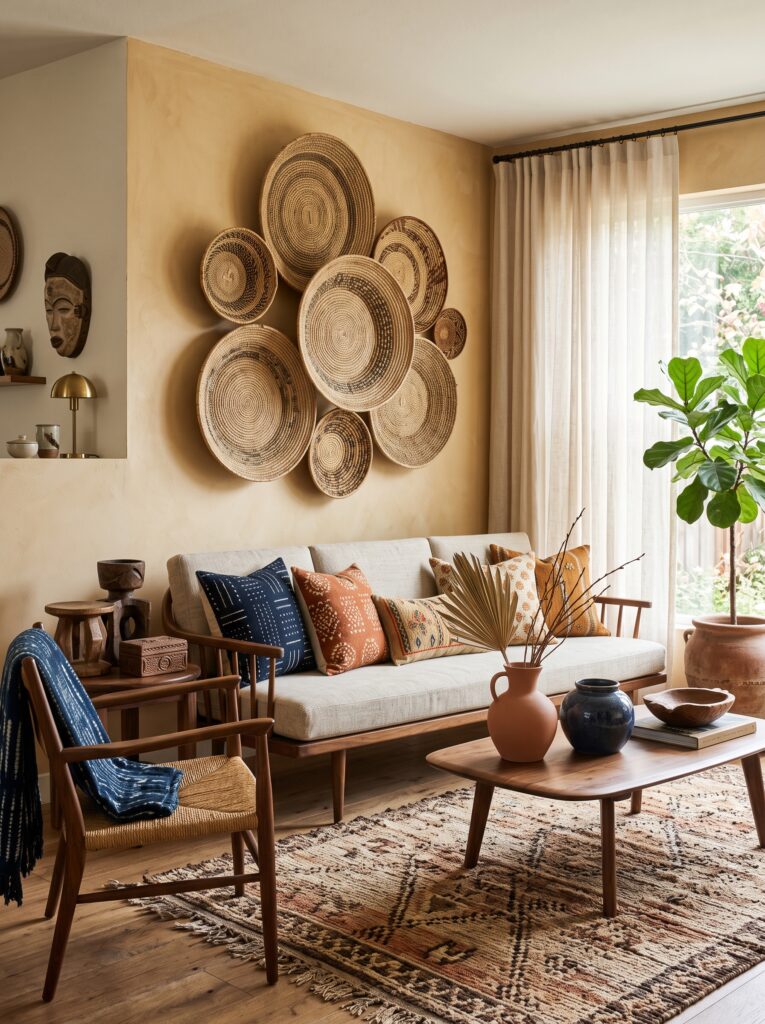
Unlike minimalist interiors where every object may be carefully hidden or reduced, Afrohemian decorating embraces texture, personality, and visual storytelling. The goal is not to fill every corner with accessories. Instead, it’s about choosing meaningful-looking pieces and combining them in a way that creates warmth and character.
Whether you’re decorating a living room, bedroom, entryway, home office, or apartment, Afrohemian style can make an ordinary space feel much more distinctive.
What Is Afrohemian Home Decor?
Afrohemian home decor blends African-inspired visual elements with the relaxed, layered character of bohemian interior design.
The style commonly features:
- Natural wood
- Woven baskets
- Handcrafted ceramics
- Earthy textiles
- Organic shapes
- Sculptural accessories
- Patterned fabrics
- Rich neutral colors
- Indigo-inspired accents
- Terracotta tones
- Natural fibers
- Artistic wall decor
- Layered textures
The result is an interior that feels warm, creative, relaxed, and collected.
The most important thing to understand is that Afrohemian decor isn’t about filling your home with random “boho” accessories. A sophisticated interpretation focuses on craftsmanship, texture, balance, and intentional styling.
Why Afrohemian Decor Feels So Warm
One reason this decorating style works so well is its emphasis on natural materials.
Wood, woven fibers, linen, clay, stone, leather, and cotton introduce tactile variation. Instead of relying entirely on color, the room gets visual interest from the materials themselves.
For example, imagine a neutral living room with:
- A warm wooden coffee table
- A textured cream sofa
- A woven basket
- A patterned rug
- A sculptural ceramic vase
- A natural fiber pendant
- A large piece of expressive artwork
Even though the overall palette may remain relatively neutral, the different textures prevent the room from feeling flat.
1. Start With an Earthy Color Palette
A warm color palette is one of the easiest ways to establish an Afrohemian atmosphere.
Consider shades such as:
- Terracotta
- Clay
- Burnt orange
- Warm beige
- Camel
- Chocolate brown
- Cream
- Ochre
- Deep olive
- Muted rust
- Indigo
You don’t need to use every shade.
A sophisticated room might use cream and warm beige as the foundation, walnut furniture as the anchor, and terracotta or indigo as small accents.
This creates depth without making the room visually overwhelming.
2. Layer Natural Wood Throughout the Room
Natural wood is one of the strongest materials for this style.
Choose furniture with visible grain whenever possible.
Consider:
- Walnut coffee tables
- Oak consoles
- Wooden stools
- Carved side tables
- Teak benches
- Wood-framed mirrors
- Sculptural wooden accessories
Don’t worry if every wood piece isn’t identical.
A collected interior can actually benefit from subtle differences in wood tone and texture.
The important thing is maintaining an overall warm appearance.
3. Use Woven Baskets as Statement Decor
Woven baskets can serve both decorative and functional purposes.
Instead of treating baskets as simple storage containers, consider using one as a major visual element.
A large woven basket can be placed beside a sofa, underneath a console table, near an entryway, or in an empty bedroom corner.
Use smaller baskets for:
- Blankets
- Towels
- Magazines
- Toys
- Laundry
- Accessories
Natural woven materials add texture without introducing another strong color.
4. Create a Statement Wall With Texture
A textured wall can dramatically change the atmosphere of a room.
You could use:
- Woven wall baskets
- Textile art
- Abstract artwork
- Natural fiber pieces
- Sculptural wall decor
- Wood panels
- Handcrafted objects
Instead of creating a symmetrical gallery wall, experiment with different sizes and shapes.
One large statement piece can sometimes look more sophisticated than ten small decorations.
5. Introduce Indigo Accents
Indigo is a particularly beautiful accent for warm earthy interiors because it creates contrast.
You can introduce it through:
- Throw pillows
- Blankets
- Rugs
- Artwork
- Curtains
- Upholstery
- Decorative textiles
Keep the rest of the room relatively warm and neutral so the indigo becomes an intentional focal point.
For example, a cream sofa with terracotta pillows and one indigo patterned cushion can create a layered but balanced appearance.
6. Mix Patterns Carefully
Afrohemian interiors can include beautiful patterns, but pattern mixing requires restraint.
Instead of combining several highly contrasting patterns, choose one dominant pattern and support it with simpler textures.
For example:
Main pattern:
Bold geometric rug
Secondary pattern:
Subtle pillow pattern
Supporting textures:
Linen, woven baskets, wood, and ceramic
This creates visual interest without making the room chaotic.
7. Add Sculptural Ceramics
Ceramics are an excellent way to bring an artistic quality into Afrohemian interiors.
Look for pieces with:
- Organic shapes
- Matte finishes
- Earthy colors
- Handmade appearance
- Irregular silhouettes
A large ceramic vase can sit on a console, while smaller vessels can be grouped on a coffee table or bookshelf.
Try arranging objects in groups of different heights.
This creates a more dynamic composition.
8. Use Oversized Plants
Greenery works beautifully against warm earthy colors.
Instead of placing several tiny plants throughout the room, consider one or two larger plants that make a stronger visual statement.
Good options for suitable indoor conditions can include:
- Fiddle leaf fig
- Bird of paradise
- Rubber plant
- Monstera
- Olive tree
Choose planters made from terracotta, ceramic, woven fibers, or natural stone-look materials.
The greenery adds freshness while reinforcing the natural character of the decor.
9. Choose Organic Furniture Shapes
Furniture with curved or organic silhouettes can make an Afrohemian room feel softer.
Consider:
- Rounded coffee tables
- Curved sofas
- Organic-shaped mirrors
- Arched cabinets
- Rounded accent chairs
- Sculptural stools
These shapes contrast beautifully with rectangular architecture.
You don’t need to replace all your furniture.
One curved accent piece can be enough to introduce the look.
10. Layer Rugs for a Collected Appearance
Layering rugs can make a room feel more relaxed and textural.
For example, you could place a neutral natural-fiber rug underneath a smaller patterned rug.
The contrast between texture and pattern creates visual depth.
However, make sure the rugs work together in scale and color.
If one rug is highly patterned, keep the second one relatively subtle.
11. Create an Afrohemian Entryway
Your entryway is an excellent place to introduce this style.
A simple arrangement might include:
- Wooden console
- Large organic mirror
- Woven basket
- Ceramic vase
- Branches or greenery
- Textured runner
- Small sculptural object
The entryway should remain functional.
Leave enough room for walking and avoid covering every surface with accessories.
A few carefully chosen pieces will make a stronger impression.
12. Design a Warm Afrohemian Bedroom
Bedrooms can benefit from the softness of this style.
Start with neutral bedding and add texture through:
- Linen duvet covers
- Woven blankets
- Patterned pillows
- Wooden nightstands
- Natural fiber lampshades
- Textured rugs
- Earth-toned artwork
Avoid making the bed excessively decorative.
The room should feel comfortable and restful rather than like a showroom.
13. Use Textiles to Tell a Story
Textiles are one of the easiest ways to add personality.
Look for pieces featuring:
- Geometric patterns
- Handcrafted textures
- Earthy colors
- Indigo tones
- Neutral stripes
- Subtle tribal-inspired motifs
Use textiles through pillows, throws, rugs, curtains, and upholstered furniture.
The key is repetition.
If you introduce terracotta in a rug, repeat a small amount of that color elsewhere in the room.
14. Create a Collected Bookshelf
Bookshelves provide an opportunity to mix objects, books, artwork, and natural elements.
Instead of arranging every book perfectly, combine horizontal and vertical stacks.
Then add:
- Ceramic vessels
- Small sculptures
- Framed artwork
- Woven objects
- Small plants
- Wooden accessories
Leave some empty shelf space.
Negative space prevents the arrangement from becoming visually heavy.
15. Bring in Handmade-Looking Accessories
One of the easiest ways to make an interior feel more authentic is to incorporate objects that appear handcrafted.
Consider:
- Hand-thrown pottery
- Carved wood
- Woven baskets
- Textured bowls
- Artisan-style trays
- Natural fiber lampshades
These pieces don’t have to be expensive.
The visual objective is simply to create variation and avoid an overly mass-produced appearance.
16. Balance Bold Decor With Neutral Furniture
If you’re worried that Afrohemian decorating will become too colorful, start with neutral furniture.
A cream sofa or warm beige bed can provide a calm foundation.
Then introduce personality through smaller elements.
For example:
Neutral foundation:
- Cream sofa
- Natural wood table
- Beige curtains
Decorative layer:
- Indigo pillow
- Terracotta artwork
- Patterned rug
- Woven basket
This approach allows you to change accents seasonally without replacing major furniture.
17. Use Warm Lighting
Lighting can completely change the atmosphere of a layered interior.
Instead of relying only on a bright overhead fixture, create several light sources.
Try:
- Floor lamps
- Table lamps
- Wall sconces
- Pendant lights
- Small decorative lamps
Choose warm-toned lighting to emphasize wood, textiles, and earthy colors.
A textured lampshade can also become part of the decor.
18. Mix Vintage Pieces With Modern Furniture
Afrohemian interiors can feel especially sophisticated when old and new pieces are combined.
For example:
A contemporary sofa can sit beside a vintage wooden side table.
A modern floor lamp can stand next to an antique-inspired basket.
A contemporary artwork can hang above a traditional wooden console.
This contrast creates a more interesting interior than purchasing everything from one furniture collection.
19. Don’t Overdecorate
Layered doesn’t mean cluttered.
If you have a large patterned rug, you may not need several additional bold patterns.
If you have a statement artwork, allow the surrounding wall to breathe.
If your coffee table has several sculptural objects, keep the nearby shelves simpler.
Think in terms of visual hierarchy.
Every room should have one or two major focal points rather than dozens competing for attention.
20. Create a Sophisticated Afrohemian Living Room
For a modern American living room, start with a neutral sofa and warm wood furniture.
Then layer:
- Textured area rug
- Woven basket
- Earth-toned pillows
- Sculptural ceramic
- Large artwork
- Indoor plant
- Natural wood accent
- Warm lighting
This combination creates a comfortable living room that feels artistic without being excessively themed.
Afrohemian Decor for Small Apartments
Small apartments can absolutely embrace this style.
The key is choosing multifunctional pieces.
A woven basket can provide storage and decoration.
A wooden stool can work as seating or a side table.
A large mirror can create visual openness.
Floating shelves can display artwork and ceramics without taking up floor space.
Choose a restrained palette so the room doesn’t feel crowded.
Natural textures can provide enough interest without requiring lots of accessories.
Afrohemian Home Office Ideas
A home office can benefit from this aesthetic because natural materials make workspaces feel less sterile.
Consider a warm wooden desk, woven desk accessories, an earthy rug, expressive artwork, and a comfortable upholstered chair.
Add one or two plants for freshness.
Keep the desk surface relatively clean so the workspace remains functional.
A large piece of artwork behind the desk can also create a beautiful background for video calls.
Afrohemian Dining Room Ideas
For the dining room, consider combining a natural wood table with woven or upholstered chairs.
A sculptural pendant light above the table can become the centerpiece.
Add a ceramic centerpiece and a textured runner.
You can introduce pattern through dining chairs, artwork, or a nearby rug rather than using patterns everywhere.
The result should feel relaxed enough for everyday family dinners but sophisticated enough for entertaining.
How to Make Afrohemian Decor Look Expensive
A sophisticated Afrohemian interior depends more on editing than on quantity.
Choose fewer pieces with stronger visual impact.
Natural materials often look more refined than excessive synthetic decoration.
Focus on:
- Good lighting
- Quality-looking textiles
- Natural wood
- Consistent color palette
- Sculptural accessories
- Large-scale artwork
- Interesting textures
- Negative space
Instead of filling a room with dozens of inexpensive objects, choose a few pieces that create strong focal points.
Common Afrohemian Decorating Mistakes
Using Too Many Patterns
Multiple bold patterns can make a room feel chaotic.
Choose one dominant pattern and balance it with solids and textures.
Using Only Brown and Beige
Earthy colors are important, but an entirely brown room can feel flat.
Add contrast through cream, olive, terracotta, black, or indigo.
Buying Everything at Once
Collected interiors should feel developed over time.
Add pieces gradually.
Overusing Decorative Objects
Too many baskets, sculptures, and accessories can make the space look staged.
Use negative space intentionally.
Ignoring Function
Beautiful decor should still support everyday living.
Make sure baskets provide storage, tables provide surfaces, and furniture remains comfortable.
A Simple Afrohemian Decorating Formula
If you’re unsure where to begin, use this simple formula:
Neutral foundation + natural wood + woven texture + earthy color + artwork + greenery + sculptural accessory.
For example:
Cream sofa
- walnut coffee table
- woven basket
- terracotta pillow
- indigo artwork
- large indoor plant
- handmade ceramic vase
This combination can immediately create the layered warmth associated with Afrohemian home decor.
Afrohemian Home Decor Color Combinations
Here are several combinations that work beautifully:
Warm Neutral
Cream + beige + walnut + caramel
Earthy
Terracotta + olive + cream + brown
Moody
Chocolate brown + charcoal + cream + brass
Indigo Accent
Warm beige + walnut + terracotta + indigo
Natural
Oatmeal + oak + olive + clay
Choose one palette and repeat it throughout the room.
How to Keep Afrohemian Decor Timeless
Trends come and go, but natural materials and thoughtful styling tend to remain visually relevant.
Rather than purchasing every trend-specific accessory, invest in a strong foundation.
Choose timeless furniture silhouettes.
Use natural materials.
Keep major pieces neutral.
Experiment with color through removable accessories.
This allows the room to evolve without requiring a complete redesign every few years.
Conclusion
Afrohemian home decor is a beautiful choice for anyone who wants a home that feels warm, artistic, layered, and personal. Instead of creating a perfectly matched interior, the style encourages you to combine natural materials, expressive artwork, handmade-looking ceramics, woven textures, earthy colors, organic shapes, and meaningful decorative details.
The secret to making this style work in a modern American home is balance. Start with a calm foundation, introduce natural wood and woven textures, add one or two strong patterns, incorporate greenery, and finish the room with sculptural or artistic pieces.
You don’t need to completely redesign your home to embrace the look. A new textured rug, a large woven basket, an earthy throw pillow, a ceramic vase, or a statement artwork can begin transforming an ordinary room.
The best Afrohemian interiors feel collected naturally. They don’t look as though every item was purchased on the same day. They feel warm, creative, comfortable, and full of personality.
If you’re planning a home refresh, save these Afrohemian home decor ideas for inspiration and use them to create a space that feels uniquely yours—beautiful enough to photograph, but comfortable enough to actually live in.
- Afrohemian Dining Room Ideas for a Warm, Collected and Sophisticated Home
- Warm Wood and Black Kitchen Ideas for a Timeless Designer Look
- Small Reading Nook Ideas That Turn Forgotten Corners Into a Cozy Luxury Retreat
- Curated Trinket Shelf Ideas: How to Create a Collected and Personal Home
- Neo Deco Entryway Ideas That Make Your Home Feel Instantly Expensive