
That awkward space underneath a staircase is one of the most overlooked areas in many homes. It often becomes a forgotten corner filled with miscellaneous items, shoes, storage boxes, or nothing at all. But with thoughtful planning, this unused area can become one of the most charming features in your home.
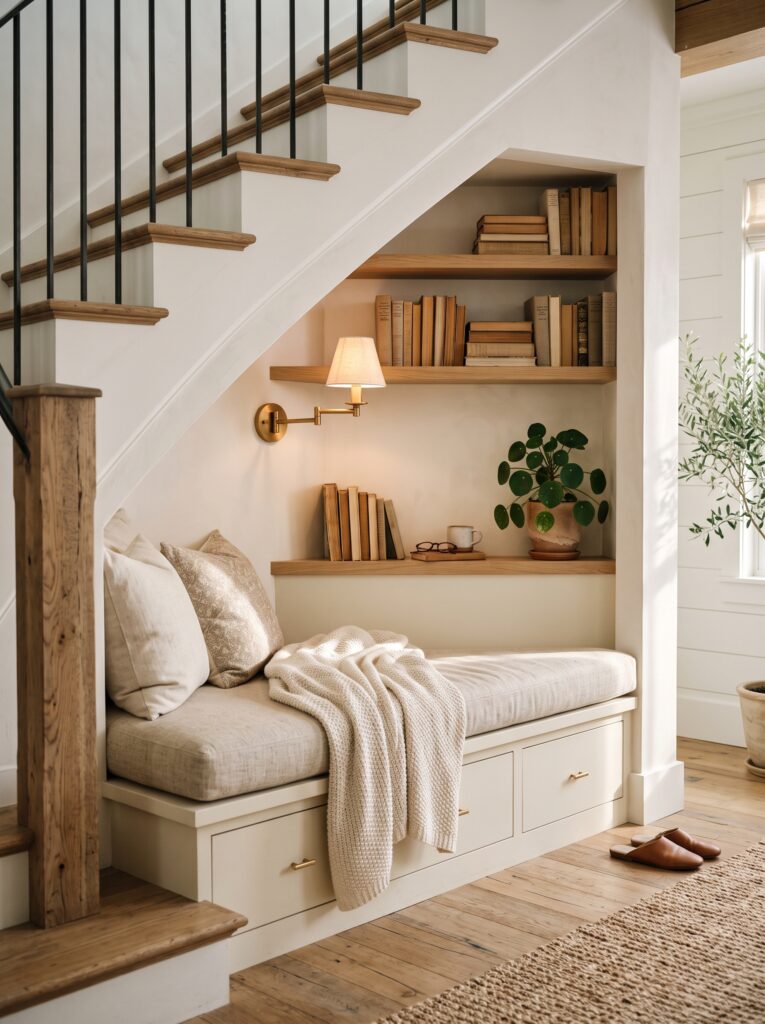
An under-stair reading nook can transform an otherwise awkward architectural space into a cozy retreat for reading, relaxing, journaling, enjoying coffee, or simply escaping the noise of everyday life. Whether you live in a spacious suburban home, a townhouse, or a smaller American house, the space beneath your stairs can offer an opportunity for creative interior design.
The best part is that you do not necessarily need a huge renovation. A built-in bench, comfortable cushion, warm lighting, a few shelves, and clever hidden storage can turn an ordinary staircase into a beautiful and functional destination.
If you are searching for reading nook ideas, under-stair storage ideas, cozy home decor, small space decorating ideas, home library inspiration, book nook ideas, built-in seating, or unique home design ideas, these ideas can help you create a reading corner that feels intentional and inviting.
Why an Under-Stair Reading Nook Is Such a Great Idea
Modern homes often require us to make the most of every square foot. The area underneath a staircase is especially valuable because it already exists within the architecture of the house.
Instead of adding another piece of furniture to the room, you can transform the existing structure into a useful feature.
An under-stair reading nook can provide:
- A dedicated relaxation area
- Built-in seating
- Additional storage
- A mini home library
- A cozy place to read
- A quiet area for journaling
- A beautiful architectural focal point
- Extra functionality without using additional floor space
It can also make your home feel more customized.
A staircase that once looked ordinary can become a memorable design feature.
1. Start With a Built-In Bench
The foundation of a cozy reading nook is comfortable seating.
A custom-built bench can fit perfectly beneath the staircase because it can follow the shape and dimensions of the available space.
Instead of forcing a standard chair into an awkward corner, a built-in bench uses the space much more efficiently.
Choose a comfortable cushion in a neutral fabric such as:
- Cream
- Oatmeal
- Beige
- Warm gray
- Soft taupe
Add one or two pillows in complementary textures.
The goal is to create a place where you can comfortably sit for an extended period.
2. Turn the Bench Into Hidden Storage
One of the biggest advantages of a built-in reading bench is the storage opportunity underneath.
The space below the seat can be designed with:
- Drawers
- Lift-up compartments
- Cabinet doors
- Pull-out baskets
- Open cubbies
Use the storage for blankets, books, board games, seasonal accessories, or other household items.
This makes the reading nook decorative and practical at the same time.
Hidden storage is particularly valuable in smaller American homes where every inch of space matters.
3. Add Built-In Bookshelves
If the staircase allows it, incorporate bookshelves beside or above the bench.
Built-in shelves can turn the reading nook into a miniature home library.
Instead of filling every shelf completely, create a balanced arrangement.
Mix:
- Books
- Small ceramic objects
- Framed artwork
- Decorative boxes
- Small plants
- Sculptural pieces
Keep some empty space between groups.
This prevents the shelves from appearing cluttered.
4. Use Warm Lighting
Lighting is what can turn a simple bench into a genuinely cozy reading retreat.
A small wall sconce is an excellent choice because it provides focused light without taking up valuable seating space.
Consider a fixture with:
- Warm light
- Brass detailing
- Opal glass
- Matte black finish
- Minimalist design
A wall-mounted reading light also gives the nook a custom architectural appearance.
For evening reading, choose a comfortable warm-white light rather than extremely cool lighting.
5. Create a Soft Neutral Color Scheme
Neutral colors work beautifully in reading nooks because they encourage relaxation.
Consider using:
- Warm white
- Cream
- Beige
- Oatmeal
- Taupe
- Natural wood
- Soft sage
You can introduce contrast through darker books, a wood shelf, or a small black metal light fixture.
Avoid using too many competing colors.
A calm palette helps the nook feel separate from the busier parts of the house.
6. Add a Cozy Throw Blanket
A reading nook should look comfortable even when nobody is using it.
A textured throw can create that inviting appearance.
Look for fabrics such as:
- Cotton
- Linen
- Wool
- Chunky knit
- Soft woven textiles
Drape the blanket casually over one corner of the bench.
This small styling detail can make the entire space feel warmer.
7. Choose a Comfortable Seat Cushion
A built-in bench without proper cushioning can look beautiful but may not be comfortable.
Invest in a thick, supportive cushion designed specifically for the dimensions of the bench.
For a sophisticated appearance, select a durable upholstery fabric in a neutral tone.
If the nook will be used frequently, choose a fabric that is easy to maintain.
This is particularly important for households with children or pets.
8. Make the Ceiling Height Work for You
Under-stair spaces can have unusual ceiling heights.
Instead of treating this as a disadvantage, use the architecture to create character.
The lower part can house the bench while the taller end can accommodate:
- Bookshelves
- Artwork
- A reading lamp
- Decorative storage
- Tall cabinets
The changing ceiling height can actually make the nook feel more custom.
9. Use Wallpaper to Define the Nook
Wallpaper can visually separate the reading nook from the surrounding room.
For a sophisticated look, consider:
- Soft botanical patterns
- Small-scale geometric designs
- Textured neutral wallpaper
- Subtle vintage patterns
- Grasscloth-inspired textures
If you prefer a minimalist interior, choose a wallpaper that stays within the existing color palette.
A subtle pattern can add personality without making the area feel visually crowded.
10. Add a Small Picture Light
A picture light above artwork can create another layer of warm illumination.
This is particularly effective if the reading nook has a small gallery wall.
A simple artwork plus warm picture light can give the space a boutique-library atmosphere.
It is a small design detail, but it can make the nook feel intentionally designed rather than simply furnished.
11. Create a Mini Home Library
You do not need an entire room to create a home library.
A few carefully arranged shelves can be enough.
Organize your collection based on what makes sense for you.
You might arrange books by:
- Color
- Genre
- Size
- Author
- Personal importance
Avoid worrying too much about perfectly styled bookshelves.
The reading nook should still feel personal.
A collection of books that you actually enjoy will make the space more meaningful.
12. Add a Small Side Table
If there is enough space, a compact side table can make the reading nook more functional.
Use it for:
- Coffee
- Tea
- A reading lamp
- A candle
- Your phone
- A small plant
- A current book
Choose a table that does not overwhelm the nook.
A small round table can work particularly well because it introduces a softer shape against the architectural lines of the staircase.
13. Create a Coffee-and-Book Corner
For a more lifestyle-oriented reading nook, create a small area where you can enjoy your morning coffee or afternoon tea.
Place a compact table beside the bench with enough space for a mug and a book.
This transforms the nook from simply a reading area into a small daily ritual space.
It can become a place where you start the morning, unwind after work, or spend a quiet weekend afternoon.
14. Add Greenery
Plants can make an enclosed reading corner feel fresh and alive.
If the area receives natural light, consider a suitable indoor plant.
Possible options include:
- Pothos
- Snake plant
- ZZ plant
- Ferns
- Small olive-style trees
Choose plants according to the available light and humidity.
If there is little or no natural light, a realistic faux plant can provide a similar decorative effect without requiring unsuitable growing conditions.
15. Use Natural Wood
Natural wood is one of the easiest materials for creating warmth.
Use it for:
- Shelves
- Bench trim
- Side tables
- Decorative objects
- Storage fronts
Oak and walnut can both create beautiful results.
Lighter woods tend to feel Scandinavian and airy, while walnut creates a richer, more sophisticated atmosphere.
16. Install a Recessed Wall Niche
If the architecture allows it, a recessed niche can provide additional display space.
Use it for:
- Small books
- Artwork
- Ceramics
- Candles
- Decorative objects
A niche keeps objects organized without projecting far into the room.
This can be particularly useful in narrow stair areas.
17. Try a Built-In Reading Light
For frequent readers, dedicated lighting is essential.
A flexible wall-mounted reading lamp can allow you to direct light exactly where you need it.
Choose a fixture that blends with your interior style.
For example:
Warm neutral nook + oak shelving + brass reading light
creates a soft organic aesthetic.
Meanwhile:
Cream bench + black shelves + black adjustable lamp
creates a more modern look.
18. Add Acoustic Softness
Staircases can sometimes create echo because of their hard surfaces.
Soft furnishings can help make the area feel quieter and more comfortable.
Use:
- Upholstered cushions
- Rugs
- Curtains nearby
- Textiles
- Fabric wall art
This can make the reading nook feel more secluded.
19. Place a Rug Nearby
If the reading nook connects directly to a larger room, a small rug can visually define the area.
Choose a rug that complements the surrounding flooring.
A textured neutral rug can create a warm transition between the reading nook and the main room.
For a more traditional appearance, consider a vintage-inspired pattern.
For an organic-modern home, a simple textured rug may work better.
20. Use a Darker Color for a Dramatic Reading Nook
Although light neutrals are popular, darker colors can create an intimate atmosphere.
Consider:
- Deep olive
- Charcoal
- Chocolate brown
- Muted navy
- Deep warm gray
A darker nook can feel especially cozy when combined with warm lighting and light-colored cushions.
This approach works well if you want the reading nook to feel like a private little library.
21. Create a Kid-Friendly Reading Nook
An under-stair reading nook can also become a wonderful children’s reading space.
Use:
- Durable washable fabrics
- Low shelves
- Soft cushions
- Easy-to-reach books
- Rounded furniture
- Warm lighting
Keep heavier objects securely installed and make sure the design is appropriate for the child’s age.
A dedicated reading corner can encourage children to spend more time with books while giving them a special area of their own.
22. Design a Minimalist Reading Nook
If your home has a minimalist aesthetic, resist the temptation to fill the nook with accessories.
A simple bench, one cushion, a single shelf, and a wall light may be enough.
The beauty comes from:
- Clean lines
- Natural materials
- Empty space
- Soft textures
- Thoughtful proportions
Minimalist design can make the small space feel larger and calmer.
23. Create an Organic Modern Reading Nook
Organic modern interiors are especially well suited to cozy reading spaces.
Combine:
- Cream upholstery
- Natural oak
- Woven baskets
- Soft beige walls
- Ceramic accessories
- Greenery
- Warm lighting
This creates a relaxed, sophisticated atmosphere without appearing overly formal.
24. Make It Feel Like a Boutique Hotel
If you want a more luxurious look, take inspiration from upscale hotels.
Think about:
- High-quality upholstery
- Layered lighting
- Elegant hardware
- Natural materials
- Minimal accessories
- Custom built-ins
Add one beautiful piece of artwork and keep everything else understated.
Luxury often comes from the quality and coordination of the details rather than from excessive decoration.
25. Use Every Inch of the Staircase
The area around the reading nook can provide additional functionality.
Depending on your layout, you might incorporate:
- Closed storage
- Display shelves
- Coat hooks
- Shoe storage
- Cabinets
- Drawers
This is particularly useful in entryways where the staircase is located near the home’s main entrance.
The same architectural area can therefore serve both decorative and practical purposes.
Under-Stair Reading Nook Ideas for Different Home Styles
Modern
Use a floating bench, clean cabinetry, neutral upholstery, minimalist lighting, and simple shelving.
Traditional
Try detailed millwork, classic wall sconces, built-in bookshelves, rich wood, and patterned textiles.
Scandinavian
Choose pale wood, white walls, soft textiles, simple shelving, and minimal accessories.
Farmhouse
Combine warm wood, cream upholstery, woven baskets, vintage-inspired artwork, and classic lighting.
Organic Modern
Use natural oak, beige upholstery, textured materials, greenery, and warm ambient lighting.
How to Create an Under-Stair Reading Nook on a Budget
You do not necessarily need custom carpentry.
If a built-in bench is outside your budget, consider using a compact upholstered bench that fits the space.
Then add:
- A comfortable cushion
- Two decorative pillows
- A small side table
- A wall-mounted reading lamp
- A few floating shelves
- A cozy throw
- One plant or decorative object
This can create the visual impression of a designed reading nook without a complete construction project.
What to Avoid When Designing an Under-Stair Reading Nook
Do Not Overcrowd the Space
The staircase already occupies visual space, so too much furniture can make the area feel cramped.
Do Not Ignore Lighting
A reading nook needs sufficient illumination to be genuinely functional.
Do Not Use Oversized Furniture
Measure the area carefully before buying anything.
Do Not Forget Storage
If the bench can provide hidden storage, take advantage of it.
Do Not Sacrifice Comfort
A beautiful reading nook is not successful if you cannot comfortably sit there.
How to Make the Nook Feel More Private
If your reading corner is located in a busy area of the home, create a sense of separation.
Depending on the layout, you could use:
- A curtain
- Tall plants
- Open shelving
- A partial wood divider
- Decorative screen
- Soft lighting
You do not necessarily need to completely close the space.
A subtle visual boundary can be enough to make it feel like a retreat.
The Perfect Reading Nook Styling Formula
A simple formula can help you create a balanced space:
Comfort + Storage + Lighting + Texture + Personality
Start with comfortable seating.
Add useful storage.
Install warm reading light.
Layer soft textiles.
Finish with one or two personal details.
This approach prevents the nook from becoming either too plain or overly decorated.
Conclusion
The space beneath a staircase does not have to remain an awkward forgotten corner. With a little creativity, it can become one of the most charming and memorable areas in your home.
An under-stair reading nook combines smart space planning with cozy interior design. A built-in bench can provide comfortable seating and hidden storage, while bookshelves turn the area into a miniature home library. Warm lighting, natural wood, soft textiles, neutral colors, and a few personal details can transform the entire atmosphere.
Whether you live in a large American home or a compact townhouse, the principle remains the same: unused space can become valuable space when it is designed intentionally.
The most beautiful reading nooks are not necessarily the largest ones. They are the spaces that make you want to slow down, pick up a book, enjoy a warm drink, and stay for a while. By combining comfort, organization, and thoughtful styling, you can turn the forgotten space beneath your stairs into a cozy retreat that feels uniquely yours.
- Afrohemian Dining Room Ideas for a Warm, Collected and Sophisticated Home
- Warm Wood and Black Kitchen Ideas for a Timeless Designer Look
- Small Reading Nook Ideas That Turn Forgotten Corners Into a Cozy Luxury Retreat
- Curated Trinket Shelf Ideas: How to Create a Collected and Personal Home
- Neo Deco Entryway Ideas That Make Your Home Feel Instantly Expensive