
An indoor herb garden is one of the easiest ways to bring natural beauty, freshness, and functionality into your kitchen. Instead of treating herbs as something that belongs only in an outdoor garden, you can turn them into part of your home’s interior styling.
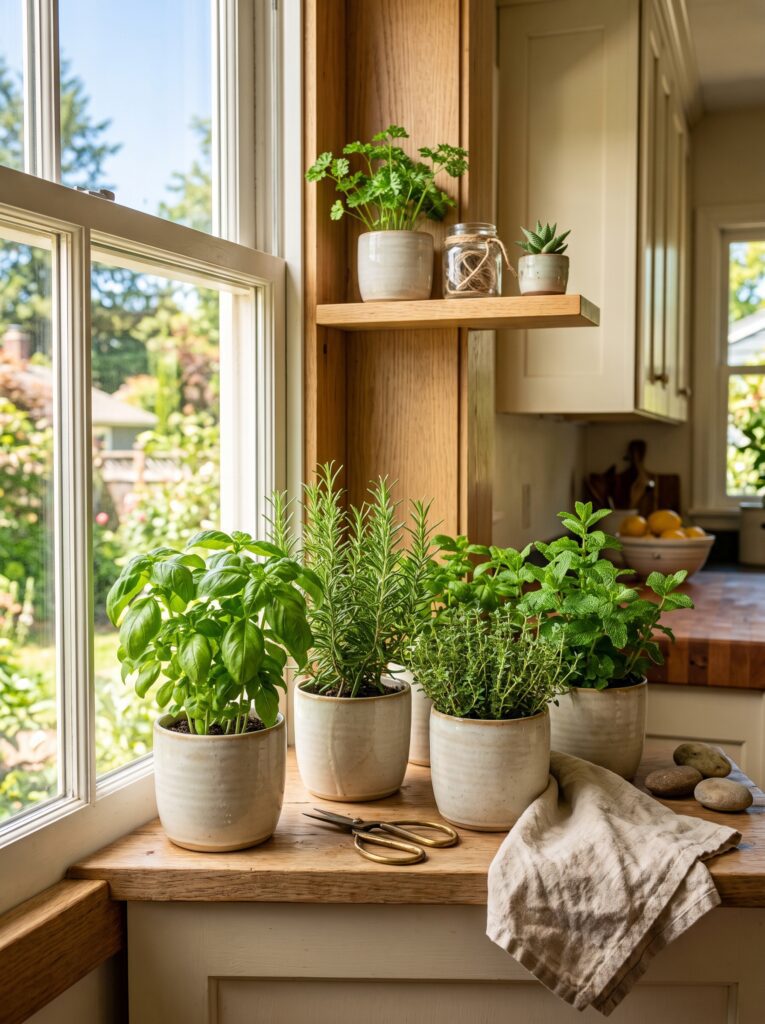
Fresh basil, rosemary, thyme, mint, parsley, and other herbs can add greenery to a kitchen while also making everyday cooking more enjoyable. With the right containers, placement, lighting, and organization, an indoor herb garden can look like a deliberate design feature rather than a collection of ordinary plant pots.
Whether you live in a large suburban house, a city apartment, a townhouse, or a small rental, there are plenty of creative ways to grow herbs indoors. You can use a sunny windowsill, open shelving, a countertop corner, a wall-mounted planter system, or even a compact vertical garden.
This guide explores beautiful and practical indoor herb garden ideas that can help you create a fresh, organized, and stylish kitchen.
Why Create an Indoor Herb Garden?
Growing herbs indoors offers several benefits beyond decoration.
Fresh herbs are convenient because you can simply reach for them while cooking. You don’t have to walk outside or depend on store-bought packages that may spoil before you use them.
An indoor herb garden can also introduce:
- Natural greenery
- Texture
- Freshness
- Color
- Fragrance
- Personality
- A connection to nature
From an interior-design perspective, plants can soften hard kitchen surfaces such as stone countertops, tile backsplashes, stainless-steel appliances, and cabinetry.
The combination of greenery with natural materials can make even a modern kitchen feel warmer.
1. Turn a Sunny Windowsill Into an Herb Garden
A kitchen windowsill is one of the easiest locations for growing herbs.
If your window receives enough natural light, place several small pots along the sill.
Try combining herbs with different leaf shapes and heights.
For example:
Basil + thyme + rosemary
or
Parsley + mint + oregano
Choose containers that look cohesive.
You could use matching ceramic pots for a minimalist kitchen or slightly different handmade pots for a more collected appearance.
Keep the arrangement organized rather than filling the entire windowsill.
2. Use Matching Ceramic Pots
If you want your herb garden to look intentional, the containers matter almost as much as the plants.
Instead of using random plastic nursery pots, transfer herbs into attractive containers that complement your kitchen.
Beautiful options include:
- Cream ceramic
- Terracotta
- Stone
- Matte black
- Natural clay
- Speckled pottery
Matching pots create a clean and sophisticated appearance.
For a more relaxed look, use pots from the same color family but with slightly different shapes.
3. Create a Dedicated Herb Shelf
If your kitchen has an empty wall, consider installing a narrow shelf specifically for herbs.
A small wooden shelf can hold several compact planters without consuming countertop space.
Choose a location close to a window if possible.
You can style the shelf with:
- Herb pots
- Small gardening scissors
- A ceramic watering container
- One small piece of artwork
- A wooden label system
Keep decorative objects limited so the plants remain the main focus.
4. Use a Vertical Herb Garden
Vertical gardening is especially useful in small kitchens.
Instead of spreading plants across a countertop, use wall-mounted planters or vertical shelving.
A vertical arrangement can make use of unused wall space while keeping herbs accessible.
This works particularly well in:
- Apartments
- Small kitchens
- Kitchenettes
- Townhouses
- Rental homes
A vertical herb garden can also become a beautiful living wall feature.
5. Style Herbs on a Wooden Tray
A simple tray can instantly make an herb display look more organized.
Place three or four herb pots on a wooden tray and position it near a sunny window.
The tray creates visual boundaries and makes it easier to move the plants when cleaning.
Natural wood works especially well with greenery because it reinforces the organic feeling.
Try:
Wood tray + ceramic pots + green herbs
for a simple, timeless combination.
6. Grow Herbs Beside Your Kitchen Sink
The area near the kitchen sink can be another convenient location for a small herb collection.
A narrow planter or two compact pots can add greenery without taking up too much space.
Choose herbs that you use frequently.
For example, if you cook Italian-inspired meals regularly, basil, oregano, rosemary, and thyme may be useful.
If you prefer fresh garnishes, parsley and mint may be better choices.
The goal is to grow herbs that fit naturally into your cooking habits.
7. Combine Herbs With Kitchen Decor
An herb garden doesn’t have to exist separately from the rest of your kitchen styling.
Use the plants as part of your overall decorative composition.
For example, combine:
- Greenery
- Wooden cutting boards
- Ceramic bowls
- Linen towels
- Natural stone
- Glass jars
The green plants provide contrast against neutral materials.
This creates a more layered and sophisticated kitchen environment.
8. Create a Farmhouse-Style Herb Display
For a farmhouse-inspired kitchen, use traditional materials and slightly rustic containers.
Consider:
- Terracotta pots
- Galvanized metal containers
- Reclaimed wood shelves
- Woven baskets
- Handwritten-style plant labels
Keep the overall arrangement simple.
A few healthy herbs usually look better than a crowded collection of plants.
9. Create a Modern Minimalist Herb Garden
Modern kitchens can benefit from a more streamlined approach.
Use identical planters in a single color.
White ceramic, stone, matte black, or neutral gray can work particularly well.
Arrange the plants in a simple row.
Avoid excessive labels and decorative objects.
The plants themselves become the decoration.
10. Use Hanging Herb Planters
If counter space is limited, look upward.
Hanging planters can allow you to grow herbs without using valuable work surfaces.
You can hang small planters near a bright window or install a dedicated hanging rail.
Make sure the location provides appropriate light and doesn’t interfere with cooking, cabinets, or movement through the kitchen.
Hanging herb gardens can also add a beautiful vertical element to an otherwise plain wall.
11. Make a Kitchen Herb Station
A dedicated herb station can combine growing, harvesting, and organization.
Set aside a small area with:
- Herb planters
- Small scissors
- Watering container
- Plant labels
- Small tray
- Gardening supplies
This makes caring for your herbs easier.
It also creates a visually satisfying corner that can become part of your kitchen’s personality.
12. Use Terracotta for a Natural Look
Terracotta is a classic material for growing herbs.
Its warm earthy color works beautifully with green foliage.
Pair terracotta pots with:
- Wooden shelves
- Cream walls
- Natural stone
- Woven accessories
- Brass hardware
The result is warm, organic, and timeless.
Terracotta is particularly beautiful in Mediterranean-inspired, farmhouse, rustic, and transitional kitchens.
13. Try a Neutral Ceramic Herb Collection
If your kitchen is more contemporary, choose neutral ceramic containers.
Cream, ivory, beige, and soft gray can create a sophisticated look.
The plants provide the color while the containers remain visually quiet.
This approach is ideal if you prefer minimalist home decor but still want to introduce natural greenery.
14. Add Small Plant Labels
Labels can be practical and decorative.
If you grow several herbs, labeling them makes it easier to identify each plant.
You can use:
- Wooden tags
- Ceramic markers
- Metal labels
- Simple chalk labels
Keep the typography clean.
Avoid oversized decorative signs that compete with the plants.
15. Create an Herb Garden in a Small Apartment
Small apartments often have limited kitchen space, but that doesn’t mean you have to give up on growing herbs.
Try:
- A sunny windowsill
- One narrow shelf
- Hanging planters
- A vertical wall system
- A small countertop tray
Choose compact herbs and avoid planting more than you can realistically maintain.
A tiny collection of healthy plants can be much more attractive than a large collection struggling for space.
16. Use a Tiered Plant Stand
A tiered stand can create height and make a small herb collection more visually interesting.
Place taller plants toward the back and shorter herbs toward the front.
This arrangement makes it easier to see every plant.
A natural wood stand can complement warm kitchens, while a metal stand can work with modern interiors.
17. Grow Herbs Under a Grow Light
Not every kitchen has a sunny window.
If your kitchen receives limited natural light, an indoor grow light may help certain herbs grow successfully.
Choose a setup appropriate for indoor gardening and follow the manufacturer’s instructions regarding placement and timing.
A well-designed grow-light system can also be integrated into shelving so it doesn’t disrupt your kitchen aesthetic.
For kitchens with very little natural light, a dedicated indoor growing system may be more practical than relying entirely on a dark countertop.
18. Choose Herbs Based on Your Cooking Style
The most useful indoor herb garden is one you’ll actually use.
For Italian Cooking
Try:
- Basil
- Oregano
- Rosemary
- Thyme
For Fresh Salads
Try:
- Parsley
- Mint
- Dill
- Chives
For Mediterranean-Inspired Meals
Try:
- Rosemary
- Thyme
- Oregano
- Sage
For Drinks and Desserts
Mint and basil can be particularly useful.
Choose a combination that reflects what you already cook rather than growing herbs simply because they look attractive.
19. Make Herbs Part of Your Kitchen Island Styling
If your island has enough space, a small herb arrangement can make an attractive centerpiece.
Use a long narrow planter or three matching pots.
Place them toward one side of the island so you still have enough room for food preparation.
Pair the plants with a wooden bowl or ceramic vessel for a natural composition.
20. Use a Built-In Herb Niche
If you’re designing or renovating a kitchen, consider incorporating a dedicated plant niche.
A shallow recessed shelf near a window can provide a permanent location for herbs.
This approach is especially useful in custom kitchens because it turns functional gardening into an architectural feature.
You can use the niche for herbs, small plants, or decorative objects depending on the season.
21. Create a Rustic Herb Shelf
A reclaimed wood shelf can create a charming rustic display.
Combine it with:
- Terracotta pots
- Small glass jars
- Wooden labels
- Dried flowers
- Ceramic containers
The mixture of materials gives the display character.
Keep the color palette relatively limited so the arrangement doesn’t become visually chaotic.
22. Mix Fresh Herbs With Dried Botanicals
You can combine living herbs with dried natural materials.
For example, fresh rosemary plants can sit beside a small vase of dried grasses.
This creates a layered botanical composition.
The fresh greenery keeps the display lively while the dried elements introduce texture.
23. Use an Herb Garden as a Kitchen Focal Point
If your kitchen has a blank corner, a beautiful herb display can become a focal point.
Instead of putting decorative objects there that have no practical purpose, use the space for something functional.
A large planter stand or wall-mounted herb garden can fill the empty area while adding life to the room.
24. Keep the Herb Garden Looking Clean
An indoor garden can quickly become messy if leaves, soil, and water collect around the pots.
Use trays beneath containers to protect surfaces.
Trim plants regularly.
Remove damaged leaves.
Clean the outside of containers.
Keep soil contained.
These small maintenance habits help your herb garden remain part of your decor rather than becoming a source of clutter.
25. Decorate With Herbs in an All-White Kitchen
Green plants are especially striking against white cabinetry.
If your kitchen has:
- White cabinets
- White backsplash
- Light countertops
green herbs can introduce natural contrast.
Add warm wood and cream ceramics to soften the overall appearance.
This creates a fresh, timeless palette.
26. Style an Herb Garden in a Dark Kitchen
Dark kitchens can also look beautiful with greenery.
Deep green foliage creates a natural connection with darker cabinetry.
Try pairing herbs with:
- Walnut
- Black ceramic
- Brass
- Cream stone
- Warm lighting
The result can feel dramatic without becoming heavy.
27. Use Herbs to Soften Stainless Steel
Stainless steel appliances can sometimes make a kitchen feel industrial.
Plants provide an easy way to soften the look.
Place greenery near appliances without blocking ventilation or creating safety concerns.
Combine the plants with natural wood accessories for balance.
28. Create a Seasonal Herb Display
Your herb garden can remain year-round while the surrounding styling changes.
Spring
Use lighter ceramics and fresh flowers.
Summer
Add bright greenery and lightweight textiles.
Fall
Introduce terracotta, warm wood, and amber accents.
Winter
Use evergreen elements, darker ceramics, and warm lighting.
This allows the same plants to remain part of your decor throughout the year.
29. Indoor Herb Garden Ideas for Renters
Renters can create beautiful herb gardens without permanent modifications.
Use:
- Freestanding shelves
- Countertop planters
- Window boxes designed for indoor use
- Small plant stands
- Decorative trays
Avoid drilling into walls unless your lease permits it.
Freestanding solutions also make it easy to move the garden when needed.
30. Make Your Herb Garden Feel Like a Design Feature
The difference between random plants and a beautiful herb garden is usually intentional styling.
Think about:
Color:
Choose containers that complement the kitchen.
Scale:
Mix plant heights.
Materials:
Combine ceramic, wood, glass, and natural textures.
Placement:
Choose an area with appropriate growing conditions.
Repetition:
Repeat shapes or colors to create cohesion.
Negative space:
Don’t fill every available surface.
These principles can turn a simple collection of herbs into a genuine interior-design feature.
Best Indoor Herbs for Beginners
If you’re new to growing herbs indoors, start with a manageable selection.
Basil
A popular kitchen herb that adds lush green foliage.
Mint
Fast-growing and useful for drinks, desserts, and fresh dishes. It is often best kept in its own container because it can spread aggressively.
Thyme
Compact and attractive, making it suitable for small spaces.
Rosemary
Its upright structure can add height and texture to a windowsill display.
Parsley
A practical choice for garnishes and everyday cooking.
Always check the specific light, watering, temperature, and container requirements of each herb because indoor conditions vary.
Common Indoor Herb Garden Mistakes
Choosing a Dark Location
Most culinary herbs need adequate light.
Overwatering
More water does not necessarily mean healthier plants.
Using Containers Without Drainage
Poor drainage can create problems for plant roots.
Growing Too Many Herbs
Start small and expand as you learn what works.
Ignoring Plant Size
Some herbs grow much larger than expected.
Placing Plants Too Close Together
Adequate airflow can help maintain healthier plants.
How to Make an Indoor Herb Garden Look Expensive
A stylish herb garden doesn’t require expensive planters.
Focus on presentation.
Choose containers from the same color family.
Use one beautiful wooden tray.
Keep the plants healthy and trimmed.
Remove unnecessary packaging.
Hide messy gardening supplies.
Use natural materials.
Give the plants enough space.
The overall effect will feel curated rather than improvised.
Conclusion
An indoor herb garden is more than a convenient way to grow fresh ingredients. It can become a beautiful design element that brings greenery, texture, and life into the kitchen. Whether you have an expansive kitchen with plenty of counter space or a compact apartment kitchenette, you can create a herb garden that fits your home. A sunny windowsill, a few ceramic pots, a wooden tray, or a narrow shelf may be all you need to get started.
The most successful indoor herb garden ideas balance beauty with practicality. Choose herbs you will actually use, provide them with the growing conditions they need, and style the containers so they complement your existing decor. Start small, keep the arrangement intentional, and allow the greenery to become part of your everyday kitchen experience.
A few healthy herbs beside a sunny window can make an ordinary kitchen feel fresher, warmer, and more connected to nature—all while giving you something useful to enjoy every time you cook.
- Afrohemian Dining Room Ideas for a Warm, Collected and Sophisticated Home
- Warm Wood and Black Kitchen Ideas for a Timeless Designer Look
- Small Reading Nook Ideas That Turn Forgotten Corners Into a Cozy Luxury Retreat
- Curated Trinket Shelf Ideas: How to Create a Collected and Personal Home
- Neo Deco Entryway Ideas That Make Your Home Feel Instantly Expensive