
A beautiful kitchen does not always require an expensive renovation. Sometimes, the smallest styling changes can completely transform the way a kitchen looks and feels. One of the easiest places to begin is the countertop.
Kitchen countertops naturally become one of the most visible areas in a home. They are practical workspaces, but they also offer an opportunity to add personality, warmth, and visual interest to the room. With the right combination of functional pieces, natural textures, greenery, and carefully selected accessories, even a simple kitchen can look polished and thoughtfully designed.
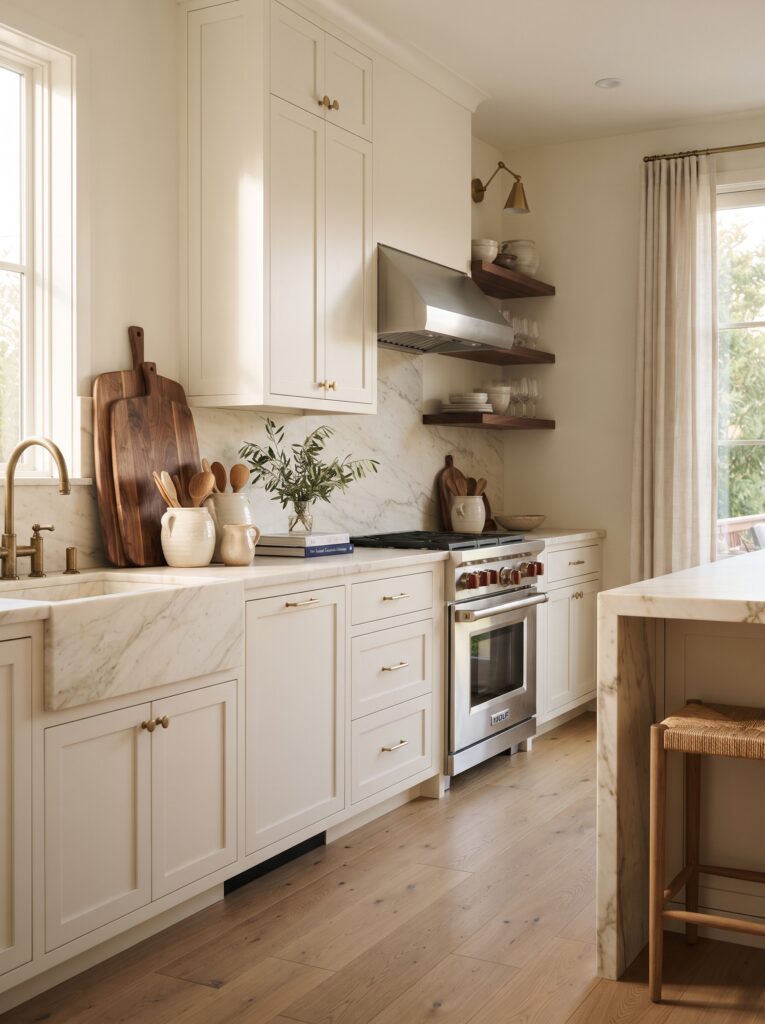
If you love the look of elegant American kitchens featured in interior design magazines but do not want to spend a fortune on remodeling, countertop styling is an excellent place to start. The key is not adding more things. It is choosing the right things and arranging them intentionally.
This guide explores beautiful kitchen countertop decor ideas that can make your space feel sophisticated, organized, warm, and expensive without requiring a major renovation.
Why Kitchen Countertop Styling Matters
Kitchen countertops occupy a large visual area, which means they can strongly influence the overall appearance of your kitchen.
A completely empty countertop can sometimes make a kitchen feel cold or unfinished. On the other hand, a countertop covered with too many appliances, containers, and decorative objects can make the room feel cluttered.
The goal is to find the middle ground.
Well-styled countertops should still feel functional. You should have enough open space to prepare food, while the decorative elements should complement the cabinetry, backsplash, hardware, flooring, and overall color palette.
This is especially important in modern American homes where kitchens often function as more than cooking spaces. They can become gathering areas, breakfast spaces, homework stations, and entertaining zones.
A thoughtfully styled countertop can help the kitchen feel like part of the home’s overall interior design rather than simply a practical workspace.
1. Start With a Clean Countertop
Before purchasing new kitchen accessories, begin by removing everything from the countertop.
This simple step can make a surprisingly large difference.
Take away appliances you rarely use, miscellaneous papers, excessive containers, random utensils, and decorative pieces that no longer fit your style. Once the countertop is clear, look at the space with fresh eyes.
Ask yourself:
- Which appliances need to stay visible?
- Which items can be stored inside cabinets?
- Where is the most useful food-preparation space?
- Which areas could benefit from decorative styling?
- What colors and materials already exist in the kitchen?
This process prevents you from decorating simply for the sake of filling empty space.
A luxurious kitchen usually feels intentional rather than crowded. Leaving some countertop space completely empty can actually make the decorated areas look more sophisticated.
2. Use Large Wooden Cutting Boards
One of the easiest ways to add warmth to a kitchen countertop is with oversized wooden cutting boards.
Walnut, oak, maple, and other natural woods work beautifully with both modern and traditional kitchens.
Instead of laying several cutting boards flat across the counter, lean two or three boards vertically against the backsplash. Vary their sizes slightly to create a layered appearance.
You can place a small ceramic bowl, stone container, or olive branch in front of them.
This creates height and texture without taking up too much usable space.
Wood also helps soften kitchens that contain a lot of white, gray, marble, or stainless-steel surfaces. The natural grain introduces an organic element that can make the room feel warmer and more welcoming.
For a sophisticated look, choose boards with simple shapes and natural finishes rather than highly decorative designs.
3. Add Handcrafted Ceramic Pieces
Ceramics are another excellent way to make kitchen countertops look elevated.
A large handmade-looking ceramic vase, utensil holder, bowl, or crock can become a subtle focal point without overwhelming the room.
Cream, ivory, beige, taupe, soft gray, and earthy tones are particularly versatile because they work with many kitchen color schemes.
Consider grouping a few ceramic pieces together rather than spreading small accessories across the entire countertop.
For example, one large ceramic vessel beside a wooden cutting board can look more intentional than five small decorative objects placed randomly around the kitchen.
The slightly imperfect appearance of handmade ceramics can also add character to an otherwise sleek kitchen.
4. Bring in Natural Greenery
Plants and greenery can instantly make a kitchen feel fresher.
You do not need a large collection of plants. One small herb pot or a simple branch arrangement may be enough.
For a sophisticated countertop, consider:
- Olive branches
- Eucalyptus
- Rosemary
- Basil
- Small potted herbs
- Simple leafy stems
- Seasonal branches
Fresh herbs have the added advantage of being useful while cooking.
If your kitchen receives good natural light, a few herbs near the window can create a beautiful combination of function and decoration.
For a lower-maintenance approach, realistic faux greenery can also work, particularly in areas where natural plants struggle.
The most important thing is to keep the arrangement simple. One intentional green element often looks more elegant than several unrelated plants.
5. Style With Cookbooks
Cookbooks are an underrated kitchen decorating accessory.
A small stack of beautifully designed cookbooks can add color, height, and personality to a countertop. It also makes the kitchen feel lived-in rather than staged.
Choose books that genuinely interest you, but consider covers that complement your kitchen’s color palette.
Place two or three books in a small stack and top them with a ceramic bowl, candle, or decorative object.
Avoid creating excessively tall stacks. The arrangement should remain practical and visually balanced.
Cookbooks are particularly useful for open shelves, coffee stations, breakfast corners, and areas beside a range or prep station.
6. Create a Beautiful Coffee Station
If you enjoy coffee, your countertop can become an elegant mini coffee station.
Instead of allowing the coffee maker, mugs, sugar containers, and accessories to spread across the counter, group them into one defined area.
A simple coffee station might include:
- Coffee machine
- Two or three favorite mugs
- Wooden tray
- Small ceramic container
- Coffee beans
- Small plant or greenery
- One decorative object
A tray can visually organize all of these pieces and make the area feel intentional.
For a more luxurious appearance, choose mugs and containers with similar colors and materials. Warm white ceramics, walnut wood, brushed brass, and neutral stone work especially well together.
This approach allows everyday necessities to become part of the kitchen’s design.
7. Use Trays to Create Organized Zones
One of the easiest countertop styling tricks is grouping accessories on a tray.
Without a tray, several objects can look scattered. Placing them together creates a visual zone.
For example, a wooden tray might hold:
- Olive oil
- Salt and pepper
- Small ceramic bowl
- Wooden spoon
- Small herb plant
A stone or marble tray could hold hand soap, lotion, and a small vase near the sink.
Trays are especially useful because they combine decoration with organization.
They also make cleaning easier because multiple objects can be moved at once.
8. Choose Countertop Accessories That Are Both Beautiful and Useful
The most successful kitchen decor usually serves a purpose.
Instead of purchasing decorative objects that simply occupy space, look for functional pieces that are attractive enough to display.
Examples include:
- Wooden cutting boards
- Ceramic utensil holders
- Stone canisters
- Glass storage jars
- Woven baskets
- Elegant soap dispensers
- Ceramic fruit bowls
- Decorative trays
- Coffee accessories
- Wooden serving boards
This approach creates a kitchen that feels naturally decorated rather than artificially staged.
When every visible item has a purpose, maintaining the space becomes easier as well.
9. Use a Neutral Color Palette
Neutral colors are particularly effective when creating an expensive-looking kitchen.
You do not need everything to be white. Instead, combine several complementary neutral shades.
For example:
Warm white + walnut + beige + cream + brass
or
Ivory + natural oak + soft gray + stone + black accents
or
Cream + taupe + dark wood + muted green
The goal is to create contrast while keeping the overall palette cohesive.
Natural materials can make neutral kitchens feel much richer. Wood, stone, ceramic, linen, glass, and metal each contribute a different texture.
This prevents a neutral kitchen from becoming visually flat.
10. Add Texture Instead of Excessive Color
If your kitchen feels plain, you may be tempted to introduce many bright colors.
Instead, consider adding texture first.
A smooth marble countertop can be balanced with rough ceramic, woven baskets, natural wood, linen towels, and leafy greenery.
Texture creates visual interest without making the kitchen feel busy.
This is one reason luxury interiors often feel sophisticated even when they use relatively simple color palettes.
The richness comes from the combination of materials.
11. Style the Area Around the Kitchen Sink
The kitchen sink is another area that can benefit from thoughtful styling.
Because this is a highly functional zone, avoid placing too many unnecessary items here.
A simple arrangement might include:
- Elegant soap dispenser
- Small hand lotion bottle
- Natural-bristle dish brush
- Small ceramic container
- Tiny plant
- Folded neutral kitchen towel
If you use matching or coordinated containers, everyday cleaning products can become much less visually distracting.
A small wooden or stone tray can help keep everything together.
12. Don’t Forget the Space Beside the Stove
The area beside the stove can be both functional and attractive.
If you frequently use olive oil, salt, pepper, or cooking utensils, store them in beautiful containers that can remain visible.
A ceramic utensil crock filled with wooden spoons is a classic option.
You can also place a couple of attractive olive-oil bottles or a small cutting board nearby.
However, always consider heat and food-safety requirements when positioning decorative materials and containers near cooking surfaces.
The goal is to make the cooking area convenient, not simply decorative.
13. Introduce Warm Metal Accents
Metal details can subtly elevate a kitchen.
Brass, aged brass, bronze, and matte black are common choices depending on the overall design.
You do not need to replace your hardware to introduce metallic accents.
Small details such as:
- Tray handles
- Small decorative objects
- Lighting
- Containers
- Faucet accessories
- Cabinet hardware
can create continuity throughout the room.
If your kitchen already has brass hardware, repeating a small amount of brass elsewhere can make the design feel more cohesive.
14. Use Open Shelving Strategically
If your kitchen includes open shelves, treat them as an extension of the countertop styling.
Avoid filling every inch.
Instead, combine:
- Stacked plates
- Bowls
- Cookbooks
- Small plants
- Ceramic vessels
- Wooden boards
- A few decorative objects
Vary the height of objects and leave breathing room between groups.
The shelves should feel curated rather than packed.
This principle also applies to glass-front cabinets.
15. Add a Statement Fruit Bowl
A beautiful fruit bowl can serve as both a functional kitchen item and a decorative focal point.
Choose a large bowl made from wood, ceramic, stone, or another natural material.
Then fill it with a small selection of fruit.
For a sophisticated appearance, avoid allowing the bowl to become excessively full. A few lemons, apples, pears, or seasonal fruit can provide a subtle pop of color.
This is especially effective in neutral kitchens where a small amount of natural color can make the space feel more alive.
16. Layer Heights for a Designer Look
One reason professional interiors look polished is that designers rarely place everything at the same height.
Instead, they create visual layers.
For example:
Tall: oversized vase or cutting board
Medium: ceramic crock or coffee canister
Low: tray, bowl, or stacked cookbook
This creates movement across the countertop.
If everything is the same height, the arrangement can appear flat.
If everything is tall, it can feel cluttered.
A mixture of heights usually creates a more balanced composition.
17. Keep Some Countertop Space Empty
One of the biggest mistakes people make when decorating a kitchen is trying to style every available inch.
Luxury interiors generally benefit from negative space.
An empty section of countertop gives the eye somewhere to rest and provides a practical preparation area.
Instead of asking, “What can I put here?” ask:
“Does this item improve the kitchen?”
If the answer is no, leave the space empty.
Minimalism does not mean having no decoration. It means choosing fewer things with greater intention.
18. How to Make a Small Kitchen Look More Expensive
Small kitchens can benefit significantly from careful countertop styling.
When space is limited, focus on vertical and multifunctional pieces.
Instead of spreading accessories across the countertop, create one or two concentrated styling zones.
For example, a small coffee station can occupy one corner while the rest of the countertop remains open.
Use light-colored ceramics, natural wood, glass containers, and a small amount of greenery to keep the visual weight balanced.
Avoid oversized accessories that interfere with food preparation.
A small kitchen can look luxurious when it feels clean, organized, and thoughtfully edited.
19. Countertop Decor Mistakes to Avoid
Even beautiful accessories can make a kitchen look less polished when they are used incorrectly.
Too Many Small Objects
A collection of tiny decorations can create visual clutter.
Choose fewer, larger pieces instead.
Too Many Colors
Using unrelated colors can make the countertop feel chaotic.
Stick to a cohesive palette.
Decorating Every Surface
Not every empty area needs something on it.
Negative space is important.
Ignoring Function
Decor should not make cooking more difficult.
Keep frequently used items accessible and unnecessary objects out of working areas.
Mixing Too Many Styles
A farmhouse sign, ultra-modern sculpture, colorful plastic container, and ornate vintage accessory may each look attractive individually but can feel disconnected together.
Choose a clear overall aesthetic.
20. The Best Materials for an Elegant Kitchen
If you want your countertop decor to look sophisticated, natural materials are an excellent starting point.
Wood
Adds warmth and organic texture.
Ceramic
Provides handcrafted character and softness.
Stone
Creates a refined, substantial appearance.
Glass
Adds lightness and transparency.
Brass
Introduces subtle warmth and elegance.
Woven Materials
Bring softness and natural texture.
Using several of these materials together can create a layered kitchen without requiring expensive renovations.
21. Create a Kitchen That Looks Beautiful Every Day
The best kitchen styling ideas are not only attractive in photographs. They should also work for everyday life.
Think about your daily routine.
If you cook frequently, keep your most-used tools accessible. If you make coffee every morning, create a dedicated coffee zone. If you entertain often, keep serving boards and attractive bowls within easy reach.
When the decor supports the way you actually use your kitchen, the room becomes easier to maintain.
This is ultimately what makes a kitchen feel luxurious.
It is not simply about expensive materials. It is about thoughtful design, organization, comfort, and visual harmony.
Conclusion
Beautiful kitchen countertop decor does not require a complete remodel or a large decorating budget. A few carefully selected elements can completely change the atmosphere of your kitchen.
Start with a clean surface, then introduce natural wood, handcrafted ceramics, greenery, attractive storage, cookbooks, trays, and subtle metal accents. Keep the color palette cohesive and remember to leave enough open space for everyday activities. The most elegant kitchens are rarely the ones filled with the most decorations. They are the ones where every visible detail feels intentional.
Whether you have a spacious suburban kitchen, a compact apartment kitchen, or a modern open-concept space, these countertop styling ideas can help you create a warmer, more organized, and sophisticated home.
Save these kitchen countertop decor ideas for your next home refresh and use them as inspiration to create a kitchen that feels beautiful, functional, and uniquely yours.
- Luxury Bathroom Styling Ideas That Create a Spa-Like Feel
- Under-Stair Storage Ideas That Make Small Spaces Feel Organized
- Statement Ceiling Ideas That Transform an Ordinary Room
- Color-Drenched Bedroom Ideas for a Cozy Designer Look
- Kitchen Countertop Decor Ideas That Look Effortlessly Expensive