
When people want to make their home look more expensive, they often think about replacing furniture, changing countertops, installing new flooring, or adding expensive artwork. But there is one decorating detail that can dramatically change the appearance of a room without requiring a major renovation: window treatments.
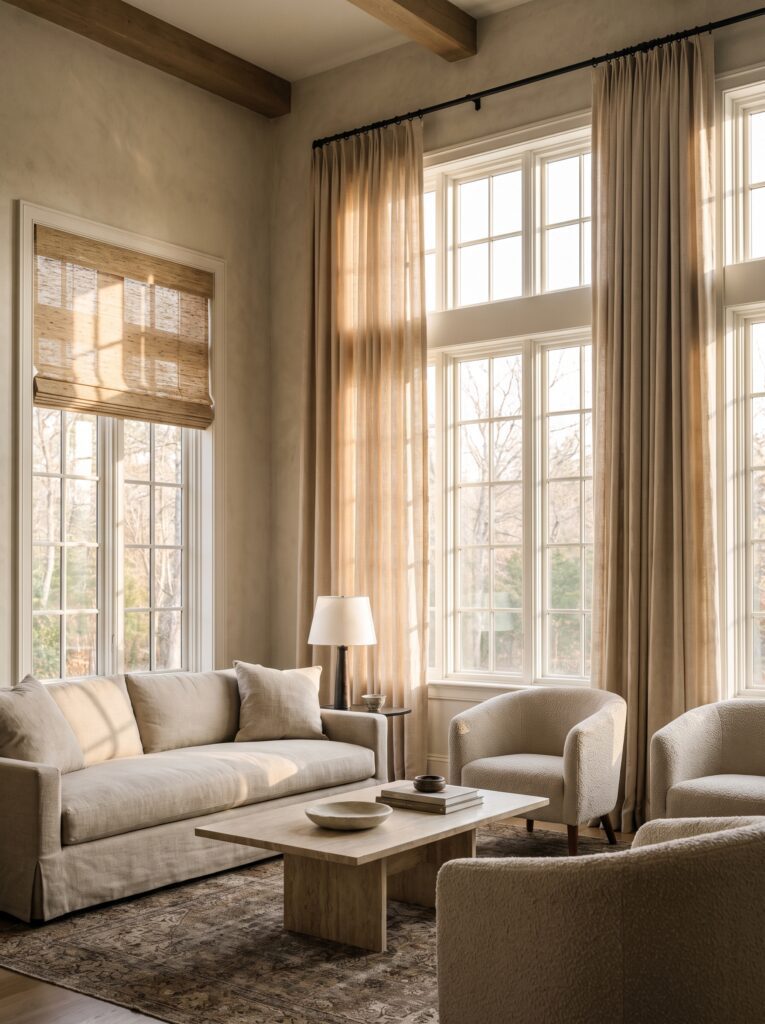
The right curtains, shades, blinds, or combination of window coverings can completely transform the proportions and atmosphere of a space. They can make ceilings appear taller, windows look larger, rooms feel softer, and even simple furniture arrangements appear more polished.
On the other hand, poorly fitted curtains can make an otherwise beautiful room feel unfinished. Curtains that are too short, rods that are mounted too low, or fabrics that lack fullness can make windows appear smaller and the entire room feel less intentional.
The good news is that creating an elevated look doesn’t necessarily require expensive custom treatments. With the right measurements, materials, colors, and installation techniques, you can achieve a sophisticated window treatment look in almost any American home.
Why Window Treatments Matter So Much
Windows naturally draw attention because they connect the interior of your home with the outdoors.
They also influence how natural light enters a room, which means window treatments affect both appearance and atmosphere.
A well-designed window can:
- Make ceilings look taller
- Make windows appear wider
- Soften hard architectural lines
- Add texture
- Improve privacy
- Control sunlight
- Create a more finished appearance
- Complement furniture and wall colors
- Add warmth to minimalist spaces
- Make a room feel more luxurious
This is why window treatments should be considered part of the overall interior design rather than something added at the very end.
1. Hang Curtains Higher Than the Window
One of the most effective curtain styling tricks is also one of the simplest.
Instead of mounting the curtain rod directly above the window frame, position it higher.
When curtains start closer to the ceiling, the eye naturally follows the fabric upward, creating the impression of greater ceiling height.
This can be particularly helpful in homes with standard-height ceilings where you want to create a more spacious appearance.
You don’t necessarily need to mount the rod directly against the ceiling. The important thing is to avoid placing it so close to the top of the window that the wall above feels unnecessarily compressed.
2. Extend the Curtain Rod Beyond the Window
Another common mistake is choosing a rod that is almost exactly the same width as the window.
When curtains are opened, this can cover a significant portion of the glass and make the window appear smaller.
Instead, extend the rod beyond both sides of the window.
This allows the curtains to sit mostly outside the window when they’re open.
The result?
More visible glass, more natural light, and the visual impression of a wider window.
This small adjustment can make a surprisingly big difference.
3. Choose Full-Length Curtains
For an elegant interior, floor-length curtains usually create a more polished appearance than short panels.
Long curtains emphasize vertical lines and create softness around the window.
For a relaxed look, allow the fabric to meet the floor naturally.
For a more tailored appearance, have the panels finish close to the floor without excessive fabric pooling.
The choice depends on your home’s style, but the key is consistency.
Curtains that stop awkwardly several inches above the floor can make a room feel visually disconnected.
4. Choose the Right Curtain Fullness
Luxury-looking curtains tend to have enough fabric to create beautiful folds.
If a pair of panels is too narrow, the fabric can look flat and inexpensive even when the material itself is high quality.
Fullness creates movement and softness.
When selecting curtains, consider the total width of the window and how much fabric you’ll need to create natural folds when the panels are closed.
For decorative side panels that remain open most of the time, you can use less fullness than you would for curtains intended to completely cover the window.
5. Try Natural Linen for a Relaxed Luxury Look
Linen curtains have become a favorite for homeowners who want an elevated but relaxed aesthetic.
Their slightly imperfect texture makes a room feel softer and more organic.
Natural linen shades work beautifully with:
- Warm white walls
- Light oak furniture
- Natural stone
- Woven accessories
- Neutral rugs
- Soft beige upholstery
- Rattan
- Brass accents
Linen doesn’t have to look overly formal.
That’s one reason it works so well in modern American interiors.
It can create the feeling of a thoughtfully designed home without appearing too staged.
6. Use Woven Shades for Texture
If you want something beyond traditional curtains, woven shades can introduce beautiful natural texture.
Materials inspired by rattan, bamboo, grasses, and other woven fibers can add warmth while still maintaining a clean appearance.
They are especially effective in:
- Dining rooms
- Bedrooms
- Kitchens
- Home offices
- Sunrooms
- Coastal-inspired interiors
You can also combine woven shades with curtains for a layered appearance.
The woven shade handles light and privacy while the curtains provide softness and decorative impact.
7. Layer Curtains and Shades
Layered window treatments can make a room feel much more complete.
A simple combination is:
Woven shade + linen curtains
Another option is:
Roman shade + sheer curtain
Or:
Blackout shade + decorative curtain panels
Layering gives you greater control over light and privacy while also adding dimension.
This is especially useful in bedrooms, living spaces, and street-facing rooms where you want flexibility throughout the day.
8. Don’t Underestimate Roman Shades
Roman shades are a beautiful alternative to traditional curtains.
They provide a clean, tailored appearance while allowing you to introduce color, pattern, or texture around the window.
A neutral Roman shade can work beautifully in a minimalist home.
A patterned fabric can become a statement feature in a more traditional interior.
For smaller windows, Roman shades can also be more practical than long curtains because they don’t require as much wall space.
9. Select a Curtain Color That Connects the Room
Curtains don’t have to match your walls exactly.
Instead, think about creating a connection.
If your room contains warm beige upholstery, a creamy linen curtain can reinforce that warmth.
If your interior includes muted blue accents, a subtle blue-gray curtain can create continuity.
If you have dark wood furniture, a warmer neutral curtain can balance the richness of the wood.
The goal isn’t perfect matching.
It’s visual harmony.
10. Try Tone-on-Tone Window Treatments
For a quiet luxury aesthetic, consider choosing curtains that are close in color to the walls.
For example:
Cream walls + ivory curtains
Warm beige walls + taupe curtains
Soft gray walls + slightly darker gray curtains
This approach creates a seamless appearance.
The fabric texture becomes more important because there isn’t a dramatic color contrast.
Linen, cotton, velvet, and woven fabrics can each create a completely different mood even when they are similar in color.
11. Use Pattern Carefully
Patterned window treatments can add personality without requiring major changes elsewhere.
Consider:
- Subtle stripes
- Botanical prints
- Small geometric patterns
- Vintage-inspired florals
- Soft checks
- Abstract patterns
If the room already contains strong artwork or patterned furniture, choose a quieter window treatment.
If the rest of the room is relatively neutral, however, the window can become an opportunity to introduce pattern.
12. Pay Attention to Curtain Rods
The curtain fabric isn’t the only important detail.
The rod and hardware also contribute to the overall appearance.
Depending on your home’s style, you might consider:
- Aged brass
- Matte black
- Brushed nickel
- Warm bronze
- Natural wood
- Simple painted finishes
Choose hardware that relates to other finishes already present in the room.
For example, if your lighting and cabinet hardware use warm brass, repeating that tone in the curtain hardware can create subtle consistency.
13. Use Blackout Curtains in Bedrooms
Beautiful window treatments should also be practical.
In bedrooms, blackout curtains or layered blackout shades can help control unwanted morning light.
They can be especially useful for:
- Main bedrooms
- Children’s bedrooms
- Guest rooms
- Media rooms
You don’t have to sacrifice style for function.
A decorative linen-look curtain can be paired with a discreet blackout layer to create both comfort and visual appeal.
14. Think About Privacy
Window treatments should reflect how the room is used and where the window is located.
Street-facing rooms may require more privacy than upper-level rooms.
Bathrooms obviously need greater privacy than some living spaces.
Layered shades and curtains can give you more control than a single decorative panel.
For daytime privacy, sheer or woven materials can soften views while still allowing natural light.
For nighttime privacy, you’ll generally need a more opaque solution.
15. Don’t Forget the Kitchen
Kitchen windows are often treated differently from windows in living spaces.
Long floor-length curtains may not always be practical near counters, sinks, or cooking areas.
Instead, consider:
- Roman shades
- Café curtains
- Woven shades
- Simple tailored shades
- Short decorative treatments
The kitchen is also a wonderful place to introduce subtle pattern.
A small botanical print or classic stripe can add character without overwhelming the space.
16. Make a Dining Room Feel More Refined
Dining rooms benefit beautifully from full-length window treatments.
Long curtains can soften the hard surfaces commonly found in dining areas, including tables, chairs, flooring, and architectural trim.
For a sophisticated dining room, consider combining:
- Floor-length curtains
- Warm wood furniture
- Soft lighting
- A subtle rug
- Simple artwork
- Natural textures
The curtains can help connect all these elements.
17. Create a Soft Bedroom Atmosphere
Window treatments are particularly important in bedrooms because they influence both appearance and comfort.
Soft curtains can make a bedroom feel calmer and more inviting.
Try combining:
Linen curtains + blackout shade
or
Woven shade + sheer curtain
Use warm neutral colors if you want a relaxed environment.
For a more dramatic bedroom, deeper tones such as charcoal, olive, chocolate, or muted navy can create a cozy atmosphere.
18. Use Window Treatments to Make Small Rooms Feel Larger
Small rooms require careful visual planning.
Heavy curtains with large patterns can sometimes overwhelm a compact space.
Instead, choose lightweight fabrics and hang curtains high and wide.
Keeping the curtain color relatively close to the wall color can also reduce visual interruptions.
The goal is to create long, uninterrupted vertical lines.
This can help the room feel taller and more spacious.
19. Choose Treatments Based on Your Home’s Architecture
A window treatment should work with the architecture instead of fighting against it.
Older homes might look beautiful with:
- Roman shades
- Classic drapery
- Small floral patterns
- Traditional hardware
Modern homes may work better with:
- Simple panels
- Minimal hardware
- Clean Roman shades
- Woven textures
- Monochromatic colors
There is no universal “best curtain.”
The best option is the one that makes sense for the room.
20. Common Window Treatment Mistakes to Avoid
Hanging the Rod Too Low
This can visually shorten the room.
Curtains That Are Too Short
They can make the entire design feel unfinished.
Insufficient Fabric
Thin, flat curtains often lack the fullness needed for an elevated appearance.
Rods That Are Too Narrow
They can make windows appear smaller.
Ignoring the Rest of the Room
Curtains should relate to the furniture, flooring, walls, and lighting.
Choosing Style Over Function
Beautiful curtains are not useful if they don’t provide the privacy or light control you actually need.
How to Get the Expensive Look Without an Expensive Budget
You don’t need custom designer curtains in every room.
Instead, focus your budget on the details that have the biggest visual impact.
Invest in:
- Proper measurements
- Correct curtain length
- Quality-looking fabric
- Good hardware
- Fullness
- Professional-looking installation
You can also mix custom-looking elements with more affordable pieces.
For example, simple neutral curtains can look much more expensive when they’re properly hung with attractive hardware and enough fullness.
Good styling often matters just as much as the original price.
A Simple Formula for an Elevated Window
If you’re overwhelmed by choices, start with this formula:
High rod + wide placement + full-length panels + textured fabric + coordinated hardware
Then add a Roman or woven shade if you need additional privacy or light control.
This simple combination works across many interior styles and can be adapted with different colors and materials.
Conclusion
Window treatments may seem like a small decorating detail, but they can have an enormous impact on how a home feels.
The right curtains or shades can soften architecture, frame natural light, create privacy, add texture, and make a room feel significantly more finished. You don’t need to completely renovate your home to achieve that elevated appearance.
Start by looking at the windows you already have.
Are the curtains too short? Is the rod mounted too close to the window? Is there enough fabric? Could a woven shade add texture? Would a softer color create better harmony with the room?
Small adjustments can create surprisingly noticeable results.
Whether you prefer relaxed linen curtains, tailored Roman shades, woven blinds, dramatic drapery, or a layered combination, the goal is the same: make the window feel intentionally designed rather than simply covered.
And when the window treatment is right, the entire room can suddenly feel taller, softer, warmer, and more expensive—without changing the furniture at all.
- Afrohemian Dining Room Ideas for a Warm, Collected and Sophisticated Home
- Warm Wood and Black Kitchen Ideas for a Timeless Designer Look
- Small Reading Nook Ideas That Turn Forgotten Corners Into a Cozy Luxury Retreat
- Curated Trinket Shelf Ideas: How to Create a Collected and Personal Home
- Neo Deco Entryway Ideas That Make Your Home Feel Instantly Expensive