
When decorating a home, most people automatically focus on the four walls, furniture, flooring, and accessories. But there is one large surface that is frequently overlooked: the ceiling.
Often called the “fifth wall,” the ceiling can completely change the character of a room. A thoughtfully designed ceiling can make an ordinary space feel architectural, sophisticated, intimate, dramatic, or even larger than it actually is.
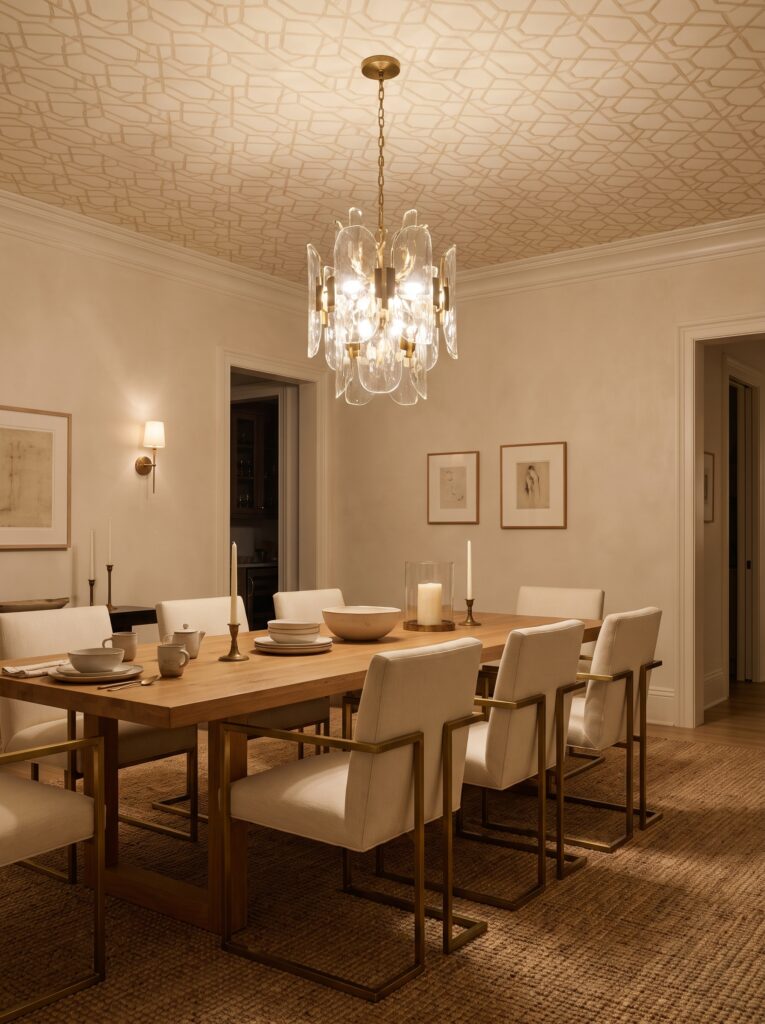
For homeowners in the United States who want a high-end interior without filling every wall with artwork and accessories, an elevated ceiling design can be one of the most effective ways to create visual impact.
From subtle ceiling wallpaper and painted ceilings to architectural molding, exposed beams, wood paneling, and statement lighting, there are countless ways to make the ceiling an intentional part of your home’s design.
The key is choosing an approach that complements the architecture rather than simply adding decoration for the sake of decoration.
Why the Ceiling Matters So Much in Interior Design
The ceiling occupies a surprisingly large portion of your visual field.
Even when you do not consciously notice it, its color, texture, height, lighting, and architectural details influence how a room feels.
A plain white ceiling creates a completely different atmosphere from:
- A warm wood ceiling
- A softly painted blue ceiling
- A patterned wallpaper ceiling
- A coffered ceiling
- A ceiling with exposed beams
- A plaster-effect ceiling
- A ceiling with decorative molding
- A dramatic chandelier surrounded by architectural detail
This makes the ceiling a powerful design opportunity.
Instead of treating it as an empty surface, think of it as another layer of the overall interior.
What Is the “Fifth Wall”?
The term fifth wall refers to the ceiling.
Interior designers often use this concept to encourage homeowners to consider the ceiling as an active design element rather than simply a blank overhead surface.
This does not necessarily mean you need a dramatic renovation.
Sometimes the smallest change can have the biggest effect.
For example, painting the ceiling in a soft, warm shade that is slightly different from the walls can create a more finished and sophisticated appearance.
Similarly, wallpapering the ceiling of a small powder room or dining room can create an unexpected moment that guests immediately notice.
1. Try a Softly Painted Ceiling
One of the simplest ceiling design ideas is also one of the most effective: paint it.
Instead of automatically choosing bright white, consider a color that complements the room.
Soft options include:
- Warm ivory
- Pale blue
- Muted sage
- Dusty beige
- Soft taupe
- Light gray
- Warm blush
- Subtle cream
For a more dramatic interior, deeper shades can work beautifully.
A darker ceiling can create a cozy, intimate atmosphere in spaces such as:
- Dining rooms
- Libraries
- Home offices
- Bedrooms
- Powder rooms
The trick is to consider the entire room rather than choosing a ceiling color in isolation.
2. Use Ceiling Wallpaper for a Designer Look
Wallpaper is traditionally associated with walls, but using it overhead can create a much more unexpected result.
A ceiling wallpaper design can introduce:
- Pattern
- Texture
- Movement
- Color
- Architectural interest
This works particularly well in smaller rooms.
A powder room, hallway, breakfast nook, or dining room can handle a more expressive ceiling because the area is usually viewed for shorter periods than a bedroom or living space.
For a sophisticated look, consider subtle botanical patterns, geometric designs, textured wallpaper, or small-scale motifs.
If the ceiling has architectural molding, wallpaper can also be used within the framed sections to emphasize the structure.
3. Create a Tonal Ceiling
If you love neutral interiors but still want something more interesting than a plain white ceiling, try a tonal ceiling treatment.
Choose a ceiling color that is closely related to the wall color.
For example:
Warm beige walls + soft cream ceiling
Cream walls + slightly darker ivory ceiling
Pale blue walls + muted blue ceiling
Soft taupe walls + warm beige ceiling
The difference may be subtle, but it creates a more intentional atmosphere.
This approach is particularly effective in modern-traditional and transitional American homes.
4. Add Architectural Molding
Decorative molding can instantly make a room feel more architectural.
Depending on the home’s style, options include:
- Crown molding
- Coffered ceilings
- Box molding
- Picture-frame molding
- Ceiling beams
- Decorative trim
- Tray ceiling details
Molding is particularly beautiful in dining rooms, libraries, entry spaces, and traditional-style homes.
The goal is not to make the ceiling look overly ornate.
A clean, proportional design usually feels more expensive than an excessive one.
5. Consider a Coffered Ceiling
A coffered ceiling features recessed panels that create a grid-like architectural pattern.
This style works especially well in:
- Dining rooms
- Home offices
- Libraries
- Great rooms
- Formal sitting areas
Traditional coffered ceilings can be elaborate, but modern versions can be much simpler.
For a contemporary interpretation, use clean rectangular sections with minimal trim.
You can also paint the recessed areas in a slightly different shade to emphasize the geometry.
6. Use Wood for Warmth
A wood ceiling can completely change the atmosphere of a room.
Instead of feeling cold or overly formal, a room with natural wood overhead often feels warmer and more grounded.
Popular approaches include:
- Light oak planks
- Warm walnut tones
- Whitewashed wood
- Reclaimed-style beams
- Wood slats
- Decorative timber details
Wood ceilings can work particularly well in homes with:
- High ceilings
- Open floor plans
- Rustic architecture
- Modern farmhouse influences
- Mountain or coastal aesthetics
- Contemporary interiors
However, if you already have many wood elements in the room, use the ceiling carefully so the space does not become visually heavy.
7. Highlight Ceiling Beams
Exposed beams are another excellent way to give a ceiling architectural personality.
You can use beams as a structural-looking feature even when they are primarily decorative.
For a modern aesthetic, consider simple rectangular beams.
For a more rustic look, rougher wood textures can create character.
If your home already has original beams, consider making them a feature instead of hiding them.
Pairing beams with soft plaster walls, natural textiles, and understated lighting can create an elegant European-inspired atmosphere without making the room feel overly rustic.
8. Let Lighting Become Part of the Ceiling Design
A beautiful ceiling does not need to rely entirely on paint, wallpaper, or molding.
Lighting itself can become the statement.
A sculptural chandelier can act almost like artwork suspended from the ceiling.
Other possibilities include:
- Oversized pendant lights
- Clustered pendants
- Sculptural flush mounts
- Recessed lighting
- Decorative ceiling fixtures
- Architectural track lighting
In a dining room, a dramatic chandelier centered above the table can establish the room’s focal point.
In a bedroom, a soft sculptural fixture can create a calm, luxurious atmosphere.
In a hallway, a series of small fixtures can create rhythm.
9. Make a Small Room Feel Special
One of the best places to experiment with ceiling design is a small room.
Why?
Because a smaller footprint means you can use a more expressive design without spending as much money or material.
Consider a statement ceiling in:
- Powder rooms
- Small bathrooms
- Laundry rooms
- Breakfast nooks
- Compact home offices
- Narrow hallways
A patterned ceiling in a small powder room can create a boutique-hotel feeling.
A painted ceiling in a breakfast nook can make an otherwise ordinary corner feel intentionally designed.
10. Try a Dark Ceiling for a Moody Interior
A dark ceiling can be surprisingly sophisticated.
Colors such as deep brown, charcoal, navy, or muted plum can create intimacy.
This approach works particularly well when the room already has:
- Warm lighting
- Dark furniture
- Rich wood
- Brass details
- Soft textiles
- Moody artwork
The goal is balance.
If the ceiling is dark, keep some other elements lighter so the room does not feel visually compressed.
A dark ceiling is especially effective in rooms designed for evening use.
11. Use a Soft Blue Ceiling
Blue is one of the most timeless ceiling colors.
A very soft blue can make a room feel airy and relaxed while adding just enough color to distinguish it from a standard neutral interior.
Blue ceilings can work beautifully with:
- White walls
- Cream furniture
- Natural wood
- Brass fixtures
- Linen textiles
- Warm beige flooring
For an elegant American interior, choose a muted or dusty blue rather than an overly saturated shade.
The result feels sophisticated rather than childish.
12. Create a Statement Ceiling in the Dining Room
Dining rooms are ideal for experimenting with the fifth wall.
Because the room is often used for entertaining, guests naturally spend time looking around and noticing architectural details.
A dining room ceiling could feature:
- Wallpaper
- Coffered panels
- Warm paint
- Decorative molding
- Wood beams
- A statement chandelier
For a refined look, coordinate the ceiling with the dining table and lighting rather than matching every decorative item.
For example, a warm neutral ceiling can complement a walnut table and antique brass chandelier beautifully.
13. Elevate a Home Office With Ceiling Detail
Home offices have become an important part of American home design, and the ceiling is an easy way to give a workspace more personality.
A simple painted ceiling can make a compact office feel finished.
For a more dramatic approach, consider:
- Coffered panels
- Wood slats
- Subtle wallpaper
- Decorative beams
- A statement pendant
Pair the ceiling with comfortable furniture, layered lighting, and organized storage.
A beautiful workspace does not need to look corporate.
14. Use Ceiling Design to Support the Room’s Style
A ceiling treatment should make sense with the architecture.
For example:
Traditional Homes
Try:
- Coffered ceilings
- Crown molding
- Decorative trim
- Classic chandeliers
Modern Homes
Consider:
- Minimal wood slats
- Clean recessed lighting
- Smooth painted ceilings
- Simple geometric details
Transitional Homes
Try:
- Soft tonal paint
- Subtle molding
- Elegant pendant lights
- Minimal coffered details
Rustic Homes
Consider:
- Exposed beams
- Natural wood
- Plank ceilings
- Textured finishes
Coastal Homes
Try:
- Soft blue
- Whitewashed wood
- Light natural textures
- Simple woven lighting
The strongest designs feel connected to the home’s architecture.
15. Don’t Forget Ceiling Height
Before choosing a dramatic ceiling treatment, consider the height of the room.
High ceilings provide more opportunities for:
- Beams
- Chandeliers
- Architectural molding
- Large-scale patterns
- Dramatic color
Lower ceilings generally benefit from lighter treatments.
Soft colors, subtle patterns, and clean lighting can help the room feel more open.
That does not mean low ceilings must always be white.
The right tonal color or carefully selected wallpaper can still create an elegant result.
How to Make a Ceiling Look Expensive
If your goal is a luxury-inspired interior, focus on proportion and restraint.
A ceiling looks expensive when its details appear intentional.
Instead of combining wallpaper, beams, molding, and a massive chandelier all at once, choose one dominant feature.
For example:
Option 1: Coffered ceiling + simple lighting
Option 2: Wallpaper ceiling + understated pendant
Option 3: Wood ceiling + minimal lighting
Option 4: Painted ceiling + architectural molding
Option 5: Plain ceiling + spectacular chandelier
This keeps the room visually balanced.
Ceiling Design on a Budget
You can also create a fifth-wall transformation without a major renovation.
Affordable ideas include:
Paint
One of the easiest options is simply changing the ceiling color.
Removable Wallpaper
For renters or people who want a temporary update, removable wallpaper can be an option depending on the surface and product instructions.
Decorative Trim
Simple trim can create architectural-looking panels.
Statement Lighting
Changing a ceiling fixture can transform the entire room without touching the architecture.
DIY Wood Details
In suitable spaces, simple wood slats or beams can introduce warmth and texture.
Always consider ceiling structure, electrical requirements, and local building codes before attempting major modifications.
Mistakes to Avoid With Statement Ceilings
Choosing a Design That Ignores the Architecture
A ceiling should feel like part of the home.
Using Too Many Competing Details
If you have elaborate molding, you may not need a highly patterned wallpaper too.
Ignoring Lighting
A beautiful ceiling can disappear if the lighting is poorly planned.
Choosing Color Without Considering the Walls
The ceiling and walls should work together.
Forgetting Scale
Large rooms can handle larger architectural details. Small rooms usually benefit from more delicate treatments.
The Most Important Rule: Look Up
When planning your next home update, do not automatically stop at eye level.
Look up.
The ceiling offers an enormous design opportunity that many homeowners overlook. Whether you choose a subtle warm paint color, elegant molding, natural wood, a dramatic wallpaper, or simply a beautiful statement light fixture, treating the ceiling as the fifth wall can give your home a more finished and custom-designed appearance.
You do not need to completely renovate your house to create an expensive-looking interior. Sometimes the most memorable design detail is the one people never expected to see overhead.
A thoughtfully designed ceiling can add architecture, warmth, personality, and visual interest while allowing the rest of the room to remain relatively simple. That balance is what makes this approach so appealing for modern American homes.
If you are looking for a fresh way to make your home feel more elevated in 2026, start by looking at the surface you have probably been ignoring all along: the ceiling.
Conclusion
The ceiling is one of the most overlooked opportunities in home decorating, yet it can have a powerful effect on the way an entire room looks and feels. Instead of treating it as a plain surface that simply disappears into the background, homeowners can use the fifth wall to introduce color, texture, architecture, pattern, or statement lighting.
Whether you choose a softly painted ceiling, elegant wallpaper, natural wood, decorative molding, exposed beams, a coffered design, or a sculptural light fixture, the right ceiling treatment can make an ordinary room feel more intentional and custom-designed.
The most successful ceiling designs are not necessarily the most dramatic. A subtle tonal color or carefully placed architectural detail can sometimes create more sophistication than an overwhelming statement. The key is to consider the room’s size, ceiling height, architecture, lighting, and existing color palette before choosing a treatment.
For homeowners looking to create a more elevated and luxurious interior in 2026, looking upward may be the easiest design change they have been overlooking. Your ceiling does not have to be an afterthought—it can become one of the most memorable details in your home.
- Red Marble Powder Room Ideas for a Dramatic 2026 Home
- The Ceiling Is the New Fifth Wall: Elevated Ceiling Ideas for 2026
- Afrohemian Home Decor Ideas That Make a Space Feel Collected and Expensive
- Elegant Fall Tablescape Ideas Without Pumpkins for a Sophisticated Autumn Home
- The Awkward Corner Makeover: Stylish Ways to Transform Empty Space