
Afrohemian home decor is having a beautiful moment in interior design, especially for homeowners who want their spaces to feel warm, artistic, layered, and deeply personal. Instead of relying on mass-produced decorations or perfectly matching furniture, this style combines natural materials, handcrafted details, expressive patterns, earthy colors, and globally inspired accents to create a home that feels collected over time.
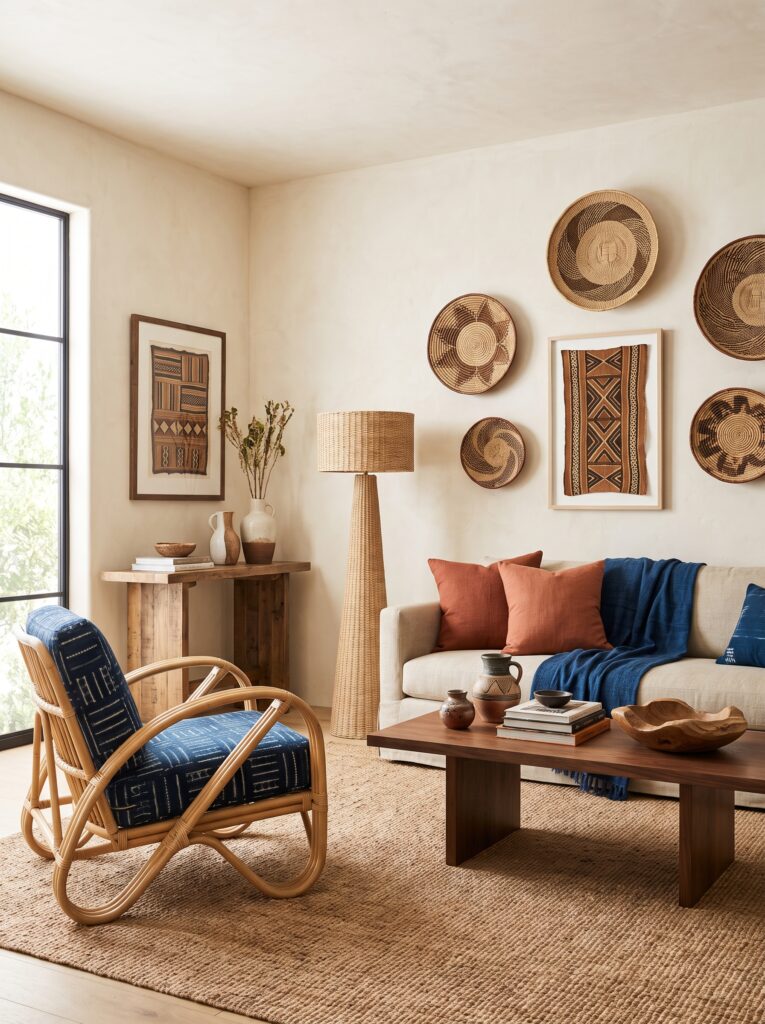
The best part about Afrohemian decor is that it does not require you to completely redesign your home. A few carefully selected pieces—such as woven baskets, sculptural pottery, textured textiles, natural wood furniture, or statement artwork—can completely change the personality of a room.
For American homes that already feature neutral walls, warm wood floors, modern furniture, or transitional architecture, Afrohemian styling can add depth and character without making the space feel chaotic.
What Is Afrohemian Home Decor?
Afrohemian decor blends elements associated with African-inspired design and relaxed bohemian interiors. The aesthetic typically emphasizes craftsmanship, natural materials, meaningful objects, organic textures, and artistic expression.
Rather than creating a room that looks overly themed, modern Afrohemian interiors often use a neutral foundation and introduce personality through texture, artwork, textiles, pottery, baskets, and carefully chosen accent colors.
Think of:
- Handwoven baskets
- Natural rattan and cane
- Walnut or teak wood
- Handmade ceramics
- Linen and cotton textiles
- Earthy terracotta tones
- Indigo-inspired accents
- Sculptural objects
- Abstract or culturally inspired artwork
- Vintage and artisan-style accessories
- Layered natural textures
The result is an interior that feels relaxed but sophisticated.
Why Afrohemian Decor Feels So Luxurious
Luxury does not always come from expensive furniture. Often, a room feels expensive because it has texture, proportion, restraint, craftsmanship, and visual depth.
This is where Afrohemian decor works particularly well.
Instead of filling a room with numerous decorative objects, focus on a smaller collection of pieces with strong shapes and interesting materials. A large woven basket can have more visual impact than several small accessories. A handcrafted ceramic vase can become a focal point when displayed against a quiet plaster wall.
The goal is to create a room that looks thoughtfully assembled rather than decorated all at once.
Choose Quality-Looking Textures
Texture is one of the easiest ways to make an interior look sophisticated.
Combine materials such as:
- Linen
- Bouclé
- Rattan
- Woven fibers
- Natural wood
- Stone
- Ceramic
- Leather
- Cotton
- Handwoven textiles
When these materials appear together, even a neutral color palette can feel rich and interesting.
Start With a Neutral Foundation
If you are introducing Afrohemian style into an existing American home, start with the architecture and larger furniture pieces you already have.
Cream, warm white, beige, taupe, sand, camel, and soft brown make excellent foundations.
Neutral walls allow artwork, textiles, baskets, and sculptural accessories to become the stars of the room.
For example, imagine a room with warm white walls, a natural oak console, a cream linen sofa, a textured neutral rug, and a few dark wood accessories. Adding an oversized woven basket, indigo textile, handcrafted pottery, and expressive artwork can immediately introduce Afrohemian character.
You do not need every element to be colorful.
In fact, restraint often makes the overall look more sophisticated.
Bring In Handwoven Baskets
Woven baskets are one of the most versatile accessories for an Afrohemian-inspired home.
They can be used for both decoration and organization.
Try placing a large basket:
- Beside a cabinet
- Under a console
- In an empty corner
- Near a fireplace
- Beside a tall plant
- On an open shelf
- Under a bench
Choose baskets with visible craftsmanship and natural variation rather than pieces that look overly uniform.
Different basket shapes can also create visual interest. A tall basket adds height, while a wide shallow basket can work as wall decor or tabletop styling.
Use Natural Wood for Warmth
Natural wood is essential when creating a warm, collected interior.
Walnut, oak, teak, and other warm-toned woods can balance lighter textiles and neutral walls beautifully.
For a sophisticated look, avoid filling the entire room with one matching wood finish. Instead, allow subtle variations.
For example:
A walnut console can sit alongside an oak accent table, while a woven rattan basket introduces another natural texture.
This creates a more organic appearance.
Add Sculptural Pottery
Ceramics are another excellent way to introduce an artisan feeling.
Look for vessels with:
- Irregular silhouettes
- Matte finishes
- Organic shapes
- Earthy tones
- Handcrafted-looking surfaces
- Oversized proportions
A single sculptural vessel can often create more impact than a shelf crowded with small decorations.
Try grouping two or three pieces at different heights.
Keep some empty space around them so each object has room to breathe.
Introduce Indigo and Earthy Colors
Afrohemian interiors do not have to be limited to beige and brown.
Color can be introduced through textiles, artwork, ceramics, and accessories.
Beautiful accent colors include:
- Indigo
- Terracotta
- Burnt orange
- Deep brown
- Ochre
- Rust
- Olive
- Muted green
- Warm burgundy
If you prefer a subtle aesthetic, choose only one or two accent colors.
For example, an otherwise neutral room can feature indigo cushions and a small terracotta ceramic object.
This creates personality without overwhelming the space.
Make Artwork the Personality of the Room
Artwork can completely transform an Afrohemian interior.
Instead of choosing generic wall art simply because it matches the furniture, look for pieces that create emotion and visual interest.
Abstract compositions, expressive line art, textured artwork, photography, and culturally inspired patterns can all work beautifully.
Large-scale artwork is especially effective in sophisticated interiors because it creates a clear focal point.
One oversized piece can often look more luxurious than an entire wall filled with small frames.
When selecting culturally inspired artwork, it is also important to approach the subject thoughtfully and respectfully. The goal should be appreciation, craftsmanship, and authentic artistic expression—not turning cultural symbols into superficial decoration.
Layer Textiles for a Softer Look
Textiles help balance the harder surfaces of wood, ceramic, and stone.
Try combining:
- Linen cushions
- Cotton throws
- Woven blankets
- Textured curtains
- Patterned accent pillows
- Natural fiber rugs
Do not make everything identical.
A sophisticated room usually contains several textures that complement one another without perfectly matching.
For example, a cream linen cushion, a woven neutral pillow, and an indigo patterned textile can look far more interesting together than three identical cushions.
Use Plants to Bring the Look Together
Greenery works naturally with Afrohemian interiors because plants reinforce the organic quality of the design.
Large-leaf plants can create a dramatic focal point, while smaller plants can soften shelves and tables.
Consider:
- Fiddle leaf fig
- Bird of paradise
- Rubber plant
- Olive tree
- Snake plant
- Pothos
- Palm varieties
Choose planters made from ceramic, terracotta, woven fibers, or natural materials to maintain visual consistency.
The plant should feel integrated into the room rather than added as an afterthought.
Create a Collected, Not Cluttered, Look
One of the biggest mistakes people make with eclectic decorating is assuming that more objects automatically create a more interesting room.
They do not.
The difference between collected and cluttered is intentionality.
A collected room has:
- Different textures
- Varied heights
- Meaningful objects
- Visual breathing room
- A controlled color palette
- A mixture of old and new
- Clear focal points
A cluttered room simply has too many things competing for attention.
When styling an Afrohemian space, regularly step back and ask:
Does every object contribute something?
If the answer is no, remove it.
Mix Vintage and Modern Pieces
Afrohemian interiors look especially beautiful when contemporary furniture is combined with vintage-inspired or artisan-style accessories.
For example, pair a modern cream sofa with:
- A vintage-style wood side table
- An oversized woven basket
- A sculptural ceramic vase
- A patterned textile
- Contemporary abstract artwork
This mixture prevents the room from feeling like it came directly from a furniture showroom.
The slight imperfections and variations are part of the charm.
Afrohemian Decor for Small Spaces
You do not need a large house to embrace this aesthetic.
In an apartment or smaller American home, focus on a few high-impact elements.
A small space might only need:
- One statement textile
- One sculptural ceramic piece
- One woven basket
- One natural wood accent
- One piece of expressive artwork
- One plant
Because these elements have strong textures and silhouettes, they can transform a room without taking up much space.
Vertical styling is particularly useful in small homes.
Use shelves, wall baskets, artwork, and tall plants to draw the eye upward.
How to Create an Afrohemian Entry Moment
Even though Afrohemian style can work throughout the house, an entry area is an excellent place to introduce it.
A simple console can become a stylish focal point when paired with:
- A large textured mirror
- Sculptural ceramic vessels
- A woven basket underneath
- A small plant
- A handmade-looking tray
- Warm wood accents
Keep the surface relatively uncluttered.
The entry should feel like a preview of the home’s personality rather than a storage zone.
Afrohemian Kitchen Styling
You can also introduce the aesthetic into a kitchen without replacing cabinets or countertops.
Try adding:
- Wooden cutting boards
- Handcrafted ceramic bowls
- Woven storage baskets
- Natural wood stools
- Linen kitchen towels
- Terracotta vessels
- Organic-shaped serving pieces
Open shelving can be styled with a combination of functional and decorative objects.
Keep the palette controlled so the kitchen still feels clean and practical.
Afrohemian Bedroom Details
For bedrooms, texture should take center stage.
Instead of relying on dozens of decorations, layer:
- Linen bedding
- A woven throw
- Neutral pillows
- A textured rug
- Natural wood furniture
- Soft ambient lighting
- One or two meaningful decorative pieces
Warm neutrals create a calm foundation, while an indigo or rust textile can provide contrast.
The bedroom should feel peaceful rather than overly busy.
How to Make Afrohemian Decor Look Expensive on a Budget
You do not need a designer budget to achieve this aesthetic.
Start by investing in a few visually important pieces instead of buying many inexpensive accessories.
Prioritize:
Texture over quantity.
Scale over clutter.
Craftsmanship over trends.
Natural materials over excessive plastic finishes.
One statement piece over ten small decorations.
A large woven basket, substantial ceramic vessel, beautiful textile, or oversized artwork can create much more impact than numerous small decorative items.
You can also shop vintage markets, antique stores, artisan markets, estate sales, and secondhand furniture stores for pieces with character.
Common Afrohemian Decorating Mistakes to Avoid
1. Using Too Many Patterns
Patterns are beautiful, but several competing patterns can quickly make a room feel chaotic.
Choose one dominant pattern and support it with simpler textures.
2. Making Everything Brown
Earthy colors are important, but an entire room of brown can feel flat.
Add cream, black, indigo, muted green, or terracotta for contrast.
3. Overdecorating Every Surface
Leave negative space.
Not every shelf, table, and corner needs an accessory.
4. Choosing Mass-Produced “Global” Decor Without Thought
If you want an authentic and respectful aesthetic, prioritize genuine craftsmanship and learn about the artists, makers, or traditions behind the pieces when possible.
5. Forgetting the Architecture
Decor should complement the home.
If your house has traditional molding, modern architecture, or rustic beams, allow those features to remain visible instead of covering everything with accessories.
The Modern Afrohemian Color Palette
A sophisticated palette might include:
Base colors: warm white, cream, sand, beige, taupe
Wood tones: walnut, oak, teak, dark brown
Accent colors: indigo, terracotta, rust, ochre, olive
Contrast: charcoal, deep brown, soft black
The secret is not using all of these colors equally.
Choose a dominant neutral, two supporting tones, and one or two accent colors.
That creates visual harmony.
Conclusion
If you want an easy formula for creating an Afrohemian-inspired space, remember:
Neutral foundation + natural wood + woven texture + artisan object + expressive artwork + organic greenery + one rich accent color.
This combination works across many American home styles, from modern and transitional houses to apartments and more traditional interiors.
Afrohemian home decor is ultimately less about following a strict decorating formula and more about creating a home that feels personal, layered, warm, and intentional. The most beautiful spaces are rarely the ones where everything was purchased at the same time. They are the spaces where materials, memories, craftsmanship, artwork, and everyday objects come together naturally.
Whether you introduce the look through a single woven basket or completely redesign an entire room, focus on texture, authenticity, balance, and restraint. A neutral foundation gives you flexibility, natural materials bring warmth, and carefully selected artistic pieces give the home its personality.
The result is a home that feels collected rather than decorated, sophisticated rather than overly styled, and personal rather than predictable—which is exactly what makes Afrohemian interiors so compelling.
- Red Marble Powder Room Ideas for a Dramatic 2026 Home
- The Ceiling Is the New Fifth Wall: Elevated Ceiling Ideas for 2026
- Afrohemian Home Decor Ideas That Make a Space Feel Collected and Expensive
- Elegant Fall Tablescape Ideas Without Pumpkins for a Sophisticated Autumn Home
- The Awkward Corner Makeover: Stylish Ways to Transform Empty Space