
There is something incredibly inviting about a kitchen that feels as though it has a story to tell.
Instead of perfectly matching cabinets, completely empty countertops, and an overly polished appearance, today’s most interesting kitchens are embracing warmth, personality, vintage character, and a lived-in feeling. One of the most beautiful examples of this shift is the dark cottagecore kitchen.
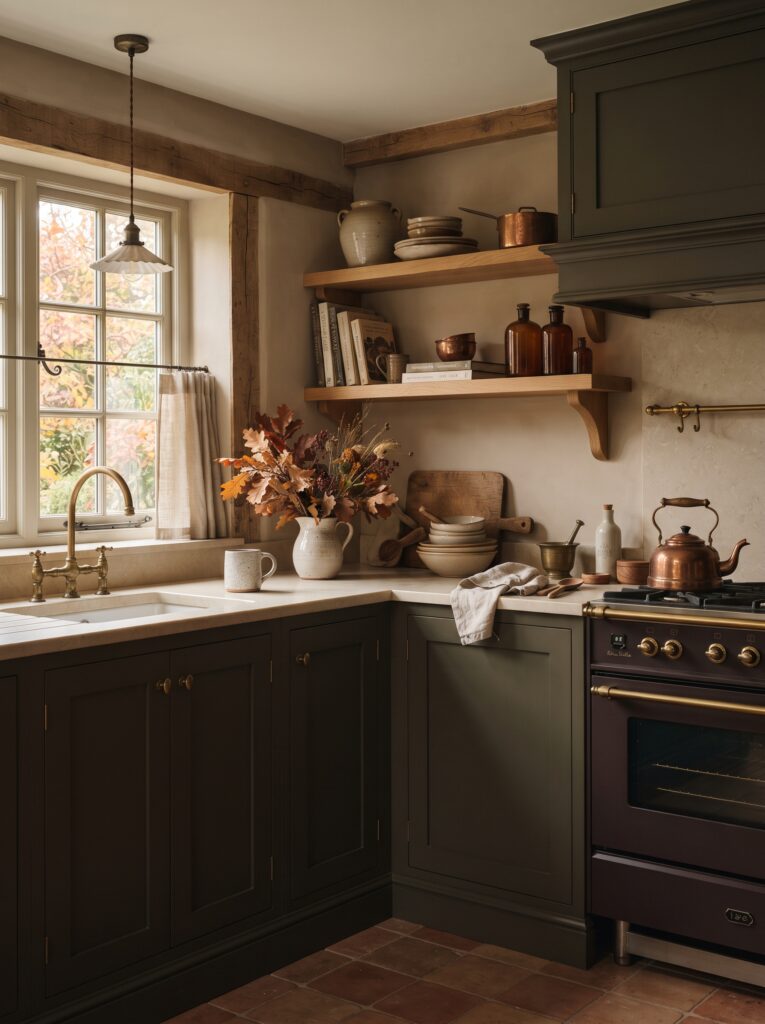
Dark cottagecore combines the charm of traditional cottage kitchens with deeper, moodier colors, natural materials, vintage details, and a relaxed atmosphere. The result is a kitchen that feels cozy without being cluttered, sophisticated without being formal, and timeless without looking old-fashioned.
Pinterest’s 2026 trend data shows just how much interest this aesthetic is receiving. Searches for “dark cottagecore kitchen” increased by 915%, while related searches such as “village kitchen ideas,” “grandma core kitchen,” and “cozy vintage kitchen” also experienced significant growth.
That makes this style particularly interesting if you are looking for a kitchen design that combines a current Pinterest aesthetic with elements that can remain beautiful for years.
What Is a Dark Cottagecore Kitchen?
A dark cottagecore kitchen is essentially a more dramatic interpretation of the traditional cottage kitchen.
Classic cottage kitchens often feature soft colors, natural wood, vintage accessories, open shelving, handmade ceramics, and an informal atmosphere. Dark cottagecore keeps those elements but introduces richer colors and stronger contrast.
Instead of an all-white kitchen, imagine:
- Deep olive-green cabinetry
- Aubergine or muted plum accents
- Warm walnut or oak
- Aged brass hardware
- Creamy stone countertops
- Handmade ceramic dishes
- Vintage cutting boards
- Woven baskets
- Antique-inspired lighting
- Dried branches and natural greenery
- Textured linen
- Old-world decorative pieces
The key is balance.
The kitchen should feel moody but welcoming, not dark and depressing.
The best versions combine deep colors with enough cream, wood, natural light, and warm materials to keep the room visually comfortable.
Why Dark Cottagecore Kitchens Are Becoming So Popular
For years, bright white kitchens dominated home design inspiration. While white kitchens are still beautiful, homeowners are increasingly interested in spaces that reveal more personality.
Pinterest’s 2026 trend report describes a broader movement toward personalization and “micro-makeovers,” with younger homeowners using color, vintage finds, and smaller changes to make their spaces feel more individual.
That shift is important because you don’t necessarily need a complete kitchen renovation to create a cottagecore-inspired atmosphere.
A cabinet color change, vintage-style hardware, a new pendant light, handmade pottery, or a few carefully selected accessories can dramatically change the character of the room.
Current fall 2026 kitchen coverage is also emphasizing personalization, warmer lighting, natural materials, freestanding vintage furniture, and kitchens that feel more like lived-in rooms rather than purely functional spaces.
In other words, the goal is no longer simply to have a “perfect kitchen.”
The goal is to have a kitchen that feels like yours.
1. Choose a Deep, Nature-Inspired Cabinet Color
Cabinet color is one of the easiest ways to establish a dark cottagecore aesthetic.
You don’t necessarily need black cabinets. In fact, some of the most sophisticated cottage kitchens use colors inspired by nature.
Consider:
Deep olive green
Olive is particularly effective because it feels earthy rather than overly dramatic. It works beautifully with warm wood, cream stone, brass, and natural textiles.
Forest green
For a stronger cottage atmosphere, a deep forest green can create a traditional, almost English-country feeling.
Aubergine
Aubergine adds personality and sophistication. It is especially useful if you want something more unexpected than green.
Moody blue
A deep blue can make the kitchen feel elegant while still maintaining a relaxed cottage character.
Warm charcoal
Charcoal is a good option if you prefer a neutral palette but still want the room to feel dramatic.
The important thing is to choose a color with depth rather than simply choosing the darkest possible shade.
2. Balance Dark Cabinets With Warm Wood
One of the easiest ways to prevent a dark kitchen from feeling heavy is to introduce natural wood.
Warm oak, walnut, reclaimed wood, and lightly finished timber can soften deeper cabinet colors beautifully.
Consider adding wood through:
- Open shelving
- A butcher-block section
- A freestanding island
- Wooden stools
- Cutting boards
- A vintage table
- Wooden serving trays
- Cabinet accents
The combination of dark cabinetry + warm wood creates contrast while keeping the room grounded.
Pinterest’s 2026 data also shows increased interest in warm wood kitchens, reinforcing the broader movement toward natural, tactile materials.
3. Use Aged Brass Instead of Shiny Hardware
Hardware may seem like a small detail, but it can completely change the personality of a kitchen.
For a dark cottagecore kitchen, polished chrome can sometimes feel too contemporary.
Instead, consider:
- Aged brass
- Antique brass
- Oil-rubbed bronze
- Warm unlacquered brass
- Vintage-inspired iron
Cup pulls and simple knobs can work particularly well on traditional cabinetry.
You don’t need dozens of decorative details.
A few beautiful hardware choices can create the impression of a carefully designed kitchen.
4. Bring in Handmade Ceramics
One of the easiest ways to make a kitchen feel more cottage-inspired is to display ceramics.
Rather than hiding every plate and bowl inside cabinets, allow a few beautiful pieces to become part of the decoration.
Think:
- Handmade cream-colored mugs
- Stoneware bowls
- Small ceramic pitchers
- Speckled pottery
- Handmade serving plates
- Vintage crockery
- Rustic ceramic vases
The imperfections are part of the charm.
A slightly irregular handmade bowl can often make a kitchen feel warmer than a perfectly coordinated collection.
5. Add Vintage Cutting Boards
Wooden cutting boards are one of those rare kitchen accessories that are both practical and decorative.
Layer several against a backsplash or place one beside a countertop prep area.
Look for boards with:
- Warm walnut tones
- Visible wood grain
- Rounded edges
- Aged surfaces
- Simple traditional shapes
Avoid making the arrangement look overly staged.
A couple of boards leaning casually against the wall often looks more natural than a perfectly symmetrical display.
6. Consider Open Shelving
Open shelving can work beautifully in a cottagecore kitchen because it allows everyday objects to become part of the design.
However, the secret is restraint.
Instead of filling every shelf, create small visual groupings.
For example:
Shelf one:
Cream pottery + wooden bowl + small plant
Shelf two:
Stacked plates + vintage mug + ceramic pitcher
Shelf three:
Cookbooks + cutting board + small brass object
This creates a collected look without creating visual clutter.
7. Choose Natural Stone With Character
Countertops are another opportunity to add depth.
Instead of perfectly uniform surfaces, consider materials with natural variation.
Marble, quartzite, limestone-inspired surfaces, and other stone finishes can provide subtle movement.
Current kitchen design reporting for fall 2026 points toward more expressive veined marble and quartzite surfaces, particularly honed or leathered finishes that feel tactile rather than overly glossy.
For a cottage-inspired kitchen, a slightly imperfect or natural-looking surface can feel much more authentic than something extremely sleek.
8. Make Lighting Warm and Atmospheric
Lighting can completely change how a dark kitchen feels.
Cool white lighting can make deep cabinetry look harsh.
Instead, use warm lighting throughout the space.
Pendant lights over an island can provide a focal point, while smaller accent lights can create a cozy evening atmosphere.
If your kitchen allows it, consider adding:
- A small table lamp on a counter
- Under-cabinet lighting
- Wall sconces
- Antique-style pendants
- Warm LED bulbs
- Dimmable fixtures
The goal is to create several layers of light rather than relying on one bright ceiling fixture.
This is especially valuable during fall and winter when daylight hours become shorter.
9. Use Dried Branches for Seasonal Character
You don’t need to decorate your kitchen with obvious seasonal decorations to make it feel appropriate for fall.
A simple ceramic vase filled with dried branches can be enough.
Try branches in:
- Soft brown
- Burgundy
- Muted olive
- Warm tan
- Dusty gold
This approach keeps the kitchen seasonal without turning it into a themed display.
It also works beautifully with dark cabinetry and warm wood.
10. Create a Freestanding Furniture Moment
One of the most interesting directions in current kitchen design is the return of furniture-like pieces.
Instead of making every element look permanently built in, consider adding a freestanding cabinet, antique table, vintage dresser-style island, or small wooden storage piece.
This can make the kitchen feel more like a room in a home rather than a showroom.
A vintage cabinet painted in a deep green or aubergine shade can become an especially beautiful focal point.
11. Don’t Forget the Kitchen Textiles
Textiles can soften a dark kitchen instantly.
Use natural fabrics such as:
- Linen
- Cotton
- Woven fibers
- Washed canvas
Good places to introduce textiles include:
- Dish towels
- Roman shades
- Bench cushions
- Small curtains
- Table runners
- Aprons
Keep the colors relatively muted so the kitchen remains sophisticated.
Cream, oatmeal, olive, brown, faded burgundy, and soft charcoal are particularly versatile.
12. Add a Little Imperfection
Perhaps the most important rule of cottagecore design is that everything does not need to look brand new.
A kitchen becomes more interesting when it contains objects that appear to have been collected over time.
That could be an antique breadboard.
A thrifted ceramic pitcher.
A vintage brass candlestick.
An old wooden stool.
A framed botanical print.
A secondhand cabinet.
These small details create personality.
And because they don’t necessarily require expensive purchases, they can also be an affordable way to make a kitchen feel significantly more custom.
Dark Cottagecore Kitchen Ideas for Small Kitchens
You don’t need a large American farmhouse kitchen to use this aesthetic.
A small kitchen can actually benefit from the style because a few strong elements can have a major impact.
For a smaller space, consider using:
- One dark accent cabinet color
- Open shelving instead of bulky upper cabinets
- A single statement pendant
- Warm wood accessories
- One vintage-inspired mirror
- Small ceramic collections
- Brass hardware
- A compact freestanding island
If the room has limited natural light, balance the darker elements with cream walls, lighter countertops, or warm wood.
The objective is not to make the entire room dark.
It is to create depth and character.
How to Make a Dark Kitchen Feel Cozy Instead of Heavy
This is one of the biggest concerns homeowners have when considering darker colors.
The answer is layering.
If every surface is dark, the room can feel visually compressed.
Instead, combine different tones and textures.
For example:
Dark:
Cabinetry
Warm:
Wood
Light:
Cream countertop
Metallic:
Aged brass
Natural:
Dried branches
Soft:
Linen
Textural:
Handmade ceramics
This creates visual balance.
You are essentially allowing the darker color to act as an anchor while the lighter and natural materials keep the kitchen welcoming.
Dark Cottagecore Kitchen Color Palette Ideas
If you’re building a Pinterest mood board before beginning your kitchen makeover, these color combinations are worth considering.
Olive + Cream + Walnut
A timeless combination that works especially well for transitional American homes.
Aubergine + Oatmeal + Brass
More dramatic and sophisticated, with a beautiful autumn feeling.
Forest Green + Natural Oak + Stone
Perfect for a traditional cottage-inspired atmosphere.
Moody Blue + Cream + Walnut
Elegant, slightly coastal, but still warm and grounded.
Charcoal + Warm White + Aged Brass
A more contemporary interpretation of cottagecore.
The best palette depends on the amount of natural light in your kitchen and the existing flooring and countertops.
How to Decorate a Dark Cottagecore Kitchen on a Budget
You don’t have to replace your entire kitchen.
In fact, small changes can often make a bigger difference than a complete renovation.
Start with the most visible elements.
Replace ordinary cabinet hardware with vintage-inspired hardware.
Add two or three handmade ceramic pieces.
Display a wooden cutting board.
Bring in a woven basket.
Add a vintage-style runner.
Replace harsh lighting with warmer bulbs.
Find a secondhand wooden stool or small cabinet.
Add a few dried branches.
These details can create a completely different atmosphere without requiring a massive renovation budget.
Thrifted Pieces Can Make the Kitchen More Interesting
If you want an authentic cottagecore appearance, don’t be afraid of secondhand shopping.
Look for:
- Wooden trays
- Brass candlesticks
- Vintage pottery
- Old cutting boards
- Small cabinets
- Decorative pitchers
- Antique frames
- Woven baskets
The goal isn’t to fill the kitchen with antiques.
Choose a few pieces that look as though they belong naturally in the space.
That is what creates the collected feeling.
Dark Cottagecore Kitchen Styling for Fall
Fall is one of the best seasons for this aesthetic because the natural color palette already complements darker interiors.
Instead of covering the kitchen in obvious Halloween or pumpkin decorations, focus on subtle seasonal changes.
Try:
- Burgundy linen towels
- Dried branches
- Brown ceramic pieces
- Warm wood boards
- Small bowls of seasonal fruit
- Olive-colored textiles
- Brass candleholders
- Amber glass
This approach feels seasonal without becoming temporary.
It also makes the kitchen easier to transition into winter.
Common Mistakes to Avoid
Making Everything Dark
Dark cabinetry is beautiful, but pairing it with dark counters, dark floors, dark walls, and dark accessories can overwhelm the room.
Buying Too Many “Cottage” Accessories
You don’t need signs, excessive floral prints, or dozens of decorative objects.
Modern cottage care is more sophisticated when it is restrained.
Using Only New Items
A completely new-looking kitchen can miss the nostalgic quality that makes cottagecore appealing.
Mix new pieces with vintage or thrifted finds.
Ignoring Lighting
A beautiful dark kitchen can look completely different under cold lighting.
Warm, layered illumination is essential.
Trying to Match Everything
The beauty of cottagecore comes partly from variety.
Different woods, ceramics, metals, and textiles can coexist.
Conclusion
A dark cottagecore kitchen is ultimately about creating a space that feels warm, personal, collected, and genuinely lived in.
You don’t need a historic cottage or a huge renovation budget to achieve the look. A deeper cabinet color, warm wood, aged brass hardware, handmade ceramics, natural stone, vintage accessories, and softer lighting can completely change the personality of an ordinary kitchen.
The biggest opportunity is to stop thinking of the kitchen as a purely functional space. Treat it as one of the most expressive rooms in your home.
That is also why this aesthetic feels so relevant right now. Pinterest’s 2026 trend research points toward a broader movement away from perfection and toward self-expression, comfort, vintage character, and smaller personalized home updates.
Whether you choose deep olive cabinetry, aubergine accents, warm walnut shelves, or simply introduce a few vintage pieces, the most successful dark cottagecore kitchens are the ones that look as though they have evolved naturally over time.
The goal isn’t to create a kitchen that looks trendy for one season. It’s to create a kitchen that feels so warm and personal that you’ll still love it years from now.
- Vintage Bathroom Vanity Ideas: How to Create an Elegant and Timeless Bathroom
- Small Balcony Makeover Ideas: How to Turn a Tiny Balcony Into a Cozy Autumn Retreat
- Elegant Fall Dining Table Decor: Sophisticated Autumn Tablescape Ideas for a Warm Home
- Elegant Mudroom Ideas: How to Create a Beautiful, Organized and Welcoming Drop Zone
- Dark Cottagecore Kitchen Ideas: How to Create a Moody, Warm and Timeless Kitchen