
A beautiful bedroom is not only about the bed, bedding, paint color, or furniture. One of the most powerful elements in bedroom design is something that is often overlooked: lighting.
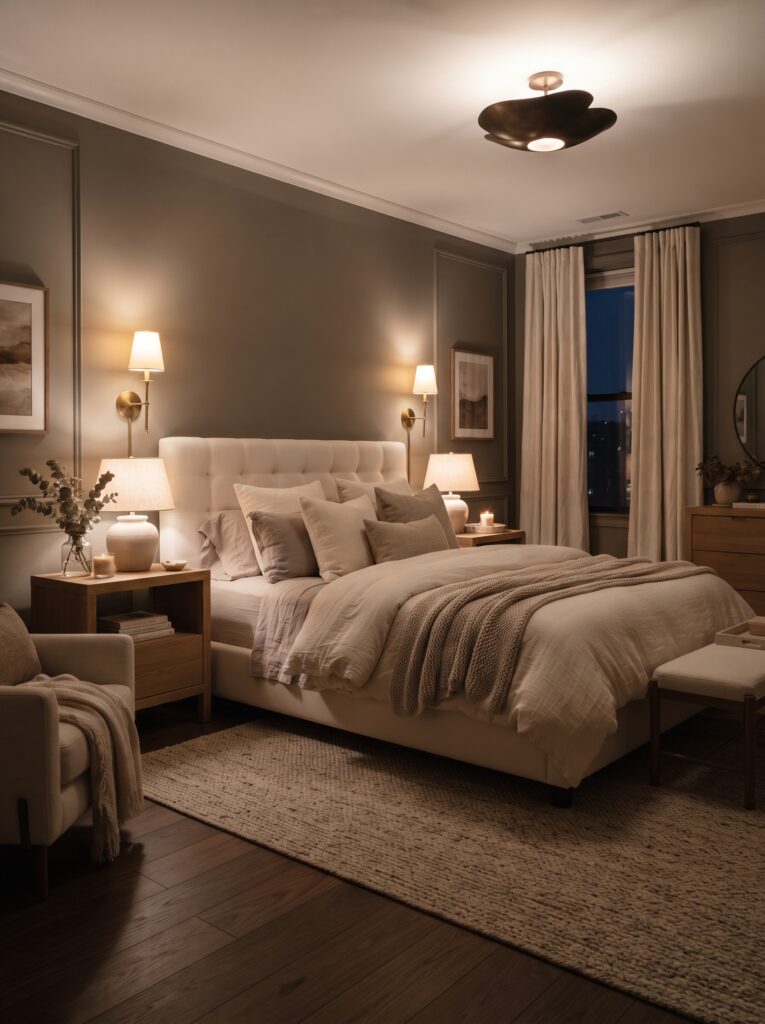
The right bedroom lighting can completely change the atmosphere of a space. A room that feels flat and ordinary during the day can become warm, relaxing, and sophisticated at night simply because the lighting has been layered correctly.
If you want your bedroom to feel more like a comfortable boutique hotel or a thoughtfully designed luxury home, you do not necessarily need expensive furniture or a complete renovation. Sometimes, changing the way the room is illuminated can create the biggest difference.
For homeowners in the United States, bedroom lighting is especially useful because bedrooms need to perform several different functions. They are places for sleeping, reading, getting ready, relaxing, and sometimes working or watching television. One bright overhead fixture cannot comfortably serve all of these purposes.
A well-designed bedroom therefore needs layers of light.
Why Bedroom Lighting Matters So Much
Imagine two bedrooms with exactly the same furniture.
The first has one bright ceiling light.
The second has:
- Soft bedside lamps
- Wall sconces
- A subtle ceiling fixture
- Gentle accent lighting
- Warm bulbs
- Adjustable light levels
Even though the furniture is identical, the second bedroom will probably feel much more inviting.
That is because lighting affects how we perceive:
- Color
- Texture
- Furniture
- Room proportions
- Architectural details
- Mood
- Comfort
Lighting can also make expensive-looking materials appear richer.
Natural wood, linen, velvet, textured walls, stone, and metal finishes all respond differently to light.
The Three Main Layers of Bedroom Lighting
A sophisticated bedroom usually benefits from three basic categories of lighting:
- Ambient lighting
- Task lighting
- Accent lighting
You do not necessarily need dozens of fixtures.
The goal is to combine different sources so the room does not depend on one light.
1. Ambient Lighting
Ambient lighting provides general illumination.
It is the basic layer that allows you to move comfortably around the room.
Common examples include:
- Ceiling fixtures
- Flush mounts
- Semi-flush fixtures
- Recessed lighting
- Chandeliers
- Large pendant lights
For a bedroom, ambient lighting should generally feel comfortable rather than harsh.
A large, overly bright fixture can make the room feel more like a workspace than a relaxing retreat.
2. Task Lighting
Task lighting is designed for specific activities.
In a bedroom, one of the most common examples is reading light beside the bed.
Bedside task lighting can come from:
- Table lamps
- Wall sconces
- Adjustable reading lights
- Pendant lights
The advantage of task lighting is that you can illuminate a specific area without turning on every light in the room.
This is particularly useful when one person wants to read while another person is preparing to sleep.
3. Accent Lighting
Accent lighting adds atmosphere and visual depth.
It can highlight:
- Artwork
- Architectural features
- Built-in shelving
- Decorative objects
- Textured walls
- Headboards
Accent lighting does not have to be bright.
In fact, subtle lighting is often more effective in a bedroom.
The purpose is to create gentle pools of light rather than illuminate every surface equally.
Warm Lighting Is Essential for a Cozy Bedroom
The color temperature of your bulbs can dramatically affect the feeling of a bedroom.
Cool, bright lighting can make a room feel energetic and clinical.
Warmer lighting tends to create a softer, more relaxing atmosphere.
For bedrooms, many homeowners prefer warm-toned light, particularly during the evening.
This works beautifully with colors such as:
- Cream
- Beige
- Taupe
- Brown
- Olive
- Dusty blue
- Terracotta
- Soft pink
Warm lighting can also enhance natural materials and make wood furniture appear richer.
Bedside Sconces for a Designer Look
One of the easiest ways to give a bedroom a more custom-designed appearance is to install matching sconces on either side of the bed.
Sconces can provide:
- Reading light
- Symmetry
- Architectural interest
- Space-saving illumination
They are particularly useful when your nightstands are small.
Instead of taking up valuable surface area with large lamps, the lighting can be mounted on the wall.
Choose fixtures that complement the overall style of the room.
For example:
Traditional bedroom: aged brass or classic metal sconces
Modern bedroom: simple geometric fixtures
Organic bedroom: textured or natural-material shades
Transitional bedroom: understated brass, bronze, or linen-covered designs
How to Position Bedside Lighting
The lighting should be comfortable to use from the bed.
Avoid positioning a fixture so high or low that the light shines directly into your eyes.
The exact height depends on:
- Bed height
- Mattress thickness
- Nightstand height
- Fixture size
- Whether the fixture is primarily decorative or functional
If installing hardwired sconces, carefully plan the location before electrical work begins.
For renters or homeowners who do not want electrical modifications, plug-in sconces can provide a similar visual effect.
Matching Lamps Are Not the Only Option
Symmetry is popular in bedroom design, but matching bedside lamps are not mandatory.
You can create a more collected look by using two different fixtures with similar visual weight.
For example:
- One ceramic lamp
- One small sculptural lamp
or:
- One brass sconce
- One brass pendant
The important thing is to maintain some relationship between the pieces.
They should feel intentionally different rather than randomly mismatched.
Statement Ceiling Fixtures
A bedroom ceiling fixture can function as a decorative focal point.
Instead of choosing the brightest possible light, consider a fixture that contributes to the overall design.
Good options include:
- Fabric-shaded chandeliers
- Sculptural pendants
- Minimal globe fixtures
- Woven fixtures
- Modern flush mounts
- Vintage-inspired chandeliers
A statement fixture can add personality while providing the room’s main ambient lighting.
However, scale matters.
A fixture that is too large can overwhelm a small bedroom.
A fixture that is too small may look disconnected from the room.
Small Bedrooms Need Thoughtful Lighting
A small bedroom does not need to feel dark or cramped.
In fact, lighting can help create a sense of depth.
Wall-mounted fixtures are particularly useful because they do not consume floor or nightstand space.
You can also use:
- Mirrors to reflect light
- Light-colored lampshades
- Soft wall lighting
- Small accent fixtures
- Layered illumination
Avoid relying exclusively on one overhead light.
A single bright fixture tends to flatten the room visually.
Bedroom Lighting for a Luxury Hotel Feel
If your goal is a boutique-hotel-inspired bedroom, think about how hotels create atmosphere.
They rarely depend on one extremely bright light.
Instead, they use multiple controlled sources.
You can recreate a similar feeling at home by combining:
Bedside lamps + wall sconces + ceiling fixture + subtle accent lighting
Keep the finishes coordinated.
Warm brass, matte black, bronze, or natural materials can all work depending on the bedroom’s design.
Add layered bedding and textured fabrics, and the lighting will have even more material to interact with.
Lighting Behind the Headboard
Indirect lighting behind a headboard can create a beautiful soft glow.
Instead of illuminating the room directly, the light reflects against the wall.
This creates depth without producing harsh shadows.
The technique works particularly well with:
- Upholstered headboards
- Built-in headboards
- Paneled walls
- Floating beds
- Minimalist bedrooms
Keep the light subtle.
The goal is atmosphere, not a visible strip of intense light.
Don’t Forget the Closet and Dressing Area
Bedroom lighting should not stop at the sleeping area.
If your bedroom includes a closet or dressing zone, adequate illumination is important.
Consider:
- Closet-integrated lighting
- Ceiling fixtures
- Motion-activated lights
- Vanity lighting
- Illuminated mirrors
Good lighting makes it easier to distinguish clothing colors and textures.
For dressing areas, lighting that minimizes harsh shadows can also be more useful than a single overhead fixture.
Vanity Lighting in the Bedroom
If you have a bedroom vanity, consider lighting it separately.
A beautiful vanity can become a decorative feature while also serving a practical purpose.
Use lighting around the mirror where appropriate so your face is illuminated evenly.
Avoid relying solely on a ceiling fixture directly above you because it can create unflattering shadows.
Reading Light for the Bedroom
For anyone who reads before bed, task lighting is especially important.
A good reading fixture should be:
- Adjustable
- Comfortable
- Easy to operate
- Appropriately positioned
- Bright enough for reading without illuminating the entire room
Wall-mounted adjustable sconces are an excellent option.
A directional bedside lamp can also work well.
The key is to direct the light toward the book rather than toward your eyes.
Portable Lamps Can Add Flexibility
You do not always need hardwired fixtures.
Portable lamps can be incredibly useful in bedrooms because they allow you to experiment with lighting placement.
Try placing a small lamp on:
- A dresser
- A nightstand
- A bookshelf
- A window ledge
- A console
Portable lamps are also useful for creating low-level evening lighting.
Instead of turning on every fixture, you can leave one or two small lamps glowing.
Use Dimmers Whenever Possible
Dimmers can dramatically improve bedroom lighting.
The same fixture can provide brighter illumination when you are getting dressed and softer light when you are relaxing.
This gives you greater control over the atmosphere.
If you are installing or renovating electrical fixtures, make sure the bulbs and switches are compatible with dimming systems.
Choosing Lampshades
The lampshade itself influences the quality of light.
Fabric shades can diffuse light and create a softer appearance.
Opaque shades direct light differently from translucent shades.
For a cozy bedroom, linen, cotton, or other softly textured shades can contribute to the overall aesthetic.
The shade should also be proportional to the lamp base.
An oversized shade can look unbalanced, while a tiny shade can make the lamp appear visually heavy.
Coordinate Lighting With Bedroom Materials
Think about the materials already present in your room.
Wood
Warm wood looks especially beautiful under warm lighting.
Linen
Soft diffused lighting emphasizes linen’s natural texture.
Velvet
Low, warm lighting can make velvet appear rich and dimensional.
Brass
Warm light can enhance brass’s golden undertones.
Stone
Directional lighting can reveal subtle variations in natural stone.
Lighting should therefore be considered part of the material palette.
Bedroom Lighting for Different Design Styles
Modern Bedroom
Choose clean-lined fixtures with minimal ornamentation.
Traditional Bedroom
Consider classic sconces, fabric shades, and elegant chandeliers.
Organic Modern Bedroom
Natural materials, warm metals, woven fixtures, and soft lighting work beautifully.
Minimalist Bedroom
Use fewer fixtures but make each one purposeful.
Transitional Bedroom
Mix classic silhouettes with contemporary finishes.
How to Create a Cozy Fall and Winter Bedroom
Seasonal lighting is particularly effective during the colder months.
As evenings become longer, warm lighting can make the bedroom feel especially inviting.
Add:
- Warm bedside lamps
- Soft accent lighting
- Textured bedding
- Chunky throws
- Natural wood
- Subtle candles where appropriate and safely used
You do not need obvious seasonal decorations.
The atmosphere itself can communicate the season.
A warm amber glow combined with cream bedding and natural textures can create a beautiful autumn and winter retreat without making the room look themed.
Common Bedroom Lighting Mistakes
Using Only One Light Source
This creates a flat lighting environment.
Choosing Extremely Cool Bulbs
Very cool light can make a bedroom feel harsh.
Installing Fixtures Without Considering Bed Height
The light may end up being uncomfortable or visually awkward.
Making Every Fixture Identical
Coordination is useful, but a room can become overly matched.
Ignoring the Ceiling
The ceiling fixture contributes to the overall visual design.
Using Too Much Light
A bedroom should feel relaxing rather than brightly illuminated at all times.
Forgetting Controls
If you cannot easily turn off or adjust the lighting from bed, the setup becomes less convenient.
How to Make Bedroom Lighting Look Expensive
You do not need designer fixtures everywhere.
Instead, focus on:
- Consistent finishes
- Appropriate scale
- Warm light
- Quality-looking materials
- Symmetrical placement where appropriate
- Multiple layers
- Concealed or indirect lighting
- Clean installation
A simple brass sconce can look more sophisticated than an expensive fixture that is too large for the room.
Proportion is often more important than price.
A Simple Bedroom Lighting Formula
If you are unsure where to start, try this basic formula:
1 statement ceiling fixture
2 bedside light sources
1 subtle accent source
This provides enough variety without making the room feel overloaded with fixtures.
For example:
- Sculptural ceiling light
- Two bedside sconces
- Soft lighting behind a headboard
The result is layered, functional, and atmospheric.
Conclusion
Bedroom lighting is one of the easiest ways to change the personality of a room without replacing all of your furniture. The key is to stop thinking about lighting as a single fixture and start thinking about it as a collection of layers.
Use ambient lighting for overall illumination, task lighting for reading and practical activities, and accent lighting to create atmosphere and highlight architectural or decorative details. Choose warm tones, pay attention to scale, coordinate finishes, and give yourself control through dimmers or multiple switches whenever possible.
Most importantly, remember that a bedroom should feel comfortable at night—not simply bright. A thoughtfully illuminated bedroom can turn ordinary furniture into a sophisticated composition, make textures feel richer, and create the calm atmosphere that makes you want to slow down at the end of the day.
Whether your style is modern, traditional, transitional, or organic, the right lighting can make your bedroom feel more personal, polished, and beautifully inviting.
- Outdoor Fire Pit Ideas: How to Create a Cozy Backyard Lounge for Fall Evenings
- Bedroom Lighting Ideas: How to Create a Soft, Cozy, Luxury Bedroom at Home
- Under-Stair Storage Ideas: Smart Ways to Turn an Awkward Space Into Beautiful Home Storage
- Wall Paneling Ideas: How to Make a Plain Room Look Custom-Designed
- Color Drenching: The Designer-Inspired Home Decor Trend That Makes a Room Feel Rich and Intentional