
Indoor plants can completely change the atmosphere of a home. A single well-placed plant can add height, softness, movement, and natural texture to an otherwise simple room. Instead of scattering small plants across every available surface, creating one intentional indoor plant corner can make your home feel more thoughtfully designed.
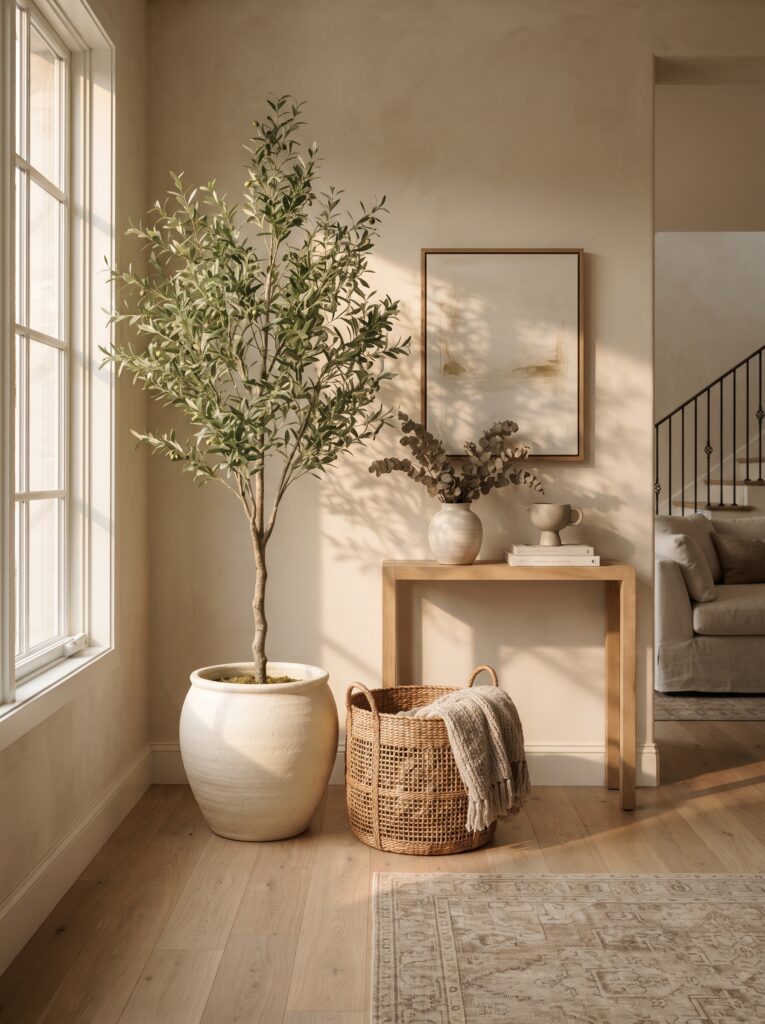
This approach works especially well in neutral, organic modern, transitional, minimalist, and contemporary interiors. A tall olive tree beside a console, a sculptural plant in a handmade ceramic planter, or a collection of greenery arranged at different heights can become a natural focal point without overwhelming the room.
For homeowners in the United States who want their interiors to feel warm, sophisticated, and connected to nature, an indoor plant corner is an easy way to refresh a room without completely redesigning it.
Why Indoor Plants Make Such a Difference
Rooms are generally filled with hard architectural and furniture lines: walls, cabinets, tables, shelves, windows, and flooring.
Plants introduce something completely different.
Their leaves create organic shapes and movement.
Their natural colors can soften neutral interiors.
Their height can fill an empty corner.
Their textures can complement wood, stone, linen, ceramic, and woven materials.
This is why even one carefully selected plant can have a significant visual effect.
The key is placement.
A plant should feel like part of the room rather than something that was added simply because there was an empty corner.
Create One Intentional Plant Moment
Instead of placing small plants randomly throughout the house, choose one area where greenery can become a deliberate design feature.
Good locations include:
- An empty living room corner
- Beside a console table
- Near a large window
- Next to a reading chair
- Beside a staircase
- In an entryway
- Near a home office
- Beside a media cabinet
- In a bedroom corner
- Near a large piece of artwork
The exact location depends on the lighting and the plant’s needs.
A beautiful arrangement should also make sense within the architecture of the room.
Choose a Statement Plant
If you want your plant corner to have a strong visual impact, start with one larger plant rather than several tiny ones.
Tall plants can draw the eye upward and help fill vertical space.
Depending on your home’s conditions, possibilities include:
- Olive trees
- Fiddle leaf figs
- Rubber plants
- Bird of paradise
- Dracaena
- Kentia palms
- Monstera
- Norfolk Island pines
Plant suitability depends on available light, humidity, temperature, and care requirements, so choose a variety that can realistically thrive in your home.
A beautiful plant that struggles in the location will eventually lose the effect you were trying to create.
Use an Oversized Planter
The planter is just as important visually as the plant itself.
An attractive planter can turn greenery into a genuine interior design feature.
For an elegant aesthetic, consider:
- Handmade ceramic
- Natural stone
- Textured plaster
- Terracotta
- Woven baskets
- Matte finishes
- Sculptural concrete
Neutral colors are especially versatile.
Cream, warm white, beige, taupe, charcoal, and earthy brown can work beautifully with a wide range of interiors.
Choose the Right Scale
Scale is one of the most important principles when decorating with plants.
A tiny plant placed in a huge empty corner may look lost.
A massive plant placed beside a small chair may overwhelm the room.
Instead, consider the relationship between the plant, planter, furniture, and ceiling height.
For a large room with high ceilings, a tall plant can provide visual balance.
For a smaller room, a medium-sized plant may be enough.
The goal is proportion.
Add a Plant Beside a Console
A console table and tall plant can create a beautiful layered arrangement.
Imagine a neutral console against a warm plaster wall.
On one side, there might be a ceramic lamp.
On the other, a tall olive tree.
A few carefully selected accessories can complete the composition.
The plant provides height while the console creates a horizontal foundation.
This combination can work particularly well in living rooms, hallways, and entry areas.
Use Natural Materials Around the Plant
Plants look especially beautiful when paired with other natural materials.
Consider combining greenery with:
- Walnut
- Oak
- Rattan
- Jute
- Linen
- Stone
- Ceramic
- Woven fibers
This creates a cohesive organic feeling.
For example, an olive tree in a textured ceramic planter beside a walnut console can create a sophisticated natural focal point.
Create an Organic Modern Plant Corner
Organic modern interiors often rely on a combination of clean architecture and natural materials.
Plants fit naturally into this aesthetic.
Try combining:
Natural wood + neutral walls + stone + greenery + textured ceramics
Keep the color palette restrained.
Instead of adding many decorative objects, allow the plant itself to provide visual interest.
Use Plants to Soften Empty Corners
Empty corners can make a room feel unfinished.
A large plant is one of the easiest ways to fill that visual gap without adding another large piece of furniture.
A tall plant can soften the transition between two walls.
It can also balance a large sofa, cabinet, or architectural feature on the opposite side of the room.
Before purchasing a plant, stand in the corner and consider its relationship with the surrounding furniture.
The plant should complement the room rather than simply occupy unused space.
Create Different Heights
If you want more than one plant, avoid placing every plant at the same height.
Instead, create layers.
For example:
Tall: Floor-standing tree
Medium: Plant on a small stool or stand
Low: Small plant on a console or shelf
Different heights create depth and movement.
However, do not overcrowd the area.
A plant corner can look more sophisticated when there is plenty of breathing room.
Use a Woven Basket for Warmth
A woven basket can soften the appearance of a standard nursery pot.
Materials such as rattan, seagrass, jute, and other natural fibers can introduce warmth and texture.
A neutral woven basket works particularly well in:
- Coastal interiors
- Organic modern homes
- Farmhouse-inspired spaces
- Transitional rooms
- Neutral interiors
Make sure the basket is appropriate for the planter and protects the surrounding floor from water.
Try a Sculptural Ceramic Planter
If you prefer a more refined look, a large ceramic planter can create a stronger architectural effect.
Look for organic shapes rather than overly decorative patterns.
A handmade, slightly imperfect ceramic finish can provide character.
This is particularly effective with simple plants because the planter becomes part of the composition.
Create a Plant Corner Near a Reading Chair
A reading nook can benefit enormously from greenery.
Place a medium or tall plant beside the chair.
Add a small side table and floor lamp.
The plant creates a natural backdrop while the chair establishes a comfortable focal point.
For a cozy aesthetic, combine:
- Upholstered chair
- Soft throw
- Small side table
- Floor lamp
- Indoor plant
- Neutral rug
This creates a relaxing corner without requiring a large amount of furniture.
Add Greenery to a Home Office
Plants can also soften a home office.
A tall plant beside the desk can break up the hard lines of office furniture.
A smaller plant on a shelf can introduce natural texture.
Choose plants according to the available light rather than choosing purely based on appearance.
The best office plant is one that fits both the design and the environment.
Use Plants in an Entryway
A large plant can make an entryway feel more welcoming.
If the entrance has enough space, consider placing greenery beside a console or near a bench.
Keep pathways clear.
An entryway plant should add visual interest without becoming an obstacle.
A tall, narrow plant can be especially useful when floor space is limited.
Create a Bedroom Plant Moment
Bedrooms generally benefit from softer styling.
A single plant can introduce a natural element without making the room feel busy.
Consider placing greenery near a window or in an unused corner.
Choose varieties appropriate for your bedroom’s light and temperature conditions.
Avoid selecting a plant simply because it is currently popular if its care requirements do not match your space.
How to Choose Plants Based on Light
Plant selection should begin with the environment.
Observe the location throughout the day.
Ask:
How much direct sunlight reaches the area?
Is the light bright but indirect?
Is the corner relatively dim?
Does the temperature fluctuate?
Is the location close to a heating or cooling vent?
Different plants have different requirements.
Before purchasing, check the care recommendations for the specific species.
A beautiful design begins with healthy greenery.
Do Not Ignore Plant Maintenance
Plants are living elements, so they require maintenance.
Depending on the species, care can include:
- Watering
- Pruning
- Cleaning leaves
- Repotting
- Fertilizing
- Monitoring pests
- Rotating the plant toward light
Create a routine that works for your schedule.
If you travel frequently or prefer low-maintenance decor, select plants known for being more forgiving rather than choosing something that requires constant attention.
Clean Plant Leaves Regularly
Dust can accumulate on large leaves.
Clean foliage can make a plant look healthier and more attractive.
Follow appropriate care practices for the specific plant.
Avoid using household cleaning products on leaves unless they are specifically intended for plants.
Simple maintenance can make a noticeable difference in the appearance of your indoor garden.
Create a Seasonal Plant Corner
Your main plant can remain the same throughout the year while smaller surrounding details change.
Spring
Add lighter ceramics and fresh seasonal flowers.
Summer
Use woven textures and lighter accessories.
Fall
Introduce warm wood, amber tones, dried branches, or subtle earthy accents.
Winter
Pair greenery with warm lighting, textured ceramics, and cozy neutral textiles.
This allows the plant corner to evolve without replacing the primary plant.
Indoor Plants for a Neutral Home
Neutral interiors can sometimes lack contrast.
Greenery provides a natural color variation without disrupting the palette.
Cream walls, beige furniture, natural wood, and green foliage create a classic combination.
If you prefer an especially sophisticated look, choose a planter that repeats one of the room’s existing materials.
For example:
Walnut furniture + cream ceramic planter + green foliage
The colors feel connected while the plant provides natural contrast.
Create a Minimalist Plant Display
Minimalist plant styling does not mean removing all greenery.
Instead, choose fewer but more intentional pieces.
One large plant in a beautiful planter can be more effective than ten small plants.
Keep the surrounding area clean.
Avoid unnecessary decorative objects.
Let the plant become the focal point.
Create a Luxury-Inspired Plant Corner
For a luxury-inspired interior, focus on scale and materials.
Choose a substantial plant.
Pair it with a high-quality-looking planter.
Place it near sophisticated furniture.
Use warm lighting.
Keep the surrounding accessories restrained.
For example, a tall olive tree in a large textured cream planter beside a walnut console can create an elegant focal point without looking excessive.
Indoor Plant Corners on a Budget
You do not need expensive plants or designer planters.
Start with what you already have.
A simple nursery plant can look beautiful when placed inside a well-chosen basket.
You can also find interesting planters at:
- Thrift stores
- Vintage shops
- Local garden centers
- Home improvement stores
- Estate sales
- Artisan markets
Focus your budget on the overall composition rather than the brand name of every piece.
Common Indoor Plant Styling Mistakes
Choosing the Wrong Plant for the Location
A beautiful plant will not thrive without suitable conditions.
Using Too Many Plants
More greenery does not automatically create a better design.
Ignoring Scale
The plant should be proportional to the room and furniture.
Choosing a Planter Without Considering the Room
The planter should complement the existing palette and materials.
Blocking Walkways
Decor should never interfere with safe movement through the home.
Neglecting Maintenance
Healthy plants always look better than neglected ones.
Creating a Cluttered Plant Corner
Leave enough negative space around the greenery.
How to Make an Indoor Plant Corner Look More Expensive
The simplest approach is to emphasize scale and simplicity.
Instead of purchasing several small decorative plants, invest in one substantial plant.
Choose a planter with a beautiful texture.
Place it thoughtfully.
Keep the surrounding area uncluttered.
Add one complementary natural material nearby.
This creates a more intentional composition.
A large plant can become a piece of living decor rather than simply another accessory.
Combine Plants With Artwork
A plant can also be used to frame artwork.
For example, a large piece of neutral artwork can hang above a console while a tall plant sits slightly to one side.
The organic leaves soften the edges of the artwork and create visual movement.
Be careful not to cover the artwork completely.
The goal is layering, not obstruction.
Use Plants to Balance Furniture
Interior design is largely about visual balance.
If one side of a room contains a large cabinet, media console, or tall bookshelf, a plant can sometimes provide balance on the opposite side.
This does not mean everything needs to be symmetrical.
Asymmetrical balance can actually feel more natural.
A tall plant can provide visual weight without requiring another large piece of furniture.
How to Photograph an Indoor Plant Corner for Pinterest
If you are creating Pinterest content, photograph the plant as part of the room.
A close-up can show the texture of the leaves and planter.
A wider vertical photograph can demonstrate how the plant transforms the entire space.
Use natural light whenever possible.
Soft morning or late-afternoon light can create beautiful shadows across walls and floors.
Avoid excessive editing.
The image should feel aspirational while still looking realistic.
For a strong Pinterest composition, make sure viewers can immediately understand the idea: one beautiful plant can transform an empty corner.
How to Make Your Plant Corner Feel Personal
Your home should not look exactly like a showroom.
Choose plants that you genuinely enjoy.
Pair them with objects that have meaning.
Maybe the planter came from a local artisan.
Maybe the basket was found while traveling.
Maybe the plant was given to you as a gift.
These details create a sense of personality.
The most beautiful interiors often combine design principles with objects that tell a story.
A Simple Indoor Plant Corner Formula
If you want an easy starting point, try this formula:
Statement Plant + Beautiful Planter + Suitable Light + Negative Space + One Natural Accent
For example:
A tall olive tree provides height.
A textured ceramic planter adds visual weight.
A bright location supports healthy growth.
Negative space keeps the arrangement sophisticated.
A small wooden stool or woven basket adds texture.
The result can feel polished without being complicated.
Conclusion
Creating an elevated indoor plant corner is one of the simplest ways to bring natural beauty into your home. You do not need dozens of plants or an elaborate indoor garden. Often, one carefully selected statement plant can transform an empty corner and make an entire room feel more finished.
Start by choosing a location with conditions suitable for the plant you want. Then consider scale, planter style, surrounding materials, and the relationship between the greenery and nearby furniture.
Natural wood, ceramic, stone, woven fibers, linen, and neutral colors can all complement indoor plants beautifully. Most importantly, keep the arrangement intentional. Give the plant enough space to stand out, choose a planter that feels connected to your interior, and avoid adding unnecessary objects simply to fill an empty area.
Whether your home is modern, transitional, minimalist, organic, or traditionally styled, greenery can bring softness and life into the space.
A thoughtfully designed plant corner is not just decoration. It becomes a small living feature that adds character, texture, and warmth to everyday life.
- The Indoor Plant Corner That Makes a Home Feel Instantly More Elevated
- How to Turn Your Closet Into a Boutique-Inspired Dressing Space
- A Calm Home Office That Makes Working From Home Feel Beautiful
- How to Style a Coffee Table Like a Luxury Interior Designer
- Elegant Fall Wedding Welcome Table Ideas for a Beautiful First Impression