
A coffee table may be one of the smallest pieces of furniture in a living room, but it can have a surprisingly big impact on the overall look and feel of the space. When styled thoughtfully, a coffee table can make an ordinary living room feel polished, welcoming, and professionally designed.
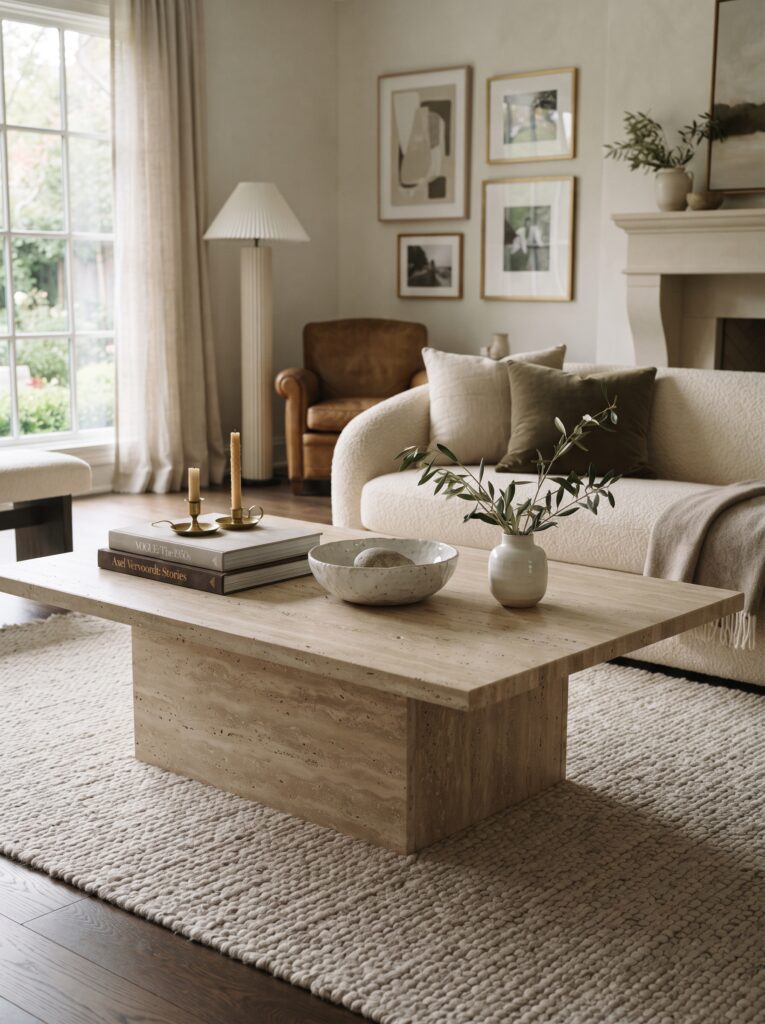
The secret is not filling the table with expensive accessories. Instead, luxury-looking coffee table styling comes from choosing a few beautiful objects, combining different shapes and textures, and creating a balanced arrangement that feels intentional without looking overly decorated.
For homeowners who love elegant, neutral, modern classic, transitional, or quiet-luxury interiors, the coffee table is an excellent place to introduce personality.
Whether you have a large rectangular coffee table, a round wood table, a marble surface, or a small apartment-friendly design, the same styling principles can help you create a sophisticated focal point.
Why Coffee Table Styling Matters
The coffee table naturally sits near the center of many living rooms. Because of its position, it is often one of the first decorative surfaces people notice when they enter the room.
An empty coffee table can sometimes make a living room feel unfinished. On the other hand, a table covered with too many decorative objects can make the entire space feel cluttered.
The goal is balance.
A well-styled coffee table should look beautiful while remaining practical enough for everyday life.
You should still have room to place a cup of coffee, a remote control, a book, or something you are using while relaxing.
This combination of beauty and functionality is what makes professional-looking coffee table styling different from simply placing decorations on a table.
Start With the Coffee Table Itself
Before adding accessories, look at the shape, material, and size of your coffee table.
The table should influence the styling approach.
A large rectangular table gives you more room to create multiple decorative groupings. A round coffee table often looks better with one central arrangement or several objects arranged loosely around the center.
A glass table can benefit from substantial textured objects because transparent furniture can otherwise appear visually light.
A wood coffee table already provides warmth and texture, so it may require fewer accessories.
Common coffee table materials include:
- Natural wood
- Walnut
- Oak
- Marble
- Travertine
- Glass
- Metal
- Stone
- Concrete
The material of the table should work with the surrounding furniture rather than compete with it.
The Three-Layer Coffee Table Formula
One of the easiest ways to create a designer-inspired arrangement is to think in layers.
A simple formula is:
Books + Decorative Object + Natural Element
For example, place two oversized design books on one side of the table. Add a sculptural ceramic bowl or stone object on top. Then introduce a small plant, branch, or floral arrangement nearby.
This creates different heights and textures.
The result feels collected rather than perfectly symmetrical.
You can adjust the formula depending on your personal style.
For a minimalist home, you might use only two or three pieces.
For a traditional living room, you could incorporate a tray, books, candles, and a floral arrangement.
For an organic modern room, natural wood, stone, ceramic, and greenery can create a beautiful combination.
Use Coffee Table Books as a Foundation
Coffee table books are popular because they serve both a functional and decorative purpose.
Large-format books can add height while introducing color, texture, and personality.
Choose books related to subjects you genuinely enjoy, such as:
- Interior design
- Architecture
- Fashion
- Travel
- Art
- Photography
- Gardening
- Food
- History
Instead of buying books simply because their covers look attractive, select titles that reflect your interests.
A stack of two or three books can create a foundation for another decorative object.
For example, a sculptural bowl placed on top of a large design book can immediately create a layered composition.
Avoid Making Every Book Stack Identical
Perfectly matching stacks can sometimes make a room feel staged.
If you have several books, experiment with different combinations.
One side of the table might contain two large books, while another area could feature a single smaller book beside a ceramic object.
The goal is visual rhythm.
Different heights can make the arrangement feel more natural.
Add One Sculptural Object
A sculptural accessory can become the focal point of the coffee table.
Instead of choosing multiple small decorative pieces, consider using one larger object with an interesting silhouette.
Examples include:
- Sculptural ceramic bowls
- Organic stone objects
- Decorative spheres
- Abstract wooden forms
- Handcrafted pottery
- Architectural objects
- Textured vessels
The shape matters more than the price.
A simple handmade ceramic piece can look incredibly sophisticated when surrounded by neutral materials and enough negative space.
Bring in a Natural Element
Natural materials prevent a coffee table from feeling too artificial.
A small plant, olive branch, eucalyptus stem, seasonal flowers, or even a few dried branches can introduce organic movement.
You do not need a large bouquet.
A low arrangement is often more practical because it does not obstruct conversation across the room.
For a quiet-luxury look, try a simple branch in a sculptural ceramic vessel.
For a warmer traditional room, a small seasonal flower arrangement can work beautifully.
Use a Decorative Tray
A tray is particularly useful if your coffee table contains several small objects.
Instead of spreading candles, remotes, coasters, and accessories across the entire surface, place selected items inside a tray.
This visually groups them together.
A tray can also make everyday organization easier.
Look for materials such as:
- Wood
- Marble
- Stone
- Brass
- Leather
- Rattan
- Lacquer
Choose a tray that complements the furniture.
For example, a natural wood tray can soften a contemporary room, while a brass tray can introduce warmth into a neutral space.
Mix Shapes
One of the most important styling principles is shape variation.
If everything on your coffee table is rectangular, the arrangement can feel rigid.
If everything is round, it may lack structure.
Instead, combine different silhouettes.
Try:
Rectangular books + round bowl + organic branch
or
Square tray + curved ceramic object + cylindrical candle
This contrast makes the arrangement more visually interesting.
Combine Different Textures
Texture can make neutral interiors feel rich.
This is especially important if your living room uses a limited color palette.
Imagine a coffee table featuring:
- Smooth stone
- Rough ceramic
- Soft linen
- Natural wood
- Glossy glass
- Brushed metal
Even when these pieces are all neutral, the difference in texture creates depth.
This is one reason sophisticated interiors can feel visually interesting without relying on bold colors.
Choose a Limited Color Palette
A cohesive coffee table usually has a relationship with the colors already present in the living room.
If your room is primarily cream, beige, taupe, and brown, you might continue that palette on the table.
If the room contains black accents, introducing a small black decorative object can connect the coffee table to the rest of the space.
The goal is coordination rather than exact matching.
A useful approach is to choose two or three main colors and allow different shades and textures to create variation.
For example:
Cream + walnut + brass
or
Taupe + black + natural stone
or
Ivory + brown + muted green
Create Negative Space
One of the easiest ways to make a coffee table look more luxurious is to leave some of it empty.
Empty space gives decorative objects room to breathe.
A common mistake is assuming that every empty section of the table needs something.
It does not.
Luxury interiors often rely on restraint.
Instead of placing ten small objects across the surface, select four or five meaningful pieces and give them enough space to be appreciated individually.
Style According to the Shape of the Table
Rectangular Coffee Table
A rectangular table can be divided into visual zones.
For example, place books and a sculptural object on one side while keeping a floral arrangement toward the opposite side.
This creates balance without perfect symmetry.
Round Coffee Table
A round table naturally encourages a central arrangement.
Try a low tray with a vase, candle, and small decorative object.
Alternatively, use a stack of books topped with a sculptural bowl.
Square Coffee Table
A square table can be styled using a central grouping or four smaller zones.
However, avoid putting identical objects in each corner unless you specifically want a symmetrical traditional appearance.
Small Coffee Table
When space is limited, choose only a few pieces.
A single beautiful tray, small vase, and book may be enough.
Small spaces benefit from visual simplicity.
Make the Coffee Table Functional
A beautiful coffee table should still work for everyday living.
Before finalizing the arrangement, ask yourself:
Can I comfortably put down a drink?
Can I reach the remote?
Can people sit around the table without knocking things over?
Can the accessories be moved easily when the table needs to be used?
If the answer is no, the arrangement may be too decorative.
Good interior styling balances aesthetics with real life.
Hide Everyday Clutter
Remote controls, charging cables, coasters, and other small items can quickly make a beautiful living room feel messy.
A decorative box or tray can help contain these objects.
You could use:
- A lidded decorative box
- Small storage tray
- Woven container
- Leather catchall
- Decorative bowl
The goal is not to hide everything permanently.
Instead, create a designated place for everyday items.
Add Candles Carefully
Candles can bring warmth and atmosphere to a coffee table.
Choose one or two candles rather than covering the entire surface.
Taper candles work beautifully in a small holder, while a low pillar candle can provide a more substantial visual element.
For a sophisticated aesthetic, consider neutral candle colors such as:
- Ivory
- Cream
- Beige
- Soft brown
- Warm gray
If you have children or pets, prioritize safe placement and consider flameless alternatives where appropriate.
Seasonal Coffee Table Styling
Your coffee table does not need a complete makeover every season.
Small changes can refresh the space.
Spring
Use fresh greenery, soft flowers, lighter ceramics, and natural textures.
Summer
Introduce lighter materials, coastal-inspired textures, fresh greenery, or subtle blue accents.
Fall
Add warm brown tones, amber glass, dried branches, seasonal foliage, or textured ceramics.
Winter
Use candles, evergreen branches, warm textiles, darker wood tones, and subtle metallic accents.
The key is to make seasonal changes without replacing every accessory.
Fall Coffee Table Styling Without Looking Overly Themed
For an elegant fall living room, avoid turning the coffee table into a collection of pumpkins and artificial leaves.
Instead, introduce the season subtly.
A stack of neutral books, an amber glass candle, a dark ceramic bowl, and one dried branch can create an autumn feeling without overwhelming the room.
This is particularly effective if you want your decor to remain sophisticated throughout the season.
How to Style a Coffee Table for a Neutral Living Room
Neutral rooms can be incredibly elegant, but they require attention to texture.
If your living room contains mostly cream and beige furniture, introduce visual depth through:
- Walnut
- Natural stone
- Dark ceramic
- Aged brass
- Woven materials
- Greenery
Avoid making every accessory exactly the same shade.
Instead, use tonal variation.
For example, ivory books can sit beside a warm beige bowl and a medium-brown wooden object.
The result is neutral but not flat.
How to Create a Quiet-Luxury Coffee Table
A quiet-luxury aesthetic is generally more about quality, restraint, and timeless materials than obvious decoration.
For this style, choose:
- Oversized art books
- Natural stone
- Handmade ceramics
- Brass accents
- Quality wood
- Simple flowers
- Neutral textiles
Avoid excessive logos, bright novelty objects, or too many tiny accessories.
A few substantial pieces usually create a stronger impression.
Coffee Table Styling Mistakes to Avoid
1. Too Many Small Objects
Tiny decorative objects can quickly create visual clutter.
2. Everything Is the Same Height
Vary the height of your objects to create dimension.
3. No Empty Space
A crowded table can make the entire room feel busy.
4. Ignoring Function
Your coffee table should still be usable.
5. Matching Everything Too Perfectly
A room can feel more sophisticated when different textures and shapes are combined.
6. Using Too Many Colors
A limited palette usually creates a more cohesive appearance.
7. Choosing Accessories Without Considering the Room
The coffee table should relate to the sofa, rug, lighting, artwork, and other furnishings.
How to Style a Coffee Table on a Budget
You do not need designer accessories to create a sophisticated arrangement.
Start by shopping your own home.
You may already have:
- Books
- Ceramic bowls
- Candles
- Small plants
- Vases
- Decorative boxes
- Trays
- Wooden objects
Rearrange existing pieces before purchasing anything new.
If you want to invest in one item, choose something that has visual impact.
A beautiful handmade bowl or substantial vase can make more of a difference than purchasing several inexpensive accessories.
Where to Shop for Coffee Table Decor
For US homeowners, coffee table accessories can be found at a wide range of retailers and local sources.
Consider looking at home decor stores, vintage markets, antique shops, artisan marketplaces, thrift stores, and local boutiques.
You can also find beautiful objects through estate sales and secondhand marketplaces.
Mixing old and new pieces can create a much more personal interior than purchasing an entire matching collection.
Make Your Coffee Table Reflect Your Personality
A professionally styled coffee table should not feel like a showroom.
Your personality should still be visible.
If you love travel, display a beautiful travel book.
If you enjoy gardening, introduce a botanical book or natural element.
If you love architecture, use an architectural book as the foundation of your arrangement.
If handmade objects are important to you, display a ceramic piece created by an artist.
The most memorable homes usually contain objects that have meaning.
Coffee Table Styling for Different Interior Styles
Modern
Use clean lines, sculptural objects, monochromatic colors, and minimal accessories.
Traditional
Try classic books, floral arrangements, brass accents, trays, and decorative boxes.
Organic Modern
Combine wood, stone, ceramics, greenery, and neutral textiles.
Transitional
Mix traditional accessories with modern shapes and restrained colors.
Minimalist
Choose only two or three substantial pieces and maintain plenty of negative space.
Eclectic
Mix vintage finds, artwork, books, unusual objects, and varied textures while keeping one or two colors consistent.
How to Photograph a Styled Coffee Table
If you are sharing your interior design ideas on Pinterest, photograph the coffee table as part of the room rather than treating it as an isolated object.
A vertical photograph can show the relationship between the coffee table, sofa, rug, lighting, and surrounding decor.
Use natural light whenever possible.
Capture both wide shots and close-ups.
A close-up can highlight:
- Book textures
- Ceramic details
- Candlelight
- Natural materials
- Floral arrangements
A wider image shows viewers how the styling works within the overall living room.
Avoid excessive editing that makes neutral colors appear unnatural.
Conclusion
Styling a coffee table beautifully is less about buying expensive decorations and more about learning how to combine objects intentionally.
Start with a simple foundation such as a stack of books. Add one sculptural piece, introduce a natural element, and then consider whether the arrangement needs anything else. Pay attention to shape, height, texture, color, and negative space. Most importantly, remember that your coffee table is part of a living room—not a display shelf.
It should look beautiful while still allowing you to live comfortably. A few thoughtfully selected pieces can create the polished, layered appearance associated with professionally designed interiors. Whether your style is modern, traditional, organic, minimalist, or transitional, the same basic principles can help you create a coffee table that feels elegant, personal, and timeless.
- The Indoor Plant Corner That Makes a Home Feel Instantly More Elevated
- How to Turn Your Closet Into a Boutique-Inspired Dressing Space
- A Calm Home Office That Makes Working From Home Feel Beautiful
- How to Style a Coffee Table Like a Luxury Interior Designer
- Elegant Fall Wedding Welcome Table Ideas for a Beautiful First Impression