
A home does not need a large dedicated bar room to have a beautiful entertaining area. Sometimes, a small built-in bar tucked into a dining room, kitchen, living area, hallway, or unused wall can add an unexpected sense of character and sophistication.
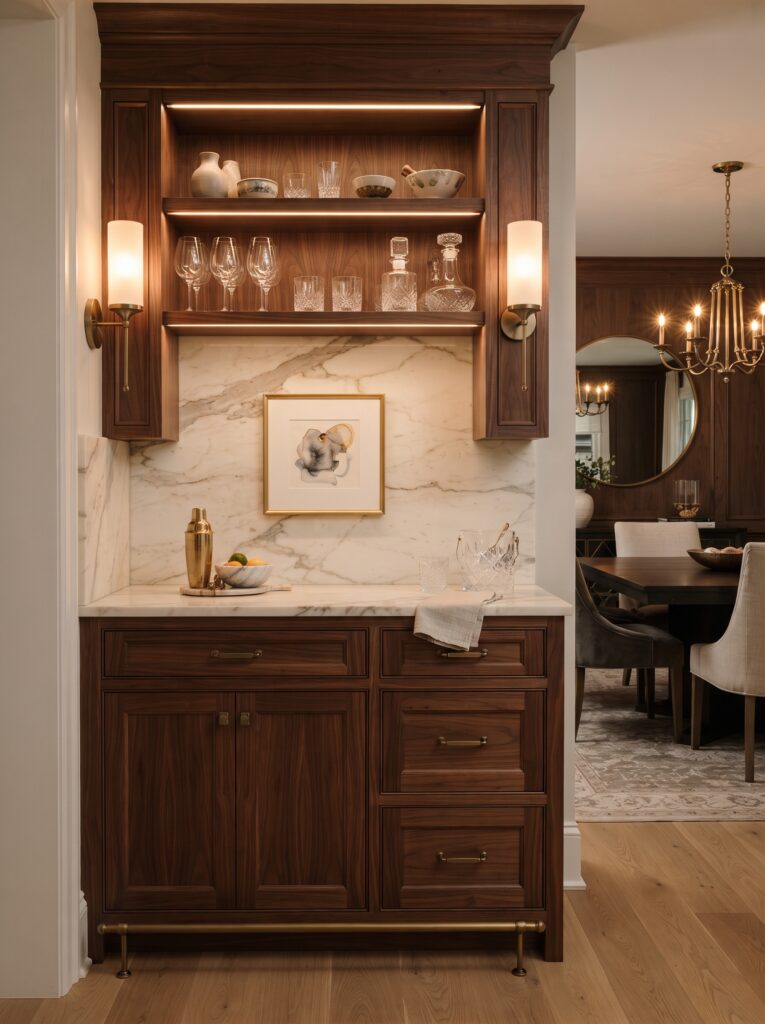
Built-in home bars have become an appealing feature for homeowners who want their spaces to feel more personalized and functional. Unlike a freestanding bar cart, a built-in bar can be designed specifically around the dimensions, storage needs, and architectural style of the home.
It can be as simple as a compact cabinet with a stone countertop or as elaborate as a custom wall of cabinetry with glass-front doors, lighting, shelving, and a dedicated beverage-preparation area.
The most successful home bar designs are not necessarily the biggest. They are the ones that make good use of available space while fitting naturally into the rest of the home.
Whether you are planning a complete renovation or simply looking for inspiration for a small entertaining corner, these built-in home bar ideas can help you create a space that feels polished, practical, and distinctly yours.
Why Choose a Built-In Home Bar?
A built-in bar offers something that many freestanding furniture pieces cannot: a sense of permanence.
Because the cabinetry is designed specifically for the wall or niche, it can make an awkward or underused area feel intentional.
A built-in bar can also provide significantly more organized storage than a small cart.
Depending on the design, it can include:
- Closed cabinets
- Drawers
- Open shelving
- Glass-front cabinets
- Counter space
- Beverage appliances
- Stemware storage
- Servingware storage
- Decorative display space
This makes the feature useful not only for entertaining but also for everyday beverages and hosting.
The design can also be customized to complement the architecture of the home.
A traditional house might use painted cabinetry and brass hardware, while a contemporary home could feature flat-panel walnut cabinetry and stone surfaces.
1. Create a Compact Built-In Bar Cabinet
You do not need an entire wall to create a home bar.
A narrow cabinet can provide everything necessary for a small entertaining station.
Choose a cabinet with enough countertop space for preparing and serving beverages. Above it, install one or two shelves for attractive glassware, ceramics, or decorative objects.
The lower cabinets can hide less attractive supplies and serving pieces.
This approach works particularly well in smaller American homes, apartments, condos, and townhouses.
The goal is to use vertical space efficiently without making the room feel crowded.
2. Turn an Unused Wall Into an Entertaining Zone
An empty wall in a dining room can become an excellent location for a built-in bar.
Instead of leaving the wall completely blank, create a custom composition with cabinetry, shelving, lighting, and artwork.
The bar does not have to dominate the dining room.
A relatively shallow installation can provide useful storage while maintaining comfortable circulation around the dining table.
Choose finishes that relate to the dining furniture.
For example, a walnut dining table can be complemented with walnut cabinetry, while brass lighting can connect with brass hardware.
3. Use a Butler’s Pantry as Inspiration
Traditional American homes sometimes feature butler’s pantries between the kitchen and dining room.
Even if your home does not have a formal butler’s pantry, you can borrow some of its design principles.
Think of the built-in bar as a compact service area rather than simply a decorative cabinet.
Include practical storage for serving pieces, glassware, napkins, trays, and entertaining accessories.
This can make hosting much easier because everything is stored together.
4. Add Glass-Front Cabinets
Glass-front cabinets can make a built-in bar feel lighter and more decorative.
Instead of hiding every item behind solid doors, use glass panels to display attractive pieces.
Beautiful glassware, ceramic pitchers, serving bowls, and vintage-inspired objects can become part of the room’s decor.
However, avoid filling every shelf.
A few carefully selected objects with open space around them usually create a more sophisticated appearance.
If you prefer a less traditional look, reeded or textured glass can provide visual interest while partially obscuring the contents.
5. Use Open Shelving Carefully
Open shelving is another popular option for built-in bar designs.
Floating wood shelves can soften cabinetry and introduce warmth.
They can also make a small bar feel more open.
However, open shelving requires organization.
If the shelves become a place for miscellaneous items, the entire area can quickly appear cluttered.
Use a simple styling formula:
One section for glassware, one for serving pieces, and one for decorative objects.
Repeat materials or colors so the shelves look cohesive.
6. Choose a Statement Countertop
The countertop can become one of the most visually important parts of a built-in bar.
Natural stone, quartz, marble, or other durable surfaces can create a polished appearance.
A countertop with subtle veining can add movement to otherwise simple cabinetry.
For a timeless look, choose a stone with a relatively restrained pattern.
For a more dramatic interior, a darker stone or stronger veining can create contrast.
The countertop should also be appropriate for the intended use and maintained according to the manufacturer’s recommendations.
7. Add Warm Cabinet Lighting
Lighting can make a major difference.
Interior cabinet lighting can illuminate glassware and decorative objects, creating a soft glow in the evening.
Under-shelf lighting can also provide functional illumination for preparing and serving beverages.
For a sophisticated atmosphere, avoid relying solely on bright overhead lighting.
Layered lighting can make the entire dining or entertaining area feel warmer.
Small wall sconces positioned beside the cabinetry can also create a more architectural appearance.
8. Use Brass Hardware for Traditional Elegance
Hardware is a relatively small detail, but it can strongly influence the overall character of a bar.
Aged brass or unlacquered brass can complement traditional and transitional interiors.
Pair brass hardware with warm wood, creamy paint colors, natural stone, and soft lighting for a classic appearance.
For a more contemporary look, simple hardware with clean lines can keep the cabinetry understated.
The goal is consistency.
If the room already has brass fixtures, repeating that finish in the bar helps the design feel connected.
9. Try Dark Wood for a Moody Look
Dark cabinetry can create a dramatic and sophisticated entertaining area.
Walnut, espresso, or other deep wood tones can make a small bar feel intimate.
Pair dark cabinetry with lighter stone, warm lighting, and metallic details to prevent the space from becoming visually heavy.
This approach works particularly well in dining rooms, studies, media rooms, and other areas designed for evening entertaining.
The contrast between dark wood and warm lighting can create a boutique-hotel atmosphere without requiring excessive decoration.
10. Create a Vintage-Inspired Home Bar
A built-in bar does not have to look completely new.
Vintage-inspired details can give it personality.
Consider combining modern cabinetry with:
- Antique-style hardware
- Vintage mirrors
- Old-fashioned glassware
- Framed artwork
- Reclaimed wood
- Aged metal finishes
- Traditional lighting
The mixture of old and new can make the bar feel collected over time.
This works especially well in homes with traditional architecture or interiors influenced by European design.
11. Incorporate a Mirror Backsplash
A mirror backsplash can make a small bar feel larger and brighter.
It reflects light and creates visual depth behind the countertop.
For a traditional home, an antique-style mirror can provide warmth and character.
For a more contemporary space, clear or lightly tinted mirror can create a cleaner appearance.
Because a mirrored surface naturally attracts attention, keep the surrounding styling relatively simple.
12. Use Wallpaper Behind the Shelves
Wallpaper can provide another way to personalize a built-in bar.
A small amount of patterned wallpaper behind open shelving can introduce color without overwhelming the entire room.
Consider:
- Botanical patterns
- Small-scale geometric designs
- Textured grasscloth
- Vintage-inspired prints
- Subtle stripes
- Abstract patterns
If the cabinetry is neutral, wallpaper can become the decorative feature.
If the cabinetry is already colorful or dramatic, choose a quieter background.
13. Design a Beverage Station Instead of a Traditional Bar
A built-in bar does not need to be focused entirely on entertaining.
A beverage station can be useful for everyday life.
Create a dedicated area for coffee, tea, sparkling water, or other drinks.
This can work beautifully in a kitchen, dining room, home office, or breakfast area.
A compact cabinet can conceal appliances when they are not being used, keeping countertops clean.
This approach is particularly useful for homeowners who want a multifunctional feature rather than a purely decorative bar.
14. Add a Beverage Refrigerator
If your space and installation requirements allow, a compact beverage refrigerator can make a built-in entertaining area more functional.
It can provide convenient storage while keeping the main kitchen refrigerator less crowded.
Before adding an appliance, consider ventilation, electrical requirements, cabinet dimensions, and manufacturer specifications.
The appliance should be integrated carefully into the cabinetry so that the entire installation looks intentional.
15. Create a Bar Within a Dining Room
The dining room is one of the most natural places for a built-in entertaining station.
Because the room is already associated with hosting and meals, the bar can feel like an extension of the dining experience.
A low cabinet along one wall can provide storage without competing with the dining table.
Use artwork above the cabinet or open shelves to create a decorative focal point.
During everyday use, the area can simply function as attractive storage.
When entertaining, it becomes a practical serving station.
16. Add a Home Bar to a Living Room
A living room bar can be much more subtle.
Instead of creating an obvious “bar” appearance, integrate a small cabinet into a wall of built-ins.
The cabinet can look like ordinary furniture until it is opened.
This is particularly effective in sophisticated living rooms where you do not want a highly themed entertaining area.
Use matching cabinetry so the bar feels like part of the room’s architecture.
17. Use a Niche for a Custom Look
If your home already has an unused wall niche, it may be the perfect location.
Rather than trying to make standard furniture fit the space, design the cabinetry around the niche.
This can create a custom appearance without requiring a large footprint.
A narrow stone counter, a mirrored back panel, one or two shelves, and concealed storage can be enough.
Small architectural spaces often become more attractive when their proportions are emphasized rather than hidden.
18. Add a Floating Shelf for a Smaller Budget
A full custom bar can be expensive.
If you want the appearance without a major renovation, consider combining a freestanding cabinet with one or two wall-mounted shelves.
Choose a cabinet that fits the wall dimensions and add a beautiful countertop or hardware.
Then use the shelves for glassware and decorative items.
This creates some of the visual effect of a built-in while keeping the project more flexible.
19. Make the Bar Blend Into the Home
The best built-in bars do not always announce themselves.
If you want a discreet design, match the cabinetry to nearby furniture or architectural elements.
For example, in a dining room with cream-painted built-ins, use the same cabinet finish for the bar.
In a wood-paneled room, choose a complementary wood tone.
This makes the bar feel like part of the original architecture.
20. Use a Bold Color for Personality
A small built-in bar can be a good place to experiment with color.
Because the feature occupies less space than an entire kitchen or living room, a richer shade may be easier to incorporate.
Consider:
- Deep green
- Navy
- Warm burgundy
- Muted blue
- Chocolate brown
- Charcoal
- Dusty plum
A colorful cabinet can become a focal point without requiring the entire room to be colorful.
Balance it with neutral walls and natural materials.
21. Add Artwork Instead of More Accessories
A built-in bar does not need to be covered with decorative objects.
One well-chosen artwork can provide enough personality.
Try a vintage landscape, abstract painting, botanical print, or architectural sketch.
If the bar is in a dining room, the artwork can coordinate with the colors used in the upholstery or rug.
This keeps the design visually connected.
22. Organize the Interior as Carefully as the Exterior
A beautiful bar is much more useful when its interior is organized.
Use drawer dividers for small serving accessories.
Adjustable shelves can accommodate different types of glassware.
Pull-out trays can make serving pieces easier to access.
Baskets can hide miscellaneous supplies.
The organization should reflect your actual habits.
Do not create storage for items you never use simply because a design photograph shows them.
23. Create a Petite Bar for an Apartment
Apartment dwellers can still enjoy a built-in-style entertaining area.
A shallow wall cabinet can provide storage without consuming valuable floor space.
A small shelf above it can display glassware.
A compact countertop can provide enough room for serving.
If you are renting, consider a freestanding cabinet that visually resembles built-in furniture rather than making permanent alterations.
The same design principles—vertical storage, coordinated finishes, good lighting, and restraint—can still create a sophisticated result.
24. Make the Space Feel Luxurious Without Overdoing It
Luxury is often created through details rather than excess.
Instead of using every possible premium material, focus on a few strong elements.
For example:
- Warm walnut cabinetry
- One beautiful stone surface
- Aged brass hardware
- Soft integrated lighting
- Carefully selected glassware
That combination can create a much more refined result than combining many competing finishes.
A restrained design also tends to age better.
25. Style the Countertop
Countertop styling should remain functional.
A simple arrangement might include a ceramic vessel, small tray, attractive serving piece, or vase with branches.
Leave enough open counter space for actual preparation and serving.
Avoid covering the entire surface with decorative objects.
A clean countertop makes a small bar feel larger and more sophisticated.
26. Add a Small Seating Area Nearby
If space allows, place two comfortable stools or accent chairs near the entertaining area.
However, do not force seating into a narrow space.
The bar can function perfectly well without dedicated seating.
If you do add stools, choose a style that complements the surrounding furniture.
Natural wood, upholstered seats, or simple metal frames can all work depending on the interior.
27. Built-In Bar Ideas for Different Home Styles
Traditional
Use painted cabinetry, natural stone, brass hardware, classic molding, and vintage-inspired artwork.
Transitional
Combine simple cabinetry with warm wood, neutral stone, contemporary lighting, and classic hardware.
Modern
Choose flat-panel cabinetry, minimal hardware, clean stone surfaces, and integrated lighting.
Modern Farmhouse
Use warm wood, simple cabinetry, natural materials, woven textures, and understated hardware.
Eclectic
Mix vintage objects, colorful cabinetry, patterned wallpaper, unusual artwork, and collected accessories.
European-Inspired
Consider walnut, limestone, aged brass, antique-style mirrors, linen textiles, and traditional detailing.
Common Built-In Home Bar Mistakes
One of the biggest mistakes is making the bar too large for the room.
A home bar should support the space rather than dominate it.
Another issue is poor lighting.
Even beautiful cabinetry can appear flat if the area is poorly illuminated.
Storage is another consideration. Before designing the cabinets, think about what you actually need to store.
It is also important to plan electrical, plumbing, ventilation, and appliance requirements before construction begins.
If the project involves significant electrical, plumbing, structural, or cabinetry work, consult the appropriate qualified professionals and follow local requirements.
How to Make a Small Home Bar Look Custom
Start by measuring the wall carefully.
Then consider the height, width, depth, and surrounding furniture.
Choose one dominant material, such as wood or painted cabinetry, and one complementary countertop.
Add one distinctive feature—perhaps antique-style hardware, a mirrored backsplash, patterned wallpaper, or integrated lighting.
Finally, keep the styling restrained.
The custom appearance comes from proportion and integration, not from filling the space with expensive objects.
Conclusion
A built-in home bar can add personality, organization, and entertaining functionality to almost any American home. It does not have to occupy an entire room or resemble a traditional bar.
A small cabinet in a dining room, a hidden beverage station in a kitchen, or a custom niche in a living room can provide the same sense of intentional design on a much smaller scale.
The most appealing designs combine practical storage with thoughtful materials, warm lighting, and a style that complements the surrounding home.
If you are working with a limited budget, start small. A well-chosen cabinet, attractive countertop, floating shelf, and carefully selected hardware can create a polished entertaining station without a complete renovation.
If you are planning a larger remodel, consider how the bar can be integrated into the home’s architecture from the beginning.
Ultimately, the goal is not simply to create a place for beverages. It is to create a beautiful, functional corner that makes hosting easier and gives your home another layer of character.
- Covered Patio Ideas for an Outdoor Room That Feels Like Home
- Staircase Gallery Wall Ideas That Feel Collected, Not Cluttered
- Built-In Home Bar Ideas for an Elevated Entertaining Space
- Fireplace Makeover Ideas That Instantly Elevate a Living Space
- Window Seat Ideas That Make Any Room Feel More Charming