
When people decorate a room, they usually think about the walls, flooring, furniture, lighting, and accessories. One area is often overlooked: the ceiling.
Yet the ceiling can have a major influence on the character of a room. Often called the “fifth wall,” it offers an opportunity to introduce color, pattern, texture, architectural detail, or lighting in a way that feels unexpected and sophisticated.
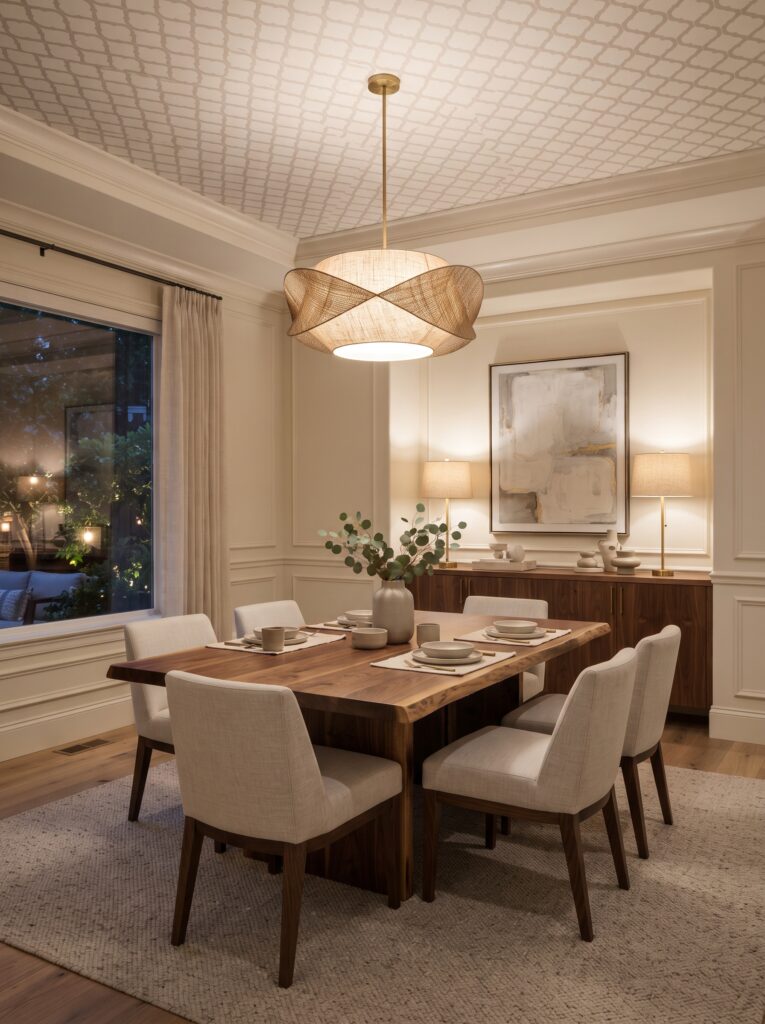
A statement ceiling can completely change an ordinary room without requiring a full renovation. Something as simple as a carefully chosen paint color can make a dining room feel richer, while wallpaper, wood details, beams, or a sculptural light fixture can turn an overlooked surface into a major design feature.
If you are looking for unique home decor ideas, ceiling design ideas, or ways to make your home look more expensive, decorating the ceiling can be an effective place to begin.
This guide explores stylish statement ceiling ideas for American homes, along with practical tips for choosing colors, patterns, materials, and lighting.
What Is a Statement Ceiling?
A statement ceiling is a ceiling that has been intentionally designed to attract attention or contribute significantly to the room’s overall aesthetic.
Instead of simply painting the ceiling white and forgetting about it, you treat it as part of the interior design.
A statement ceiling might include:
- Bold paint
- Wallpaper
- Wood paneling
- Exposed beams
- Coffered details
- Decorative molding
- Geometric patterns
- Shiplap
- Plaster texture
- Tongue-and-groove boards
- Metallic finishes
- Decorative ceiling medallions
- Dramatic lighting
The right choice depends on your home’s architecture and the atmosphere you want to create.
Why the Ceiling Deserves More Attention
Walls naturally attract attention because artwork, furniture, and architectural features are placed against them.
The ceiling, however, can influence the room without taking away valuable floor or wall space.
This makes it especially useful for homeowners who want to add personality without introducing more furniture or accessories.
A carefully designed ceiling can:
- Add architectural interest
- Make a room feel more luxurious
- Introduce color without overwhelming the walls
- Create a focal point
- Define different areas in an open floor plan
- Highlight a dining table or seating area
- Make a small room feel more intentional
- Complement existing architectural features
The ceiling can also create an unexpected moment that makes a room more memorable.
1. Paint the Ceiling a Rich, Unexpected Color
One of the simplest statement ceiling ideas is paint.
You do not necessarily need a complicated design.
A beautiful color can be enough.
For example, a dining room with warm cream walls could feature a ceiling in:
- Deep olive
- Muted terracotta
- Chocolate brown
- Dusty blue
- Warm taupe
- Soft sage
- Charcoal
The ceiling becomes a visual feature while the walls remain relatively neutral.
This approach works particularly well in dining rooms, bedrooms, powder rooms, offices, and cozy sitting areas.
2. Try a Tonal Ceiling
If you want something subtle, use a ceiling color that is related to the walls.
Instead of choosing a completely contrasting shade, select a lighter or darker version of the existing wall color.
For example:
Cream walls + warm beige ceiling
Sage walls + deeper olive ceiling
Dusty blue walls + muted blue-gray ceiling
Taupe walls + chocolate ceiling
This creates depth without making the ceiling feel disconnected from the rest of the room.
3. Create a Color-Drenched Ceiling
For a more immersive look, extend the wall color onto the ceiling.
This approach works especially well in bedrooms, libraries, dining rooms, and cozy spaces.
Imagine a room where the walls, trim, doors, and ceiling are all painted in a rich olive green.
Instead of seeing the ceiling as a separate surface, the entire room becomes one continuous environment.
This can create a sophisticated, cocoon-like atmosphere.
4. Add Wallpaper to the Ceiling
Wallpaper is another way to create a dramatic fifth wall.
Ceiling wallpaper can be particularly beautiful in dining rooms, powder rooms, entryways, bedrooms, and home offices.
For a sophisticated appearance, consider:
- Subtle geometric patterns
- Botanical designs
- Small-scale traditional prints
- Textured wallpaper
- Grasscloth-inspired finishes
- Soft abstract patterns
If the walls are already visually busy, choose a quieter ceiling pattern.
If the walls are neutral, you can use the ceiling as an opportunity for something more expressive.
5. Use a Subtle Geometric Pattern
Geometric ceiling patterns can add architectural interest without requiring major construction.
A simple grid, diamond, stripe, or repeating pattern can create a sophisticated effect.
For example, a neutral dining room could feature a subtle geometric ceiling that echoes the shape of the dining table or lighting fixture.
The key is scale.
Very large patterns can dominate a small room, while extremely small patterns may disappear from a distance.
Choose a design that can be appreciated without overwhelming the room.
6. Add Wood to the Ceiling
Wood ceilings can introduce warmth and texture.
Natural oak, walnut, cedar, and other wood tones can complement a variety of interior styles.
Wood works particularly well with:
- Modern farmhouse interiors
- Transitional homes
- Mountain-inspired spaces
- Coastal interiors
- Organic modern design
- Rustic contemporary rooms
You can cover the entire ceiling or use wood selectively in one architectural section.
A wood ceiling can also make a large open room feel warmer and more intimate.
7. Use Wood Beams for Architectural Character
Exposed or decorative beams can make a ceiling feel more substantial.
They are especially effective in homes with high ceilings or open floor plans.
Depending on the design, beams can create:
- Rustic character
- Modern architectural interest
- Traditional charm
- Farmhouse warmth
- European-inspired elegance
If your home already has structural beams, consider emphasizing them instead of hiding them.
For purely decorative beams, make sure their scale and placement look architecturally believable.
8. Install Coffered Ceiling Details
Coffered ceilings are a classic architectural feature that can instantly make a room feel more sophisticated.
They consist of recessed panels or geometric sections created through molding or architectural construction.
Coffered ceilings work particularly well in:
- Dining rooms
- Home offices
- Libraries
- Formal living rooms
- Primary bedrooms
You can paint the entire ceiling one color or use contrasting tones within the recessed areas.
A warm white coffered ceiling can create a timeless appearance, while a dark color can make the design more dramatic.
9. Use Ceiling Molding
You do not always need a complicated ceiling structure.
Decorative molding can create subtle visual interest.
Simple molding around the perimeter of a room can make the ceiling feel more finished.
More elaborate molding can create:
- Rectangular panels
- Geometric patterns
- Traditional architectural details
- Framed ceiling sections
For a modern home, keep the molding clean and simple.
For a traditional interior, more detailed profiles may work beautifully.
10. Highlight the Dining Area
The dining room is one of the best places to experiment with a statement ceiling.
Because the dining table naturally creates a focal point, the ceiling can reinforce it.
A few options include:
- Patterned wallpaper above the table
- Decorative molding
- A painted ceiling
- Wood paneling
- A large pendant light
- Coffered architecture
The combination of a beautiful dining table, statement lighting, and a carefully designed ceiling can make even an ordinary dining area feel special.
11. Use a Statement Pendant as Part of the Ceiling Design
Sometimes the ceiling itself does not need a dramatic finish.
A large sculptural light fixture can become the statement.
Consider:
- Oversized pendant lights
- Sculptural chandeliers
- Paper lantern-style fixtures
- Modern globe lights
- Woven pendants
- Linear dining lights
The fixture should complement the room’s scale.
A very small fixture can disappear in a large dining room, while an oversized fixture can overwhelm a compact space.
12. Create a Decorative Ceiling in a Powder Room
Powder rooms are ideal spaces for experimenting.
Because they are relatively small, you can often use stronger colors and patterns without overwhelming an entire home.
Try combining:
- Deep wall color
- Patterned ceiling
- Decorative mirror
- Sculptural lighting
- Bold wallpaper
- Brass fixtures
A statement ceiling in a powder room can become an unexpected detail that guests remember.
13. Try a Soft Botanical Ceiling
If you love nature-inspired interiors, botanical wallpaper on the ceiling can create a beautiful effect.
Choose a pattern with muted greens, warm neutrals, or soft earthy colors.
This works especially well in:
- Bedrooms
- Sunrooms
- Breakfast rooms
- Reading areas
- Home offices
Keep the furniture relatively simple so the ceiling remains the focal point.
14. Use Stripes for Visual Interest
Stripes can change the perceived character of a ceiling.
Thin stripes can create a delicate decorative effect, while broader stripes make a stronger statement.
A striped ceiling can work particularly well in:
- Bedrooms
- Children’s rooms
- Hallways
- Small sitting rooms
- Creative home offices
For a more sophisticated adult interior, choose low-contrast stripes rather than highly saturated colors.
15. Create a Tray Ceiling Focal Point
If your room already has a tray ceiling, use it as an opportunity rather than leaving it plain.
The recessed portion can be:
- Painted a contrasting shade
- Wallpapered
- Decorated with molding
- Highlighted with indirect lighting
For example, a bedroom with warm beige walls could have a slightly darker ceiling recess with subtle LED lighting.
This creates depth while preserving an elegant atmosphere.
16. Add Indirect Ceiling Lighting
Lighting can completely change the appearance of a ceiling.
Recessed lights, concealed LED strips, and cove lighting can emphasize architectural details.
Indirect lighting is particularly effective with:
- Coffered ceilings
- Tray ceilings
- Wood details
- Decorative molding
- Textured surfaces
Warm lighting can make natural materials look richer and create a comfortable evening atmosphere.
17. Consider Plaster Texture
If you prefer organic and understated interiors, a textured plaster ceiling can create subtle visual interest.
Plaster finishes can add:
- Soft movement
- Handmade character
- Architectural depth
- Natural texture
This approach works beautifully with warm neutrals, natural wood, stone, linen, and other organic materials.
The effect is particularly suitable for homes inspired by Mediterranean, European, or organic-modern design.
18. Use a Ceiling to Define an Open-Concept Space
Open-concept homes can sometimes feel visually undefined.
A statement ceiling can help establish separate zones without adding walls.
For example, in an open kitchen and dining area, you could use a different ceiling treatment above the dining table.
A wood ceiling section, decorative molding, or distinct paint color can visually identify the dining area.
This is an excellent way to add architectural definition while maintaining an open floor plan.
19. Make a Small Room More Interesting
Small rooms often benefit from carefully chosen ceiling details.
A dramatic ceiling can draw the eye upward and make the room feel intentionally designed.
This can work particularly well in:
- Powder rooms
- Entryways
- Small offices
- Hallways
- Compact bedrooms
Rather than filling a small room with accessories, use the ceiling as the main decorative feature.
This preserves valuable floor space.
20. Match the Ceiling With Your Furniture
A statement ceiling should still feel connected to the rest of the room.
Look for colors, shapes, or materials that already exist in your furniture.
For example:
A walnut dining table can be complemented by a warm wood ceiling.
A green sofa can be echoed with a muted green ceiling.
Brass lighting can be supported by warm neutral tones above.
The goal is not exact matching. It is visual repetition.
Repeating a material or color in subtle ways creates cohesion.
21. Use a Dark Ceiling Without Making the Room Feel Heavy
Dark ceilings can look incredibly sophisticated.
However, they need balance.
If you choose a deep brown, charcoal, navy, or forest green ceiling, introduce lighter elements below.
Cream upholstery, pale rugs, natural wood, and warm lighting can prevent the room from feeling too dark.
Large windows also help.
A dark ceiling is particularly effective in rooms where you want an intimate atmosphere.
22. Choose a Light Ceiling for an Airy Look
If you prefer a brighter interior, a soft painted ceiling can still create a statement.
Instead of plain white, try:
- Warm ivory
- Soft beige
- Pale sage
- Light blue
- Warm gray
These subtle colors can make a room feel more layered without dramatically changing its brightness.
This is especially useful in minimalist or Scandinavian-inspired interiors.
23. Statement Ceiling Ideas for a Bedroom
Bedrooms provide plenty of opportunities for creative ceiling treatments.
You could use:
- Color drenching
- Soft wallpaper
- Wood paneling
- Decorative beams
- Coffered details
- A sculptural chandelier
- Warm indirect lighting
A bedroom ceiling should support relaxation rather than compete with the bed.
Soft colors, natural textures, and warm lighting are usually effective choices.
24. Statement Ceiling Ideas for a Home Office
A home office can benefit from a ceiling that provides personality without distracting from work.
Consider:
- Subtle geometric wallpaper
- Warm wood paneling
- Dark painted ceiling
- Simple architectural molding
- Statement pendant
If your desk faces the ceiling frequently, avoid overly busy patterns.
Instead, choose something visually interesting but calming.
25. How to Choose the Right Ceiling Design
Before selecting a treatment, consider the room’s architecture.
Think about:
Ceiling Height
Tall ceilings can accommodate stronger architectural details.
Natural Light
Dark treatments may work better in rooms with plenty of daylight.
Room Size
Small rooms may benefit from subtle or carefully scaled patterns.
Existing Architecture
Work with existing beams, molding, windows, and doors rather than fighting them.
Interior Style
A farmhouse home may suit wood beams, while a contemporary home might work better with clean geometric details.
26. Don’t Forget Scale
Scale is one of the most important factors in ceiling design.
A tiny room with an enormous chandelier can feel unbalanced.
Likewise, a large dining room with a tiny pendant may feel unfinished.
The same applies to patterns and architectural details.
Always consider the size of the room before selecting a ceiling treatment.
27. Keep the Rest of the Room Balanced
When the ceiling becomes the focal point, the rest of the room does not need to compete.
Use simpler furniture and accessories.
For example, if you choose dramatic patterned wallpaper on the ceiling, keep the walls relatively calm.
If you use a sculptural chandelier, avoid adding several other oversized decorative elements.
A room feels more sophisticated when there is a clear hierarchy.
28. Statement Ceiling Ideas on a Budget
You do not need an expensive construction project.
Some budget-friendly options include:
- Paint
- Peel-and-stick wallpaper
- Decorative molding
- DIY panel details
- Simple wood slats
- Ceiling medallions
- A new pendant light
Paint is usually one of the easiest ways to make a visible difference.
Even changing a plain white ceiling to a warm neutral can make the room feel more intentional.
29. Common Ceiling Design Mistakes
Choosing a Trend Without Considering the Home
A beautiful ceiling design may not work with the architecture of your house.
Ignoring Lighting
Always consider how the ceiling will look during both daytime and evening.
Using Too Many Patterns
If the walls, flooring, furniture, and ceiling are all competing, the room can feel overwhelming.
Choosing the Wrong Scale
Large architectural features need enough space to breathe.
Forgetting Maintenance
Some textured or detailed finishes may require more care than a simple painted ceiling.
Conclusion
The ceiling may be one of the most overlooked surfaces in a home, but it can also be one of the most powerful opportunities for creative interior design. From a simple coat of paint to dramatic wallpaper, natural wood, decorative beams, architectural molding, or sculptural lighting, there are countless ways to turn an ordinary ceiling into an intentional design feature.
The best statement ceiling is not necessarily the boldest one. It is the one that works naturally with the room’s architecture, lighting, furniture, and overall atmosphere. If you want a subtle transformation, start with a tonal paint color or simple molding. If you want something more dramatic, consider wallpaper, wood, beams, or a richly colored ceiling.
Above all, remember that decorating upward can make your home feel more complete without taking away valuable floor space. Sometimes the most memorable design detail is the one people were not expecting to see.
Save these statement ceiling ideas for your next home makeover and use your home’s fifth wall to add personality, warmth, and architectural character.
- Luxury Bathroom Styling Ideas That Create a Spa-Like Feel
- Under-Stair Storage Ideas That Make Small Spaces Feel Organized
- Statement Ceiling Ideas That Transform an Ordinary Room
- Color-Drenched Bedroom Ideas for a Cozy Designer Look
- Kitchen Countertop Decor Ideas That Look Effortlessly Expensive