
The laundry room is one of the hardest-working spaces in an American home, yet it is often one of the most overlooked when it comes to decorating. While kitchens, bedrooms, and living rooms usually receive most of the attention, a thoughtfully designed laundry room can make everyday routines feel easier, calmer, and much more enjoyable.
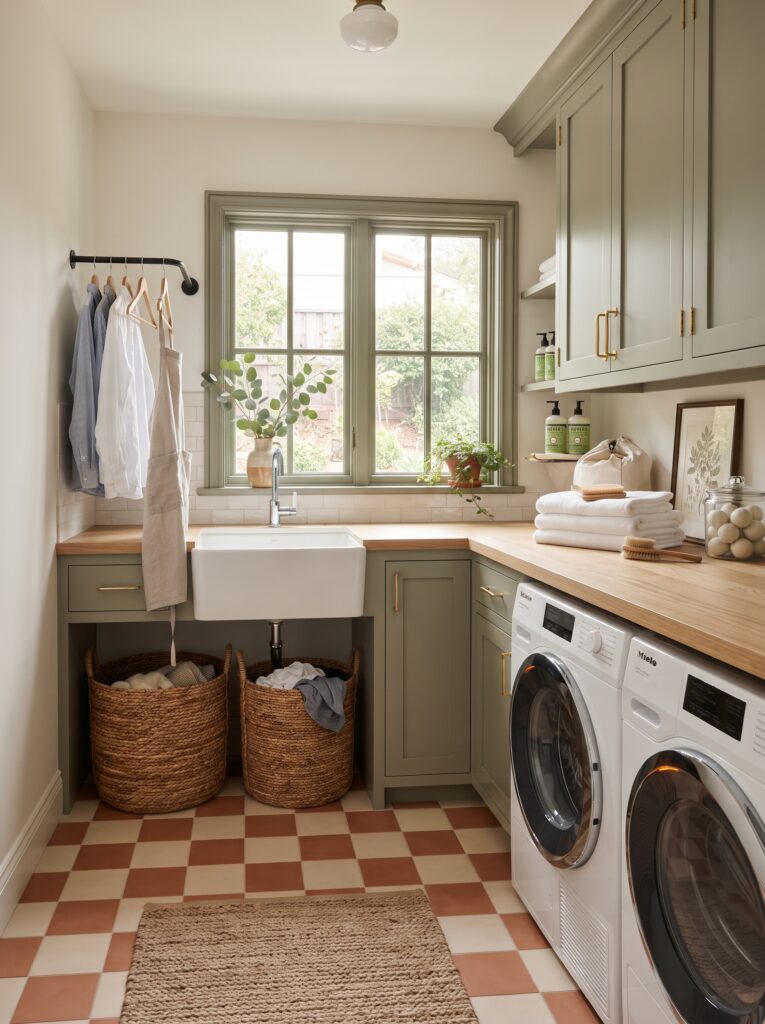
A beautiful laundry room does not have to be enormous or expensive. With the right combination of storage, lighting, color, materials, and organization, even a small laundry area can feel polished and intentional.
If you are looking for laundry room ideas that combine style and function, consider creating a space that feels more like a well-designed room than a purely utilitarian area. Sage green cabinetry, natural wood, warm brass hardware, patterned flooring, woven baskets, and simple open shelving can create a timeless look that feels both practical and elevated.
Whether you are planning a complete laundry room makeover or simply want to refresh an existing space, these ideas can help you create a room that works beautifully for everyday life.
Why Laundry Room Design Matters
Laundry is a recurring household task. That means the laundry room is used repeatedly throughout the week, sometimes every day.
When the space is dark, cluttered, poorly organized, or difficult to work in, even a simple chore can feel more frustrating.
A well-designed laundry room can solve many of these problems.
Good design can provide:
- Better storage
- Easier access to laundry supplies
- More usable folding space
- A dedicated place for hanging clothes
- Improved lighting
- Easier cleaning
- Less visible clutter
- A more pleasant environment
The best laundry room design is therefore not just about appearance. It should make the room function better.
Choose a Calm Cabinet Color
Cabinetry usually occupies a significant portion of a laundry room, making it one of the easiest ways to establish the overall aesthetic.
Sage green is particularly versatile because it brings a soft connection to nature without feeling overly colorful.
It works beautifully with:
- Warm white
- Cream
- Natural oak
- Brass
- Terracotta
- Beige
- Black accents
- Natural stone
If sage green is not your style, consider other timeless cabinet colors such as warm white, muted blue, mushroom, taupe, or soft gray.
The goal is to choose a color that you will still enjoy several years from now.
Add Warm Brass Hardware
Cabinet hardware may be a small detail, but it can have a significant visual effect.
Warm brass handles and knobs work particularly well with green cabinetry and natural wood.
For a cohesive laundry room, consider repeating the same metal finish through:
- Cabinet pulls
- Faucet
- Hanging rail
- Light fixtures
- Shelf brackets
- Small hardware
You do not need every metal in the room to be identical, but limiting the dominant finishes helps the space look intentional.
If you prefer a more contemporary appearance, matte black hardware can also work beautifully with sage, white, and natural wood.
Install a Functional Folding Counter
One of the most useful additions to a laundry room is a dedicated folding surface.
If your washing machine and dryer are positioned side by side, a countertop installed above them can create a practical workspace.
This area can be used for:
- Folding clean laundry
- Sorting clothes
- Organizing linens
- Preparing clothing for closets
- Temporarily placing laundry baskets
Natural wood is a beautiful option if you want warmth.
Quartz or another durable countertop material can provide a more streamlined appearance and can be easier to maintain.
For a smaller laundry room, make sure the countertop does not interfere with appliance doors or access to necessary controls.
Function should always come first.
Use Vertical Storage
When floor space is limited, look upward.
Vertical storage can dramatically increase the amount of usable space in a small laundry room.
Tall cabinets can hold:
- Detergent
- Cleaning products
- Towels
- Extra linens
- Household supplies
- Laundry baskets
- Seasonal items
Open shelves can also be useful for frequently accessed items.
However, not everything needs to be displayed.
A combination of closed cabinetry and a small amount of open shelving often provides the best balance between accessibility and visual calm.
Use Woven Baskets for a Softer Look
Laundry rooms can contain many hard surfaces: appliances, cabinets, countertops, tile, and metal hardware.
Woven baskets can introduce texture and make the space feel warmer.
Use baskets for:
- Towels
- Cleaning cloths
- Small laundry accessories
- Delicates
- Extra supplies
Matching or coordinating baskets can create a more organized appearance.
Instead of placing many unrelated plastic containers on open shelves, transferring smaller supplies into attractive storage containers can also reduce visual clutter.
Create a Dedicated Hanging Area
A hanging rod is one of the most practical laundry room upgrades.
It allows you to hang clothing directly after removing it from the dryer or washing machine, helping reduce wrinkles.
A hanging area can be created beneath a shelf, between cabinets, or along an unused wall.
For a compact laundry room, even a short brass or black hanging rail can provide useful functionality without requiring significant space.
If your household frequently air-dries clothing, consider installing a retractable drying rack or wall-mounted drying system.
Choose Flooring That Adds Personality
Laundry rooms need flooring that can withstand moisture, spills, frequent cleaning, and heavy foot traffic.
At the same time, practical flooring does not have to be boring.
Patterned tile can introduce personality while creating a designer-inspired appearance.
Classic choices include:
- Checkerboard tile
- Hexagonal tile
- Small geometric patterns
- Marble-look porcelain
- Terracotta-inspired tile
- Soft neutral stone-look tile
A checkerboard floor is particularly useful when you want a laundry room to feel classic and visually interesting.
For a softer aesthetic, choose warm cream and muted earthy tones instead of extremely high-contrast black and white.
Make Small Laundry Rooms Feel Bigger
Small laundry rooms are common in American homes, especially in apartments, townhouses, and compact suburban layouts.
Fortunately, limited square footage does not mean limited style.
A few design choices can help the room feel more open.
Use Light Colors
Light walls and countertops can reflect natural and artificial light.
Keep the Floor Visible
Avoid filling every available area with freestanding storage.
Use Wall-Mounted Shelves
Floating shelves can provide storage without visually adding heavy furniture.
Choose Streamlined Hardware
Simple cabinet pulls and fixtures can keep the design visually clean.
Use One Consistent Material Palette
Too many unrelated finishes can make a small space appear busier.
Make Use of the Space Above the Appliances
The wall above a washer and dryer often represents valuable unused space.
Depending on the room layout, you could install:
- Floating shelves
- Upper cabinets
- A drying rod
- A hanging rail
- Small storage compartments
If you have front-loading machines, the area directly above them is particularly useful for a folding countertop.
For top-loading machines, make sure any shelving or cabinetry leaves enough clearance for the lids.
Add a Utility Sink if Space Allows
A utility sink can be extremely useful in a laundry room.
It can be used for:
- Hand-washing delicate clothing
- Soaking stained garments
- Cleaning muddy items
- Washing household objects
- Handling messy projects
If you are remodeling, consider placing the sink near the washer and dryer to create an efficient workflow.
A deep sink can be especially useful for families and homeowners who frequently wash items that should not go directly into a washing machine.
Improve Laundry Room Lighting
Lighting can dramatically change how a laundry room feels.
Many laundry rooms have limited natural light, which makes artificial lighting especially important.
A layered lighting approach can include:
Ceiling Lighting
Provides general illumination throughout the room.
Under-Cabinet Lighting
Useful for illuminating countertops and folding areas.
Decorative Lighting
A small pendant or attractive flush-mount fixture can add personality.
Natural Light
If the room has a window, avoid blocking it with tall storage unless necessary.
Warm, balanced lighting can make sage cabinetry, wood, brass, and patterned tile look significantly more inviting.
Create a Laundry Supply Station
Laundry products can quickly create clutter if they are stored randomly.
Instead, create a dedicated supply zone.
Depending on your needs, this might include:
- Detergent
- Stain remover
- Fabric-care products
- Dryer accessories
- Cleaning cloths
- Garment-care tools
Keep frequently used products within easy reach while storing less frequently used items in closed cabinets.
If young children are present in the household, household cleaning products should be stored securely and according to their safety instructions.
Use Labels Carefully
Labels can be useful for organization, but they are not necessary on every container.
If you have several baskets or storage bins, simple labels can help everyone in the household know where things belong.
For a more sophisticated look, use understated labels with consistent typography.
Avoid creating so many labeled containers that the room begins to feel more like a storage facility than a comfortable part of the home.
Add a Small Decorative Moment
Even a practical laundry room can benefit from a decorative element.
Consider adding one or two pieces such as:
- A framed botanical print
- A small ceramic vase
- A decorative tray
- A simple clock
- A small plant
- A vintage-inspired laundry sign
- A sculptural object
The key is restraint.
Laundry rooms already contain many functional objects. A small decorative element can make the room feel finished without creating unnecessary clutter.
Bring in Natural Materials
Natural materials can soften the appearance of appliances and cabinetry.
Consider incorporating:
- Wood
- Woven baskets
- Linen
- Cotton
- Ceramic
- Stone
- Natural fibers
These materials work especially well in warm, modern, transitional, farmhouse, and organic-inspired interiors.
Natural oak shelving paired with sage green cabinets is an especially versatile combination.
Design Around Your Laundry Routine
Before choosing decorative details, think about how you actually use the room.
Ask yourself:
Where do dirty clothes enter the room?
Where do clean clothes go?
Where do you fold laundry?
Where do you hang delicate items?
Where do you store detergent?
Where do you keep cleaning supplies?
Where do laundry baskets sit?
Answering these questions can reveal which storage solutions will genuinely make your life easier.
A beautiful room that does not support your routine will eventually become frustrating.
Laundry Room Organization for Busy Households
For families, laundry organization becomes even more important.
You might create separate baskets for:
- Whites
- Colors
- Towels
- Delicates
- Household linens
Alternatively, you can keep one large sorting system depending on your laundry habits.
If multiple family members use the room, make sure frequently used items are easy to find.
A simple organizational system is more likely to remain useful than an overly complicated one.
Create a Mudroom-Laundry Combination
In some American homes, the laundry room is located near the garage or side entrance.
This creates an opportunity to combine laundry functionality with mudroom storage.
You could include:
- Hooks
- Bench seating
- Shoe storage
- Coat storage
- Laundry baskets
- Cleaning supplies
This type of multifunctional space can be particularly valuable in households with children, pets, or active lifestyles.
The important thing is to divide the zones visually so the room does not become chaotic.
How to Create a Luxury Laundry Room on a Budget
A luxury appearance does not always require luxury spending.
Instead of upgrading everything, prioritize the features that are most visible.
For example:
First: Improve lighting.
Second: Upgrade cabinet hardware.
Third: Add a beautiful folding counter.
Fourth: Introduce attractive baskets.
Fifth: Add one decorative feature.
These smaller changes can make a noticeable difference.
If you are doing a complete renovation, invest more heavily in durable flooring, cabinetry, countertops, and plumbing fixtures because these elements are harder to replace later.
Timeless Laundry Room Color Combinations
If you are unsure which colors to choose, consider these combinations.
Sage Green + Warm White
Soft, natural, and versatile.
Navy + Brass + Cream
Classic and sophisticated.
Warm White + Natural Oak
Bright and timeless.
Taupe + Walnut
Warm and understated.
Dusty Blue + White
Fresh and relaxed.
Olive + Terracotta
Earthy and expressive.
The best choice depends on the overall style of your home and the amount of natural light available.
How to Make Your Laundry Room Feel More Like the Rest of Your Home
A laundry room does not have to look completely different from your kitchen or living room.
Repeating materials throughout your home can create continuity.
For example, if your kitchen uses warm brass hardware, consider using brass in the laundry room.
If your home features natural oak, incorporate oak shelving or a countertop.
If your living areas use warm neutral colors, choose related tones for the laundry room.
This makes the entire home feel more cohesive.
Common Laundry Room Design Mistakes
Not Planning Enough Storage
Laundry supplies and household items can accumulate quickly.
Ignoring Counter Space
Even a small folding surface can make a major difference.
Choosing Style Over Function
A beautiful laundry room still needs to work efficiently.
Using Too Many Open Shelves
Open shelving looks attractive but can become visually cluttered if every item is exposed.
Poor Lighting
A dark laundry room can feel smaller and less inviting.
Forgetting Ventilation and Maintenance
Laundry spaces need practical consideration for moisture, appliance maintenance, and proper ventilation.
Always follow appliance manufacturer instructions and applicable local requirements when remodeling or installing equipment.
A Simple Formula for a Beautiful Laundry Room
If you want an easy starting point, try this combination:
One calming cabinet color + one durable floor + one warm material + one practical storage system + one decorative accent.
For example:
Sage green cabinets + checkerboard tile + natural oak + woven baskets + brass lighting.
This creates a room that feels visually interesting without becoming overwhelming.
Conclusion
A laundry room can be much more than a place where clothes are washed and dried. With thoughtful planning, it can become one of the most functional and beautiful spaces in your home.
The best laundry room ideas combine practical organization with materials and details that make the space enjoyable to use. Sage green cabinetry, natural wood, warm brass, patterned flooring, woven baskets, dedicated folding space, and efficient storage can transform an ordinary utility room into an inviting part of the home.
You do not need a huge laundry room to create this effect. Even a narrow or compact space can feel polished when every feature has a purpose.
Start with the way you use the room, identify your biggest storage or workflow problems, and then build the aesthetic around those practical needs. When function and design work together, everyday laundry can feel less like a chore and more like a well-organized part of your home.
- Cozy Window Seat Ideas That Turn Unused Space Into a Dreamy Retreat
- Built-In Home Bar Ideas That Make Any Corner Feel Custom
- Afrohemian Home Decor Ideas for a Warm, Artful Breakfast Nook
- Beautiful Laundry Room Ideas That Make Everyday Chores Feel Luxurious
- Neo Deco Powder Room Ideas for a Luxe Small Bathroom