
There is something undeniably appealing about a home with beautifully designed built-in shelving. Unlike temporary furniture pieces, built-ins can look as though they were created specifically for the architecture of the house. They can frame a wall, provide useful storage, display treasured objects, and give an ordinary room a more finished appearance.
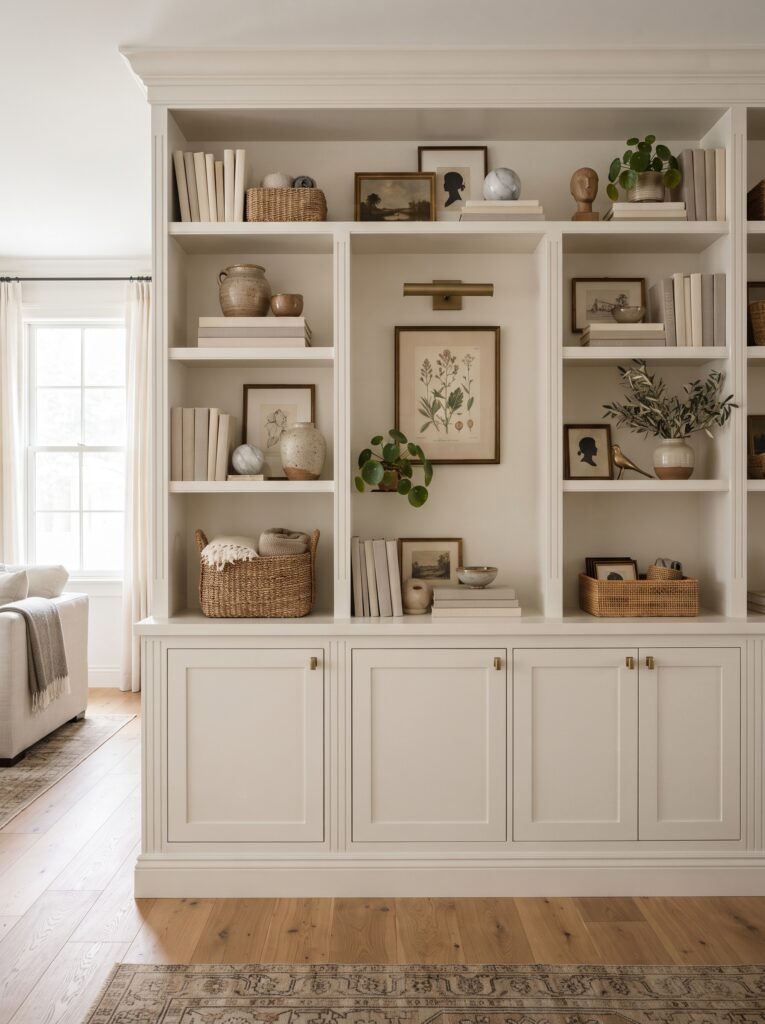
Built-in shelves are also incredibly versatile. They can be used for books, artwork, ceramics, baskets, plants, collectibles, or everyday storage. In a home office, they can provide an organized backdrop for work. In a reading room, they can create an inviting library atmosphere. In a living space, they can become an architectural focal point.
The secret to making built-in shelving look elegant is not filling every shelf. Instead, the most attractive arrangements usually combine function, negative space, varying heights, natural materials, artwork, and carefully selected decorative objects.
If you are looking for built-in shelf ideas that feel timeless rather than overly decorated, this guide will help you create a custom-looking display while keeping your home practical and comfortable.
Why Built-In Shelves Are So Popular
Built-in shelving offers something that freestanding furniture often cannot: a sense of permanence.
When shelving is designed around the dimensions of a particular wall, it can make awkward or unused areas much more useful.
Built-ins can:
- Maximize vertical space
- Create additional storage
- Display books and collections
- Frame architectural features
- Add character to plain walls
- Make rooms feel more customized
- Provide a place for meaningful decor
- Improve organization
They can also visually connect different areas of a room.
For example, a wall of shelving can combine books, artwork, storage baskets, and decorative pieces while giving the room one cohesive visual language.
1. Begin With the Architecture
Before thinking about accessories, consider the wall itself.
Look at:
- Ceiling height
- Wall width
- Windows
- Doors
- Electrical outlets
- Radiators or vents
- Existing architectural features
- Natural light
A successful built-in should feel as though it belongs to the room.
If you have a narrow wall, floor-to-ceiling shelving can emphasize verticality.
If the wall is particularly wide, symmetrical shelving can create structure.
If the room already has strong architectural features, the built-in should complement rather than compete with them.
2. Floor-to-Ceiling Built-Ins
One of the most dramatic built-in shelf ideas is a floor-to-ceiling installation.
Tall shelving naturally draws the eye upward and can make a room feel more substantial.
This approach works particularly well in:
- Home offices
- Libraries
- Reading rooms
- Living rooms
- Dining rooms
- Hallways
For a timeless look, consider warm white cabinetry paired with natural wood shelves.
Another option is to paint the entire built-in the same color as the surrounding walls. This creates a seamless appearance and allows the books and decorative objects to become the visual focus.
3. Use a Limited Color Palette
A limited color palette can instantly make open shelving look more sophisticated.
Instead of using every color in your collection, group objects around a few complementary shades.
For example:
Base: warm white and cream
Accent: walnut brown
Secondary: muted green
Small detail: aged brass
The result feels coordinated without requiring every item to match.
Neutral palettes are particularly useful if your goal is to create an elegant Pinterest-inspired interior.
4. Mix Books With Decorative Objects
Books are naturally suited to built-in shelving, but shelves filled entirely with books can sometimes feel visually heavy.
Break up the rows by introducing decorative pieces.
Try combining:
- Books
- Framed photos
- Ceramics
- Small sculptures
- Bowls
- Candles
- Decorative boxes
- Plants
- Baskets
The key is to create variation.
A horizontal stack of books can support a small ceramic object.
A vertical row of books can sit beside a framed photograph.
A basket can fill a lower shelf while adding practical storage.
5. Create Different Heights
If everything on your shelves is the same height, the arrangement can look repetitive.
Instead, create a mixture of heights.
For example:
Tall: vase or plant
Medium: framed artwork
Low: stack of books
Repeat this concept throughout the shelving without making every section identical.
This creates rhythm and allows the eye to move naturally across the display.
6. Use Negative Space
Negative space is one of the most important principles of elegant shelf styling.
You do not need every shelf to be full.
Leaving an empty section between two collections can actually make both areas look more important.
Imagine a bookcase where every shelf is packed tightly with objects. The individual pieces disappear into the overall clutter.
Now imagine the same bookcase with several intentionally empty spaces.
The artwork, ceramics, and books immediately become easier to appreciate.
This is why restraint can be more powerful than abundance.
7. Add Framed Artwork
Artwork can make built-in shelving feel much more personal.
You do not always have to hang artwork on the wall.
Small and medium frames can be leaned directly against the back of a shelf.
This creates a relaxed layered appearance.
Try combining:
- Vintage botanical prints
- Landscapes
- Architectural drawings
- Family photography
- Abstract artwork
- Black-and-white prints
Choose artwork that complements the overall color palette.
If your shelving is already visually busy, simple artwork may work better than highly colorful prints.
8. Style With Ceramics
Handmade-looking ceramics are excellent for built-in shelving because they introduce shape and texture.
Look for:
- Cream vases
- Stoneware bowls
- Sculptural vessels
- Small pitchers
- Textured pottery
- Matte ceramic objects
They do not need to be expensive.
What matters is the silhouette and finish.
A sculptural vase can become a focal point even when it contains nothing.
Pairing rough ceramic surfaces with smooth books and natural wood creates an appealing material contrast.
9. Bring in Greenery
Plants can soften the hard lines of built-in cabinetry.
If you prefer a low-maintenance arrangement, choose realistic-looking artificial greenery or dried botanicals.
For living plants, consider varieties that suit the available light.
Small trailing plants can work beautifully on upper shelves, while larger plants can anchor the bottom portion of a shelving unit.
Greenery also introduces a natural color that works particularly well with cream, beige, brown, and warm wood tones.
10. Use Baskets for Practical Storage
Not every part of a built-in needs to be decorative.
Lower shelves can become useful storage areas.
Woven baskets can hide:
- Blankets
- Office supplies
- Toys
- Electronics
- Cables
- Magazines
- Everyday household items
Choose baskets with similar materials or colors so the storage looks intentional.
This is especially useful in family homes where beautiful design still needs to accommodate everyday life.
11. Style the Bottom Shelves Differently
The lower portion of a built-in often receives less attention because it is closer to the floor.
Use this space strategically.
Larger objects generally work better toward the bottom because they visually anchor the shelving.
Consider:
- Large baskets
- Oversized books
- Decorative boxes
- Larger pottery
- Storage containers
Keeping the heavier visual elements lower can make the entire shelving unit feel more balanced.
12. Use Symmetry When You Want a Classic Look
Symmetrical built-ins can create an especially polished appearance.
For example, two tall shelving sections on either side of a central feature can create a strong architectural composition.
This works beautifully when shelving surrounds:
- A fireplace
- A television
- A doorway
- A large artwork
- A window
Symmetry tends to feel traditional and orderly.
However, the individual shelf styling does not have to be perfectly symmetrical.
You can maintain architectural symmetry while using slightly different decorative arrangements inside each section.
13. Try an Asymmetrical Styling Approach
For a more relaxed and contemporary look, style the shelves asymmetrically.
One section might contain a stack of books and ceramic vase.
Another might contain artwork and greenery.
A third could remain almost empty.
The overall shelving remains balanced because the visual weight is distributed throughout the unit.
This style works particularly well for modern organic and transitional interiors.
14. Create a Home Office Library Wall
Built-in shelving can transform a home office into a more sophisticated workspace.
Use the shelves to combine:
- Books
- Storage boxes
- Framed artwork
- Small plants
- Decorative objects
- Office supplies
Keep frequently used items within easy reach.
Less frequently used objects can occupy the higher shelves.
A consistent palette of natural wood, cream, black, and muted green can create a calm backdrop for working.
15. Design a Cozy Reading Room
A reading room is almost naturally suited to built-in shelving.
Imagine floor-to-ceiling bookshelves surrounding a comfortable chair, a small side table, and a warm lamp.
The shelving becomes both storage and atmosphere.
For an inviting reading retreat, add:
- Soft textiles
- Warm lighting
- A comfortable chair
- Natural wood
- Neutral artwork
- A small plant
- A curated book collection
The goal is to create a room that encourages you to slow down rather than simply display books.
16. Use Built-Ins Around a Fireplace
Fireplace walls and built-in shelving are a classic combination.
Shelves on both sides of a fireplace can create symmetry and provide valuable display space.
The fireplace becomes the central architectural element while the shelving provides balance.
Keep the objects on each side related without making them exact duplicates.
For example, both sides could contain books, ceramics, artwork, and greenery while varying the placement slightly.
This creates a collected appearance while maintaining visual harmony.
17. Choose the Right Cabinet Color
Color can completely change how built-ins feel.
Warm White
Classic, bright, and versatile.
Cream
Softer and warmer than pure white.
Taupe
Sophisticated and subtle.
Deep Green
Rich and nature-inspired.
Charcoal
Dramatic and contemporary.
Natural Wood
Warm, timeless, and organic.
The best choice depends on the surrounding architecture and furniture.
For a seamless look, paint the shelving the same color as the walls.
For stronger architectural emphasis, choose a complementary shade.
18. Add Cabinet Doors
Open shelves are beautiful, but not everything needs to be visible.
Combining open shelves with closed cabinetry gives you the best of both worlds.
Use open sections for attractive objects and books.
Use closed cabinets for practical items that create visual clutter.
This approach is especially useful in:
- Home offices
- Family rooms
- Kitchens
- Mudrooms
- Media rooms
It allows the room to remain organized without requiring everything to be perfectly styled all the time.
19. Mix Horizontal and Vertical Books
Books can become part of the decorative composition.
Instead of arranging every book vertically, create occasional horizontal stacks.
A horizontal stack can also serve as a small pedestal for:
- A ceramic object
- A candle
- A small sculpture
- A framed photograph
This creates height variation while keeping the books functional.
If you are styling books primarily for display, neutral or muted covers can create a calmer visual effect. But there is no need to hide colorful books if they have personal meaning.
20. Don’t Make Every Shelf Match
One of the easiest ways to make shelving look artificial is to repeat exactly the same arrangement on every shelf.
Instead, create variation.
One shelf may feature books.
Another may have artwork.
Another might include a vase and greenery.
Another can remain mostly empty.
The overall collection should feel connected through color, material, or style rather than identical placement.
21. Add Personal Objects
A custom-looking home should actually feel personal.
Include objects that tell your story.
These might include:
- Travel souvenirs
- Family photographs
- Favorite books
- Handmade pottery
- Heirlooms
- Artwork
- Objects collected over time
A perfectly styled shelf can look beautiful, but a shelf with personal meaning often feels much more like a real home.
22. Built-In Shelving on a Budget
Custom carpentry can be expensive, but you can still achieve a built-in-inspired appearance through thoughtful planning.
Consider:
- Modular shelving
- Stock cabinets
- Simple trim
- Paint
- Adjustable shelving
- Secondhand furniture
- DIY framing details
The most important visual element is continuity.
If the shelving, trim, and wall color work together, the result can appear far more customized than the individual components actually are.
For major installations, especially those involving electrical, structural, or wall modifications, professional planning may be appropriate.
23. Common Built-In Styling Mistakes
Overfilling Every Shelf
More objects do not automatically create a more luxurious look.
Using Too Many Colors
A chaotic color palette can make shelving feel disconnected.
Making Everything the Same Height
Variation creates visual interest.
Ignoring Practical Storage
Beautiful shelving should still serve the household.
Buying Decor Just to Fill Space
It is better to leave a shelf empty than fill it with objects you do not love.
Making Everything Perfectly Symmetrical
Architectural symmetry can be beautiful, but decorative symmetry can sometimes feel overly staged.
24. A Simple Formula for Styling Built-In Shelves
If you are starting from scratch, try this formula:
Books + Artwork + Ceramics + Greenery + Storage + Empty Space
You do not need every category on every shelf.
Instead, distribute them throughout the entire shelving unit.
For example:
Shelf 1:
Artwork + ceramic vase
Shelf 2:
Vertical books + small plant
Shelf 3:
Horizontal book stack + sculpture
Shelf 4:
Woven basket
Shelf 5:
Artwork + books
This creates a layered composition without excessive clutter.
25. How to Make Built-In Shelves Look Designer-Styled
Designer-looking shelves are usually edited carefully.
Start by removing everything.
Then add the largest objects first.
Next, introduce books.
Then add smaller decorative pieces.
Finally, add greenery and personal items.
After everything has been placed, take a step back.
Look at the shelving from across the room.
Ask yourself:
- Is one section visually heavier?
- Are there enough empty spaces?
- Are similar objects grouped together?
- Is the color palette balanced?
- Are the tallest objects distributed throughout the shelving?
- Does the arrangement feel connected to the rest of the room?
If something feels unnecessary, remove it.
Often, the final edit is what makes the difference.
Conclusion
Built-in shelving can do much more than provide storage. When thoughtfully designed and styled, it can become one of the most distinctive features in a home.
The most successful built-in shelf ideas combine practicality with personality. Books provide warmth and character, artwork adds visual interest, ceramics introduce texture, greenery softens architectural lines, and baskets provide hidden organization.
Most importantly, beautiful shelving does not depend on filling every available space. A combination of carefully selected objects and intentional empty space can create a much more sophisticated appearance.
Whether you are designing a home office library, upgrading a living room wall, creating a cozy reading room, or adding storage around an existing architectural feature, built-in shelving offers an opportunity to make the home feel more intentional and customized.
Start with the architecture, choose a cohesive color palette, vary heights and textures, mix decorative objects with practical storage, and allow your shelves to reflect your personality. The result can feel polished and custom designed while still remaining warm, comfortable, and genuinely lived in.
- Small Home Details That Make Your Space Look Custom Designed
- Window Seat Ideas for a Cozy Reading Retreat at Home
- Built-In Shelf Ideas for a Custom-Looking Home
- Ceiling Design Ideas That Make a Room Feel Instantly More Luxurious
- Fireplace Mantel Decor Ideas That Look Effortlessly Expensive