
Empty walls can sometimes be surprisingly difficult to decorate. A large blank wall may feel unfinished, while a small recessed area can seem too awkward for traditional artwork or furniture. Instead of filling every empty surface with frames and accessories, consider turning architectural wall niches into intentional design features.
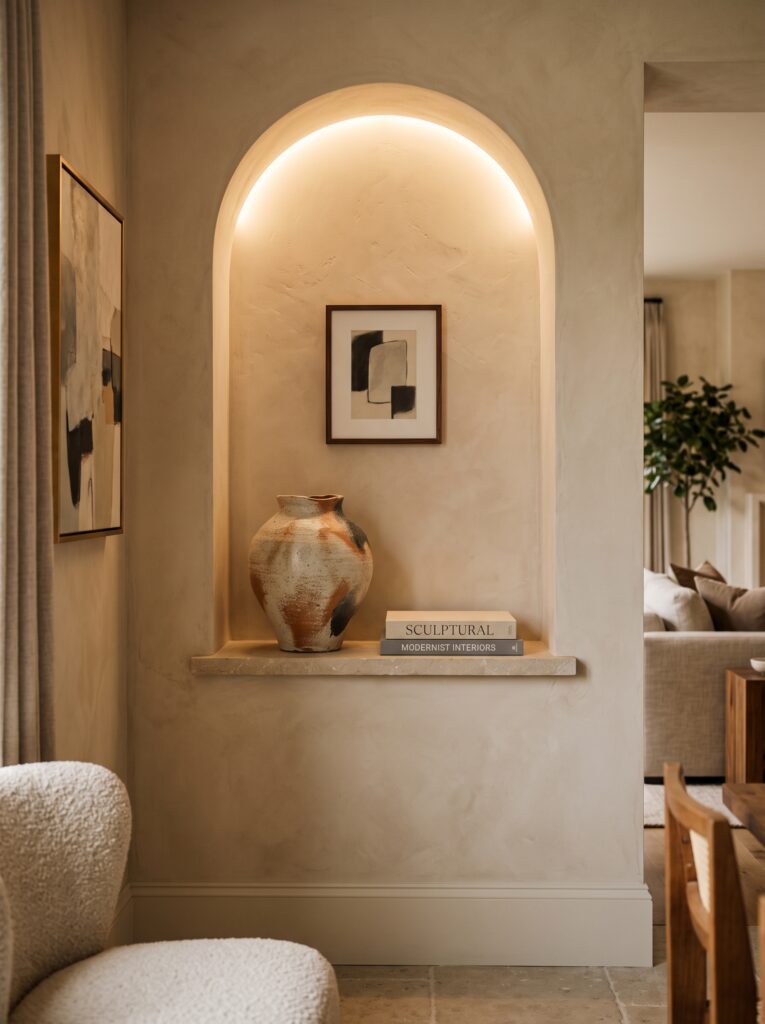
Wall niche decorating ideas are an excellent way to add character, depth, storage, and visual interest to a home without making the room feel crowded. A well-designed niche can display artwork, ceramics, books, plants, lighting, or a single sculptural object while creating the impression of custom architecture.
Whether you are renovating a home, designing a new space, or simply trying to make an existing wall more interesting, a niche can become a beautiful focal point.
The secret is not filling the niche with as many things as possible. The most sophisticated niches usually rely on scale, lighting, texture, color, and restraint.
What Is a Wall Niche?
A wall niche is a recessed section built into a wall. Unlike a standard floating shelf, a niche becomes part of the architecture itself.
It can be:
- Small and decorative
- Tall and narrow
- Wide and horizontal
- Built into a bathroom wall
- Incorporated into a hallway
- Used as a display area
- Designed for storage
- Illuminated with integrated lighting
Because the niche is recessed, it creates natural depth.
This makes it particularly useful for adding dimension to minimalist interiors where there may not be much decorative furniture.
Why Wall Niches Are Becoming Popular in Home Design
Modern homeowners increasingly want interiors that feel personalized rather than generic.
A wall niche can help create that feeling because it looks integrated into the architecture.
Instead of simply hanging another piece of artwork on a wall, you can create a small architectural moment.
A niche can also solve practical design problems.
For example, it can provide:
- Display space
- Hidden storage
- Bathroom organization
- Book storage
- Lighting
- A location for plants
- A focal point in an awkward area
This combination of beauty and functionality makes niches useful across many areas of the home.
1. Create a Minimalist Display Niche
One of the easiest ways to style a wall niche is to keep it extremely simple.
Place one beautiful object inside.
This could be:
- A sculptural ceramic vase
- A stone object
- A handmade bowl
- A small piece of artwork
- A decorative vessel
Leaving empty space around the object allows it to become the focal point.
This works particularly well in minimalist and contemporary homes.
The fewer objects you use, the more important scale and shape become.
Choose one piece with an interesting silhouette rather than several small accessories.
2. Add Integrated Lighting
Lighting can transform an ordinary niche into an architectural feature.
Consider installing subtle lighting inside the recess.
Options include:
- LED strip lighting
- Small recessed lights
- Adjustable spotlights
- Concealed accent lighting
Warm lighting can highlight texture and create a beautiful glow in the evening.
It can also make the niche feel more intentional because it visually separates the display from the surrounding wall.
For an upscale look, avoid harsh white lighting. A warm, soft illumination usually creates a more welcoming atmosphere.
3. Use a Contrasting Paint Color
You don’t always need expensive materials to make a niche stand out.
Paint the inside of the niche in a different color from the surrounding wall.
For example:
Cream wall + muted olive niche
or
Warm white wall + deep brown niche
or
Soft beige wall + dusty blue niche
The contrast creates depth without requiring major construction.
For a more subtle effect, use the same color but choose a slightly darker or lighter shade inside the niche.
4. Try Textured Plaster
If you want a more architectural appearance, consider using textured plaster inside the niche.
Materials with subtle variation can create beautiful shadows.
Options include:
- Limewash-inspired finishes
- Venetian plaster
- Microcement
- Clay-inspired textures
- Natural mineral finishes
Texture works particularly well when paired with simple decorative objects.
You don’t need many accessories when the wall itself becomes the feature.
5. Use Natural Stone
Stone can make a wall niche feel luxurious and permanent.
Consider:
- Limestone
- Travertine
- Marble
- Slate
- Soapstone
- Honed natural stone
Stone can be used on the back panel, shelf surface, or entire interior of the niche.
A softly veined stone can become the backdrop for one sculptural object.
For a timeless appearance, matte or honed finishes often feel more understated than highly polished surfaces.
6. Create a Bathroom Niche
Bathrooms are one of the most practical places for wall niches.
A shower niche can provide convenient storage for:
- Shampoo
- Conditioner
- Body wash
- Soap
- Razors
- Bath accessories
Instead of leaving bottles on the shower floor or using bulky hanging organizers, a built-in niche creates a cleaner appearance.
For a luxury bathroom, coordinate the niche material with the rest of the bathroom.
For example, if the shower uses stone tile, continue the same material into the niche.
Decorative Bathroom Niches
Not every bathroom niche needs to be used for shower storage.
A dry-wall niche can display:
- Candles
- Ceramic vessels
- Artwork
- Small plants
- Decorative bottles
This can be especially effective in powder rooms.
7. Design a Hallway Niche
Hallways often contain awkward empty walls.
A narrow niche can turn that unused space into a design feature.
Place:
- One sculptural vase
- A small artwork
- A decorative mirror
- A narrow shelf
- A small plant
Add subtle lighting if possible.
Because hallways are transitional spaces, a niche can provide visual interest without interfering with movement.
8. Turn a Niche Into a Mini Library
A larger wall niche can become a compact bookshelf.
Install several shelves inside the recess and organize books vertically and horizontally.
Mix the books with a few decorative objects.
For example:
Books + ceramic vase + small artwork
The key is to avoid making the niche look like an ordinary bookshelf.
Leave some empty space between groups.
This gives the display a more curated appearance.
9. Use a Wood Backdrop
Natural wood can instantly warm up a wall niche.
Choose:
- Oak
- Walnut
- White oak
- Reclaimed wood
- Bamboo
The wood can cover the back wall of the niche or become the shelf material.
Wood works especially well with:
- Greenery
- Cream ceramics
- Stone
- Black accents
- Brass
This combination creates an organic modern appearance.
10. Create a Bedroom Display Niche
A bedroom niche can replace traditional bedside artwork or become a decorative feature beside the bed.
Use it to display:
- Small artwork
- Books
- Ceramic objects
- Personal keepsakes
- A small plant
Avoid placing too many objects inside.
Bedrooms benefit from calm, uncluttered styling.
A simple niche with warm lighting can create a peaceful focal point.
11. Design a Dining Room Niche
A dining room is an excellent location for a decorative niche because it allows you to display beautiful objects.
Consider using the niche for:
- Handmade ceramics
- Sculptural pottery
- Wine-related accessories
- Artwork
- Decorative plates
If the dining room already contains a statement chandelier, keep the niche more restrained.
The goal is to create visual balance.
12. Use an Arched Niche
Straight rectangular niches are classic, but arched niches can introduce softness.
An arch works particularly well in:
- Mediterranean-inspired interiors
- Spanish-style homes
- European-inspired homes
- Transitional interiors
- Organic modern spaces
The curved shape can contrast beautifully with straight furniture and cabinetry.
Keep the styling simple so the architectural shape remains visible.
13. Try Multiple Small Niches
Instead of creating one large recess, you can use several smaller niches.
For example:
Three vertically stacked niches
or
Three evenly spaced niches along a hallway.
This can create rhythm and repetition.
Use the same type of object in each niche for a cohesive appearance.
For example:
Three ceramic vessels
or
Three small sculptures.
14. Create a Tall Vertical Niche
A tall narrow niche can emphasize ceiling height.
This is especially useful in rooms with:
- High ceilings
- Narrow walls
- Tall windows
- Large entryways
Place a tall vase, branch arrangement, or sculptural object inside.
Vertical niches can also work beautifully beside fireplaces or built-in cabinetry.
15. Make the Niche Functional Storage
Not every niche has to be purely decorative.
A deeper niche can provide practical storage.
Use it for:
- Keys
- Small baskets
- Books
- Towels
- Decorative storage boxes
- Everyday accessories
In an entryway, a niche can become a convenient drop zone.
In a bathroom, it can provide storage.
In a kitchen, it can hold frequently used items.
16. Create a Kitchen Niche
A kitchen niche can be both beautiful and practical.
A recessed shelf near the cooking area can hold:
- Olive oil
- Salt
- Pepper
- Cooking utensils
- Frequently used spices
This keeps everyday essentials accessible while reducing countertop clutter.
For a decorative kitchen niche, use pottery, wooden boards, or a small piece of artwork.
Make sure any materials used near heat and moisture are appropriate for the location.
17. Use a Niche Around a Fireplace
If your fireplace wall has enough depth, a niche can add architectural interest.
You could create:
- Built-in shelving
- Decorative niches
- Firewood storage
- Artwork recesses
A fireplace wall is already a focal point, so keep the niche styling restrained.
A few carefully chosen objects are usually enough.
18. Add Personal Objects
Your home should not look like a furniture showroom.
A niche is an excellent place to display something meaningful.
Consider:
- A travel souvenir
- Handmade pottery
- A family heirloom
- A small framed photograph
- A favorite book
- A sculpture from an artist you love
These details give the room personality.
The goal is to make the niche feel collected rather than staged.
19. Use One Oversized Object
An oversized object can create more impact than several small pieces.
Try:
- Large sculptural vase
- Oversized ceramic vessel
- Tall branch arrangement
- Stone sculpture
Make sure the object fits comfortably inside the niche.
Leave some breathing room around it.
This approach is particularly effective in modern interiors.
20. Create a Tone-on-Tone Niche
For a subtle luxury look, keep everything within one color family.
For example:
Warm white wall + cream niche + ivory ceramic
or
Beige wall + sand-colored niche + tan pottery.
This creates depth through texture rather than strong color contrast.
Tone-on-tone interiors can feel sophisticated and calm.
21. Add a Mirror
A mirrored niche can make a small space feel brighter.
Use a mirror as the back panel and place a small decorative object in front.
This can work particularly well in:
- Powder rooms
- Hallways
- Small entryways
- Bedrooms
Mirrors reflect light and create the illusion of greater depth.
22. Use a Decorative Tile Backdrop
Tile is another excellent material for niche interiors.
Try:
- Handmade-look ceramic tile
- Zellige-inspired tile
- Stone tile
- Geometric tile
- Small mosaic tile
This works especially well in bathrooms and kitchens.
If the surrounding room already has patterned tile, consider using a simpler material inside the niche so the design doesn’t become too busy.
23. Create a Small Plant Niche
Plants can soften architectural features.
Use a niche to display:
- Trailing plants
- Small potted plants
- Air plants
- Drought-tolerant varieties
Choose plants appropriate for the amount of light and humidity available.
A niche near a bright window can become a beautiful miniature indoor garden.
24. Use the Niche for Seasonal Styling
A neutral niche can easily change with the seasons.
Spring
Fresh greenery and light ceramics.
Summer
Natural textures and bright botanical elements.
Fall
Warm pottery, dried branches, and earthy tones.
Winter
Evergreen branches, candles, and darker accents.
Because the architecture stays the same, you only need to change a few objects.
25. Style a Niche With Books
Books add personality and warmth.
Instead of lining every shelf with books, create small groups.
Stack two or three books horizontally.
Place a ceramic object on top.
Leave empty space beside the stack.
This makes the display feel curated.
Choose books based on genuine interests rather than simply selecting covers for their colors.
26. Use a Floating Shelf Inside the Niche
A floating shelf can create additional levels.
This is useful when the niche is deep.
One or two shelves may be enough.
Choose a material that complements the surrounding room.
Wood creates warmth.
Stone creates luxury.
Metal creates a modern appearance.
Glass keeps the niche visually light.
27. Create a Children’s Room Niche
In a child’s room, a niche can become a display for:
- Books
- Toys
- Artwork
- Small collectibles
Use durable materials and secure furniture or shelving appropriately.
The niche can grow with the child by changing the display over time.
28. Make an Entryway Niche
Entryways benefit from practical decorative features.
A wall niche near the front door can provide a place for:
- Keys
- Small bowls
- Decorative objects
- Small plants
Add a mirror nearby if space allows.
This can create a functional entrance while maintaining a clean appearance.
29. Coordinate the Niche With Existing Materials
One of the easiest ways to make a niche look expensive is to connect it visually to the rest of the room.
Repeat an existing:
- Tile
- Stone
- Wood
- Paint color
- Metal finish
- Texture
For example, if your room has walnut cabinetry, using walnut inside the niche can make it feel custom.
If the bathroom uses marble, continue the marble into the niche.
Consistency creates a sense of intentional design.
30. Avoid Over-Styling
This may be the most important rule.
A niche does not need to be completely filled.
Empty space is part of the design.
Instead of asking:
“What else can I put here?”
ask:
“What is the one thing that deserves attention here?”
This shift can make your styling dramatically more sophisticated.
How to Make a Wall Niche Look Expensive
You can create a luxury appearance without using expensive accessories.
Focus on:
Scale
Use objects that are large enough to be visually noticeable.
Texture
Combine materials such as plaster, stone, ceramic, wood, and glass.
Lighting
Warm integrated lighting can elevate even a simple niche.
Restraint
Use fewer objects.
Repetition
Repeat colors and materials already present in the room.
Quality of Shape
Choose objects with interesting silhouettes.
Negative Space
Allow empty areas around the objects.
These principles are often more important than the price of the accessories.
Best Materials for Wall Niches
Different materials create different moods.
Natural Stone
Elegant, timeless, luxurious.
Wood
Warm, organic, inviting.
Plaster
Soft, architectural, textural.
Ceramic Tile
Durable, decorative, versatile.
Glass
Light, contemporary, reflective.
Painted Drywall
Affordable, flexible, and easy to update.
Choose the material based on the location and its exposure to moisture, heat, or daily use.
Wall Niche Ideas for Small Homes
If you live in a smaller American home or apartment, niches can be especially valuable.
They use existing wall depth instead of adding bulky furniture.
A recessed shelf can replace:
- A small console
- A freestanding bookshelf
- A bathroom storage unit
- A decorative table
This can make a room feel more open.
Wall Niche Ideas for Renters
True built-in niches may not be practical for renters, but you can create a similar appearance using removable or freestanding solutions.
Consider:
- Recessed-style wall shelving
- Shallow shelving units
- Removable decorative panels
- Small freestanding display cabinets
Always check your rental agreement before making permanent changes.
Wall Niche Styling Formula
If you need a simple formula, try:
1 architectural feature
1 statement object
1 natural element
negative space
For example:
Textured niche
+
large ceramic vase
+
small branch arrangement
+
empty space
This is often enough to create an elegant result.
Common Wall Niche Decorating Mistakes
Filling Every Inch
Too many objects make the niche look cluttered.
Using Tiny Objects
Small accessories can disappear inside a deep niche.
Ignoring Lighting
A beautiful niche can look flat if it is poorly illuminated.
Mixing Too Many Materials
Keep the palette coordinated.
Choosing the Wrong Scale
Objects should relate to the size of the niche.
Making Every Niche Identical
If your home has several niches, vary the styling while keeping a visual connection.
Conclusion
The best wall niche decorating ideas combine architecture and styling rather than treating the niche like another ordinary shelf. Whether you use yours for books, artwork, ceramics, plants, bathroom storage, or a single sculptural object, the goal should be to create a feature that feels integrated into the home.
Start by considering the size and location of the niche. Then choose a material, color, lighting approach, and decorative object that complements the surrounding room. Most importantly, resist the urge to fill every inch. A beautifully lit niche with one carefully selected object can have more impact than an entire wall covered in decorations.
When thoughtfully designed, a wall niche can make a home feel more custom, more personal, and more architecturally interesting—without requiring an overwhelming amount of furniture or decor.
- Afrohemian Dining Room Ideas for a Warm, Collected and Sophisticated Home
- Warm Wood and Black Kitchen Ideas for a Timeless Designer Look
- Small Reading Nook Ideas That Turn Forgotten Corners Into a Cozy Luxury Retreat
- Curated Trinket Shelf Ideas: How to Create a Collected and Personal Home
- Neo Deco Entryway Ideas That Make Your Home Feel Instantly Expensive