
Window treatments are one of the easiest ways to make a home feel more polished, comfortable, and thoughtfully designed. While furniture, rugs, wall art, and accessories usually receive most of the attention, beautifully dressed windows can completely change the appearance of a room.
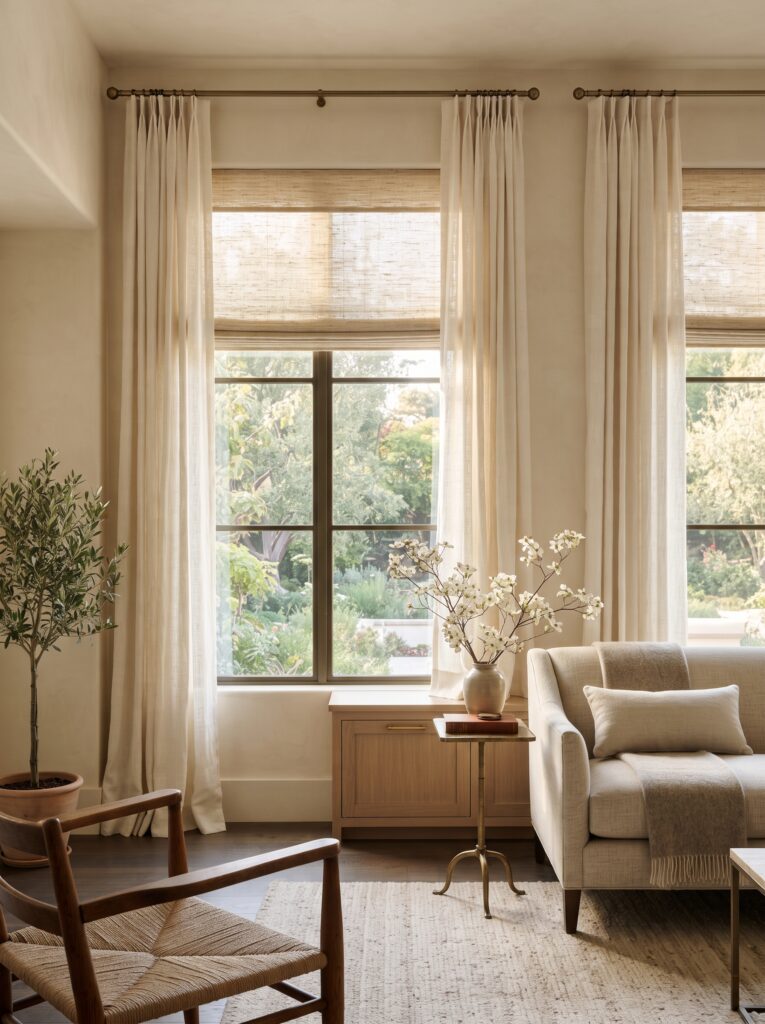
The right curtains, shades, blinds, or layered window treatments can make ceilings appear taller, windows look larger, and an ordinary room feel more custom. They can also provide privacy, control natural light, improve comfort, and add softness to rooms filled with hard surfaces.
For homeowners decorating in the United States, window treatments are especially useful because every home has different architectural details, window sizes, natural-light conditions, and privacy needs. A cozy bedroom may need blackout curtains, while a bright dining room might benefit from lightweight linen panels. A home office may need adjustable shades, while a living room could look beautiful with full-length curtains layered over woven shades.
The goal is not simply to cover a window. The goal is to make the entire room feel intentional.
If you’re looking for designer-inspired window treatment ideas that feel elegant without making your home look overly formal, these ideas can help you create a more finished and sophisticated interior.
Why Window Treatments Make Such a Big Difference
Bare windows can sometimes make a room feel incomplete, even when the rest of the decorating is beautiful.
Window treatments introduce several elements at once: softness, texture, height, color, pattern, privacy, and visual balance.
They can also help connect different parts of a room.
For example, cream curtains can repeat the color of an area rug. Natural woven shades can complement a wood coffee table. Black curtain rods can echo black picture frames or lighting fixtures. Soft beige linen panels can connect neutral upholstery with warm wood furniture.
This is why professional-looking window treatments often feel like part of the architecture rather than an afterthought.
The best designs don’t necessarily look expensive because of the fabric itself. They look expensive because the proportions, placement, and overall styling feel intentional.
1. Hang Curtains Higher Than the Window
One of the simplest designer tricks is to install curtain rods higher than the actual window frame.
Instead of positioning the rod immediately above the window, consider placing it closer to the ceiling or at least several inches above the frame, depending on the room’s proportions.
This creates the illusion of greater wall height and makes the window feel more substantial.
In rooms with standard-height ceilings, this small adjustment can make a surprisingly noticeable difference.
For an elegant look, allow the curtains to extend from near the ceiling down toward the floor rather than stopping directly at the bottom of the window.
The result is a taller, softer, and more architectural appearance.
2. Extend Curtain Rods Beyond the Window
Another common designer approach is to make the curtain rod wider than the window itself.
Instead of having the curtains cover a large portion of the glass when they’re open, extending the rod allows the panels to sit farther outside the window frame.
This has two benefits.
First, it allows more natural light to enter the room.
Second, it visually makes the window appear wider.
This technique works particularly well in living rooms, bedrooms, dining rooms, and home offices where you want to preserve as much daylight as possible.
It is also useful when decorating smaller windows that you want to make appear more substantial.
3. Choose Full-Length Curtains for an Elegant Look
Floor-length curtains are one of the easiest ways to create a sophisticated interior.
Even a simple neutral curtain can look elevated when it falls gracefully from near the ceiling to the floor.
For a polished appearance, avoid curtains that end several inches above the floor unless you are intentionally creating a specific tailored style.
A slightly longer panel can create a soft, relaxed effect, while a curtain that barely meets the floor tends to look cleaner and more contemporary.
For many American homes, neutral full-length curtains in shades such as ivory, oatmeal, warm white, taupe, or soft beige are especially versatile.
They can work with modern, traditional, transitional, organic modern, and contemporary interiors.
4. Try Linen Curtains for a Soft, Relaxed Interior
Linen curtains are a beautiful option when you want your home to feel relaxed but still sophisticated.
Their natural texture prevents neutral rooms from looking flat.
Instead of creating a perfectly smooth appearance, linen introduces subtle movement and variation. This works beautifully with wood furniture, woven baskets, ceramic accessories, natural rugs, and other organic materials.
A warm white linen curtain can make a bright room feel airy.
A beige linen curtain can create a warmer atmosphere.
A slightly darker natural linen tone can add depth without overwhelming the room.
For an organic modern or relaxed luxury interior, linen window treatments can be especially effective.
5. Layer Curtains With Roman Shades
Layering window treatments can make a room feel significantly more customized.
One elegant combination is a Roman shade underneath full-length curtains.
The Roman shade handles privacy and light control while the curtains provide softness and visual drama.
This approach works particularly well in bedrooms and living rooms.
For example, you might use a natural woven Roman shade with ivory curtains for an organic look. Alternatively, a simple fabric Roman shade paired with tailored curtains can create a more traditional or transitional aesthetic.
Layering is also useful when windows face a street or neighboring homes and require additional privacy.
6. Use Roman Shades on Their Own
Not every window needs curtains.
Roman shades can provide a clean and sophisticated appearance while maintaining a relatively streamlined profile.
They are especially useful in spaces where long curtains could interfere with furniture or walkways.
Consider Roman shades for:
- Kitchen windows
- Breakfast nooks
- Bathrooms
- Home offices
- Small bedrooms
- Reading corners
- Dining areas
- Bay windows
Neutral fabric Roman shades can create a calm, tailored appearance, while patterned shades can become a decorative focal point.
If the rest of the room is simple, a subtle pattern around the window can introduce personality without requiring major decorating changes.
7. Bring in Natural Woven Shades
Natural woven shades are another beautiful choice for homeowners who like warm, organic interiors.
Materials inspired by rattan, bamboo, grasses, and other natural fibers can introduce texture while filtering sunlight.
They work particularly well with:
- Warm wood
- Cream upholstery
- Terracotta
- Natural stone
- Jute rugs
- Woven baskets
- Greenery
- Handmade ceramics
Woven shades can also soften rooms that contain many modern or hard-edged surfaces.
For example, a contemporary kitchen with white cabinetry and stone countertops can feel warmer when natural woven shades are added to the windows.
8. Create a Layered Bedroom Window
Bedrooms benefit from window treatments that balance beauty with function.
A layered combination of blackout curtains and shades can create a cozy, private environment while also giving you flexibility during the day.
For a calm bedroom, consider combining:
- Warm white curtains
- A neutral Roman shade
- A simple curtain rod
- Soft bedding
- Natural wood
- Warm bedside lighting
The window treatment should complement the bedding rather than compete with it.
If your bedding has a strong pattern, choose simpler curtains.
If your bedding is mostly solid and neutral, you can introduce subtle texture or pattern through the window treatment.
9. Use Blackout Curtains Without Making the Room Look Heavy
Blackout curtains are practical, particularly in bedrooms, but they don’t have to look bulky or overly dark.
Choose blackout-lined curtains in soft neutral colors if you want to maintain an airy aesthetic.
Cream, beige, taupe, soft gray, and muted earthy colors can provide excellent visual softness while still offering practical light control.
Another option is to use blackout lining behind a decorative curtain fabric.
This gives you the functionality of blackout curtains without sacrificing the appearance you want.
10. Match Curtain Hardware to the Room
Curtain rods and hardware are small details, but they can influence the overall appearance of the window.
Black hardware can work beautifully in modern and transitional spaces.
Brass or antique brass can add warmth and work particularly well with classic, traditional, and vintage-inspired interiors.
Bronze hardware can create a deeper, more grounded appearance.
For a minimal room, simple hardware may be preferable.
For a more traditional interior, decorative finials can add character.
The key is to make sure the hardware feels connected to the rest of the room.
For example, if your lighting fixtures are brass, repeating a similar finish at the windows can create visual continuity.
11. Choose Curtain Colors That Connect the Room
Window treatments don’t always need to match the walls exactly.
Instead, think about creating a relationship between the curtains and the colors already present in the room.
If your room has warm beige walls, you might choose ivory or oatmeal curtains.
If the room has white walls and dark furniture, muted taupe curtains can soften the contrast.
If your interior includes earthy colors such as olive, terracotta, or camel, natural linen tones can complement them beautifully.
The goal is harmony rather than exact matching.
12. Add Pattern Through Window Treatments
If your room is mostly neutral, patterned curtains or Roman shades can become an easy way to introduce personality.
You don’t need an extremely bold print.
Small-scale botanical patterns, subtle stripes, traditional motifs, or understated geometric designs can create visual interest while keeping the room sophisticated.
Patterned window treatments work especially well when the rest of the room contains simple furniture and accessories.
Think of the window as a large decorative surface.
Instead of filling every wall with artwork, a beautiful patterned shade can become the room’s statement element.
13. Make Small Windows Look Larger
Small windows can sometimes appear disconnected from the rest of the room.
Fortunately, window treatments can help change their visual proportions.
Mounting the curtain rod higher and extending it beyond the window frame can create the impression of a larger window.
Full-length curtains can also add height.
For very small windows, avoid overly heavy fabrics that overwhelm the limited glass area.
Lightweight curtains, Roman shades, or simple woven shades can maintain balance.
14. Dress Bay Windows Beautifully
Bay windows can become one of the most attractive architectural features in a home when they are treated thoughtfully.
Instead of automatically covering the entire area with heavy curtains, consider the structure of the bay window first.
Roman shades can emphasize each individual window.
Alternatively, curtains can frame the entire bay while allowing the central area to remain visually open.
In a dining room or reading nook, a bay window can also become a cozy focal point when combined with a bench, soft cushion, and carefully chosen window treatments.
15. Use Curtains to Define a Dining Room
Dining rooms often benefit from elegant but understated window treatments.
Linen curtains in ivory, beige, or soft taupe can create a sophisticated backdrop for a dining table.
If your dining room includes a statement chandelier, avoid overly dramatic curtains that compete with it.
Instead, use the curtains to soften the space.
A simple combination of full-length neutral curtains, warm wood furniture, and subtle brass accents can create a timeless dining atmosphere.
16. Make Your Home Office Feel More Polished
A home office doesn’t need to look overly corporate.
Window treatments can help create a comfortable and productive atmosphere.
Roman shades are especially practical for offices because they provide controlled light without taking up much visual space.
If your desk faces a window, adjustable shades can help reduce glare.
For a more decorative office, combine a woven shade with lightweight curtains.
Natural textures can make the workspace feel more like a designed room rather than an improvised work area.
17. Consider Privacy in Living Areas
Privacy is an important part of window treatment design, particularly for homes close to neighboring properties or busy streets.
Sheer curtains can provide a soft layer of privacy while allowing daylight to enter.
They can also be paired with heavier curtains for more flexibility.
During the day, sheer panels can remain closed while still allowing light into the room.
In the evening, heavier curtains can be drawn for additional privacy.
This layered approach is both practical and visually elegant.
18. Don’t Forget the Kitchen
Kitchen windows are often overlooked when decorating, but even a small window can influence the overall look of the room.
For kitchens, consider practical options such as:
- Roman shades
- Café curtains
- Woven shades
- Simple fabric shades
- Short tailored curtains
Choose materials that make sense for the environment and are easy to maintain.
A subtle pattern can also bring personality to an otherwise neutral kitchen.
For example, a small botanical print can complement a kitchen filled with herbs, wood accents, and ceramic accessories.
19. Create a Soft Rental-Friendly Window
If you live in a rental, you can still improve the appearance of your windows without making permanent changes.
Depending on your lease and the existing hardware, removable solutions or tension-based options may be useful.
Another simple approach is to focus on styling around the window.
A freestanding floor lamp, tall plant, small accent chair, or narrow console can visually frame the window and make it feel more intentional.
The key is to work with what you have rather than assuming every improvement requires major renovation.
20. Use Sheer Curtains for an Airy Look
Sheer curtains can completely change the mood of a bright room.
They diffuse sunlight and create a softer atmosphere without blocking the window completely.
White or ivory sheers are particularly effective in minimalist and coastal-inspired interiors.
They can also work beautifully in bedrooms, living rooms, and sunrooms.
For an elevated appearance, choose full-length sheers and install them from a high point near the ceiling.
When the fabric gently moves with natural airflow, the room can feel lighter and more relaxed.
21. Choose the Right Curtain Length
Curtain length is one of the most important details in achieving a polished appearance.
Curtains that are too short can make the window look disconnected from the rest of the wall.
Curtains that are dramatically too long can create unnecessary bulk unless you intentionally want a puddled effect.
For a clean contemporary look, curtains that meet or barely kiss the floor are often effective.
For a softer and more romantic interior, a small amount of extra fabric can create a relaxed appearance.
The choice should match the overall style of your home.
22. Think About Fabric Weight
The fabric you choose affects both appearance and functionality.
Lightweight fabrics can make a room feel airy and casual.
Medium-weight fabrics provide more structure.
Heavier materials can create a more formal and luxurious atmosphere.
Velvet, for example, can bring drama and richness to a dining room or bedroom.
Linen can feel relaxed and natural.
Cotton can provide versatility.
Sheer fabric creates softness and filtered light.
Instead of choosing fabric based only on color, think about the atmosphere you want the entire room to create.
23. Coordinate Window Treatments With Rugs
A simple way to create a cohesive room is to connect the window treatment with the rug.
They don’t need to match.
Instead, they can share similar undertones.
For example, an oatmeal curtain can work beautifully with a cream-and-tan rug.
A muted olive Roman shade can complement an earthy patterned rug.
A soft gray curtain can connect with a cool-toned rug and upholstered furniture.
This subtle repetition makes the room feel intentionally designed.
24. Use Window Treatments to Add Texture
Texture is especially important in neutral interiors.
If your walls, sofa, bedding, and furniture are all solid colors, the room can sometimes feel visually flat.
Window treatments provide an opportunity to add another layer.
Linen, woven materials, subtle embroidery, textured cotton, and softly patterned fabrics can all introduce dimension.
This is one reason neutral rooms often look more expensive when they contain multiple textures rather than simply multiple colors.
25. Avoid Making Every Window Identical
Consistency is helpful, but every window in your home doesn’t necessarily need exactly the same treatment.
A living room may require full-length curtains.
A kitchen may work better with a Roman shade.
A bathroom may need a moisture-friendly solution.
A bedroom may benefit from blackout curtains.
The goal is to maintain a visual relationship throughout the home while adapting the treatment to each room’s needs.
Repeating similar colors, materials, or hardware finishes can create continuity without making every space look identical.
Common Window Treatment Mistakes to Avoid
Even beautiful fabric can look less polished if the installation is not carefully considered.
One common mistake is hanging curtain rods too low.
Another is choosing curtains that are too short.
Very narrow curtain panels can also make a window look smaller.
Using a fabric that is completely unrelated to the rest of the room can create visual disconnect.
Another mistake is focusing only on appearance while ignoring functionality.
Before choosing a treatment, consider sunlight, privacy, cleaning, furniture placement, and how frequently the window is used.
A beautiful window treatment should work for everyday life.
How to Make Window Treatments Look More Expensive
You don’t necessarily need a huge decorating budget to create an elevated appearance.
Focus on proportions first.
Hang the hardware thoughtfully.
Choose fabrics with attractive texture.
Keep the color palette cohesive.
Use enough fabric to create fullness rather than thin, stretched panels.
Pay attention to the details of the installation.
Sometimes a simple ivory curtain installed correctly will look more sophisticated than an expensive curtain installed at the wrong height.
The overall composition matters more than the price tag.
Creating a Designer-Inspired Look on a Budget
If you’re decorating on a budget, start with the rooms where window treatments will have the biggest visual impact.
The living room and primary bedroom are often good places to begin because large windows and large expanses of fabric can dramatically change the atmosphere.
Instead of decorating every window at once, prioritize the most visible areas.
Choose versatile neutral fabrics that can work with your existing furniture.
Then gradually add Roman shades, woven shades, or additional layers where needed.
You can also create a high-end appearance by investing in good-looking hardware and carefully measuring everything before purchasing.
Good proportions are one of the most affordable decorating upgrades available.
Conclusion
Beautiful window treatments can make a room feel taller, softer, warmer, and more complete without requiring a major renovation.
Whether you prefer relaxed linen curtains, elegant Roman shades, natural woven blinds, sheer panels, or layered treatments, the most important thing is to consider the entire room rather than the window alone. Think about natural light, privacy, fabric texture, curtain height, hardware, color, and the relationship between the windows and the furniture around them.
A well-dressed window should feel like a natural part of the home’s design. When the proportions are right and the materials complement the rest of the interior, even a simple window can become an architectural feature.
For homeowners looking for an easy way to create a more polished and designer-inspired home, thoughtful window treatments are one of those decorating details that can make a surprisingly large difference.
- Playful Home Decor Ideas That Feel Fun, Stylish, and Unexpected
- Unexpected Wallpaper Ideas That Make Ordinary Spaces Feel Custom
- How to Mix Vintage and Modern Decor Without Making Your Home Feel Random
- Designer Window Treatment Ideas That Make Any Room Look More Finished
- Vintage Lighting Ideas That Make a Home Feel Instantly Expensive