
Your dining table is more than a place to eat. It is where family dinners happen, friends gather, holidays are celebrated, conversations continue long after the meal is finished, and everyday moments become memories.
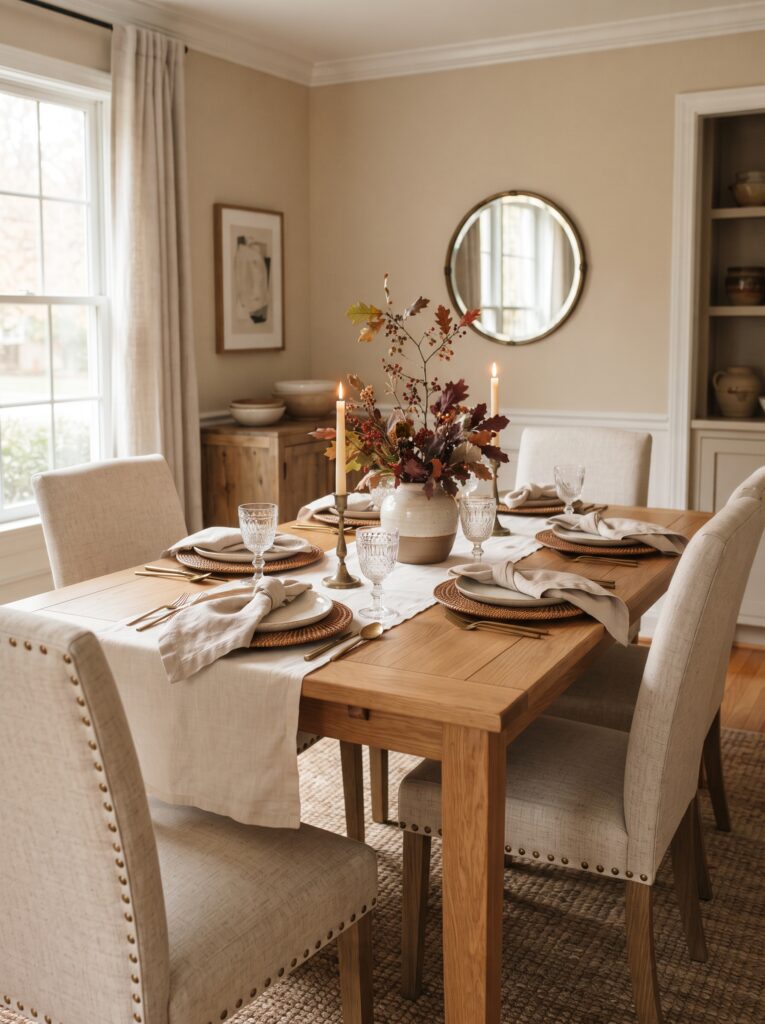
That is why a beautifully styled dining table can make such a difference to the overall feeling of a home.
You do not need an expensive dining set, designer dinnerware, or a formal dining room to create an elevated look. With the right combination of linen, natural materials, candles, ceramics, greenery, glassware, and thoughtful details, you can make an everyday dining table feel sophisticated without making it look overly formal.
The best part is that many of these ideas work throughout the year. You can keep the basic foundation simple and change a few small details as the seasons change.
If you are looking for elegant dining table decor ideas, tablescape inspiration, everyday table setting ideas, or sophisticated dining room styling, these ideas can help you create a table that feels warm, polished, and inviting.
Why Dining Table Styling Matters
A dining table often becomes one of the first things people notice when they enter a dining room.
Even when the surrounding furniture is simple, a thoughtfully styled table can immediately make the space feel more intentional.
A completely empty table can sometimes make a room feel unfinished. On the other hand, a table covered with too many decorative objects can make it difficult to use.
The goal is to find the middle ground.
An elegant dining table should look beautiful while still leaving enough space for people to sit comfortably, eat, talk, and move around.
That balance between beauty and practicality is what makes a tablescape feel sophisticated.
Start With a Simple Foundation
Before adding decorative accessories, begin with the foundation of your table.
This could be a natural wood tabletop, a simple tablecloth, or a linen runner.
For an understated luxury look, natural wood is especially beautiful because it provides warmth without requiring much decoration.
If your table has a darker finish, lighter linens and ceramics can create contrast.
If your dining table is light oak or another pale wood, deeper accessories such as olive, chocolate, burgundy, or charcoal can add depth.
The foundation should support the rest of the design rather than compete with it.
Use Linen for an Effortlessly Elegant Look
One of the easiest ways to make a dining table look more elevated is to introduce linen.
Linen napkins and runners have a naturally relaxed appearance, which makes them perfect for both everyday meals and special occasions.
You do not need perfectly pressed linen.
In fact, slightly relaxed fabric can make the table feel more inviting and less formal.
Neutral shades such as:
- Ivory
- Cream
- Oatmeal
- Natural beige
- Soft taupe
- Muted olive
- Warm gray
work particularly well because they can be reused with different seasonal decorations.
For a more dramatic fall tablescape, introduce deeper colors through napkins rather than replacing the entire table setting.
Choose Dinnerware With Character
Dinnerware does not have to match perfectly to look beautiful.
Handmade or handmade-inspired ceramic plates can give the table a more collected appearance.
Subtle variations in texture and shape can make a tablescape feel less mass-produced.
For an elegant everyday setting, choose dinnerware with a relatively simple design.
Cream, white, stone, or soft neutral ceramics are incredibly versatile.
If you already own plain white plates, there is no need to replace them.
Instead, add personality through napkins, glassware, candles, or a centerpiece.
Add Beautiful Glassware
Glassware can make even a simple dinner table feel more special.
Clear glasses are timeless and work with almost any decorating style.
For additional character, consider vintage-inspired glasses with subtle texture or delicate detailing.
You can mix different types of glassware as long as the overall arrangement remains cohesive.
For example, a clear drinking glass can be paired with a slightly more decorative wine glass.
The goal is not perfection.
A slightly collected look often feels more sophisticated than a perfectly coordinated set.
Create a Low Centerpiece
One of the most practical dining table decor ideas is to keep the centerpiece relatively low.
A centerpiece that is too tall can interfere with conversation.
Instead, use a low ceramic vessel, shallow bowl, or elongated container.
Fill it with seasonal branches, greenery, dried stems, or flowers.
For everyday decorating, you might use olive branches, eucalyptus, delicate foliage, or another simple botanical arrangement.
For fall, dried branches and muted foliage can introduce seasonal warmth without making the table look overly themed.
Use Candles to Create Warmth
Few things create a dining atmosphere as quickly as candlelight.
Taper candles are particularly effective because they add height without requiring a huge centerpiece.
Place them in simple candleholders made from brass, ceramic, wood, or another material that complements your dining room.
You can use two or three candles in the center of the table or distribute several smaller candleholders along the length of the table.
When using candles, make sure they are positioned safely away from anything flammable and where they will not be knocked over during meals.
For a relaxed everyday atmosphere, warm candlelight can make even a simple dinner feel more intentional.
Mix Materials Instead of Matching Everything
A sophisticated tablescape usually contains several different textures.
Instead of purchasing everything from one collection, combine materials such as:
- Natural wood
- Linen
- Ceramic
- Glass
- Brass
- Stone
- Woven fibers
These materials create visual depth.
For example, a wooden table paired with linen napkins, ceramic plates, glassware, brass candlesticks, and a stoneware centerpiece feels layered without being complicated.
The combination of textures often creates more interest than bold patterns.
Bring in Seasonal Color Subtly
You do not have to completely redesign your dining table every season.
A neutral foundation makes seasonal decorating much easier.
In spring, you might introduce soft greenery and delicate flowers.
For summer, lighter linens and natural textures can create an airy feeling.
During fall, introduce muted burgundy, rust, olive, chocolate, or caramel.
For winter, deeper greens, warm metallic details, and natural evergreen elements can create a cozy atmosphere.
The trick is to use seasonal colors as accents rather than covering the entire table in them.
Create an Elegant Fall Tablescape
Fall is one of the best seasons for dining table decorating because the natural color palette works beautifully with wood and neutral interiors.
Instead of using a large collection of pumpkins and highly themed decorations, try a more restrained approach.
Start with a natural wood table.
Add an ivory or oatmeal linen runner.
Place neutral ceramic plates at each setting.
Use muted burgundy or olive napkins.
Add antique brass candlesticks.
Finish the center with dried branches or seasonal foliage in a low ceramic vessel.
The result feels distinctly autumnal while remaining sophisticated enough for everyday use.
This approach can also transition naturally into Thanksgiving decorating.
Make Everyday Meals Feel Special
You do not need to wait for a holiday to set a beautiful table.
In fact, one of the most enjoyable ways to use these decorating ideas is to create a simple everyday setting.
Instead of putting all your favorite dinnerware away for special occasions, use some of it regularly.
Set the table with attractive plates, linen napkins, simple glasses, and a small centerpiece.
Even an ordinary weeknight meal can feel more intentional.
This is particularly useful if your dining area is visible from your kitchen or living space because the table becomes part of the overall home decor.
Style the Napkins Creatively
Napkins are a small detail, but they can have a major visual impact.
There are many ways to style them without making the table look overly formal.
You can simply fold each napkin and place it beneath the plate.
Alternatively, fold it loosely and place it beside the plate.
For special dinners, a simple napkin ring can add structure.
Natural materials such as wood, brass, or woven fibers work particularly well with neutral linen.
You can also add a tiny seasonal branch or herb to each setting for a subtle finishing touch.
Add Place Settings Without Overcrowding
A beautiful table still needs to function as a dining table.
Avoid placing so many decorative objects in the center that there is no room for serving dishes.
Think about the actual meal before styling the table.
If you are serving family-style food, leave generous space.
If you are hosting a more formal dinner, you can create a more detailed place setting.
The number of decorative elements should always reflect how the table will actually be used.
Use a Consistent Color Story
A cohesive color palette can instantly make a tablescape look more expensive.
You do not need to use only one color.
Instead, choose two or three primary tones and repeat them throughout the arrangement.
For example:
Cream + walnut + antique brass
creates a warm classic look.
Ivory + olive + natural wood
feels organic and relaxed.
Cream + burgundy + chocolate brown
works beautifully for autumn.
White + soft gray + light oak
creates a clean contemporary look.
Repeating colors across the table creates visual connection.
Don’t Forget the Dining Chairs
Although the table is the main focus, the chairs are part of the overall composition.
If your dining chairs are upholstered, consider how their fabric works with the table linens.
If the chairs are wooden, soften the space with cushions or a textured rug underneath the table.
The goal is for the table setting and surrounding furniture to feel like part of the same room.
You do not necessarily need matching furniture.
A mix of traditional and contemporary pieces can make a dining room feel more collected.
Add a Rug Under the Dining Table
An area rug can define the dining zone and make the room feel warmer.
Choose a rug large enough that chairs can remain on it when pulled away from the table.
For a sophisticated interior, neutral wool, vintage-inspired patterns, or subtle geometric designs are versatile choices.
Avoid extremely delicate rugs if your dining room receives heavy everyday use.
A dining area should be beautiful but also practical.
Consider the View From Other Rooms
Open-concept homes require another layer of consideration.
Your dining table may be visible from the kitchen or living room, so its styling should complement those areas.
You do not need every room to match.
Instead, repeat one or two materials or colors.
For example, if your kitchen has brass hardware, introducing brass candleholders on the dining table can create subtle continuity.
If your living room uses warm walnut, a walnut dining table can connect the spaces naturally.
Small repeated details make an open floor plan feel cohesive.
Use Vintage Pieces for Personality
A tablescape does not have to consist entirely of new products.
Vintage and secondhand pieces can give a dining room much more character.
Look for:
- Vintage candlesticks
- Antique serving bowls
- Old glassware
- Ceramic vases
- Wooden trays
- Brass accessories
- Vintage linens
A few older pieces mixed with modern dinnerware can make the table feel collected over time.
This is also an easy way to make your home decor more personal.
Avoid the “Too Perfect” Look
A table that looks untouched can sometimes feel more like a furniture showroom than a home.
Do not worry if the linen has a few natural wrinkles.
Do not worry if the ceramic plates have subtle variations.
Do not worry if the flowers are not perfectly symmetrical.
A little imperfection creates warmth.
The most inviting tables feel prepared for people—not prepared only for photographs.
How to Style a Dining Table on a Budget
You can create an elevated dining table without buying everything new.
Start with what you already have.
A plain white dinnerware set can become completely different when paired with a new linen napkin color.
An inexpensive ceramic vase can look more sophisticated when filled with branches from the garden.
A simple wooden table can look beautiful with candles and natural textiles.
Instead of buying ten small decorative objects, invest in one or two useful pieces that can be used in multiple seasons.
For example, a neutral linen runner can work for everyday meals, fall dinners, Thanksgiving, spring gatherings, and summer entertaining.
Versatility is one of the easiest ways to decorate beautifully without overspending.
Create a Table That Works for Entertaining
If you frequently host friends or family, make your tablescape practical.
Keep serving dishes within easy reach.
Use centerpieces that can be moved when food is served.
Choose washable or durable textiles for everyday entertaining.
Keep extra napkins and glassware somewhere nearby.
You can even create a small serving station on a nearby console or sideboard.
This allows the dining table to remain beautiful without becoming crowded.
Small Dining Tables Can Look Beautiful Too
A small dining area does not mean you have to sacrifice style.
For a compact table, simplify the centerpiece.
Instead of a large floral arrangement, use one small vase.
Instead of multiple candleholders, use two.
Choose slim dining chairs that preserve visual space.
A round dining table can also be especially useful in smaller spaces because its shape creates a softer visual flow.
The key is proportion.
Decor should be scaled to the table rather than simply copied from a larger dining room.
The Secret to a Timeless Tablescape
Trends can be fun, but a dining table should ideally work beyond one season.
The easiest way to achieve longevity is to keep the foundation timeless.
Use natural wood, neutral ceramics, linen, simple glassware, and understated metal accents.
Then update smaller details as your taste or the season changes.
This allows you to create a dining room that feels current without needing to redecorate every few months.
Conclusion
Creating an elegant dining table does not require an extravagant budget or a formal lifestyle. The most beautiful tables are often built from simple materials: natural wood, soft linen, handmade-looking ceramics, clear glassware, warm candlelight, and seasonal branches.
Focus on texture instead of excessive decoration. Choose a cohesive color palette. Keep the centerpiece low enough for conversation. Most importantly, remember that the dining table is meant to be used. A beautifully styled table should invite people to sit down.
Whether you are preparing a quiet weeknight dinner, hosting friends on a Saturday evening, decorating for fall, or getting ready for Thanksgiving, a thoughtful tablescape can make the entire experience feel more special. The goal is not to create a table that looks expensive.
The goal is to create a table that feels warm, intentional, personal, and effortlessly elegant—the kind of dining space where people naturally want to stay a little longer.
- Elegant Fall Staircase Decor Ideas for a Sophisticated Autumn Home
- Beautiful Laundry Room Ideas That Make Everyday Home Organization Feel Luxurious
- How to Create a Cozy and Elegant Home Library That Feels Like a Private Retreat
- Elegant Dining Table Decor Ideas That Make Everyday Meals Feel Expensive
- How to Create an Elegant Home Music Room That Feels Sophisticated and Personal