
There is something incredibly appealing about having an outdoor space that feels like a private retreat. Your backyard does not need to be enormous or professionally landscaped to become a beautiful place where you can relax, entertain guests, enjoy your morning coffee, or unwind after a long day. With the right combination of greenery, comfortable seating, natural textures, lighting, and thoughtful styling, even an ordinary backyard can become a peaceful garden sanctuary.
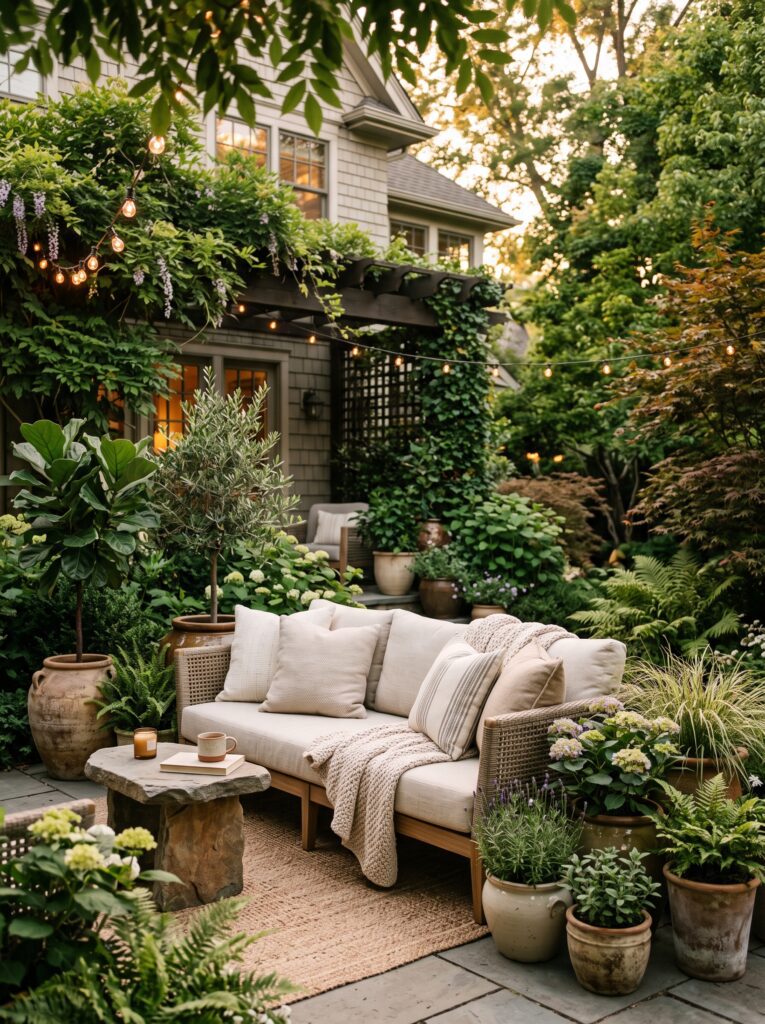
For homeowners looking for fresh backyard ideas, garden-inspired outdoor spaces are an especially beautiful direction. Instead of treating the backyard simply as an extension of the house, think of it as an outdoor room with its own personality. The goal is to create an environment that feels comfortable, layered, inviting, and connected to nature.
Whether you have a spacious suburban backyard, a small townhouse patio, a narrow side yard, or a compact outdoor corner, these garden sanctuary ideas can help you create a space that feels elevated without requiring a complete renovation.
What Is a Garden Sanctuary?
A garden sanctuary is essentially an outdoor space designed around relaxation, privacy, greenery, and atmosphere. Unlike a traditional backyard that may focus primarily on lawn space, a sanctuary-style garden combines different layers of planting, seating, textures, pathways, lighting, and decorative elements.
The most beautiful outdoor retreats usually feel natural rather than overly coordinated. Instead of purchasing an entire matching patio set and filling the space with accessories, combine different materials and textures.
Think:
- Lush greenery
- Mature-looking planters
- Comfortable outdoor seating
- Natural stone
- Wood accents
- Woven textures
- Soft outdoor textiles
- Warm ambient lighting
- Flowering plants
- Climbing vines
- Decorative pottery
- Small garden pathways
The result should feel like a place you want to spend time in rather than simply a space that looks good in photographs.
Start With a Comfortable Outdoor Seating Area
One of the easiest ways to transform a backyard is to create a dedicated seating zone.
Instead of placing chairs randomly throughout the yard, arrange your outdoor furniture as you would arrange furniture in a living room. Position a sofa or several comfortable chairs around a coffee table or small outdoor table. This immediately gives the space structure and makes it feel more intentional.
For a sophisticated American backyard, neutral outdoor furniture works particularly well. Cream, beige, taupe, soft gray, natural wood, and muted earthy tones can create a timeless foundation.
Add cushions in complementary textures rather than choosing every piece in exactly the same fabric. Linen-look outdoor cushions, woven pillows, striped textiles, and subtle botanical patterns can make the seating area feel more relaxed and collected.
If your backyard is small, consider a compact loveseat, two lounge chairs, or a built-in bench instead of a large sectional.
Use Plants to Create Layers
Plants are what truly transform a backyard into a garden sanctuary.
Rather than placing a few isolated pots around the perimeter, create layers of greenery. Combine plants of different heights, shapes, and textures to make the space feel established and abundant.
Tall plants can create privacy and vertical interest. Medium-height shrubs and ornamental plants can fill gaps, while smaller flowers and ground-level greenery can soften hard surfaces.
Large planters are particularly effective when you want a more luxurious look. A few oversized planters can have more visual impact than many tiny pots scattered around the space.
Consider using:
- Large ceramic planters
- Terracotta pots
- Stone planters
- Woven plant baskets
- Raised garden beds
- Window boxes
- Hanging planters
- Vertical garden structures
For a more cohesive appearance, repeat one or two planter materials throughout the garden.
Create Privacy With Greenery
Privacy can make a dramatic difference in how comfortable a backyard feels.
If your outdoor space is visible from neighboring homes, use plants strategically to create a sense of enclosure. Tall ornamental grasses, hedges, climbing plants, trees, and large potted plants can create natural screening.
You can also combine greenery with architectural elements such as a pergola, trellis, privacy screen, or wooden slat wall.
The goal does not have to be complete isolation. Even partial screening can make a seating area feel more intimate.
A small outdoor seating area surrounded by greenery can feel dramatically more private than the same furniture placed in the middle of an open lawn.
Add a Natural Stone Element
Natural materials help an outdoor space feel connected to its surroundings.
Stone is one of the easiest materials to incorporate into a garden sanctuary. You could use stone for a pathway, retaining wall, patio surface, stepping stones, or decorative border.
If a major landscaping project is outside your budget, you do not need to cover the entire yard in stone. Even a small stone pathway leading toward a seating area can create a sense of destination.
For a softer look, combine stone with greenery and wood. The contrast between hard stone and organic plants creates a balanced, timeless appearance.
Make Lighting Part of the Design
Outdoor lighting is often what turns an attractive backyard into an enchanting evening retreat.
During the day, plants and furniture may be the primary visual elements. At night, lighting becomes the atmosphere.
Instead of relying on one bright outdoor fixture, use several smaller sources of light.
Consider:
- String lights
- Lanterns
- Pathway lights
- Wall sconces
- Solar garden lights
- Table lanterns
- Pendant lights beneath a pergola
- LED candles designed for outdoor use
Warm-toned lighting generally creates a softer and more relaxing atmosphere than harsh, bright lighting.
Place lights at different heights to create depth. For example, combine low pathway lights with lanterns on a table and overhead string lights.
Add an Outdoor Rug
An outdoor rug can instantly make a patio or deck feel more like a finished room.
Choose a weather-resistant rug in a subtle pattern or natural color. Neutral stripes, geometric patterns, muted botanical designs, and textured-looking rugs work particularly well for a garden-inspired aesthetic.
An outdoor rug also helps visually define your seating area.
Place the rug beneath the main seating arrangement so that the furniture feels connected rather than scattered across the patio.
Bring in Natural Textures
Texture is essential when creating an elegant outdoor sanctuary.
A garden space can easily feel flat if everything is made from the same material. Introduce visual variety with woven furniture, wood, stone, ceramic, linen-look fabrics, rattan, and natural fibers.
For example, imagine a seating area with:
A natural wood coffee table, woven lounge chairs, cream cushions, a textured outdoor rug, ceramic planters, and leafy greenery.
None of these elements needs to be particularly extravagant. Together, however, they create a layered and sophisticated look.
Create a Small Morning Coffee Corner
You do not need a large backyard to create a special outdoor experience.
A tiny corner with two comfortable chairs and a small table can become one of the most useful areas in your home.
Position the chairs near greenery or flowers if possible. Add a small outdoor rug, a potted plant, and a lantern.
This becomes the perfect location for morning coffee, reading, journaling, or enjoying a quiet moment before starting the day.
For smaller American homes, this type of micro-zone can be much more practical than trying to create multiple large outdoor areas.
Design a Cozy Evening Retreat
Your garden sanctuary should work after sunset as well as during the day.
Create an evening zone with comfortable seating, soft lighting, blankets suitable for outdoor use, and a small table for drinks or snacks.
If you have a fire pit, arrange seating around it to create a natural gathering point. If a fire pit is not practical, lighting alone can create a cozy atmosphere.
The important thing is to think about how the space feels at night—not just how it looks during daylight.
Use a Pergola or Trellis as a Focal Point
A pergola can give an outdoor space architectural structure while also creating opportunities for shade and climbing plants.
If your backyard allows it, a pergola over the main seating area can become the centerpiece of the garden.
For smaller spaces, a simple trellis can provide a similar vertical effect without requiring a large structure.
Climbing greenery can gradually soften the architecture and create the feeling of a secret garden.
Mix Evergreen and Seasonal Plants
A beautiful garden sanctuary should not only look good for a few weeks each year.
Combine evergreen plants with seasonal flowers so the garden maintains visual interest throughout different seasons.
Evergreen greenery provides structure, while seasonal flowers introduce changing color and personality.
For homeowners in different parts of the United States, plant selection should always be adapted to the local climate and growing zone. What works beautifully in a Pacific Northwest garden may require very different plant choices in Arizona, Florida, or New England.
Add One Statement Garden Feature
You do not need dozens of decorations.
Instead, choose one feature that gives the garden personality.
It could be:
- A sculptural planter
- A beautiful fountain
- A stone bench
- A vintage-style garden chair
- A statement outdoor mirror
- A decorative trellis
- A small water feature
- A distinctive garden sculpture
One memorable element often looks more sophisticated than a backyard filled with unrelated decorations.
Keep the Color Palette Relaxed
A sophisticated outdoor space does not necessarily need lots of color.
For a timeless garden sanctuary, start with a base of natural tones such as cream, beige, brown, stone, green, and warm gray.
Then introduce color through flowers, cushions, pottery, or seasonal accessories.
Soft terracotta, dusty blue, muted yellow, sage, and earthy pink can add personality without overwhelming the greenery.
If you love bold colors, use them strategically rather than making every element colorful.
Make a Small Backyard Feel Bigger
Small outdoor spaces require thoughtful planning.
One common mistake is trying to fit too much furniture into a compact yard. Instead, prioritize one strong function.
If you want an outdoor dining space, focus on a table and chairs.
If relaxation is your priority, create a comfortable lounge.
If gardening is your passion, prioritize raised beds and planting zones.
Using fewer but better-chosen elements can make a small backyard feel much larger.
Vertical gardening is another excellent solution. Trellises, wall planters, hanging baskets, and tall plants draw the eye upward and make use of otherwise empty vertical space.
Create a Garden Path
A pathway can make even a small outdoor space feel more thoughtfully designed.
It does not have to be complicated. Stepping stones surrounded by gravel and greenery can create a charming garden path.
A curved pathway often feels more organic than a perfectly straight route.
Use the pathway to visually connect different areas of the garden, such as the patio, seating area, flower beds, or garden entrance.
Don’t Forget the Entrance
The garden sanctuary experience can begin before you even reach the seating area.
If your backyard has a gate or entrance, make it part of the design.
Add potted plants, climbing greenery, a simple lantern, or a beautiful pathway leading toward the main garden.
This creates a sense of arrival and makes the outdoor area feel like a destination.
Budget-Friendly Ways to Create a Luxury Outdoor Look
Creating an elegant backyard does not necessarily mean spending thousands of dollars.
Start with the elements that have the greatest visual impact.
For example, instead of replacing every piece of outdoor furniture, consider updating the cushions and adding an outdoor rug.
Instead of installing extensive landscaping, add several large planters.
Instead of constructing a permanent lighting system, experiment with solar lights and outdoor string lights.
Instead of buying dozens of decorative accessories, invest in one beautiful focal piece.
The key is prioritization.
A backyard can look expensive when it is cohesive, clean, layered, and thoughtfully arranged—even when many of the individual pieces are affordable.
Common Backyard Decorating Mistakes to Avoid
One of the biggest mistakes is overcrowding the space.
Outdoor areas need breathing room. If every corner contains furniture, plants, accessories, and decorations, the garden can quickly feel cluttered.
Another common mistake is choosing everything from one matching collection. While coordinated furniture can be convenient, mixing materials usually creates a more sophisticated appearance.
Poor lighting is another issue. A beautifully designed backyard can feel completely different at night if the lighting is too bright, too cold, or concentrated in only one location.
Finally, avoid choosing plants based solely on appearance. Consider sunlight, rainfall, soil, maintenance requirements, and your local growing conditions before purchasing plants.
How to Make Your Backyard Feel Like a Luxury Retreat
Luxury is often more about atmosphere than price.
A truly beautiful backyard should engage multiple senses.
Think about the sound of leaves moving in the breeze, the fragrance of flowers, the texture of outdoor fabrics, the warmth of evening lighting, and the comfort of the seating.
Add details that encourage people to slow down.
A small side table for morning coffee. A comfortable chair for reading. Soft lighting for evening conversations. Fragrant plants near the seating area. A pathway that encourages you to wander through the garden.
These details make the backyard feel less like a decorative project and more like an extension of your lifestyle.
Conclusion
A garden sanctuary can completely change the way you experience your home. You do not need a massive backyard, expensive landscaping, or a professional designer to create an outdoor space that feels beautiful and inviting.
Start with one area and build gradually. Create a comfortable seating zone, introduce layers of greenery, add natural textures, improve the lighting, and choose a few meaningful decorative details.
The most successful backyard designs are not necessarily the most expensive. They are the spaces that feel intentional, comfortable, personal, and connected to nature.
Whether your dream is a lush backyard retreat, a cozy patio garden, a private outdoor reading corner, or an elegant entertaining space, small thoughtful changes can turn an ordinary outdoor area into a place you genuinely look forward to using.
Save these garden sanctuary ideas for your next backyard makeover and use them as inspiration for creating a peaceful outdoor escape that feels beautiful in every season.
- Afrohemian Dining Room Ideas for a Warm, Collected and Sophisticated Home
- Warm Wood and Black Kitchen Ideas for a Timeless Designer Look
- Small Reading Nook Ideas That Turn Forgotten Corners Into a Cozy Luxury Retreat
- Curated Trinket Shelf Ideas: How to Create a Collected and Personal Home
- Neo Deco Entryway Ideas That Make Your Home Feel Instantly Expensive