
A home should reflect the people who live in it. While living rooms, kitchens, and bedrooms often receive most of the attention when decorating a house, there are plenty of other spaces that can become meaningful parts of a home. One of the most beautiful possibilities is a home music room.
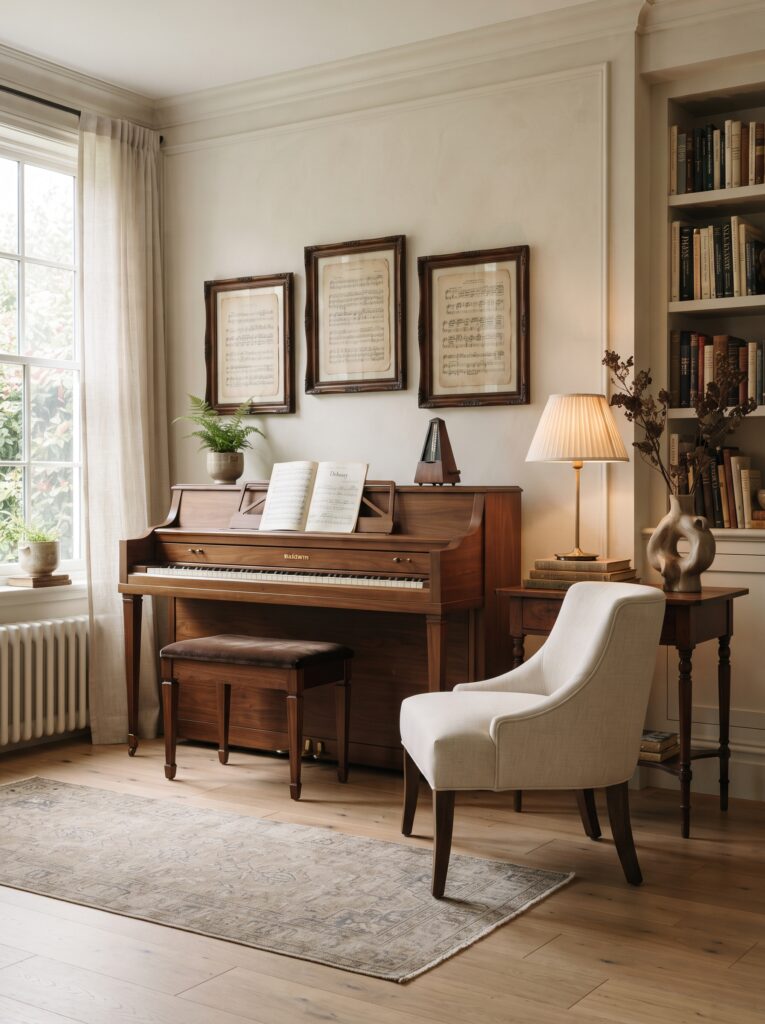
Whether you play piano, guitar, violin, or another instrument—or simply love the atmosphere created by music—a thoughtfully designed music room can add personality, warmth, and sophistication to your home. It does not have to look like a formal concert room or an expensive recording studio. With the right combination of furniture, lighting, artwork, storage, and natural materials, even a small unused room or corner can become an inviting musical retreat.
For homeowners in the United States who love elegant interiors, vintage details, and comfortable spaces, a home music room can also become a wonderful extension of the overall decorating style of the house.
Here are practical and stylish ways to create one.
Why a Home Music Room Is Worth Creating
Many homes have spaces that are rarely used to their full potential. A spare bedroom may become storage, an awkward corner may remain empty, or a small room may never receive a clear purpose.
Turning one of these areas into a music room gives the space a distinct identity.
A music room can serve several purposes at once. It can be a place to practice an instrument, listen to records, read music, relax after a long day, or entertain family and friends. It can also become a visually interesting room because musical instruments naturally function as decorative elements.
A piano, for example, can become the focal point of an entire room. A guitar collection can be displayed beautifully on a wall. Framed sheet music can add personality without requiring expensive artwork.
The result is a room that feels collected rather than simply decorated.
Start With the Purpose of the Room
Before buying furniture or choosing paint colors, think about how you actually want to use the space.
If you regularly practice piano, the instrument should naturally become the main feature. If the room is primarily for listening to music, you may want comfortable seating and better acoustics. If it is a multifunctional creative space, you might need a desk, bookshelf, or storage cabinet as well.
For a family home, the room could even become a shared creative space where children can practice instruments while adults read or relax.
Defining the purpose first prevents the room from becoming overcrowded.
The goal is not to fill every available corner. The goal is to create an environment where the most important activity feels natural.
Make the Instrument the Focal Point
One of the easiest ways to create a sophisticated music room is to let the primary instrument become the focal point.
A piano works particularly well because of its size and visual presence. Instead of trying to hide it, make it part of the architecture and decoration.
Position the piano against a wall with enough breathing room around it. Above it, consider hanging one large piece of artwork or a carefully arranged collection of framed musical prints.
Avoid placing too many decorative objects directly on top of the piano. A few carefully selected pieces usually look more elegant than a crowded arrangement.
For smaller rooms, an upright piano can provide the same visual effect while taking up considerably less floor space.
Choose a Warm and Sophisticated Color Palette
A music room does not need bright colors to feel interesting.
Warm neutrals are particularly effective for creating an intimate atmosphere. Think creamy white, warm beige, taupe, walnut brown, muted olive, charcoal, or deep chocolate.
These shades work especially well with natural wood instruments.
If you prefer a more dramatic room, consider using a deeper color on the walls. A muted olive, warm brown, or sophisticated charcoal can create a cozy evening atmosphere without making the room feel overly formal.
For a lighter aesthetic, keep the walls soft and neutral and introduce richer colors through furniture, artwork, books, rugs, and accessories.
The key is to create contrast without making the room visually chaotic.
Add Comfortable Seating
A beautiful music room should not be designed only around the instrument.
Add at least one comfortable chair where someone can sit and listen, read, or simply enjoy the room.
An upholstered accent chair can introduce softness against hard surfaces such as a piano, wooden floor, or bookshelf. A small leather chair can create a classic library-inspired atmosphere, while a textured fabric chair can make the space feel more relaxed.
If you have enough space, consider adding two chairs with a small side table between them.
This transforms the room from a practice area into a genuine living space.
Use Lighting to Create Atmosphere
Lighting can completely change the personality of a music room.
Instead of relying exclusively on bright overhead lighting, create several layers of illumination.
A floor lamp beside a reading chair provides practical light. A table lamp can create warmth on a nearby console or side table. Wall sconces can add architectural interest, while a small pendant light can provide an elegant focal point.
Warm-toned lighting is particularly effective in the evening because it creates a relaxed atmosphere.
If the room receives good natural daylight, take advantage of it during the day. Keep window treatments soft enough to allow natural light into the space while still providing privacy.
Incorporate Vintage-Inspired Details
Music naturally has a connection to history, so vintage-inspired decor works beautifully in this type of room.
You do not need to fill the space with antiques. A few carefully selected details can create the desired character.
Consider:
- Vintage-style framed sheet music
- Antique brass lighting
- Old books
- Wooden music stands
- Classic artwork
- A vintage-inspired clock
- A small antique side table
- A traditional area rug
- Leather accessories
- Decorative boxes for music supplies
The important thing is balance.
Too many vintage objects can make the room feel like a themed space. Mixing older-looking pieces with modern furniture keeps the design more sophisticated and livable.
Display Sheet Music as Artwork
Sheet music can be much more than something you use while playing.
Beautifully framed music pages can become wall art.
Choose pages that have visual interest and display them in simple frames. A large arrangement can create a gallery wall, while one oversized framed page can work as a statement piece.
You can also frame music connected to something meaningful, such as a favorite composer or song.
This gives the room a personal story rather than making it feel like a generic decorating project.
Bring in Books and Personal Collections
A sophisticated home music room should feel personal.
Books are an easy way to achieve this.
Add shelves containing music books, biographies of musicians, novels, design books, and other titles you genuinely enjoy. Stack a few books horizontally and place others vertically to create a more relaxed arrangement.
You can also display small personal objects collected from travels, family heirlooms, or meaningful moments.
These details make a room feel lived-in.
The goal is not to create a showroom. It is to create a room that tells your story.
Use Natural Wood for Warmth
Natural wood is one of the best materials for a music room.
Wood works naturally with musical instruments and can make a room feel warmer and more grounded.
Walnut, oak, mahogany-inspired finishes, and medium-to-dark wood tones can all work beautifully depending on the rest of your home.
If your piano is dark, you do not necessarily need every other piece of furniture to match it exactly.
In fact, combining several related wood tones can create more depth.
For example, a dark piano can work beautifully with a medium walnut bookshelf and a lighter oak side table.
Add a Layered Area Rug
Hard flooring can sometimes make a music room feel visually cold.
An area rug can soften the space while adding texture and helping define the seating area.
For a sophisticated American home, consider neutral wool, vintage-inspired patterns, muted Persian-style designs, or understated geometric patterns.
The rug should complement the room rather than compete with the instrument.
If the piano is already visually dominant, a subtle rug may be the better choice.
Think About Acoustics
A beautiful music room should also sound comfortable.
Large amounts of hard surfaces can create unwanted echo. Wood floors, glass, and bare walls can all contribute to a more reflective sound.
Soft furnishings can help create a more balanced environment.
Consider adding:
- Curtains
- Upholstered chairs
- Area rugs
- Bookshelves
- Fabric artwork
- Cushions
- Textured wall treatments
You do not necessarily need professional acoustic panels unless you are creating a dedicated recording or performance room.
For an ordinary home music room, simply introducing more soft materials can make the space feel more comfortable.
Create a Small Listening Corner
If you have enough room, create a dedicated listening area.
Place a comfortable chair near a small side table with a lamp. Add a bookshelf or record storage nearby if you collect vinyl.
This corner does not have to be large.
Even a compact chair positioned beside a window can become a beautiful place to listen to music.
A small listening corner also gives the room another function, making it useful even when nobody is actively playing an instrument.
Keep Storage Beautiful and Practical
Music-related accessories can quickly create clutter.
Sheet music, cables, headphones, instrument accessories, books, and cleaning supplies all need somewhere to go.
Instead of leaving everything visible, use attractive storage solutions.
Closed cabinets can hide less attractive equipment, while open shelving can display books and decorative objects.
Woven baskets are useful for smaller items and can introduce natural texture.
If you have several instruments, make sure they are stored safely and securely while still being easy to access.
Good storage allows the room to remain visually calm.
Add Greenery Carefully
Plants can soften a music room and add a natural element.
A medium-sized indoor tree in a simple ceramic planter can work well in a larger room. Smaller plants can be placed on shelves or side tables.
Choose plants that suit the natural light available in the room rather than selecting them solely for appearance.
The goal is subtle greenery—not turning the music room into a jungle.
Don’t Forget the Ceiling and Architectural Details
When decorating a room, people often focus entirely on the walls and furniture.
Look upward.
Interesting ceiling details can make a room feel much more finished. If your home already has crown molding, beams, or architectural trim, emphasize these features rather than covering them with excessive decoration.
Even a simple ceiling painted in a slightly warmer version of the wall color can make the room feel more intentional.
Architectural details are especially useful in traditional and transitional American interiors.
How to Decorate a Small Home Music Room
You do not need a large house to have a beautiful music room.
A small room can actually feel more intimate.
Choose furniture carefully and avoid oversized pieces. Let the instrument provide the main visual impact.
For a small space:
- Choose an upright piano instead of a grand piano.
- Use one comfortable chair instead of multiple seats.
- Install narrow shelving.
- Use wall-mounted artwork.
- Choose furniture with visible legs to preserve visual openness.
- Keep the color palette relatively cohesive.
- Use multifunctional storage.
A small music room should feel cozy—not crowded.
How to Make a Music Room Feel Expensive Without Overspending
An elegant room is not necessarily an expensive room.
Instead of buying dozens of decorative accessories, focus on a few high-impact details.
A beautiful lamp, quality-looking curtains, a textured rug, attractive frames, and a carefully selected chair can make a much larger difference than a room full of inexpensive decorations.
You can also shop secondhand for vintage-inspired furniture, frames, side tables, and books.
Look for pieces with interesting shapes and good construction rather than focusing exclusively on brand names.
Sometimes an older wooden table with beautiful character can look more sophisticated than a brand-new mass-produced piece.
Avoid Overdecorating
One of the biggest mistakes in a music room is turning it into a collection of music-themed decorations.
You do not need musical notes on every wall, instrument-shaped accessories, or signs with music quotes.
Let the actual instruments provide the theme.
A sophisticated room usually has some restraint.
Choose a few meaningful decorative pieces and allow empty space around them.
This creates the polished, editorial feeling that many homeowners associate with high-end interior design.
Create a Room That Feels Personal
Ultimately, the best home music room is not the one that looks the most expensive.
It is the one that feels connected to the people who use it.
Display an instrument that has been in your family for years. Frame a piece of music that has special meaning. Add photographs, books, artwork, or objects connected to your musical interests.
These personal details cannot be purchased as a decorating trend.
They are what transform a beautiful room into a meaningful one.
Conclusion
A home music room can be one of the most memorable spaces in a house because it combines beauty with personal expression. Whether you have an entire dedicated room or only a small corner, you can create an elegant retreat with warm wood, comfortable seating, sophisticated lighting, meaningful artwork, books, natural textures, and carefully chosen accessories.
The most successful designs do not feel overly decorated. Instead, they feel collected over time.
Start with the instrument you love, build the room around its purpose, and then add layers of texture, lighting, artwork, and personal details. The result can be a comfortable and sophisticated space that feels completely unique to your home.
For homeowners looking beyond the usual living room and bedroom decorating ideas, a thoughtfully designed music room is a beautiful way to give an overlooked space a new purpose—and create a room you’ll genuinely want to spend time in.
- Elegant Fall Staircase Decor Ideas for a Sophisticated Autumn Home
- Beautiful Laundry Room Ideas That Make Everyday Home Organization Feel Luxurious
- How to Create a Cozy and Elegant Home Library That Feels Like a Private Retreat
- Elegant Dining Table Decor Ideas That Make Everyday Meals Feel Expensive
- How to Create an Elegant Home Music Room That Feels Sophisticated and Personal