
Walls are often the largest visual surface in a home, yet they are frequently treated as nothing more than a background for furniture and artwork. Limewash and plaster finishes offer a completely different approach. Instead of creating a perfectly uniform surface, these finishes introduce subtle texture, tonal variation, and natural depth that can make an interior feel warmer, more sophisticated, and more architectural.
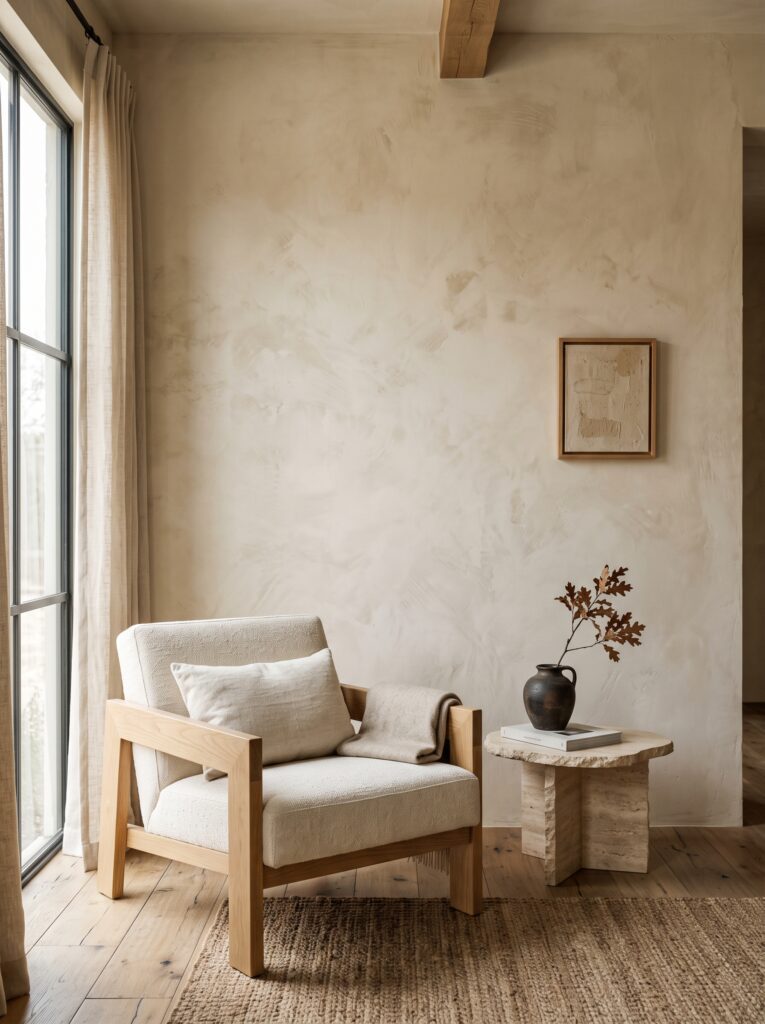
For homeowners in the United States who love organic modern interiors, European-inspired homes, Mediterranean design, or quiet luxury, limewash and plaster walls can create an elevated atmosphere without relying on excessive decoration.
Their soft, imperfect appearance works beautifully with natural wood, stone, linen, handmade ceramics, and neutral furniture, making them particularly versatile for modern home interiors.
What Are Limewash and Plaster Wall Finishes?
Although limewash and plaster are often mentioned together, they are not exactly the same thing.
Limewash is a mineral-based coating traditionally made using lime. It creates a soft, chalky finish with subtle tonal movement. Depending on the application technique, the wall can have a cloudy, brushed, or naturally aged appearance.
Plaster is a material applied to create a textured or smooth wall surface. Depending on the type and technique, plaster can range from almost perfectly smooth to visibly handcrafted and dimensional.
Both finishes can create a more organic appearance than conventional flat paint.
Why Textured Walls Feel So Luxurious
Luxury interiors are not necessarily defined by expensive-looking furniture or excessive decoration. Often, the atmosphere comes from materials, texture, proportion, and subtle variation.
A limewashed or plastered wall can create this feeling because it adds visual depth without introducing a busy pattern.
Instead of immediately noticing a decorative print, you notice how light moves across the surface.
Natural daylight can reveal subtle tonal variations throughout the day, while warm evening lighting can make the wall feel softer and more intimate.
This makes textured wall finishes particularly beautiful in homes that emphasize natural light.
1. Warm White Limewash Walls
Warm white is one of the easiest ways to use limewash while keeping the interior timeless.
Rather than a stark bright white, choose an ivory, cream, or softly warm white.
The slight variation in the limewash finish prevents the walls from looking flat while maintaining a bright and airy appearance.
This works especially well with:
- Natural oak
- Linen furniture
- Cream upholstery
- Stone surfaces
- Woven accessories
- Soft greenery
The result is a calm organic-modern interior.
2. Beige and Sand-Toned Walls
If you prefer a warmer atmosphere, beige and sandy tones can create a beautiful earthy backdrop.
These colors work particularly well in living areas, bedrooms, dining spaces, and hallways.
Pair a warm beige plaster wall with walnut furniture, textured upholstery, ceramic accessories, and natural stone.
The combination can feel sophisticated without looking overly formal.
3. Limewash in the Bedroom
The bedroom is one of the best places for a soft wall finish.
Because bedrooms benefit from calming colors and textures, limewash can create a peaceful backdrop for layered bedding and natural materials.
Consider using warm ivory, mushroom, taupe, soft beige, or muted clay.
Keep the rest of the room relatively simple.
A linen bed, wood nightstands, soft lamps, and minimal artwork can be enough.
The textured wall becomes part of the atmosphere rather than a separate decoration.
4. Plaster Walls in the Living Room
A plaster wall can become a beautiful backdrop for a living room without requiring a traditional feature wall.
Instead of painting one wall a different color, use the same plaster finish throughout the room.
This creates a cohesive appearance while allowing natural variation to provide visual interest.
Pair it with:
- Sculptural furniture
- Natural wood
- Stone
- Linen
- Wool
- Handmade ceramics
- Soft neutral rugs
This approach works particularly well with organic modern and quiet-luxury interiors.
5. Textured Walls in the Dining Room
Dining spaces can benefit from the subtle drama of plaster.
A warm textured wall behind a dining table can create a sophisticated backdrop for evening entertaining.
Add a sculptural chandelier, natural wood table, simple upholstered chairs, and understated table styling.
Because the wall already provides texture, you do not need a large amount of artwork.
A single oversized piece or sculptural object may be enough.
6. Limewash in a Hallway
Hallways are often overlooked when decorating a home.
A limewashed hallway can make this transitional space feel intentionally designed.
Use warm lighting to emphasize the natural variation in the finish.
A narrow console, small artwork, sculptural mirror, or simple wall sconce can complete the space without making it feel crowded.
This is an especially effective way to bring the same material language from one room into another.
7. Plaster Around a Fireplace
Fireplaces naturally attract attention, making them a perfect location for a textured finish.
A plaster fireplace surround can create a soft, monolithic appearance.
Instead of using multiple decorative materials, allow the plaster to create the visual impact.
Pair it with natural stone, warm wood flooring, neutral upholstery, and subtle accessories.
This can produce a sophisticated organic-modern focal point.
8. Limewash Kitchen Walls
Kitchens usually contain many hard surfaces, including cabinets, countertops, appliances, and flooring.
A soft limewash wall can help balance those harder materials.
For example, warm white or beige limewash can complement natural oak cabinetry and stone countertops.
The finish can also make a kitchen feel less sterile than a completely white painted interior.
However, areas exposed to frequent moisture, splashes, grease, or heavy cleaning may require a finish specifically suited to that environment.
9. Bathroom Plaster-Inspired Walls
Plaster-inspired finishes can create a spa-like atmosphere in bathrooms.
Soft neutral tones combined with natural stone, warm wood, simple fixtures, and diffused lighting can create a serene environment.
In wet areas, however, the specific wall system and finish need to be appropriate for moisture exposure. Not every decorative plaster or limewash product is suitable for direct water contact.
For that reason, product specifications and professional installation matter when using these finishes in bathrooms.
10. Add Architectural Depth With Tonal Variation
One of the most beautiful characteristics of limewash is its subtle variation.
Rather than creating a strong contrast, the finish can produce gentle shifts in tone across the wall.
This works particularly well in minimalist homes.
Instead of adding multiple colors and patterns, use one carefully chosen wall color and let texture provide the visual interest.
This is one reason the finish works so well with quiet-luxury interiors.
Best Colors for Limewash and Plaster Walls
The right color depends on the overall mood you want to create.
Warm White
Bright, airy, timeless, and versatile.
Ivory
Softer than traditional white and excellent for warm interiors.
Beige
Creates an inviting and grounded atmosphere.
Taupe
Works beautifully with wood, stone, and neutral textiles.
Mushroom
A sophisticated middle tone that adds depth without becoming dramatic.
Sand
Ideal for earthy and Mediterranean-inspired interiors.
Muted Clay
Adds warmth and character while remaining sophisticated.
Soft Olive
A natural-inspired option that works beautifully with greenery and wood.
How to Pair Textured Walls With Furniture
Because textured walls already have visual movement, furniture should usually be relatively restrained.
Natural materials work especially well.
Consider:
- Oak furniture
- Walnut furniture
- Linen sofas
- Bouclé chairs
- Stone tables
- Woven baskets
- Wool rugs
- Handmade ceramics
Avoid filling every surface with decorative objects.
Instead, choose a few pieces with interesting shapes and textures.
Lighting Makes a Huge Difference
The appearance of limewash and plaster changes dramatically depending on lighting.
Natural daylight can highlight subtle variations in the wall.
Warm wall sconces can create a cozy evening atmosphere.
Directional lighting can emphasize texture.
Soft ambient lighting can make the finish appear smooth and sophisticated.
For this reason, layered lighting is particularly valuable in rooms with textured walls.
Limewash and the Quiet-Luxury Aesthetic
The quiet-luxury aesthetic emphasizes timeless materials, natural textures, sophisticated neutrals, and understated details.
Limewash fits this style exceptionally well.
It does not need to look flashy to make a room feel elevated.
Instead, the beauty comes from subtle imperfections, material quality, and the way light interacts with the surface.
Combine limewash with natural stone, linen, oak, aged metals, and restrained accessories for a sophisticated home that feels collected rather than overly decorated.
How to Prevent Textured Walls From Looking Too Rustic
A common concern is that textured walls can make a home feel overly rustic.
The solution is balance.
Pair the wall finish with modern furniture, clean-lined cabinetry, contemporary lighting, and refined materials.
For example, a traditional plaster wall can look surprisingly modern when paired with a sculptural sofa, minimalist lighting, and sleek stone surfaces.
The contrast between old-world texture and contemporary forms can create a particularly sophisticated interior.
Should Every Wall Have a Textured Finish?
Not necessarily.
Although limewash and plaster can look beautiful throughout an entire home, they can also be used selectively.
You might use the finish in:
- A bedroom
- Dining room
- Entry hallway
- Fireplace wall
- Home office
- Powder room
- Living room
Using the same finish in several connected spaces can create continuity without requiring it everywhere.
Practical Considerations Before Installing Limewash or Plaster
Before choosing a wall finish, consider the condition of the existing surface.
Walls may need preparation before application.
Different products have different requirements for priming, sealing, cleaning, moisture resistance, and maintenance.
If you’re working on a major renovation, it is worth consulting the product manufacturer or an experienced professional to determine which finish is appropriate for the specific room.
This is particularly important in kitchens and bathrooms where moisture and cleaning requirements are higher.
Conclusion
Limewash and plaster walls offer a beautiful alternative to ordinary painted surfaces. Their subtle texture and natural tonal variation can give an interior a handcrafted, sophisticated appearance while creating a calm backdrop for furniture and architectural details.
For US homeowners interested in organic modern interiors, quiet luxury, Mediterranean-inspired design, or timeless home decor, these finishes can be an excellent way to add depth without adding visual clutter.
The most beautiful results usually come from restraint. Choose a warm, timeless color, combine the finish with natural materials, use thoughtful lighting, and allow the texture of the wall to become part of the architecture.
When used intentionally, limewash and plaster can transform an ordinary room into a warm, atmospheric, designer-inspired space that feels both contemporary and timeless.
- Afrohemian Dining Room Ideas for a Warm, Collected and Sophisticated Home
- Warm Wood and Black Kitchen Ideas for a Timeless Designer Look
- Small Reading Nook Ideas That Turn Forgotten Corners Into a Cozy Luxury Retreat
- Curated Trinket Shelf Ideas: How to Create a Collected and Personal Home
- Neo Deco Entryway Ideas That Make Your Home Feel Instantly Expensive