
A home bar can be much more than a place to store glassware or prepare drinks. When thoughtfully designed, it can become one of the most distinctive features in a home—a small entertaining destination that adds character, function, and a sense of luxury without requiring an enormous amount of space.
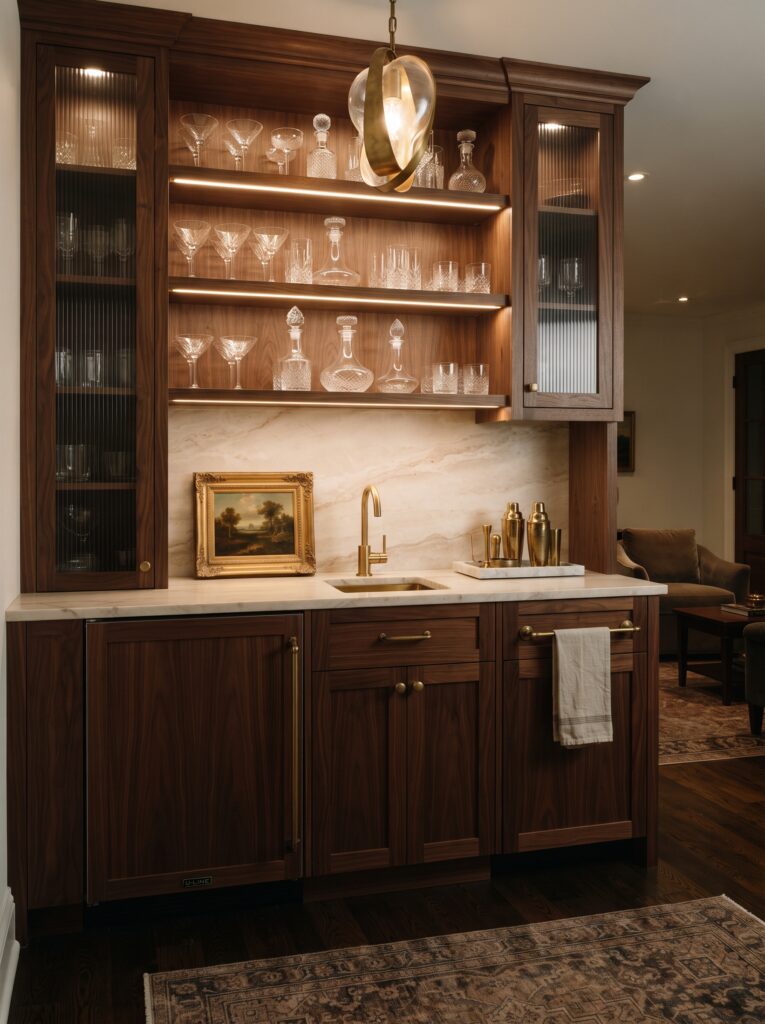
In American homes, dedicated entertaining areas are becoming increasingly interesting as homeowners look for ways to make their spaces feel more personal and useful. Instead of creating interiors that look like perfectly matched showroom displays, current design direction is moving toward warmer materials, layered finishes, meaningful details, and rooms that support everyday life.
That makes the home bar an especially interesting decorating opportunity.
Whether you have a spacious entertaining room, an unused corner, a basement, a dining area, or a small section of your kitchen, you can create a sophisticated home bar that feels intentional and expensive.
Why Home Bars Are Becoming Such a Desirable Design Feature
Home entertaining has changed considerably. People want their homes to work for everyday life, but they also want spaces that make hosting family and friends easier.
A thoughtfully designed home bar can accomplish both.
It provides dedicated storage for glassware and entertaining accessories while also creating a visual focal point. Instead of hiding everything inside ordinary cabinets, you can turn the storage itself into part of the decor.
Recent U.S. kitchen design research from Houzz shows strong interest in dedicated beverage stations and other built-in features that improve functionality.
The appeal isn’t necessarily about having a large bar.
It is about creating a small, intentional moment of hospitality inside your home.
A beautiful home bar can make a home feel more custom because it demonstrates that the space was designed around the way people actually live and entertain.
1. Choose Rich, Warm Cabinetry
One of the easiest ways to give a home bar a luxurious appearance is to start with beautiful cabinetry.
Instead of defaulting to bright white cabinets, consider:
- Dark walnut
- Medium-toned oak
- Deep espresso brown
- Warm taupe
- Muted olive
- Charcoal
- Deep navy
Warm wood is particularly effective because it adds visual depth without requiring excessive decoration.
Current U.S. design trends are increasingly favoring warm wood, earthy colors, natural materials, and layered finishes.
For a traditional home, dark walnut cabinetry can create a classic library-bar feeling.
For a transitional home, medium oak can keep the space lighter.
For a more contemporary interior, deep green or charcoal cabinetry can create a dramatic focal point.
The key is to choose a color that works with the surrounding architecture rather than making the bar look like a completely separate room.
2. Add an Elegant Countertop
The countertop is another opportunity to make a compact home bar look custom.
Natural stone can instantly elevate the design.
Consider:
- Creamy quartzite
- Honed marble
- Limestone
- Soapstone
- Warm quartz
- Travertine-inspired surfaces
For a sophisticated look, avoid making every surface in the room glossy. A honed or leathered finish can create a softer appearance and works beautifully with wood and aged metals.
Natural stone is also part of the broader 2026 movement toward tactile, authentic materials rather than overly polished interiors. Houzz reports growing interest in natural stone, plaster, warm wood, and handmade or high-variation materials.
For homeowners who want easier maintenance, engineered stone can provide a similar visual effect while offering a practical alternative.
The goal is to combine beauty with everyday usability.
3. Use Brass Hardware for a Collected Look
Hardware may seem like a small detail, but it can completely change the personality of a home bar.
Aged brass is especially effective when paired with dark wood.
Try:
- Antique brass cabinet pulls
- Brass faucet fixtures
- Brass shelf brackets
- Small brass drawer knobs
- Brass-framed glass doors
Avoid using too many shiny metallic surfaces.
Aged or brushed finishes generally create a softer, more sophisticated appearance than highly reflective finishes.
This also works well with the current preference for interiors that feel collected rather than mass-produced. Designers are increasingly mixing materials, eras, and finishes to give rooms more personality.
4. Turn Your Shelves Into Part of the Decor
Open shelving can make a home bar feel visually lighter while providing a place to display beautiful objects.
Instead of filling every shelf, create breathing room.
You might arrange:
- A few elegant glasses
- Ceramic vessels
- Small framed artwork
- Vintage-looking books
- Decorative trays
- Sculptural objects
- A small vase
- Beautiful serving pieces
The most expensive-looking shelves are rarely the most crowded ones.
Think of styling as creating a composition rather than simply filling empty space.
For example, one shelf could contain a stack of books and a ceramic object, while another displays glassware and a decorative tray.
The mixture of functional and decorative objects makes the space feel more authentic.
5. Consider Fluted or Reeded Glass
If you want your home bar to feel especially custom, consider glass-front cabinetry.
Fluted or reeded glass can add texture while partially obscuring the contents of the cabinets.
This is particularly useful if you want the bar to feel decorative rather than purely functional.
The vertical texture of reeded glass also creates subtle architectural interest without requiring complicated construction.
Pair it with dark wood and aged brass for a sophisticated vintage-modern appearance.
6. Lighting Can Transform the Entire Bar
Lighting is one of the most important elements in a luxury home bar.
A beautiful cabinet can still look ordinary if it is illuminated by harsh overhead lighting.
Instead, layer several sources.
Under-Shelf Lighting
Small integrated lights can softly illuminate glassware and decorative objects.
Wall Sconces
Two elegant sconces can frame the bar and create symmetry.
Pendant Lighting
A sculptural pendant can become the focal point if your bar has enough ceiling height.
Ambient Lighting
Warm, low-level lighting creates a relaxed evening atmosphere.
This follows the broader 2026 design movement toward layered lighting and warmer, more atmospheric interiors rather than relying exclusively on bright overhead illumination.
For a sophisticated result, use warm-toned light instead of cool white bulbs.
7. Create a Bar Even If You Don’t Have Much Space
You do not need an entire room for a home bar.
A small wall can be enough.
Consider transforming:
- An unused kitchen wall
- A section of dining-room cabinetry
- A corner near the dining area
- A basement niche
- A built-in cabinet
- An awkward hallway alcove
- A section beneath a staircase
into a compact entertaining station.
A narrow cabinet with a stone countertop and upper shelving can create the impression of a custom bar without consuming much floor space.
This is especially useful for smaller American homes, apartments, and townhomes.
8. Make the Bar Feel Connected to the Rest of Your Home
One mistake people make is designing the home bar as though it belongs to another house.
If your home has warm oak flooring, don’t suddenly introduce extremely cool gray cabinetry.
If your home uses aged brass, continue that finish.
If your interior is traditional, consider classic cabinetry and vintage-inspired details.
If your home is contemporary, simplify the design and emphasize clean lines.
A successful home bar should feel like a natural extension of the surrounding interior.
This is consistent with the larger 2026 design direction toward cohesive, personalized spaces rather than interiors built entirely around isolated trends.
9. Add One or Two Unexpected Details
Luxury is often communicated through small details rather than excessive decoration.
Try something unexpected such as:
- Wallpaper inside the cabinet
- A vintage mirror behind the shelves
- Handmade ceramic pieces
- A small piece of original artwork
- A decorative brass rail
- Antique-style glassware
- A stone backsplash
- A textured plaster wall
The objective is not to add everything.
Choose one memorable feature.
For example, a dark walnut bar with simple brass hardware could become much more distinctive with an antique mirror behind the shelves.
That single detail can give the entire space a collected character.
10. Use a Tray to Create an Organized Styling Moment
A decorative tray is one of the easiest ways to make a home bar look intentional.
Place the tray on the countertop and arrange a few coordinated objects inside it.
You could use:
- A small vase
- A beautiful glass carafe
- Decorative napkins
- A small bowl
- A candle
- A bar spoon
- A sculptural object
The tray visually groups smaller objects together, making the countertop look organized rather than cluttered.
11. Don’t Forget Comfortable Seating
If your space allows, add one or two stools.
For a traditional home, consider upholstered stools with warm wood legs.
For a modern home, try sculptural counter stools.
For a relaxed organic style, woven seating can introduce texture.
The important thing is proportion.
Oversized stools can make a compact bar feel cramped, while very small stools can make a large bar feel visually unfinished.
12. Choose Materials That Will Age Beautifully
A luxury-looking home bar doesn’t necessarily need expensive materials everywhere.
Instead, invest in the elements that receive the most visual attention.
Good places to prioritize quality include:
- Cabinet fronts
- Countertop
- Hardware
- Lighting
- Faucet
- Shelving
- Mirror or backsplash
Then balance those investment pieces with more affordable decorative accessories.
This approach creates a custom appearance without requiring every component to be high-end.
It also reflects a larger 2026 movement toward longevity and thoughtful design rather than disposable trend chasing. Houzz reports that homeowners are increasingly prioritizing long-term livability and designs that can evolve with them.
13. Create a Seasonal Home Bar Look
One advantage of a home bar is that you can change its styling throughout the year.
Fall
Introduce:
- Amber glass
- Dark wood
- Dried branches
- Burgundy accents
- Brass candleholders
Winter
Try:
- Evergreen branches
- Cream ceramics
- Soft lighting
- Velvet or linen textures
Spring
Use:
- Fresh greenery
- Light ceramics
- Soft botanical artwork
- Pale wood tones
Summer
Bring in:
- Woven textures
- Blue-and-white ceramics
- Fresh flowers
- Light linen accessories
The cabinetry can remain the same while a few small decorative changes keep the space visually fresh.
14. Keep the Styling Sophisticated, Not Overdone
One of the biggest differences between an elegant home bar and a themed bar is restraint.
You don’t need neon signs, excessive typography, dozens of decorative bottles, or a collection of unrelated accessories.
Instead, focus on:
Good materials + warm lighting + intentional styling + useful storage.
The result will feel more timeless.
Current U.S. interior design reporting is increasingly emphasizing warmth, personality, texture, and interiors that feel genuinely lived in rather than overly staged.
How to Make a Home Bar Look Expensive on a Budget
You don’t need to build a completely custom bar to achieve the look.
Start with an existing cabinet or console.
Then upgrade the visual details.
Budget-Friendly Upgrades
Replace the hardware.
Changing basic knobs to aged brass pulls can immediately improve the appearance.
Add a stone-look surface.
A beautiful countertop can become the focal point.
Install warm lighting.
Under-shelf lighting can create a custom built-in appearance.
Add a mirror.
A vintage-inspired mirror can make a small bar feel larger and more sophisticated.
Use fewer accessories.
A carefully selected collection usually looks more expensive than a crowded display.
Mix old and new.
Pair contemporary cabinetry with vintage-looking ceramics or artwork.
That combination can make the space feel collected over time rather than purchased all at once.
Conclusion
A sophisticated home bar is ultimately about more than entertaining. It is about creating a small space that reflects how you want your home to feel. Warm wood, natural stone, aged brass, textured glass, soft lighting, beautiful storage, and carefully selected accessories can transform even a modest corner into a memorable design feature.
The most successful home bars don’t necessarily look the most expensive. They look intentional. They feel connected to the architecture of the home, they provide useful storage, and they have enough personality to make guests want to stop and look.
For homeowners planning a 2026 refresh, this approach fits naturally with the broader movement toward warm, layered, personalized American interiors. Rather than chasing a perfectly coordinated showroom aesthetic, today’s design direction increasingly favors homes that feel comfortable, collected, functional, and personal.
And that is exactly what makes a beautifully designed home bar such a worthwhile addition: it turns an ordinary corner into an experience.
- Fireplace Mantel Ideas That Make a Home Feel Collected
- Guest Bedroom Ideas That Feel Like a Boutique Hotel
- Dreamy Sunroom Ideas for a Light-Filled Cozy Home
- Walk-In Pantry Ideas That Make a Kitchen Look Instantly Expensive
- Luxury Home Bar Ideas for a Sophisticated Hosting Space