
A dining room can look beautiful during the day, but the right lighting is what truly transforms it after sunset. Warm, layered illumination can make an ordinary dining space feel intimate, sophisticated, and thoughtfully designed. Instead of depending on one bright overhead fixture, today’s most inviting dining rooms combine several types of lighting to create depth, atmosphere, and visual interest.
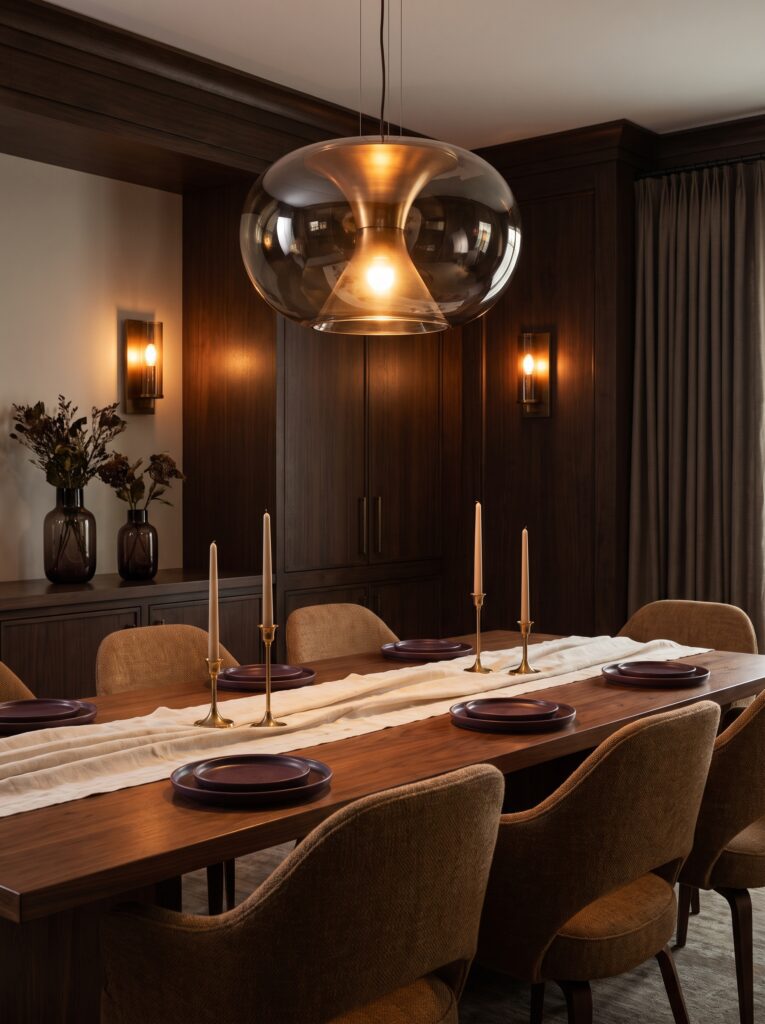
If you’re looking for moody dining room lighting ideas, you don’t necessarily need a complete renovation. A sculptural pendant, dimmable sconces, candles, warm bulbs, or even a strategically placed lamp can dramatically change the mood of the space.
For American homes, this approach works especially well with modern traditional, transitional, organic modern, contemporary, and vintage-inspired interiors. The goal isn’t to make the dining room excessively dark. Instead, the goal is to create a warm atmosphere where different areas of the room have their own gentle pools of light.
Why Moody Dining Room Lighting Is So Appealing
Bright, evenly distributed lighting is practical, but it doesn’t always create the atmosphere people want when entertaining or enjoying an evening meal.
Moody lighting introduces contrast. The dining table becomes the visual center of the room while the surrounding walls, furniture, artwork, and architectural details remain softly illuminated.
This can make a dining room feel:
- More intimate
- More sophisticated
- More comfortable
- More dramatic
- More inviting
- More luxurious
- More suitable for entertaining
The beauty of this decorating approach is that you can achieve an expensive-looking atmosphere without filling the room with expensive furniture.
1. Start With a Statement Dining Room Chandelier
The fixture above the dining table is usually the most important lighting element in the room.
Rather than choosing a fixture simply because it provides enough light, consider selecting something that also works as a piece of sculpture.
Oversized chandeliers, sculptural pendants, aged brass fixtures, dark metal designs, alabaster shades, smoked glass, and vintage-inspired silhouettes can all create an elevated look.
For a traditional American dining room, an aged-brass chandelier can add warmth. In a contemporary space, a sculptural black fixture can create contrast. If your dining room contains a lot of dark wood, a warm metallic fixture can prevent the space from feeling visually heavy.
The key is proportion.
A tiny pendant above a large dining table can look lost, while an oversized fixture can make the room feel intentionally designed.
Choose a fixture that feels substantial enough to anchor the table without blocking conversation or overwhelming the room.
2. Use Warm Light Instead of Harsh White Light
One of the easiest ways to create a moody dining room is to reconsider the color temperature of your bulbs.
Cool white lighting can make a dining room feel more clinical and energetic. Warm lighting generally creates a softer and more relaxing atmosphere.
For evening entertaining, warm-toned bulbs can complement:
- Walnut furniture
- Oak flooring
- Linen upholstery
- Brass hardware
- Cream walls
- Brown accents
- Burgundy textiles
- Natural stone
If your room has several different fixtures, try to keep their light color consistent. Mixing noticeably different bulb temperatures can make the room feel visually disconnected.
3. Install Dimmable Lighting
A dimmer switch is one of the simplest upgrades for a dining room.
Think about how the room is used throughout the day.
During breakfast or daytime activities, you may want brighter lighting. During dinner, you might prefer a softer glow. When entertaining guests, slightly lower lighting can create a more intimate environment.
A dimmable chandelier allows one fixture to serve several purposes without changing the decor.
If you’re remodeling or building a home, consider installing dimmers for the main dining-room lighting from the beginning.
4. Add Wall Sconces for a Layered Look
A chandelier alone can illuminate the table, but it may leave the walls feeling flat.
Wall sconces add another layer.
Place them beside artwork, architectural features, cabinets, or mirrors. Their purpose doesn’t necessarily need to be to flood the entire room with light. Instead, they can create small areas of illumination that add depth.
A pair of aged-brass sconces can look particularly elegant against warm plaster or painted walls.
For a more contemporary dining room, simple architectural sconces can provide a cleaner appearance.
5. Make Candles Part of the Lighting Design
Candles remain one of the easiest ways to create atmospheric dining room lighting.
You don’t need dozens of candles. A few carefully positioned taper candles or small votives can be enough.
Place them along the dining table while leaving enough open space for serving dishes and conversation.
For a sophisticated look, combine:
- Brass candlesticks
- Neutral taper candles
- Clear glass votives
- Vintage-inspired candleholders
- Low floral arrangements
The flickering light adds movement that an electric fixture cannot completely replicate.
6. Try Smoked or Amber Glass
Glass lighting can introduce another layer of visual interest.
Smoked glass shades create a slightly dramatic appearance while still allowing light to pass through. Amber glass can produce an especially warm glow.
These materials work beautifully with dark wood dining furniture because they reinforce the cozy evening atmosphere without making the room feel overly formal.
If your dining room already contains many reflective surfaces, use glass strategically rather than everywhere.
7. Pair Dark Wood With Warm Lighting
Dark wood and warm lighting are a particularly effective combination for fall and winter interiors.
A walnut dining table can become the visual anchor of the room, while warm pendant lighting highlights its grain and texture.
Instead of surrounding dark furniture with stark white light, use warmer illumination to bring out the natural depth of the wood.
This combination works particularly well in:
- Transitional dining rooms
- Modern traditional homes
- Vintage-inspired interiors
- Moody interiors
- Contemporary American homes
8. Use Lighting to Highlight Artwork
Your dining room walls shouldn’t disappear after sunset.
If you have artwork, a large mirror, architectural molding, or a statement wall, consider giving it its own light source.
Picture lights are especially useful for creating an elegant, collected appearance. They can make artwork feel intentional rather than simply decorative.
For larger pieces, directional lighting can create subtle shadows and texture.
The objective isn’t to illuminate every inch of the artwork equally. A little contrast can make the room feel more sophisticated.
9. Don’t Forget the Corners
Dining-room corners are often overlooked.
Even if the table is beautifully illuminated, dark corners can make the rest of the room feel unfinished.
A small table lamp on a console, a floor lamp near a cabinet, or a softly illuminated display can solve this problem.
You don’t need bright lighting in every corner. In fact, keeping some areas darker can actually make the brighter areas feel more dramatic.
10. Layer Your Lighting
The secret to an expensive-looking dining room isn’t one extraordinary fixture.
It’s layering.
A thoughtfully designed dining room can combine several lighting sources:
Ambient lighting: Provides overall illumination.
Task lighting: Helps illuminate the dining table.
Accent lighting: Highlights artwork, architecture, shelving, or decorative objects.
Decorative lighting: Adds personality and visual interest.
Candlelight: Adds warmth and atmosphere.
When these layers work together, the room feels much more dimensional.
11. Choose Fixtures That Match Your Home’s Architecture
A lighting fixture should complement the architecture rather than fight against it.
For a traditional home, consider:
- Aged brass
- Classic chandeliers
- Fabric shades
- Vintage-inspired fixtures
For transitional interiors:
- Sculptural pendants
- Bronze finishes
- Simple chandeliers
- Mixed-material fixtures
For modern interiors:
- Architectural silhouettes
- Matte metal
- Minimal pendants
- Geometric designs
For organic modern interiors:
- Natural materials
- Soft curves
- Linen shades
- Textured finishes
The goal is cohesion rather than perfect matching.
12. Consider the Height of Your Dining Light
The height of a pendant or chandelier can significantly affect how the dining room feels.
If the fixture hangs too high, it may lose its visual relationship with the table. If it hangs too low, it can interfere with sightlines and conversation.
The ideal placement depends on the fixture, ceiling height, table size, and personal preference.
Before permanently installing a fixture, consider its scale from different seating positions.
You want the light to feel connected to the dining table without becoming an obstacle.
13. Use Metallic Finishes Carefully
Metallic details can make dining rooms feel elevated, but too much shine can become distracting.
Instead of matching every metallic finish, consider allowing one finish to dominate.
Aged brass can work beautifully with:
- Walnut
- Burgundy
- Cream
- Olive
- Chocolate brown
- Natural linen
Bronze can create a more grounded appearance.
Black metal can provide contrast and structure.
The finish should support the overall atmosphere rather than become the only thing you notice.
14. Create a Fall Dining Room With Lighting Alone
You don’t need to completely redecorate your dining room every autumn.
Lighting can create a seasonal atmosphere without obvious themed decorations.
Combine warm lighting with:
- Dark wood
- Linen napkins
- Dried branches
- Deep brown textiles
- Burgundy accents
- Vintage glassware
- Brass candleholders
This creates an autumnal feeling without covering the dining table in pumpkins and orange decorations.
The result feels more sophisticated and reusable throughout the season.
15. Create an Elegant Dinner Party Atmosphere
If you’re hosting friends or family, lighting can make a surprisingly significant difference.
Before guests arrive, lower the main overhead lighting and turn on your accent lights.
Light a few candles and allow the dining table to become the brightest visual point.
This naturally directs attention toward the food, table setting, and people gathered around it.
A beautifully illuminated table can make even a simple dinner feel special.
16. Mix Modern and Vintage Lighting Elements
One of the easiest ways to make a dining room feel personal is to combine old and new.
For example, pair a contemporary chandelier with:
- A vintage dining table
- Antique brass accessories
- Traditional artwork
- Modern dining chairs
- Old-fashioned glassware
This creates a collected appearance rather than a room that looks like everything was purchased from the same showroom.
The contrast between contemporary lighting and vintage furniture can be particularly effective in American transitional interiors.
17. Make Small Dining Rooms Feel More Sophisticated
Small dining rooms don’t require complicated lighting schemes.
A single statement pendant can create a strong focal point. Add a wall sconce or small lamp if space allows.
Mirrors can also help reflect light and visually expand the room.
For a small dining area, prioritize:
- One beautiful central fixture
- Warm bulbs
- Dimmability
- Reflective surfaces
- Minimal accessories
Keeping the room visually calm will prevent it from feeling crowded.
18. Avoid These Common Dining Room Lighting Mistakes
Even beautiful lighting can become ineffective if it is poorly planned.
Avoid relying exclusively on one harsh overhead fixture.
Avoid using extremely cool bulbs throughout a warm, traditional interior.
Avoid choosing a chandelier that is too small for the table.
Avoid placing every light at exactly the same brightness.
Avoid overdecorating around the light fixture.
And avoid making the dining room so dark that guests cannot comfortably see their food.
Moody doesn’t mean impractical.
The best dining room lighting combines atmosphere with functionality.
19. The Best Color Palette for Moody Dining Rooms
If you’re creating a sophisticated fall-inspired dining room, consider colors such as:
- Warm ivory
- Mushroom
- Taupe
- Walnut brown
- Chocolate
- Burgundy
- Muted olive
- Charcoal
- Antique brass
- Deep navy
These shades work particularly well with warm lighting.
You don’t need to use all of them. Choose two or three primary colors and introduce the others through smaller details.
20. Make the Dining Room Feel Expensive Without Overspending
Creating a luxurious dining room doesn’t necessarily require expensive furniture.
Instead, focus on atmosphere.
A modest dining table can look significantly more elevated when surrounded by good lighting, attractive textiles, thoughtful artwork, and restrained accessories.
Consider investing in one strong lighting fixture rather than purchasing many inexpensive decorative objects.
You can also improve the atmosphere with affordable additions such as:
- Warm LED bulbs
- Dimmers
- Taper candles
- Linen napkins
- Vintage-style glassware
- A small table lamp
- Dried branches
- One large piece of artwork
Good design is often more about how things work together than how much they cost.
Conclusion
A beautiful dining room isn’t only about furniture, wall color, or table decor. Lighting determines how those elements look and how the room feels once the sun goes down.
The most sophisticated moody dining room lighting ideas combine warm illumination, dimmable fixtures, layered light sources, natural materials, and carefully selected decorative accents. A sculptural chandelier can establish the focal point, wall sconces can add depth, candles can introduce intimacy, and subtle accent lighting can bring artwork and architectural details to life.
For a timeless American dining room, focus on warmth rather than darkness. Mix practical lighting with atmospheric details and choose finishes that complement the existing furniture and architecture.
Whether you’re planning a complete dining room makeover or simply want to make weeknight dinners feel a little more special, thoughtful lighting can completely change the experience. Sometimes, the simplest design upgrade isn’t a new table or a new set of chairs—it’s simply changing the way the room glows after sunset.
- Elegant Fall Tablescape Ideas Without Pumpkins for a Sophisticated Autumn Home
- The Awkward Corner Makeover: Stylish Ways to Transform Empty Space
- Afrohemian Home Decor: Bold, Natural and Collected Ideas for 2026
- Under-Stair Space Ideas: Smart Ways to Transform an Awkward Corner
- Moody Dining Room Lighting Ideas That Make Every Dinner Feel Expensive