
As summer begins to soften into early fall, your outdoor space does not have to become unused.
In many American homes, the patio, backyard, deck, or outdoor dining area can remain a comfortable extension of the house well into the cooler months. The key is knowing how to transition the space without making it look overly seasonal.
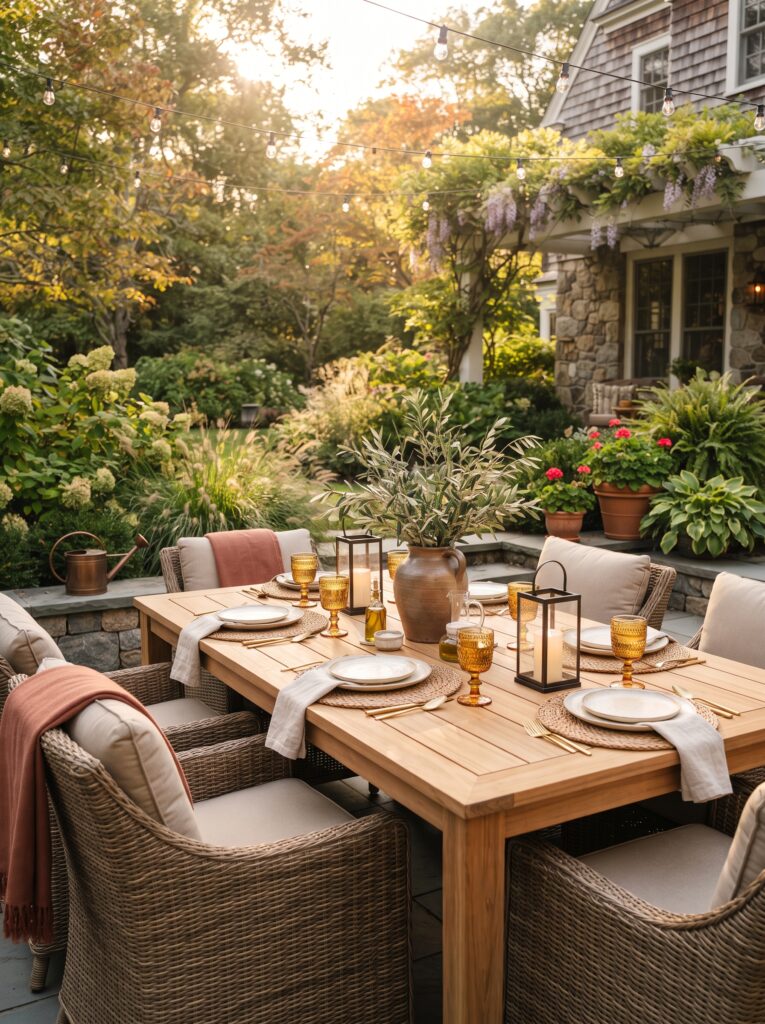
Instead of covering the patio with obvious fall decorations, focus on warm textures, natural materials, comfortable seating, layered lighting, earthy colors, and flexible outdoor dining details.
This creates an outdoor space that works during the final warm evenings of summer and gradually feels more appropriate as early fall arrives.
The beauty of this approach is that most of the design can remain useful throughout the year. You are simply changing a few textiles, accessories, and lighting elements as the season shifts.
If you are searching for patio decor ideas, outdoor living ideas, fall patio decor, backyard decorating ideas, outdoor dining inspiration, cozy patio ideas, or late-summer outdoor decorating, these ideas can help you create a polished and inviting space.
Why the Late-Summer-to-Fall Transition Is So Beautiful
The period between summer and fall offers one of the most enjoyable opportunities for outdoor decorating.
The days may still be warm enough for outdoor meals, but evenings begin to feel cooler.
The light becomes softer.
The colors of the landscape slowly change.
Outdoor entertaining becomes less about long, hot afternoons and more about relaxed dinners, morning coffee, weekend brunches, and cozy evenings.
Instead of completely changing the patio, use these environmental changes as inspiration.
Keep the foundation light and natural.
Then gradually introduce warmer colors and textures.
1. Start With a Natural Outdoor Dining Table
If you regularly entertain outside, the dining table should be the foundation of the space.
Teak and other durable outdoor woods can create a warm, natural appearance.
A wooden table also works beautifully with:
- Linen
- Woven placemats
- Ceramic dinnerware
- Glassware
- Outdoor cushions
- Lanterns
- Natural greenery
Do not feel pressure to create a perfectly styled tablescape every day.
The table should remain functional.
A simple vase or bowl can provide enough decoration for everyday use.
2. Introduce Warm Neutral Textiles
One of the easiest ways to transition a patio toward fall is through textiles.
Start with neutral outdoor cushions in:
- Cream
- Oatmeal
- Beige
- Taupe
- Warm gray
Then add one or two richer accents.
Good transitional colors include:
- Cocoa
- Terracotta
- Olive
- Rust
- Muted burgundy
- Deep caramel
These colors create a seasonal feeling without making the patio look like a themed fall display.
3. Use Outdoor Throws
As evenings become cooler, outdoor blankets become both decorative and practical.
Keep a few throws folded inside a basket near the seating area.
Look for durable fabrics appropriate for your climate.
Neutral blankets can remain useful throughout the year, while one darker accent blanket can create a stronger autumn atmosphere.
A casually folded throw also makes outdoor seating look more inviting.
4. Add Lanterns Instead of Relying Only on Overhead Lighting
Outdoor lighting becomes increasingly important as days get shorter.
Lanterns can create warm pools of light around the patio.
Place them:
- Beside seating
- Near the dining table
- Along a wall
- Near steps
- Around an outdoor fireplace or fire feature where appropriate
Use outdoor-rated lighting and follow manufacturer safety guidance.
The goal is to create several smaller sources of light rather than one extremely bright fixture.
5. String Lights Can Create a Softer Atmosphere
String lights remain useful beyond summer.
When used thoughtfully, they can make an outdoor dining area feel intimate and relaxed.
Install them along:
- A pergola
- Fence
- Covered patio
- Exterior wall
- Overhead structure
Choose warm-toned outdoor-rated lights for a softer appearance.
Avoid creating an overly bright canopy.
A little light can go a long way outdoors.
6. Use Natural Greenery Instead of Excessive Seasonal Decor
You do not need pumpkins everywhere to make a patio feel ready for fall.
Instead, use plants and natural materials.
Consider:
- Olive branches
- Grasses
- Potted herbs
- Seasonal greenery
- Dried branches
- Hardy container plants
These elements create visual connection with the changing landscape.
They also allow the patio to transition naturally as the season develops.
7. Create an Outdoor Tablescape That Feels Effortless
Outdoor dining should feel more relaxed than indoor formal dining.
Start with:
Natural placemats + cream plates + simple glassware + linen napkins
Then add one organic centerpiece.
A ceramic vase filled with branches is often enough.
You can also use a shallow bowl filled with seasonal fruit.
Apples, pears, grapes, or figs can add color while remaining practical for entertaining.
8. Use Ceramic Pieces for a Handmade Feel
Handmade-looking ceramics can make an outdoor table feel more personal.
Choose pieces with:
- Slightly irregular edges
- Matte finishes
- Earthy colors
- Natural textures
Cream, sand, terracotta, olive, and brown ceramics work particularly well for early fall.
They also transition easily into other seasons.
9. Add a Cozy Conversation Area
An outdoor dining table is useful, but a separate seating area can make the patio feel more versatile.
If you have enough space, create a small conversation zone with:
- Two lounge chairs
- A sofa
- A low coffee table
- Outdoor cushions
- A small side table
Arrange the furniture so that people can comfortably talk.
This creates a second function for the patio beyond dining.
10. Make the Seating Comfortable
Outdoor furniture can look beautiful but still feel uncomfortable.
Add cushions with weather-appropriate covers.
Choose fabrics designed for outdoor use and follow care instructions.
If your seating is already comfortable, a simple throw may be all you need for the seasonal transition.
Comfort should be the priority.
11. Use a Rug to Define the Outdoor Space
An outdoor rug can visually connect furniture and make a patio feel more like an outdoor room.
For fall, choose a subtle pattern with:
- Cream
- Brown
- Olive
- Terracotta
- Charcoal
- Muted blue
Avoid extremely pale rugs in high-traffic outdoor areas unless you are prepared for regular cleaning.
A patterned rug can also help conceal everyday dirt.
12. Introduce Wood in Small Details
If your patio already has metal furniture, natural wood can make the space feel warmer.
Use wood through:
- Side tables
- Serving boards
- Planters
- Trays
- Decorative stools
You do not need to replace all your furniture.
One or two wooden elements can soften a predominantly metal outdoor setup.
13. Use Woven Materials for Texture
Woven materials naturally complement outdoor spaces.
Consider:
- Rattan
- Wicker
- Seagrass
- Jute
- Woven baskets
A basket can hold outdoor blankets.
A woven tray can hold drinks.
Woven planters can surround greenery.
These details introduce texture without requiring major changes.
14. Create a Beverage Station
If you regularly entertain outdoors, a small beverage station can be both useful and decorative.
Use:
- A bar cart
- Small outdoor cabinet
- Console
- Serving table
Keep it simple.
You might include:
- Glassware
- Water pitcher
- Napkins
- Ice bucket
- Nonalcoholic drink options
- Serving utensils
The exact contents can change depending on the gathering.
15. Add a Seasonal Fruit Centerpiece
One of the simplest seasonal decorating ideas is to use food as decoration.
A bowl of apples or pears can create a natural fall feeling without requiring decorative objects.
Try placing fruit in:
- A large ceramic bowl
- Wooden serving bowl
- Stoneware dish
- Woven basket
The colors can naturally complement the patio.
16. Bring the Colors of the Landscape Into the Patio
Look around your yard.
What colors are already present?
Perhaps you have:
- Green foliage
- Brown tree bark
- Stone
- Beige fencing
- Terracotta planters
Use these colors rather than introducing completely unrelated shades.
This makes the patio feel connected to the surrounding landscape.
17. Add a Fire Feature Carefully
A fire pit or outdoor fireplace can extend the usable season of a patio.
If you already have one, make it the visual anchor of the seating area.
Arrange chairs or sofas around it while maintaining appropriate clearances and following local fire-safety requirements.
Keep blankets nearby.
Use warm lighting around the surrounding area.
The goal is to create a comfortable gathering space as evenings become cooler.
18. Don’t Overdecorate for Fall
One of the easiest mistakes is treating the patio like an indoor seasonal display.
You do not need:
- Large quantities of artificial leaves
- Dozens of pumpkins
- Seasonal signs
- Overly bright orange accessories
Instead, let fall appear through:
Color + texture + lighting + natural materials
This creates a more sophisticated result.
19. Use Earthy Colors in Small Doses
If your patio is mostly neutral, you can introduce fall colors without replacing everything.
Try:
Cream cushions + olive throw + terracotta planter
or:
Beige seating + cocoa blanket + amber glassware
or:
Natural wood + ivory textiles + muted rust accents
The colors should feel integrated rather than added at the last minute.
20. Make the Patio Work for Morning Coffee
Outdoor spaces are not only for entertaining.
A comfortable chair and small side table can create a perfect morning coffee spot.
Add:
- Small ceramic cup
- Outdoor cushion
- Lightweight throw
- Side table
- Nearby plant
This makes the patio useful even when you are not hosting guests.
21. Create an Outdoor Reading Corner
If your patio has a quiet section, consider turning it into a reading area.
You only need:
- Comfortable chair
- Small table
- Outdoor rug
- Soft throw
- Good lighting
Place it away from the main dining area if possible.
This gives the patio another purpose and can make the outdoor space feel more like an extension of your home’s interior.
22. Use Plants as Architectural Elements
Large containers can help define different zones.
For example:
Two tall planters can frame a doorway.
A row of smaller planters can separate dining and seating.
A large potted tree can create a focal point.
Choose plants appropriate for your climate and the amount of sunlight available.
The goal is to use greenery as part of the architecture rather than scattering random pots everywhere.
23. Make a Small Patio Feel Larger
Small patios require editing.
Choose furniture that fits comfortably without blocking movement.
Use a small round dining table if a rectangular one feels too large.
Use vertical planters rather than spreading plants across the floor.
Choose furniture with visible legs to preserve visual openness.
A limited color palette can also make a small patio feel more cohesive.
24. Make a Large Patio Feel Cozy
Large outdoor spaces can sometimes feel disconnected.
Use multiple zones.
For example:
Dining zone
Outdoor dining table and chairs.
Conversation zone
Sofa, lounge chairs and coffee table.
Quiet zone
Single reading chair and side table.
Greenery zone
Large planters and container garden.
Dividing a large patio into functions makes it feel more intentional.
25. Add a Covered Area
If your patio is covered, use the ceiling as another design opportunity.
Consider:
- Outdoor-rated ceiling fans
- Pendant lighting
- String lights
- Hanging plants
- Wood detailing
A covered outdoor room can feel remarkably similar to an indoor living space.
26. Use Outdoor Curtains
For covered patios, outdoor curtains can provide softness and privacy.
They can also visually frame the space.
Choose neutral fabrics that complement your furniture.
Cream and natural tones are particularly versatile.
Keep them secure and use products designed for outdoor conditions.
27. Keep the Outdoor Kitchen Organized
If your patio includes an outdoor kitchen, treat it as part of the overall design.
Use attractive storage for:
- Serving pieces
- Cooking tools
- Outdoor dinnerware
- Napkins
Keep frequently used items accessible while storing seasonal pieces elsewhere.
This keeps entertaining easier.
28. Prepare for Cooler Evenings
As fall progresses, outdoor comfort becomes more important.
Depending on your climate, consider:
- Outdoor blankets
- Patio heaters
- Fire features
- Wind protection
- Covered seating
Always follow manufacturer instructions and local safety requirements for heating equipment.
The goal is to make the space comfortable rather than forcing yourself to stay outside when conditions are unpleasant.
29. Choose Accessories That Can Last Beyond Fall
This is important if you want your decor to remain useful.
Instead of purchasing highly seasonal accessories, choose pieces that work across several months.
For example:
Olive cushion
works in summer, fall and spring.
Cream linen
works almost year-round.
Natural wood
works in every season.
Terracotta
works especially well from late summer through fall.
This creates a more sustainable decorating approach and reduces the need to constantly buy new accessories.
30. Create a Patio That Feels Like an Extension of Your Home
The best outdoor spaces do not feel completely separate from the interior.
If your indoor home uses:
- Walnut
- Cream
- Brass
- Linen
- Olive
- Warm neutrals
you can repeat some of those elements outdoors.
This creates visual continuity.
When the patio door is open, the indoor and outdoor spaces feel connected.
A Simple Formula for a Late-Summer-to-Fall Patio
If you want an easy starting point, use:
Natural wood + cream textiles + woven texture + earthy accent color + greenery + warm lighting
Then add seasonal layers as the weather changes.
Start with lighter textiles during late summer.
Introduce richer brown, olive, terracotta, or muted burgundy as fall progresses.
Add throws and additional lighting when evenings become cooler.
Budget-Friendly Patio Updates
You do not need to replace your entire outdoor furniture set.
Start with small changes.
Update the Textiles
New cushion covers or outdoor pillows can dramatically change the look.
Add Lighting
Lanterns and outdoor-rated string lights can create a completely different evening atmosphere.
Use Plants
A few well-placed containers can add color and structure.
Add a Rug
An outdoor rug can visually unify existing furniture.
Introduce a Tray
A simple serving tray can make the dining area feel more finished.
Rearrange Furniture
Sometimes the biggest improvement costs nothing.
Move furniture into a more conversational arrangement.
Common Patio Decorating Mistakes
Too Much Seasonal Decor
Keep the seasonal influence subtle.
Ignoring Weather
Choose materials and fabrics appropriate for your local conditions.
Poor Furniture Placement
Leave comfortable pathways between seating and dining areas.
Too Many Small Accessories
Wind can make outdoor clutter especially impractical.
Forgetting Lighting
An outdoor space can look beautiful during the day but feel unusable at night without proper illumination.
Using Indoor Materials Outdoors
Only use products designed and rated for outdoor environments where required.
How to Transition the Patio From Fall Into Winter
If your climate allows outdoor use into winter, the same design can evolve again.
Remove delicate seasonal plants.
Store cushions according to manufacturer recommendations.
Add heavier outdoor blankets where appropriate.
Increase lighting.
Keep the palette neutral.
The basic design can remain while seasonal accessories change.
This is why a timeless outdoor foundation is more useful than a highly themed patio.
Conclusion
A beautiful patio does not have to end when summer does. With a few thoughtful changes, your outdoor space can transition naturally into early fall while remaining useful for dining, entertaining, morning coffee, reading, and quiet evenings.
The secret is to avoid decorating the season too literally. Instead, introduce autumn through warmer colors, natural textures, soft lighting, comfortable textiles, earthy materials, and seasonal greenery.
Keep the foundation versatile. Let the landscape provide inspiration. And make comfort just as important as appearance.
A patio that feels warm, relaxed, and connected to the rest of your home can become one of the most enjoyable spaces in the house—not only during summer, but throughout the changing seasons.
- Outdoor Patio Ideas for a Cozy Late-Summer to Fall Transition
- Laundry Room Organization Ideas That Look Beautiful and Built-In
- Staircase Wall Decor Ideas: How to Create a Collected Gallery Look
- Library-Inspired Home Office Ideas That Make Working From Home Feel Luxurious
- Chocolate Brown Dining Table Ideas for a Warm and Elegant Fall Home