
When people decorate a room, they usually focus on the walls, furniture, flooring, lighting, and accessories. But there is one major surface that is often completely overlooked: the ceiling.
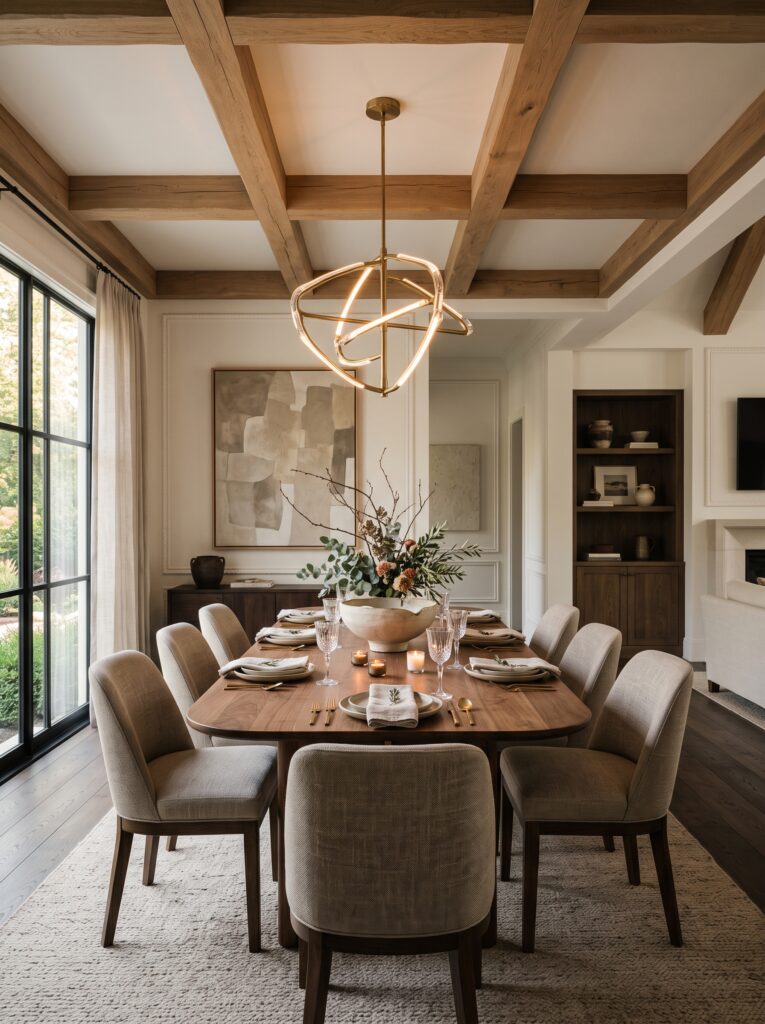
A ceiling can dramatically influence how a room feels. It can make a space look taller, warmer, more architectural, more luxurious, or more visually interesting. While a plain white ceiling is timeless and practical, adding thoughtful architectural details can make an ordinary room feel surprisingly custom.
From coffered ceilings and exposed beams to tongue-and-groove paneling, subtle wallpaper, painted ceilings, and decorative molding, there are countless ways to turn an overlooked surface into a design feature.
If you are searching for ceiling design ideas, statement ceiling ideas, luxury home decor, designer interior ideas, custom home inspiration, architectural details, dining room ceiling ideas, or elegant interior design, these ideas can help you rethink the fifth wall of your home.
Why the Ceiling Matters in Interior Design
The ceiling is one of the largest uninterrupted surfaces in a room, yet it often receives very little design attention.
That makes it an opportunity.
A carefully designed ceiling can:
- Add architectural character
- Define a room
- Create a focal point
- Visually change the proportions of a space
- Introduce texture
- Add warmth
- Highlight lighting
- Complement furniture
- Make a builder-grade home feel more customized
You do not necessarily need a dramatic ceiling treatment.
Sometimes a subtle change in color or texture is enough.
The goal is to make the ceiling feel connected to the overall architecture rather than treating it as an afterthought.
1. Create a Classic Coffered Ceiling
A coffered ceiling is one of the most recognizable architectural ceiling treatments.
It features recessed panels separated by beams or trim, creating a grid-like pattern.
Coffered ceilings work especially well in:
- Dining rooms
- Living rooms
- Home offices
- Libraries
- Large bedrooms
- Entry areas
For a timeless appearance, use the same paint color throughout the ceiling and trim.
For something more dramatic, use contrasting tones.
For example, a warm white ceiling with natural wood beams can create an elegant organic-modern look.
2. Add Natural Wood Beams
Wood beams can instantly add warmth and architectural character.
They work particularly well in homes with:
- High ceilings
- Open floor plans
- Large dining areas
- Vaulted ceilings
- Farmhouse architecture
- Modern organic interiors
Natural oak creates a light and contemporary appearance, while walnut or darker wood can create a richer atmosphere.
If structural beams are not possible, decorative beams can sometimes provide a similar visual effect when appropriately installed.
Always make sure any ceiling modification is compatible with the structure and building requirements of your home.
3. Try a Painted Ceiling
You do not need expensive millwork to create a statement ceiling.
Paint is one of the simplest ways to change the appearance of a room.
Instead of automatically painting the ceiling bright white, consider:
- Warm cream
- Pale blue
- Soft beige
- Muted sage
- Dusty taupe
- Warm gray
- Deep charcoal
A subtle ceiling color can create depth without overwhelming the room.
For bedrooms, soft muted shades can create a relaxing atmosphere.
For dining rooms, a deeper color can add drama.
4. Use the Same Color on Walls and Ceiling
A monochromatic room can feel incredibly sophisticated.
Painting the walls and ceiling in the same shade can visually blur the transition between the two surfaces.
This works particularly well with:
- Warm whites
- Cream
- Beige
- Soft taupe
- Muted greens
- Deep moody colors
The result can feel enveloping and architectural.
For a high-end look, use different finishes where appropriate—for example, a more durable wall finish and a ceiling finish suited to the surface.
5. Install Tongue-and-Groove Paneling
Tongue-and-groove ceiling paneling adds subtle texture and architectural interest.
It can work beautifully in:
- Kitchens
- Breakfast rooms
- Bathrooms
- Covered porches
- Bedrooms
- Coastal-style homes
- Farmhouse-inspired spaces
White tongue-and-groove paneling creates a fresh, classic appearance.
Natural wood paneling creates a warmer, more organic atmosphere.
For contemporary homes, narrow boards can create a refined linear effect.
6. Make a Dining Room Ceiling the Focal Point
Dining rooms are particularly suitable for statement ceilings.
The dining table already establishes a strong central focal point, so the ceiling can reinforce that visual axis.
Consider combining:
- A decorative ceiling
- A sculptural chandelier
- A large dining table
- Minimal wall decor
- Simple architectural trim
For example, a coffered ceiling with a statement chandelier can create a sophisticated dining room without requiring excessive decoration elsewhere.
7. Use Wallpaper on the Ceiling
Wallpaper does not have to stop at the walls.
A patterned ceiling can create a memorable design moment.
Consider:
- Botanical prints
- Subtle geometric patterns
- Textured wallpaper
- Grasscloth-inspired designs
- Vintage motifs
- Soft abstract patterns
If you use wallpaper overhead, keep the rest of the room relatively restrained.
The ceiling should be the star.
A subtle pattern can be especially effective in a small powder room, dining room, or reading room.
8. Add Decorative Molding
Decorative molding can create the appearance of custom architecture.
Options include:
- Crown molding
- Picture-frame molding
- Ceiling medallions
- Geometric trim
- Panel molding
- Simple linear molding
The trick is proportion.
Too much molding in a small room can feel overwhelming.
Simple, properly scaled trim often creates a more expensive appearance than overly elaborate detailing.
9. Create a Tray Ceiling
Tray ceilings feature a recessed central section that adds depth.
They can be especially effective in:
- Primary bedrooms
- Dining rooms
- Living rooms
- Large entryways
Lighting can be incorporated around the recessed portion to emphasize the architecture.
A tray ceiling does not necessarily have to be dramatic.
Even a subtle change in height can create a more customized appearance.
10. Use Wallpaper Inside a Coffered Ceiling
For a more distinctive look, combine architectural trim with wallpaper.
Imagine a traditional grid of ceiling panels, with subtle wallpaper installed inside each recessed section.
This can create an intricate designer appearance.
To prevent the design from becoming too busy, choose a wallpaper with a restrained pattern and keep the surrounding trim simple.
11. Highlight a Vaulted Ceiling
Vaulted ceilings already provide architectural drama.
Instead of hiding their height, emphasize it.
Use:
- Exposed beams
- Vertical paneling
- Oversized lighting
- Large-scale artwork
- Tall curtains
- Natural wood
The goal is to draw the eye upward.
This can make the entire room feel grander and more intentional.
12. Add a Statement Chandelier
A beautiful ceiling treatment becomes even more effective when paired with the right lighting.
A chandelier can visually connect the ceiling to the furniture below.
For a contemporary home, choose a sculptural fixture.
For a traditional home, consider a classic chandelier.
For organic-modern interiors, natural materials such as wood, linen, or woven elements can work beautifully.
Make sure the fixture is appropriately sized for the room and installed safely.
13. Use Ceiling Beams to Define an Open Floor Plan
Open-concept American homes often combine several functions within one large space.
Ceiling beams can help visually define different zones.
For example, beams can establish a boundary between:
- Living room
- Dining area
- Kitchen
without physically closing the spaces off.
This can be especially effective when the rest of the home has a minimalist layout.
The ceiling becomes a subtle architectural divider.
14. Create a Wood-Slat Ceiling
Wood slats can provide a contemporary alternative to traditional beams.
They create rhythm and texture while maintaining a clean appearance.
A slatted ceiling can work particularly well in:
- Modern dining rooms
- Home offices
- Media rooms
- Entryways
- Covered outdoor spaces
Natural wood creates warmth, while painted slats can create a more monochromatic appearance.
15. Try a Minimalist Ceiling Treatment
A statement ceiling does not have to be elaborate.
For minimalist interiors, subtlety is often more effective.
Consider:
- One soft paint color
- Simple recessed lighting
- Thin linear trim
- Minimal wood beams
- A single sculptural pendant
The ceiling should enhance the architecture without becoming visually dominant.
16. Create a Moody Dining Room
Dark ceilings can create a dramatic atmosphere.
Deep shades such as:
- Charcoal
- Espresso
- Deep olive
- Muted navy
- Warm brown
can make a dining room feel intimate and sophisticated.
Pair a darker ceiling with lighter walls and warm lighting to create contrast.
This approach is particularly effective for evening entertaining.
17. Use a Soft Blue Ceiling
A pale blue ceiling can create a light and airy atmosphere.
This works especially well in:
- Bedrooms
- Bathrooms
- Breakfast rooms
- Coastal-inspired interiors
Pair soft blue with creamy white walls and natural wood for a relaxed American coastal aesthetic.
The color should remain muted rather than overly saturated.
18. Make a Bedroom Feel More Luxurious
A bedroom ceiling can become an unexpected luxury feature.
Consider adding:
- Coffered panels
- Soft wallpaper
- Painted trim
- Recessed lighting
- Wood paneling
- A statement pendant
For a calming atmosphere, stay within warm neutrals.
For a dramatic boutique-hotel look, consider a deeper ceiling shade.
19. Design a Statement Home Office Ceiling
A home office can benefit from architectural details that make the space feel more permanent and intentional.
A wood-paneled ceiling or subtle coffered design can create a sophisticated backdrop for:
- Built-in shelving
- A large desk
- Comfortable office seating
- Artwork
- Task lighting
The goal is to create a space that feels inspiring without becoming visually distracting.
20. Add Texture Without Adding Color
If you love neutral interiors but want more visual interest, texture is the answer.
A ceiling can remain white or cream while gaining depth through:
- Wood paneling
- Coffered sections
- Beams
- Plaster texture
- Molding
- Subtle wallpaper
This is an excellent strategy for quiet-luxury interiors.
The room remains neutral, but the architecture gives it personality.
21. Use Ceiling Design to Make a Room Feel Taller
Certain ceiling treatments can emphasize verticality.
Vertical wall paneling combined with a simple ceiling can draw the eye upward.
In rooms with sufficient height, long architectural lines and carefully positioned lighting can enhance the sense of height.
Avoid visually heavy treatments in genuinely low-ceilinged rooms unless the proportions have been carefully considered.
22. Make a Builder-Grade Home Feel Custom
Many newer homes have simple, standardized finishes.
Ceiling treatments can be a powerful way to introduce individuality.
If the walls and flooring are basic, consider adding:
- Simple ceiling molding
- A painted ceiling
- Wood beams
- A statement light
- Paneling
- A ceiling medallion
Even one architectural improvement can make a room feel more distinctive.
23. Use a Ceiling Medallion for Traditional Charm
A ceiling medallion can add traditional architectural character around a chandelier or pendant.
It works particularly well in:
- Dining rooms
- Entryways
- Traditional living rooms
- Historic-style homes
Choose a size that is proportional to the light fixture and room.
The goal should be elegance rather than excessive ornamentation.
24. Combine Multiple Ceiling Details Carefully
You can combine treatments, but restraint is important.
For example:
Coffered ceiling + simple chandelier + neutral walls
can look sophisticated.
But:
Coffered ceiling + bold wallpaper + oversized chandelier + dramatic wall molding + multiple colors
may overwhelm the room.
When several architectural features are present, allow one to become the primary focal point.
25. Match the Ceiling to the Architecture
The most successful ceiling designs feel natural to the home’s architecture.
A traditional home may benefit from:
- Coffered ceilings
- Crown molding
- Ceiling medallions
- Classic paneling
A modern home may suit:
- Wood slats
- Minimal beams
- Smooth surfaces
- Linear lighting
An organic-modern home may benefit from:
- Natural oak
- Soft plaster textures
- Warm neutral paint
- Simple beams
The ceiling should feel like part of the house—not an unrelated decorative addition.
Statement Ceiling Ideas for Different Rooms
Living Room
Try exposed beams, coffered panels, wood slats, or a large sculptural pendant.
Dining Room
Use a coffered ceiling, wallpaper, decorative molding, or a dramatic painted color.
Bedroom
Choose soft paneling, subtle wallpaper, a tray ceiling, or a warm neutral paint color.
Kitchen
Consider tongue-and-groove paneling, wood beams, or a simple painted ceiling.
Home Office
Try wood slats, paneling, or a restrained coffered ceiling.
Entryway
Use architectural molding, a statement chandelier, or a decorative ceiling treatment.
Bathroom
A subtle painted ceiling or moisture-appropriate architectural treatment can add personality.
How to Make a Ceiling Look Expensive on a Budget
You do not have to completely rebuild your ceiling.
Start with affordable visual changes.
Paint
A new ceiling color can create a dramatic difference.
Trim
Simple molding can create the appearance of custom architecture.
Lighting
A beautiful pendant or chandelier can draw attention upward.
Faux Beams
Decorative beams can create architectural character when suitable for the space and installed properly.
Wallpaper
A small amount of wallpaper can create a major visual impact.
Wood Paneling
Even a modest amount of natural wood can introduce warmth and texture.
Common Ceiling Design Mistakes
Using Too Many Details
More architectural elements do not automatically mean more luxury.
Ignoring Room Proportions
A ceiling treatment should be scaled to the room.
Choosing a Trend Without Considering the Home
A ceiling design should complement the home’s architecture.
Poor Lighting Placement
Lighting should highlight the architecture rather than create harsh shadows.
Making Everything a Focal Point
Choose one dominant feature and let the remaining elements support it.
How to Choose the Right Statement Ceiling
Before committing to a design, consider five questions:
What is the height of the ceiling?
A treatment that works in a vaulted room may not work in a low-ceilinged room.
What is the architectural style of the home?
Choose details that feel appropriate to the existing structure.
What is the room used for?
A dining room may tolerate more drama than a minimalist bedroom.
How much visual activity is already present?
If the room has patterned furniture and dramatic flooring, keep the ceiling simpler.
What is your long-term style?
Architectural treatments are often more permanent than accessories, so timeless choices can be worthwhile.
Conclusion
The ceiling is one of the most overlooked opportunities in home decorating. While furniture and wall decor naturally attract attention, the ceiling can quietly transform the entire atmosphere of a room.
A statement ceiling does not have to be extravagant. Sometimes the most elegant result comes from a subtle combination of paint, architectural trim, natural wood, thoughtful lighting, and balanced proportions.
Whether you choose a classic coffered ceiling, warm wood beams, tongue-and-groove paneling, subtle wallpaper, decorative molding, or simply a beautiful new paint color, the goal is the same: make the architecture feel intentional.
For homeowners who want their spaces to look more custom and designer-inspired, looking upward may be the simplest place to start.
The best ceiling designs are the ones that complement the room rather than compete with it. When the ceiling, lighting, walls, furniture, and architectural details work together, even a standard room can develop the polished character of a thoughtfully designed home.
- Afrohemian Dining Room Ideas for a Warm, Collected and Sophisticated Home
- Warm Wood and Black Kitchen Ideas for a Timeless Designer Look
- Small Reading Nook Ideas That Turn Forgotten Corners Into a Cozy Luxury Retreat
- Curated Trinket Shelf Ideas: How to Create a Collected and Personal Home
- Neo Deco Entryway Ideas That Make Your Home Feel Instantly Expensive