
When decorating a room, most people naturally focus on the walls, furniture, flooring, and accessories. The ceiling is often treated as an afterthought—something that simply needs a coat of white paint.
But designers have long understood that the fifth wall can dramatically change the personality of a room.
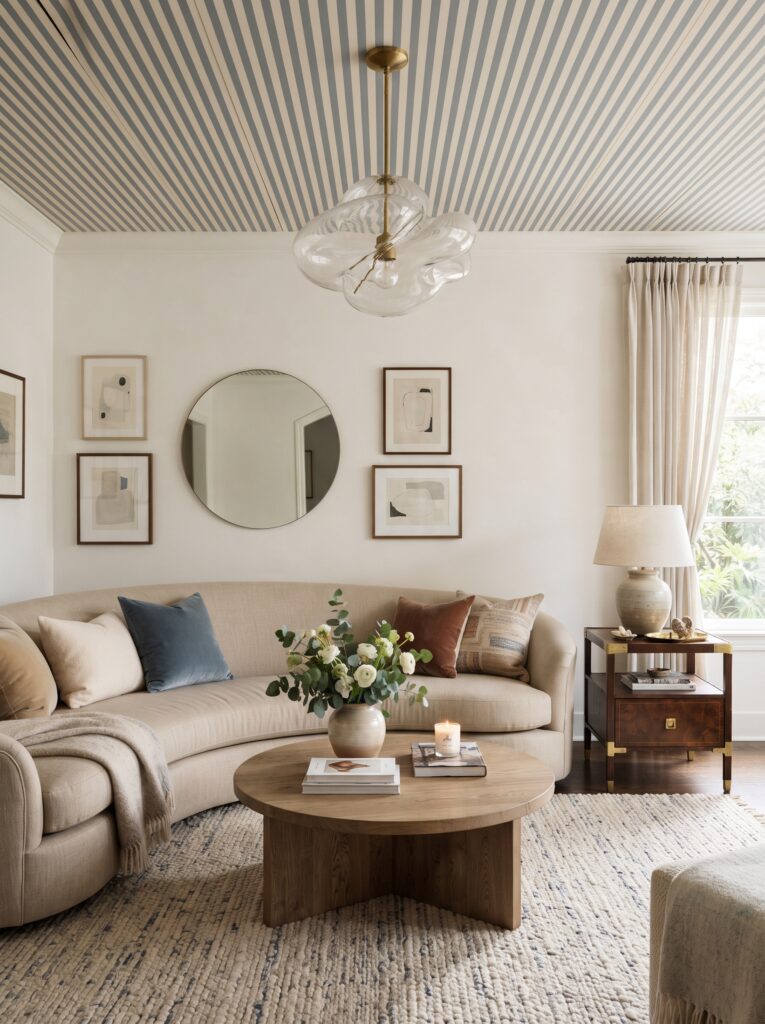
In 2026, more homeowners are becoming interested in expressive ceiling treatments, including painted patterns, architectural details, wallpaper, decorative molding, and striped ceilings. Instead of leaving the ceiling completely blank, this approach turns it into an intentional design feature.
A striped ceiling can make a room feel taller, more distinctive, and more visually interesting without adding another piece of furniture.
Pinterest’s 2026 trend reporting identifies striped ceilings as a rising search direction within its Fun Haus trend, alongside a broader movement toward playful and expressive interiors. The trend reflects growing interest in using unexpected patterns and decorative details in places that traditionally remain plain.
The beauty of a statement ceiling is that you can experiment with personality while keeping the rest of the room relatively calm.
If you are searching for ceiling design ideas, unique home decor ideas, painted ceiling inspiration, designer interiors, or ways to make a room look more expensive, the ceiling may be the place you have been overlooking.
Why the Ceiling Matters in Interior Design
A ceiling occupies a large visual area.
Even when you are not consciously looking upward, the ceiling affects how the entire room feels.
A plain white ceiling can make a room feel bright and open.
A dark ceiling can create intimacy.
A textured ceiling can add architectural character.
A patterned ceiling can introduce personality.
A striped ceiling can create rhythm and movement.
Because the ceiling is separate from the walls, it provides an opportunity to introduce something unexpected without changing the entire room.
This is especially useful if you already have neutral furniture and do not want to introduce bold colors everywhere.
What Is a Striped Ceiling?
A striped ceiling is exactly what it sounds like: a ceiling decorated with repeated linear bands of color or pattern.
The stripes can be:
- Wide
- Narrow
- Horizontal
- Vertical depending on the room’s geometry
- Tonal
- Contrasting
- Painted
- Wallpapered
- Fabric-inspired
- Hand-painted
For a sophisticated home, the most successful versions tend to use restrained colors rather than extremely bright contrasts.
Think:
Warm white + taupe
Cream + dusty blue
Ivory + muted green
Beige + soft terracotta
White + charcoal
The pattern creates interest while the muted palette keeps the room livable.
1. Try Soft Cream and White Stripes
If you are nervous about a bold ceiling, start with a subtle combination.
Instead of using strongly contrasting colors, choose two shades that are close together.
For example:
- Warm white
- Cream
- Ivory
- Soft beige
The difference may be subtle enough to feel architectural rather than decorative.
This approach works particularly well in traditional, transitional, and contemporary American homes.
2. Use Blue and White for a Fresh Look
Soft blue and white can create a relaxed atmosphere.
A muted dusty blue works particularly well because it provides color without becoming overwhelming.
This combination can work in:
- Dining rooms
- Bedrooms
- Sunrooms
- Breakfast areas
- Home offices
- Children’s spaces
- Covered porches
For an elevated appearance, avoid overly bright blue.
Look for dusty, gray-blue, or slightly muted tones.
3. Add Stripes to a Dining Room Ceiling
The dining room can be a particularly effective place for a statement ceiling.
Because dining areas often have a central light fixture, the pattern naturally draws attention toward the center of the room.
Imagine:
A warm wood dining table below.
Cream upholstered chairs around it.
A sculptural chandelier in the center.
And subtle stripes extending across the ceiling.
The ceiling becomes part of the composition rather than a separate surface.
4. Create a Striped Breakfast Nook
A breakfast nook is another excellent place for experimentation.
Because the space is usually smaller, you can introduce more personality without changing the visual character of the entire home.
A striped ceiling above a round breakfast table can create a charming architectural moment.
Add:
- A pendant light
- Built-in seating
- Soft cushions
- Natural wood
- Simple artwork
Keep the walls relatively quiet so the ceiling remains the focal point.
5. Use Narrow Stripes for a More Refined Look
The width of your stripes changes the overall mood.
Narrow stripes can feel more traditional and delicate.
Wide stripes can feel bold and contemporary.
For a sophisticated interior, consider medium-width stripes with a low-contrast palette.
This creates visual interest without making the ceiling look busy.
6. Use Wide Stripes for a Dramatic Statement
If subtlety is not your style, wider stripes can create a stronger architectural effect.
Try:
Cream + deep taupe
or
White + charcoal
or
Ivory + muted terracotta
Wide stripes can work especially well in rooms with high ceilings because they create a strong visual pattern.
In a smaller room, however, use contrast carefully.
7. Coordinate the Ceiling With the Furniture
The ceiling should not feel disconnected from the rest of the room.
You do not need to match the stripes exactly to your furniture.
Instead, repeat one of the ceiling colors somewhere else.
For example:
Dusty blue ceiling + blue accent cushion
or
Warm taupe ceiling + taupe upholstery
or
Terracotta ceiling + terracotta ceramic accessories
This small repetition makes the room feel intentionally designed.
8. Keep the Walls Simple
A statement ceiling usually needs breathing room.
If the ceiling already has stripes, consider keeping the walls:
- Solid
- Lightly textured
- Neutral
- Minimal in pattern
You can still use artwork, but avoid adding multiple competing patterns.
The goal is visual hierarchy.
The ceiling should have a clear role.
9. Add Architectural Molding
Painted stripes can become even more sophisticated when combined with molding.
Consider adding:
- Picture-frame molding
- Crown molding
- Coffered details
- Beams
- Thin trim
You can paint the molding and ceiling in coordinated shades.
This can make the ceiling appear custom-designed rather than simply painted.
10. Combine Stripes With a Statement Light
Lighting is an important part of a statement ceiling.
A beautiful pendant or chandelier can become the central focal point.
Consider:
- Sculptural pendants
- Globe lights
- Lantern-style fixtures
- Vintage-inspired chandeliers
- Oversized woven pendants
The fixture should complement the pattern rather than compete with it.
If the stripes are bold, choose a relatively simple light.
If the stripes are subtle, you can use a more sculptural fixture.
11. Try Tonal Stripes
Tonal stripes are one of the easiest ways to make the idea feel sophisticated.
Instead of choosing two dramatically different colors, use different shades of the same color family.
For example:
Light beige + medium beige
Cream + warm taupe
Pale blue + dusty blue
Soft green + muted sage
This creates pattern without excessive contrast.
12. Use Wallpaper Instead of Paint
Painting stripes is not the only option.
Wallpaper can provide:
- More precise lines
- Repeating patterns
- Textured finishes
- Fabric-inspired designs
- Decorative motifs
Ceiling wallpaper can be particularly effective in small rooms.
A powder room, reading area, breakfast nook, or compact office can become a memorable space with a patterned ceiling.
13. Consider Removable Wallpaper
If you rent your home or simply want flexibility, removable wallpaper may be worth considering.
It allows you to experiment without making a permanent commitment.
This can be particularly useful for:
- Apartments
- Home offices
- Guest rooms
- Small dining areas
- Temporary homes
Always check the manufacturer’s instructions and the condition of the ceiling before installation.
14. Create a Striped Ceiling in a Home Office
A home office does not have to look corporate.
A subtle striped ceiling can add personality while keeping the desk area professional.
Try:
- Warm white walls
- Walnut desk
- Linen chair
- Brass lighting
- Soft blue-and-cream ceiling
The result can feel sophisticated and creative without becoming distracting.
15. Use the Ceiling to Define an Open-Concept Space
Open-concept American homes often combine multiple functions within one large area.
Instead of building a wall, you can use the ceiling to visually define a zone.
For example, a striped ceiling can identify the dining area within an open kitchen-living space.
The furniture stays visually connected, but the ceiling provides a subtle boundary.
This is an especially clever approach for homes where structural walls are limited.
16. Create a Luxury Look With a Neutral Palette
Luxury does not require gold or dark colors.
A neutral striped ceiling can feel extremely sophisticated.
Try:
Ivory + warm beige + walnut + linen
The combination creates an understated atmosphere.
Add one sculptural light fixture and carefully selected artwork.
The ceiling becomes a quiet luxury feature.
17. Use Dark Stripes Carefully
Dark colors can create a dramatic effect.
Charcoal, chocolate brown, deep green, or navy can work beautifully with warm neutrals.
But dark stripes can visually lower the ceiling.
If the room already has low ceilings, consider:
- Narrow dark stripes
- Low contrast
- Lighter surrounding walls
- Good ambient lighting
Use the effect intentionally rather than simply following a trend.
18. Try Stripes in a Covered Porch
A covered porch can be an unexpected location for a statement ceiling.
Instead of leaving the ceiling plain, consider subtle painted stripes or beadboard in alternating tones.
Combine it with:
- Woven furniture
- Neutral cushions
- Outdoor lanterns
- Natural textures
- Potted greenery
The result can feel like an extension of the home’s interior.
19. Add a Striped Ceiling to a Sunroom
Sunrooms are naturally suited to decorative ceilings.
Because they already receive plenty of natural light, a patterned ceiling can become an attractive focal point without making the room feel dark.
Use soft colors such as:
- Cream
- Sage
- Dusty blue
- Warm beige
Then keep furniture comfortable and natural.
20. Create a Cozy Bedroom Ceiling
Bedrooms are another place where a ceiling pattern can work beautifully.
A soft striped ceiling can create a cozy, enveloping effect.
Consider:
Cream walls + soft beige stripes + linen bedding + warm wood furniture
The pattern remains visible without becoming visually stimulating.
For a bedroom, avoid overly high-contrast stripes if you want a calm atmosphere.
21. Make a Small Room Feel More Special
A small room can benefit significantly from a statement ceiling because there are fewer surfaces to decorate.
Instead of adding more furniture or accessories, use the ceiling as the feature.
This can be particularly effective in:
- Powder rooms
- Hallways
- Small offices
- Breakfast nooks
- Entry areas
- Compact bedrooms
A small amount of pattern can have a surprisingly large visual impact.
22. Use Ceiling Stripes With Traditional Decor
You do not need a contemporary home to use this trend.
Striped ceilings can work beautifully with traditional American interiors.
Combine them with:
- Antique furniture
- Traditional artwork
- Classic wood
- Linen upholstery
- Brass lighting
The result feels collected rather than trendy.
23. Combine With Transitional Interior Design
Transitional interiors are especially flexible.
A transitional room can handle:
- Modern lighting
- Traditional furniture
- Contemporary artwork
- Natural wood
- Decorative ceiling details
A subtle striped ceiling can connect these different elements.
Choose colors already present in the room.
24. How to Choose the Right Stripe Width
There is no single correct stripe width.
Consider the scale of the room.
Small room
Use narrower or lower-contrast stripes.
Medium room
Medium-width stripes provide balance.
Large room
Wider stripes can create a stronger architectural statement.
Also consider the height of the ceiling.
High ceilings can generally handle more visual drama.
Lower ceilings benefit from lighter colors and subtle contrast.
25. How to Make a Striped Ceiling Look Expensive
The difference between an inexpensive-looking pattern and an elevated one often comes down to execution.
Focus on:
Clean lines
Consistent spacing
High-quality paint
Careful preparation
Crisp edges
Appropriate proportions
A sophisticated color palette also helps.
Instead of choosing colors solely because they are eye-catching, choose shades that work with the architecture of your home.
26. Choose the Right Finish
The paint finish can change the appearance of the ceiling.
A softer finish generally helps reduce harsh reflections and can create a more refined appearance.
Always consider the condition of the ceiling before choosing a finish.
Imperfections may become more noticeable with certain finishes or lighting conditions.
27. Do You Need a Professional?
Not necessarily.
A relatively simple striped ceiling can be a DIY project if you are comfortable with measuring, taping, painting, and working safely overhead.
However, complex ceilings involving:
- Coffered architecture
- Detailed molding
- High ceilings
- Extensive wallpaper
- Uneven surfaces
may be better handled by a professional.
The goal is to achieve clean, precise results.
28. Budget-Friendly Ceiling Transformation
One advantage of ceiling design is that paint can create a major visual change without requiring expensive furniture.
If your budget is limited, consider:
- Paint the ceiling.
- Update the light fixture.
- Rearrange existing furniture.
- Add one piece of artwork.
- Introduce a complementary textile.
This can completely change the atmosphere of a room without replacing everything.
29. Seasonal Ceiling Styling
A statement ceiling does not have to be changed seasonally.
Instead, change the accessories underneath it.
For fall, introduce:
- Rust-colored textiles
- Warm wood
- Burgundy accents
- Dried branches
For spring:
- Soft greens
- Cream
- Light blue
- Fresh flowers
For winter:
- Deep green
- Warm white
- Natural wood
- Soft candlelight
The ceiling remains the architectural foundation.
30. How to Keep the Trend From Looking Too Themed
This is important.
The goal is not to make your room look like a circus or themed restaurant.
Instead, use the expressive spirit of the trend while maintaining sophistication.
Choose:
- Muted colors
- Quality materials
- Simple furniture
- Controlled pattern
- Good lighting
- Plenty of negative space
This allows the ceiling to feel artistic without becoming overwhelming.
31. The Best Rooms for a Statement Ceiling
If you are unsure where to experiment first, consider:
Dining Room
Creates a sophisticated entertaining atmosphere.
Breakfast Nook
Adds charm to a small space.
Home Office
Introduces personality.
Powder Room
Allows bolder experimentation.
Sunroom
Complements natural light.
Bedroom
Creates a cozy decorative layer.
Covered Porch
Adds architectural character.
32. A Simple Designer Formula
If you want an easy starting point, use:
Neutral walls + striped ceiling + natural wood + one sculptural light + restrained accessories.
For more color:
Cream walls + dusty blue stripes + walnut + linen + brass.
For a moodier room:
Warm ivory walls + chocolate stripes + dark wood + aged brass.
For an earthy look:
Cream + muted terracotta + oak + natural fibers.
33. Why the Fifth Wall Is Worth Decorating
The ceiling offers something that walls cannot.
It adds visual interest without taking up floor space.
That makes it especially useful for smaller homes.
Instead of adding another cabinet, shelf, or decorative object, you can change the ceiling.
This preserves the functionality of the room while still giving it personality.
34. The Biggest Mistake to Avoid
The biggest mistake is treating the ceiling as an isolated design decision.
It should connect with the rest of the room.
Before choosing your colors, look at:
- Flooring
- Furniture
- Curtains
- Lighting
- Artwork
- Wood finishes
- Accent colors
Then choose a ceiling palette that complements at least two or three of these elements.
That creates cohesion.
Conclusion
The ceiling may be the most overlooked design opportunity in the home, but it can also be one of the most transformative.
A striped ceiling gives homeowners a way to introduce color, pattern, and personality without filling the room with additional furniture or accessories. Whether you choose subtle cream-on-white stripes or a more dramatic combination of contrasting tones, the effect can make an ordinary room feel intentionally designed.
The key is restraint.
Let the ceiling be the statement while the rest of the room provides balance. Use colors that connect with existing furniture, choose a light fixture that complements the pattern, and leave enough visual breathing room around the design.
For smaller spaces, a statement ceiling can be particularly effective because it creates impact without taking up valuable floor space. In open-concept homes, it can even help visually define different zones without adding walls.
And for homeowners looking for fresh 2026 interior inspiration, striped ceilings are especially timely: Pinterest’s 2026 trend reporting lists rising interest in striped ceilings as part of its Fun Haus direction, reflecting a broader move toward more expressive and personality-driven interiors.
Whether you are planning a complete home makeover or simply want to give one overlooked room a designer-inspired update, looking upward may be the change that makes the biggest difference.
- Elegant Fall Kitchen Decor in the New Persimmon Color Palette
- The Unexpected Ceiling Trend That Makes a Room Look Designer
- Red Marble Bathroom Ideas for a Bold Luxury Home
- The Elegant Home Bar Corner Everyone Will Want in 2026
- NeoDeco Dining Room Ideas That Make Your Home Look Instantly Expensive