
A beautiful home does not have to look perfectly coordinated to feel sophisticated. In fact, some of the most inviting interiors are the ones that look collected over time, with artwork, photographs, meaningful objects, and decorative pieces that tell a story. One of the easiest ways to create this feeling is with an unexpected gallery wall.
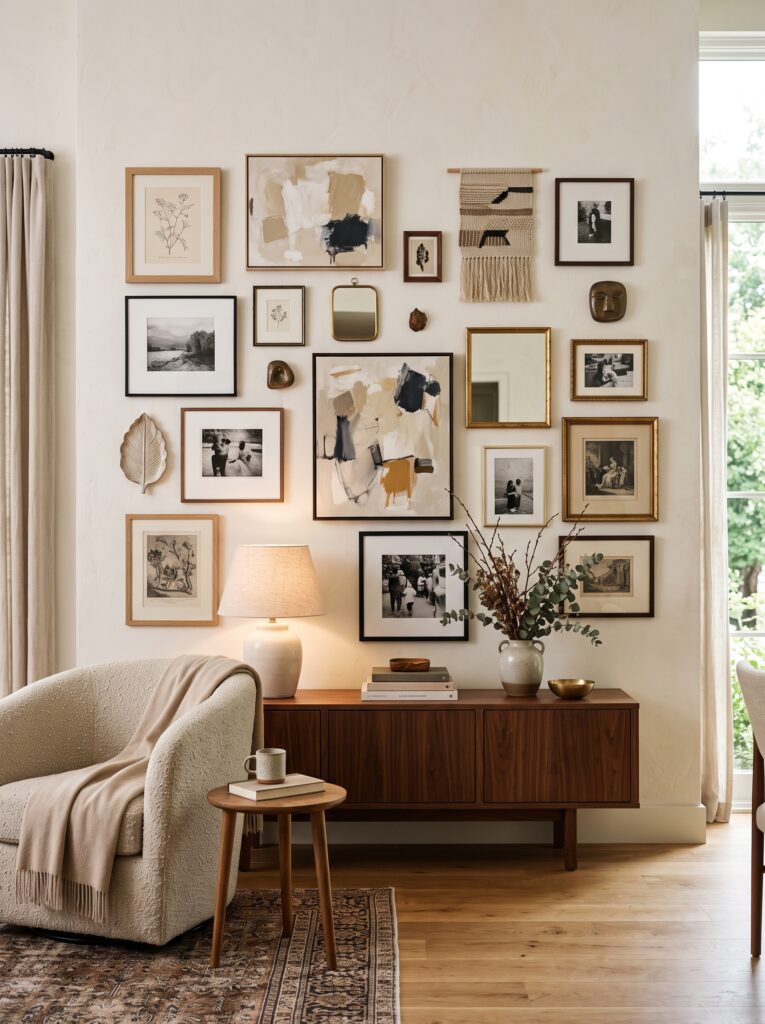
Gallery walls have evolved far beyond rows of identical frames arranged in a predictable grid. Today, homeowners are mixing different frame sizes, artwork styles, textures, photography, vintage-inspired pieces, sculptural objects, and personal finds to create walls that feel artistic and individual.
If you want your home to feel more elevated without completely redecorating, an eclectic gallery wall can be one of the most effective changes you make. It adds personality, fills an empty wall, and creates an immediate focal point without requiring expensive furniture or a major renovation.
Why Gallery Walls Are So Popular in Home Decor
Wall decor has a major influence on how a room feels. Furniture establishes the basic function of a space, but artwork and decorative objects often give it personality.
A blank wall can make an otherwise beautifully furnished room feel unfinished. On the other hand, a thoughtfully designed gallery wall can make the same room feel layered, intentional, and complete.
The key is not simply hanging as many pieces as possible. The goal is to create visual balance.
For a sophisticated gallery wall, think about:
- Color
- Scale
- Texture
- Frame style
- Negative space
- Artwork placement
- The architecture of the room
- The relationship between the wall and surrounding furniture
When these elements work together, the result feels collected rather than cluttered.
Move Beyond the Matching-Frame Gallery Wall
One of the easiest ways to make a gallery wall feel more current is to stop thinking that every frame needs to match.
A perfectly symmetrical arrangement with identical black frames can look polished, but it can also feel predictable. If you prefer a more personal interior, try mixing frame finishes while maintaining another unifying element.
For example, you could combine:
- Natural wood frames
- Aged brass frames
- Thin black frames
- Cream-colored frames
- Vintage-style frames
The frames do not have to be identical. Instead, they should feel like they belong to the same overall design story.
If your artwork contains warm colors, natural wood and aged brass frames can create a cohesive appearance. For a cooler palette, black, charcoal, silver, or muted wood may work better.
Create a Collected Look With Different Types of Artwork
A sophisticated gallery wall does not need to consist entirely of traditional artwork.
Try combining several categories of wall decor.
Black-and-White Photography
Black-and-white photography is timeless and works particularly well in minimalist, modern, and transitional interiors.
Architectural photography, landscapes, portraits, street photography, and abstract photography can all add visual interest without introducing too many competing colors.
Abstract Art
Abstract artwork can provide a modern focal point while allowing you to introduce subtle colors into the room.
If your furniture is neutral, choose artwork featuring soft beige, warm gray, muted brown, dusty blue, or earthy green.
Vintage-Inspired Prints
Vintage-inspired botanical prints, architectural illustrations, old maps, and classic sketches can make a new home feel more established.
These pieces work especially well with traditional, European-inspired, transitional, and collected interior styles.
Small Decorative Objects
You can also move beyond framed artwork.
Small sculptural wall pieces, woven elements, ceramic wall objects, and textured artwork can introduce dimension.
This is particularly effective when the rest of the room contains natural materials such as linen, wood, stone, or rattan.
Use a Consistent Color Story
One of the biggest mistakes people make when creating an eclectic gallery wall is choosing individual pieces without considering how they look together.
The artwork can be different without looking random.
A simple solution is to establish a color story before you start.
For a warm neutral gallery wall, consider:
- Cream
- Beige
- Camel
- Warm brown
- Soft black
- Muted olive
For a coastal-inspired wall, you could use:
- White
- Sand
- Soft blue
- Gray
- Natural wood
For a dramatic modern look, consider:
- Black
- Charcoal
- Ivory
- Deep brown
- Muted metallic accents
You do not have to use every color equally. One or two accent colors can appear repeatedly throughout the collection to create visual connection.
Mix Large and Small Pieces
Scale is another important part of gallery wall design.
If every piece is exactly the same size, the arrangement may feel too rigid. If every piece is tiny, the wall may look busy without creating enough visual impact.
Instead, create a hierarchy.
Start with one or two larger pieces as anchors. Then surround them with smaller artwork.
A large abstract print can sit beside several smaller photographs. A medium vintage illustration can be positioned underneath a larger painting. A tiny framed sketch can fill a small visual gap.
The result should feel balanced rather than perfectly symmetrical.
Leave Breathing Room
A common misconception is that gallery walls need to cover every inch of available wall space.
They do not.
Negative space is extremely important in sophisticated interior design.
Leaving a little breathing room between pieces allows each artwork to remain visually distinct. It also prevents the wall from feeling overwhelming.
For a more refined look, avoid pushing every frame tightly against the next one. Instead, create consistent spacing while allowing the overall arrangement to remain organic.
Create a Gallery Wall Above Furniture
Gallery walls often work particularly well above major furniture pieces.
Consider placing one above:
- A sofa
- A console table
- A sideboard
- A desk
- A bed
- A dining area
- A hallway console
The furniture underneath provides an important visual foundation.
For example, a large sofa can support a wider horizontal gallery wall, while a narrow console may work better with a vertical arrangement.
The artwork should feel connected to the furniture rather than floating independently on the wall.
Try a Vertical Gallery Wall in Narrow Spaces
Not every gallery wall needs to be wide.
A vertical arrangement can be perfect for narrow walls, hallways, stair-adjacent areas, or small entry spaces.
Use taller artwork toward the center and gradually introduce smaller pieces around it.
This approach can visually emphasize ceiling height and make a narrow area feel more intentional.
Create a Gallery Wall Around a Single Statement Piece
If you already own one large artwork that you love, you do not necessarily need to choose between displaying it alone or building a gallery wall.
Use it as the anchor.
Place smaller complementary pieces around it while maintaining enough negative space for the main artwork to remain dominant.
This approach is particularly effective when the statement piece contains colors that can be repeated throughout the smaller artwork.
Incorporate Personal Photography
One of the easiest ways to make a gallery wall feel genuinely personal is to include photographs.
Family photographs, travel photography, architectural images, landscapes, or personal black-and-white images can make the collection feel meaningful rather than purely decorative.
For a more sophisticated appearance, consider printing personal photographs in similar tones.
Black-and-white photography is especially useful because it can unify photographs from different locations or periods.
Add Texture Instead of More Color
If you prefer neutral interiors, you do not need colorful artwork to create interest.
Instead, use texture.
Consider adding:
- Woven wall art
- Linen-covered pieces
- Natural wood frames
- Textured paper
- Handmade ceramics
- Sculptural objects
A neutral gallery wall can be incredibly sophisticated when different materials create subtle variation.
This works especially well with organic modern, Japandi-inspired, minimalist, transitional, and quiet-luxury interiors.
How to Choose the Right Gallery Wall for Your Home
Before buying artwork, consider the overall design style of your room.
For Modern Homes
Choose clean-lined frames, abstract artwork, architectural photography, and restrained colors.
For Traditional Homes
Consider botanical prints, landscapes, classic portraits, ornate frames, and vintage-inspired artwork.
For Organic Modern Interiors
Focus on natural wood, handmade textures, neutral artwork, organic shapes, and earthy colors.
For Minimalist Homes
Use fewer pieces with generous spacing and a carefully controlled palette.
For Eclectic Homes
Mix artwork styles, frame finishes, textures, and periods while keeping one or two elements consistent.
Easy Gallery Wall Mistakes to Avoid
Even a beautiful collection can look unfinished if the arrangement is not planned.
Avoid these common mistakes.
Making Everything Too Symmetrical
Perfect symmetry is not always necessary. A slightly organic arrangement can feel more collected.
Using Too Many Colors
If every artwork introduces a completely different color, the wall can become visually chaotic.
Choosing Pieces That Are Too Small
Tiny artwork can disappear on a large wall. Make sure the overall arrangement has enough visual weight.
Ignoring the Furniture Below
The gallery wall should relate to the furniture underneath it.
Hanging Everything Too High
Artwork should generally feel connected to the surrounding furniture and room rather than appearing disconnected near the ceiling.
Filling Every Empty Space
A sophisticated gallery wall needs breathing room.
How to Make a Gallery Wall Look Expensive
You do not need an enormous art budget to achieve an elevated look.
Start with a strong concept rather than expensive individual pieces.
Use:
- Consistent visual tones
- Quality-looking frames
- Different artwork scales
- Natural materials
- Thoughtful spacing
- One or two statement pieces
- Minimal decorative clutter
You can also combine affordable prints with a few more distinctive pieces.
The goal is to make the collection feel intentional.
Pinterest-Worthy Gallery Wall Styling
If you are creating a gallery wall specifically for a highly visual platform such as Pinterest, focus on the entire room rather than photographing only the wall.
Show how the gallery wall interacts with:
- Furniture
- Lighting
- Flooring
- Curtains
- Accessories
- Plants
- Architectural details
A complete room scene helps viewers imagine how they could recreate the look in their own homes.
Neutral interiors with layered artwork, natural materials, and strong architectural composition can also create highly saveable visual inspiration.
Conclusion
An unexpected gallery wall can completely change the personality of a home. Instead of relying on perfectly matching frames and predictable artwork arrangements, experiment with scale, texture, photography, vintage-inspired prints, sculptural pieces, and meaningful objects.
The most beautiful gallery walls often feel collected rather than purchased all at once. They reflect the homeowner’s personality while still maintaining a thoughtful color palette and visual balance.
Whether you are decorating a living room, bedroom, dining area, hallway, or home office, a well-designed gallery wall can transform an empty surface into a meaningful focal point.
Start with one piece you genuinely love, build around it gradually, and focus on creating a collection that feels like it belongs to your home. The result can be artistic, elegant, personal, and timeless—all without requiring a complete interior makeover.
- Afrohemian Dining Room Ideas for a Warm, Collected and Sophisticated Home
- Warm Wood and Black Kitchen Ideas for a Timeless Designer Look
- Small Reading Nook Ideas That Turn Forgotten Corners Into a Cozy Luxury Retreat
- Curated Trinket Shelf Ideas: How to Create a Collected and Personal Home
- Neo Deco Entryway Ideas That Make Your Home Feel Instantly Expensive