
Wallpaper has made a major comeback in interior design, but today’s wallpaper ideas go far beyond covering all four walls of a room.
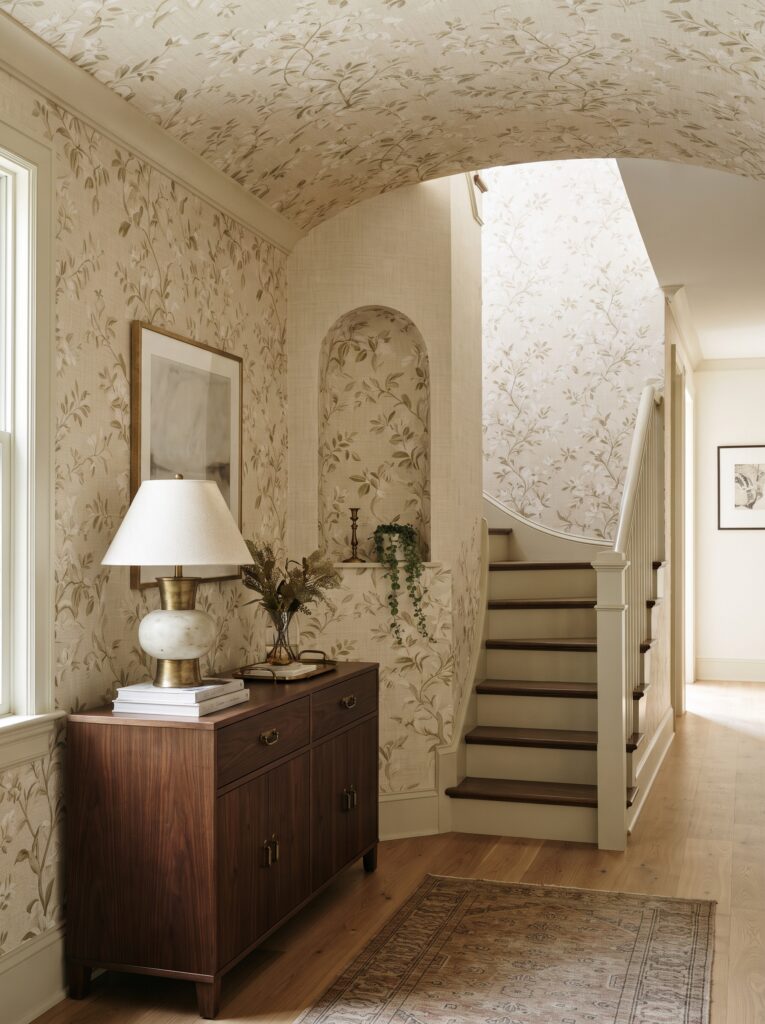
Used thoughtfully, wallpaper can turn an overlooked corner, small hallway, ceiling, cabinet interior, or architectural detail into something that feels intentionally designed. It can add color, pattern, texture, depth, and personality without requiring a complete renovation.
For homeowners who want their spaces to feel more custom, wallpaper is one of the most versatile decorating tools available.
You don’t necessarily need a bold pattern covering an entire room. Sometimes the most beautiful result comes from using wallpaper in an unexpected location.
A small powder room can become dramatic with a rich botanical print. A bookshelf can feel completely different with patterned backing. A plain entryway can gain personality from a subtle geometric design. Even the ceiling can become a decorative feature.
The secret is choosing the right pattern for the space and using it in a way that feels intentional rather than overwhelming.
If you’re searching for creative wallpaper ideas for your home, these unexpected applications can help you create rooms that feel more personalized, layered, and designer-inspired.
Why Wallpaper Can Make a Home Feel More Custom
Paint changes the color of a room, but wallpaper can change both the color and visual character.
Depending on the design, wallpaper can make a space feel:
- More luxurious
- More colorful
- More intimate
- More traditional
- More modern
- More playful
- More dramatic
- More connected to nature
It can also highlight areas that might otherwise disappear.
A narrow hallway, for example, may not have enough room for furniture or large artwork. Wallpaper can provide visual interest without taking up any physical space.
This is particularly useful in smaller American homes, apartments, entryways, powder rooms, and awkward architectural spaces where decorating options may be limited.
1. Wallpaper the Ceiling
One of the most unexpected wallpaper ideas is using wallpaper on the ceiling.
Instead of treating the ceiling as an empty fifth wall, use it as an opportunity to introduce pattern.
This can work particularly well in:
- Powder rooms
- Bedrooms
- Reading nooks
- Small dining rooms
- Home offices
- Entryways
A subtle botanical, textured, or geometric pattern can add interest without making the walls feel too busy.
For a sophisticated look, keep the walls relatively simple and let the ceiling become the unexpected feature.
2. Transform the Back of a Bookshelf
Open shelving can become much more interesting when wallpaper is installed behind the shelves.
This creates a decorative background for books, ceramics, artwork, and collected objects.
The wallpaper doesn’t need to be extremely bold.
A small floral print, muted geometric pattern, or textured neutral design can create enough contrast to make the shelving feel custom.
This idea is especially useful if you already have built-in shelving but don’t want to replace the entire unit.
3. Give an Entryway a Dramatic Moment
Entryways are often overlooked because they are transitional spaces.
But that is exactly what makes them perfect for experimentation.
Wallpaper can instantly turn a plain entryway into a memorable first impression.
Try pairing patterned wallpaper with:
- A simple console table
- Vintage or modern mirror
- Table lamp
- Small ceramic bowl
- Framed artwork
- Natural wood accents
If the entryway is narrow, a wallpaper pattern can provide the visual interest that furniture cannot.
4. Use Wallpaper in a Small Powder Room
Small powder rooms are ideal places to experiment with wallpaper.
Because the room is compact, you can often use a stronger pattern without overwhelming the entire home.
Consider:
- Botanical prints
- Traditional motifs
- Small-scale florals
- Dramatic geometric patterns
- Vintage-inspired designs
- Textured neutral wallpaper
A powder room can have a completely different personality from the rest of the house.
That makes it a great place to try something you might not want in a large living area.
5. Create a Wallpaper Accent Wall
If you’re not ready to wallpaper an entire room, start with one wall.
An accent wall can create a focal point behind:
- A bed
- Sofa
- Dining table
- Desk
- Console
- Fireplace
In a bedroom, wallpaper behind the headboard can create the feeling of a custom architectural feature.
In a dining room, it can frame the dining table.
In a home office, it can create a visually interesting background for video calls.
The key is choosing the wall that naturally deserves attention.
6. Frame Wallpaper Like Artwork
Wallpaper doesn’t always need to cover an entire wall.
A creative alternative is to install a wallpaper panel inside decorative molding or picture-frame molding.
This creates the appearance of oversized artwork.
For example, you could place patterned wallpaper inside several rectangular molding panels on a dining room wall.
The result combines architectural detail with decorative pattern.
This approach works particularly well in traditional, transitional, and contemporary homes.
7. Use Wallpaper Behind the Bed
The wall behind a bed is naturally a focal point.
Wallpaper can make it even more visually important.
Instead of using a traditional headboard, consider creating a wallpaper feature wall behind the entire bed.
For a calm bedroom, choose:
- Soft botanical patterns
- Neutral geometric designs
- Muted florals
- Textured wallpaper
- Subtle stripes
For a more dramatic bedroom, deeper colors and larger-scale patterns can create a sophisticated atmosphere.
Keep the bedding relatively simple if the wallpaper is bold.
8. Add Wallpaper to a Reading Nook
A reading nook doesn’t need much furniture to become special.
A comfortable chair, small side table, lamp, and wallpaper can be enough.
Use wallpaper to visually separate the nook from the rest of the room.
This can be particularly effective when the nook is located inside a larger living room, bedroom, hallway, or home office.
A small pattern can make the area feel like its own little retreat.
9. Wallpaper the Inside of Cabinets
Wallpapering the interior of cabinets is another subtle way to introduce personality.
This works especially well with glass-front cabinets because the wallpaper becomes visible behind the displayed objects.
Imagine a cabinet filled with:
- White ceramics
- Glassware
- Books
- Vintage dishes
- Decorative bowls
A patterned wallpaper behind them can create contrast and make the collection look more curated.
10. Give a Home Office a Custom Backdrop
Home offices often contain functional furniture, which can sometimes make them feel visually plain.
Wallpaper can turn a basic office into a more inspiring space.
Consider placing wallpaper behind the desk rather than covering every wall.
A subtle geometric pattern can create a professional atmosphere.
A botanical print can make the room feel more relaxed.
A vintage-inspired pattern can complement a traditional wooden desk.
The wallpaper should support the atmosphere you want while remaining comfortable enough for daily work.
11. Create a Dining Room Feature Wall
Dining rooms are excellent spaces for wallpaper because they often have fewer competing objects than living rooms.
A wallpapered wall behind a dining table can create a sophisticated backdrop.
Pair it with:
- Simple dining chairs
- Warm wood
- Elegant lighting
- Minimal table decor
- Artwork or a mirror
If the wallpaper is patterned, allow the dining table and chandelier to remain relatively clean and simple.
This creates balance.
12. Try Wallpaper in a Hallway
Hallways can be difficult to decorate because they are often narrow.
There may not be enough space for furniture, large artwork, or decorative accessories.
Wallpaper solves that problem by adding visual interest directly to the walls.
A narrow hallway can become much more memorable with:
- A small-scale botanical print
- Vertical stripes
- Soft geometric patterns
- Textured wallpaper
- Classic traditional motifs
For long hallways, consider how the pattern looks from both ends of the space.
13. Use Vertical Patterns to Emphasize Height
Vertical lines and vertically oriented patterns can visually draw the eye upward.
This can be useful in rooms with lower ceilings.
You don’t need an obvious striped wallpaper.
Subtle vertical botanical arrangements, elongated geometric shapes, or vertically oriented patterns can create a similar effect.
Combine the wallpaper with tall curtains, vertical artwork, or a tall mirror for an even stronger sense of height.
14. Use Large-Scale Wallpaper in Small Rooms
Many people assume that small rooms require small patterns.
That isn’t always true.
A large-scale pattern can create a dramatic and immersive atmosphere in a compact space.
Powder rooms, small offices, and cozy bedrooms can sometimes handle bold wallpaper particularly well.
The trick is controlling the rest of the room.
If the wallpaper makes a strong statement, keep furniture and accessories relatively simple.
15. Choose Small-Scale Patterns for a Subtle Look
If dramatic wallpaper isn’t your style, small-scale patterns can create a quieter effect.
Small florals, delicate geometric shapes, tiny botanical motifs, and subtle textures can add depth without becoming the main feature.
This works particularly well in:
- Bedrooms
- Kitchens
- Laundry rooms
- Home offices
- Transitional spaces
A subtle pattern can also be easier to live with for many years.
16. Bring Nature Indoors With Botanical Wallpaper
Botanical wallpaper can make an interior feel connected to nature.
Leaves, branches, flowers, vines, and organic patterns can add softness to otherwise structured spaces.
This works beautifully with natural materials such as:
- Oak
- Walnut
- Rattan
- Wicker
- Linen
- Stone
- Ceramic
- Jute
For a refined look, choose botanical patterns with muted or earthy colors rather than extremely bright tones.
17. Use Wallpaper to Highlight an Architectural Feature
If your home already has interesting architecture, wallpaper can help emphasize it.
Consider using wallpaper inside:
- Wall niches
- Arches
- Alcoves
- Built-in shelving
- Recessed areas
- Fireplace surrounds
- Stairway landings
Instead of covering the entire wall, use wallpaper only where you want the eye to go.
This creates a more custom appearance.
18. Wallpaper the Staircase Wall
Staircases often have large blank walls that are difficult to decorate.
Wallpaper can turn this unused surface into a statement.
A staircase wallpaper design can be paired with framed artwork, photographs, or a simple runner.
Because stairs naturally lead the eye upward, the pattern can create movement throughout the space.
For a timeless look, consider traditional motifs or subtle geometric patterns.
19. Add Wallpaper to a Laundry Room
Laundry rooms are functional spaces, but they don’t need to feel purely utilitarian.
Wallpaper can make doing everyday chores feel a little more enjoyable.
A soft botanical pattern, small floral print, or subtle stripe can transform an ordinary laundry room.
Pair it with:
- White cabinets
- Natural wood shelves
- Woven baskets
- Simple brass hardware
- Neutral flooring
The result can feel polished without requiring an expensive remodel.
20. Use Wallpaper in a Closet
A walk-in closet can become a surprisingly beautiful place for wallpaper.
Because closets are usually smaller than bedrooms or living rooms, they can accommodate more decorative choices.
Consider wallpaper behind open clothing storage, around a vanity area, or on a feature wall.
A subtle pattern can make the space feel like a boutique dressing room.
21. Create a Custom Vanity Area
Wallpaper can make a bathroom vanity wall feel more intentional.
Instead of relying entirely on tile, consider using wallpaper in areas appropriate for the product and room conditions.
A decorative pattern behind a mirror can create a strong focal point.
Pair it with simple lighting and understated accessories.
The mirror will break up the pattern while also reflecting it, creating additional depth.
22. Mix Wallpaper With Wall Paneling
Wallpaper and wall molding can work beautifully together.
One option is to place wallpaper above decorative wall molding.
Another is to install wallpaper inside molding panels.
You can also combine lower wall paneling with wallpaper on the upper portion of the wall.
This approach is particularly effective in dining rooms, bedrooms, hallways, and entryways.
The architectural structure keeps the wallpaper feeling sophisticated.
23. Use Wallpaper as a Headboard Alternative
If you want the visual effect of a statement headboard without purchasing a large piece of furniture, wallpaper can help.
A patterned wall behind the bed creates a defined sleeping zone.
Add wall-mounted lights or simple bedside tables to complete the composition.
This is especially useful in smaller bedrooms where a large upholstered headboard may take up too much physical space.
24. Create a Wallpapered Breakfast Nook
Breakfast nooks can sometimes feel like leftover spaces.
Wallpaper can give them their own identity.
A small floral, botanical, or geometric design can define the area and visually separate it from the kitchen.
Add a round table, comfortable bench seating, pendant light, and simple artwork.
The wallpaper becomes the background that makes the nook feel intentional.
25. Use Wallpaper in Unexpected Color Combinations
You don’t always have to choose wallpaper based on the dominant color of the room.
Sometimes an unexpected accent can make the design more interesting.
For example, a neutral room could introduce muted green.
A warm beige interior could include dusty blue.
A mostly white room could use a soft terracotta pattern.
The important thing is to repeat the accent color somewhere else.
A small vase, artwork, cushion, or rug can connect the wallpaper to the rest of the room.
26. Match Wallpaper to the Mood of the Room
Think about atmosphere before choosing a pattern.
For a peaceful bedroom, soft botanical or organic patterns may work well.
For a sophisticated dining room, traditional or geometric patterns can create structure.
For a playful powder room, a more expressive design may be appropriate.
For a home office, subtle patterns can provide visual interest without becoming distracting.
The pattern should support the purpose of the room.
27. Use Wallpaper to Make a Rental Feel Personal
Renters may have fewer options for permanent wall changes, but removable wallpaper can offer a way to introduce personality where permitted.
It can be especially effective on:
- Accent walls
- Small entryways
- Powder rooms
- Home office walls
- Bookshelf backs
- Temporary decorative areas
Always check your lease and the product instructions before applying removable wallpaper.
A carefully selected removable design can make a temporary home feel significantly more personal.
28. Think About Lighting Before Choosing Wallpaper
Lighting can change how wallpaper looks throughout the day.
A pattern that looks soft in bright daylight may appear much deeper under warm evening lighting.
Before making a large commitment, consider how much natural light enters the room and what type of artificial lighting you use.
Warm lamps can enhance warm-toned wallpaper.
Cooler daylight can make certain colors appear more crisp.
Whenever possible, view a wallpaper sample in the actual room at different times of day.
29. Don’t Forget About Scale
Scale is one of the most important parts of choosing wallpaper.
A tiny pattern can disappear on a large wall.
A huge pattern can dominate a very small area.
Neither is automatically wrong.
The important thing is deciding what you want the wallpaper to accomplish.
If you want subtle texture, choose a smaller or quieter design.
If you want a dramatic focal point, choose a larger-scale pattern.
30. Balance Pattern With Simplicity
Wallpaper doesn’t mean everything else needs to become decorative.
In fact, simple furniture can make beautiful wallpaper look even better.
If the walls contain a strong pattern, use clean-lined furniture.
If the wallpaper is subtle, you can introduce more decorative furniture or artwork.
Think of the room as a composition.
Every element doesn’t need to compete for attention.
How to Choose Wallpaper That Won’t Feel Dated Quickly
If you’re investing in wallpaper for a long-term home, consider patterns that have visual character rather than relying entirely on short-lived trends.
Classic botanicals, subtle stripes, traditional motifs, textured neutrals, organic shapes, and restrained geometric patterns can remain versatile.
You can also choose a trend-inspired color within a timeless pattern.
This allows the room to feel current without making the entire design dependent on one decorating trend.
Wallpaper Doesn’t Have to Cover the Whole Room
One of the biggest misconceptions about wallpaper is that you need to cover every wall.
You don’t.
A small application can have a huge effect.
Try wallpapering:
- One wall
- The ceiling
- A niche
- A bookshelf backing
- A cabinet interior
- A closet
- A powder room
- A stairway wall
- A reading nook
These smaller applications can be easier to manage and can make your home feel more customized.
How to Make Wallpaper Look More Expensive
The appearance of wallpaper depends on more than the pattern itself.
Professional-looking results usually come from careful preparation, proper installation, clean edges, and thoughtful coordination with the rest of the room.
Keep surrounding elements relatively intentional.
Repeat one or two colors from the wallpaper elsewhere.
Choose hardware and lighting that complement the design.
Avoid covering every surface with competing patterns.
A beautiful wallpaper should feel like part of the architecture rather than something randomly added afterward.
Conclusion
Wallpaper can completely transform a room, but its greatest potential often comes from using it in unexpected places. A ceiling, bookshelf, hallway, closet, staircase, powder room, or small reading nook can become a memorable design feature with the right pattern.
You don’t need to redesign your entire home to create a custom look. Sometimes one carefully chosen wall is enough. The best wallpaper designs balance pattern with the architecture, furniture, lighting, and overall mood of the space. Whether your style is modern, traditional, organic, transitional, vintage-inspired, or eclectic, there is a way to use wallpaper that feels personal rather than overly trendy.
Start with one area that feels plain or overlooked. Choose a pattern that complements the colors and materials already present. Then let the wallpaper become the detail that gives the space its own identity.
That small design decision can make an ordinary room feel surprisingly custom, layered, and complete.
- Playful Home Decor Ideas That Feel Fun, Stylish, and Unexpected
- Unexpected Wallpaper Ideas That Make Ordinary Spaces Feel Custom
- How to Mix Vintage and Modern Decor Without Making Your Home Feel Random
- Designer Window Treatment Ideas That Make Any Room Look More Finished
- Vintage Lighting Ideas That Make a Home Feel Instantly Expensive