
There is a difference between a room that looks decorated and a room that looks thoughtfully designed. Sometimes that difference is not expensive furniture or a major renovation—it is the architecture of the walls.
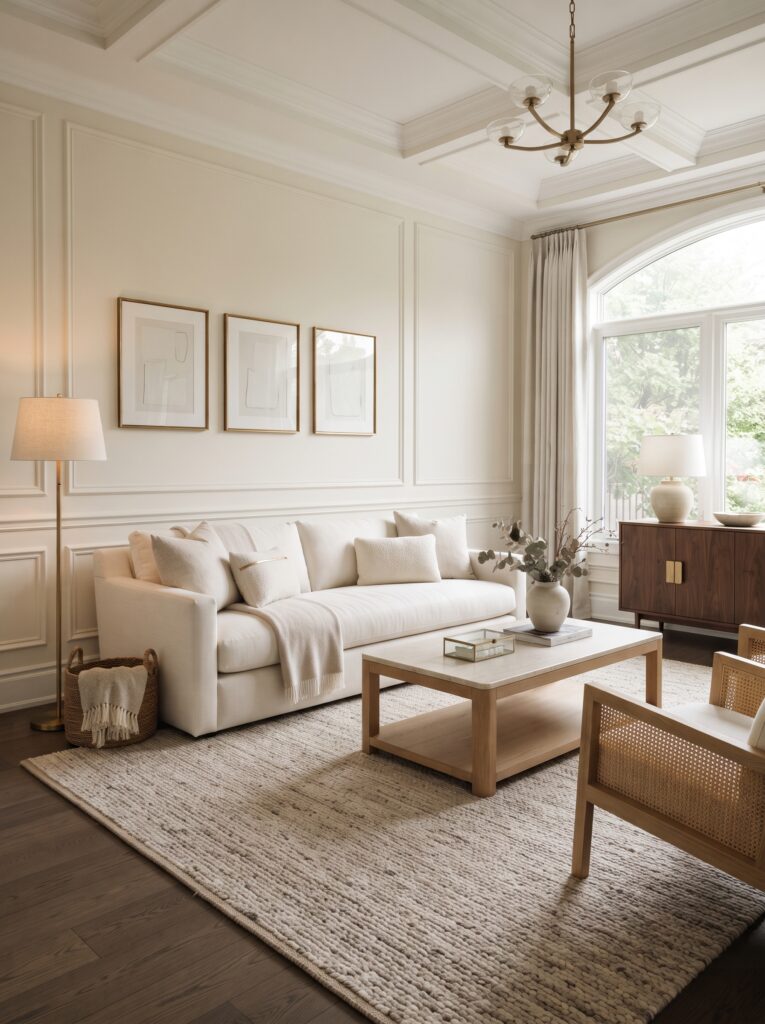
Wall paneling is one of those design details that can make an ordinary room feel more finished, dimensional, and custom-built. A plain wall can become an architectural feature with simple molding, picture-frame panels, vertical slats, or fluted details.
The best part is that wall paneling does not have to make a home look overly traditional. With the right proportions, color, and materials, it can work beautifully in modern, transitional, contemporary, classic, and even minimalist American interiors.
If you are looking for wall paneling ideas, wall molding ideas, accent wall ideas, or affordable ways to make your home look more expensive, this decorating technique is worth exploring.
What Is Wall Paneling?
Wall paneling is a decorative treatment used to add architectural detail and visual texture to an otherwise flat wall.
Traditional paneling was often made from wood, but modern homeowners have many more options. Depending on the design, wall paneling can be created using:
- Wood
- MDF
- Decorative molding
- Shaker-style panels
- Picture-frame molding
- Vertical battens
- Fluted panels
- Tongue-and-groove boards
- Beadboard
- Reclaimed wood
- PVC or composite panels
The style you choose should complement the architecture of your home.
A historic or traditional house may look beautiful with classic picture-frame molding, while a newer home may work better with clean vertical panels or simple geometric designs.
Why Wall Paneling Makes a Room Look More Expensive
One reason wall paneling has such a strong effect is that it introduces architectural detail.
A completely flat wall provides one uninterrupted surface.
Paneling creates:
- Shadow
- Depth
- Repetition
- Proportion
- Texture
- Visual structure
These small changes can make the room feel more considered.
This is particularly useful in newer American homes where walls can sometimes feel visually plain compared with older homes that naturally contain features such as wainscoting, crown molding, built-ins, and detailed millwork.
Instead of replacing the architecture, decorative wall treatment can help introduce some of that character.
Picture-Frame Wall Molding
Picture-frame molding is one of the most timeless wall paneling options.
It consists of rectangular or square molding pieces arranged in a balanced pattern across the wall.
The look can range from traditional to contemporary depending on:
- Panel size
- Spacing
- Molding width
- Paint color
- Furniture
- Lighting
For a sophisticated modern look, keep the molding narrow and the spacing generous.
For a more traditional appearance, use deeper molding and more formal proportions.
One of the biggest advantages of picture-frame molding is that it can look beautiful even when painted the same color as the wall.
Modern Vertical Wall Paneling
Vertical wall paneling has become popular because it can add texture without making the room feel overly formal.
Narrow vertical battens or slats create a subtle rhythm across the wall.
The vertical lines can also draw the eye upward, making the room feel taller.
This style works especially well in:
- Bedrooms
- Home offices
- Hallways
- Dining spaces
- Entry areas
- Living spaces
For a contemporary American home, try warm white, mushroom, soft beige, muted green, or natural wood.
Fluted Wall Panels
Fluted walls introduce repeated vertical grooves that create a more textured appearance.
They can be especially effective when you want an accent wall to feel interesting without using a strong pattern or bright color.
Fluted panels can work behind:
- A bed
- A console
- A desk
- A television
- A dining area
- An architectural niche
The repeated lines create shadows that change throughout the day as natural light moves across the surface.
Wainscoting for a Classic Look
Wainscoting typically covers the lower portion of a wall rather than the entire surface.
It can be a particularly good choice for homeowners who want traditional character without completely changing the appearance of a room.
Classic wainscoting can work beautifully in:
- Dining rooms
- Hallways
- Stair areas
- Bathrooms
- Bedrooms
- Entry spaces
A simple approach is to paint the wainscoting and upper wall in related shades.
For example, warm white paneling with a slightly deeper neutral above it creates subtle contrast.
Choosing the Right Wall for Paneling
You do not necessarily need to panel every wall.
In many homes, one carefully selected wall creates a stronger result than covering the entire room.
Consider choosing a wall that naturally attracts attention.
Good candidates include:
Behind a Bed
The wall behind the bed is already a natural focal point.
Paneling can create a custom-looking backdrop without requiring an oversized headboard.
Behind a Desk
A paneled wall can make a home office feel more intentional and visually finished.
Behind a Console
A decorative wall treatment can turn an otherwise simple console area into a designed feature.
Dining Room Focal Wall
Paneling can give a dining room architectural character without requiring extensive decoration.
Hallway
A long hallway can sometimes feel plain because there is limited furniture.
Wall molding gives the space visual interest without taking up floor area.
Choosing the Right Color
Paint can completely change the personality of your paneling.
White-on-White
Painting the wall and molding the same warm white creates a subtle architectural effect.
This is ideal if you want texture without dramatic contrast.
Warm Beige
Warm beige paneling creates a soft, sophisticated appearance.
It works particularly well with:
- Walnut
- Oak
- Cream upholstery
- Brass
- Linen
- Natural stone
Deep Green
For a more dramatic room, consider a muted olive or forest green.
Dark paneling can make a room feel rich and intimate, particularly when combined with warm lighting.
Dusty Blue
Muted blue can create an elegant, relaxed atmosphere.
It works beautifully with white, cream, natural wood, and aged brass.
Rich Brown
Brown wall paneling can create a warm, library-inspired feeling.
Instead of making every element dark, balance the room with lighter upholstery and natural textures.
Should the Paneling Match the Wall?
It can—and often should.
One of the most sophisticated approaches is to paint the entire wall treatment the same color.
This creates a subtle tonal effect rather than making the paneling look like a separate object attached to the wall.
The result is architectural rather than decorative.
If you want stronger contrast, you can use two shades from the same color family.
For example:
Upper wall: warm ivory
Paneling: slightly deeper beige
This creates definition without becoming visually busy.
How to Make DIY Wall Paneling Look Professional
If you are considering a DIY project, planning is more important than expensive materials.
Before attaching anything to the wall, measure the entire surface carefully.
Think about:
- Door placement
- Window placement
- Electrical outlets
- Furniture
- Wall width
- Ceiling height
- Panel spacing
The biggest mistake is creating a pattern that looks uneven around doors or corners.
Symmetry is particularly important with picture-frame molding.
Even small differences in spacing can become noticeable once the project is finished.
Don’t Forget the Scale
Panel size matters.
Very small panels on a large wall can make the wall look overly busy.
Very large panels on a small wall can feel awkward.
The design should relate to the dimensions of the room.
A tall wall may benefit from taller rectangular panels.
A narrow hallway may look better with simpler, vertically oriented details.
The goal is not to fill the wall with decoration.
The goal is to make the architecture feel intentional.
Wall Paneling in a Bedroom
A bedroom is one of the easiest places to introduce paneling.
A paneled wall behind the bed can act as a built-in architectural headboard.
For a calm bedroom, consider:
- Warm ivory
- Soft taupe
- Muted sage
- Dusty blue
- Mushroom
- Warm gray-beige
Pair the paneling with natural bedding and minimal furniture.
The architectural detail does most of the decorating work.
Wall Paneling in a Dining Room
Dining rooms can sometimes feel empty between meals because they contain relatively little furniture.
Wall paneling can solve that problem.
Picture-frame molding can create an elegant backdrop for:
- Artwork
- A sideboard
- A mirror
- Sculptural lighting
- A dining table
For a more traditional American interior, combine painted molding with warm wood furniture and brass lighting.
For a contemporary look, use simple vertical panels and minimal accessories.
Wall Paneling in a Hallway
Hallways are often overlooked when homeowners decorate.
Because furniture options are limited, walls become especially important.
Simple molding can turn a basic hallway into an architectural feature.
You can also combine paneling with:
- Small framed artwork
- Wall sconces
- A runner
- A narrow console
- A large mirror
Keep the floor clear and avoid overcrowding the space.
Wall Paneling in a Bathroom
Paneling can also bring character to a bathroom.
However, bathrooms require materials and finishes appropriate for moisture.
Traditional painted wainscoting can work beautifully in a bathroom with proper preparation and suitable materials.
For a more contemporary bathroom, moisture-resistant decorative panels can provide texture while maintaining a clean appearance.
Pair the wall treatment with:
- Stone
- Ceramic
- Brass
- Wood-look materials
- Soft neutral textiles
The result can feel much more custom than a bathroom with completely flat walls.
Affordable Wall Paneling Ideas
You do not need a luxury renovation budget to experiment with wall molding.
One of the most accessible approaches is decorative trim arranged into simple geometric rectangles.
Another option is to create a partial wall treatment rather than covering the entire room.
For example, you could panel only:
- The wall behind the bed
- The lower third of a dining room
- One home-office wall
- A hallway
- A small powder-room wall
A focused installation can provide a major visual change without requiring a complete renovation.
How Wall Paneling Works With Different Interior Styles
Modern
Use narrow vertical panels, minimal furniture, and monochromatic colors.
Transitional
Combine classic molding with contemporary furniture and warm neutral colors.
Traditional
Choose deeper molding, symmetrical layouts, classic lighting, and rich wood furniture.
Organic Modern
Pair simple wall treatment with natural wood, linen, stone, and earthy colors.
Minimalist
Keep the panel design extremely simple and let subtle shadows provide the visual interest.
The same basic technique can therefore work across many different homes.
Mistakes to Avoid
Over-paneling Every Room
If every room has elaborate molding, the architectural feature can lose its impact.
Use it selectively.
Ignoring Existing Architecture
Paneling should complement doors, windows, baseboards, and ceiling height.
Using Too Many Patterns
If the wall already has strong geometry, keep rugs, curtains, and upholstery relatively calm.
Choosing the Wrong Scale
Panel proportions should relate to the wall and room dimensions.
Poor Preparation
Uneven walls, visible seams, and poorly filled nail holes can make even expensive materials look unfinished.
Forgetting Lighting
Wall paneling looks especially beautiful when light creates subtle shadows across the molding.
Consider sconces or directional lighting where appropriate.
How to Create a Luxury Look Without Overspending
The secret is not necessarily the material.
It is consistency.
A simple MDF molding project can look sophisticated when:
- Measurements are precise
- Spacing is consistent
- Corners are finished properly
- The paint finish is smooth
- The color complements the room
- Furniture is appropriately scaled
- Lighting is intentional
Meanwhile, expensive paneling can look underwhelming if the proportions are wrong.
Good design is often more about balance than price.
Conclusion
Wall paneling is one of the most effective ways to give a plain room architectural personality. It can make a new-build home feel more established, add character to an ordinary hallway, create a sophisticated bedroom backdrop, or turn a simple dining room into a more intentional entertaining space.
The most timeless approach is to choose a paneling style that works with your home’s architecture rather than simply copying a popular design. Keep the proportions balanced, choose a color that works with your natural light, and use furniture and materials that complement the architectural detail.
Whether you choose classic picture-frame molding, elegant wainscoting, modern vertical panels, or subtle fluted detailing, the goal is the same: make the room feel like it was designed as a whole rather than decorated piece by piece.
That is what gives wall paneling its lasting appeal—and why this relatively simple decorating idea can have such a powerful effect on the overall feeling of an American home.
- Outdoor Fire Pit Ideas: How to Create a Cozy Backyard Lounge for Fall Evenings
- Bedroom Lighting Ideas: How to Create a Soft, Cozy, Luxury Bedroom at Home
- Under-Stair Storage Ideas: Smart Ways to Turn an Awkward Space Into Beautiful Home Storage
- Wall Paneling Ideas: How to Make a Plain Room Look Custom-Designed
- Color Drenching: The Designer-Inspired Home Decor Trend That Makes a Room Feel Rich and Intentional