
A beautiful home is not always about adding more furniture or filling every empty corner. Sometimes, the most memorable spaces come from using an overlooked area in a thoughtful way. One of the best examples is a window seat.
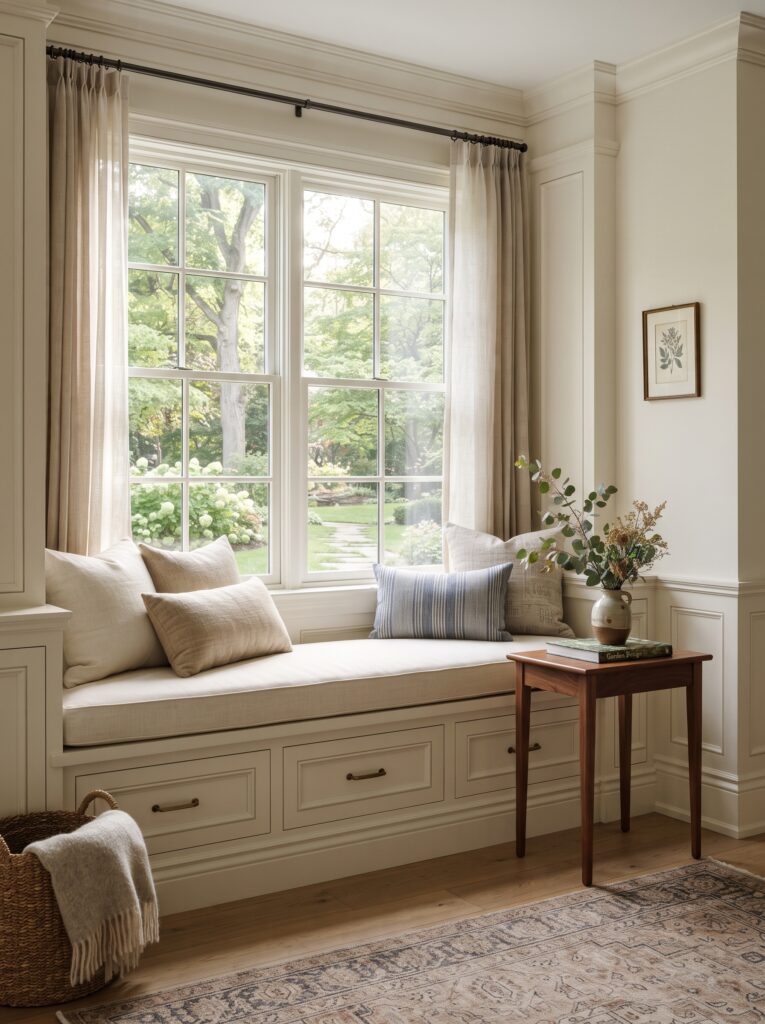
A well-designed window seat can turn an ordinary window into a cozy architectural feature while providing a comfortable place to sit, read, relax, enjoy morning coffee, or simply watch the world outside. Because window seats can also include drawers, cabinets, bookshelves, or hidden storage, they combine beauty and practicality in a way that works particularly well in modern American homes.
Whether you live in a traditional suburban house, a small apartment, a townhouse, or a newer-build home, there are plenty of ways to create a window seat that feels intentional and personal. Current home-design coverage continues to highlight window seats for their ability to combine natural light, seating, comfort, and storage.
Why Window Seats Are So Appealing
There is something naturally inviting about sitting beside a window. Natural light makes the area feel brighter during the day, while the connection to the outdoors can make a small corner feel more open and peaceful.
Unlike a freestanding chair, a built-in window seat can become part of the architecture of the home. It can visually belong to the room rather than looking like another piece of furniture placed against a wall.
Window seats are also surprisingly versatile. Depending on the location, the same basic feature can serve several purposes.
A window seat in a bedroom can become a quiet morning retreat. In a living room, it can provide additional seating without taking up the same amount of floor space as a sofa or accent chair. In a kitchen, it can become part of a breakfast nook. In an upstairs hallway, it can create a charming resting spot. In a child’s room, it can become a reading or play area.
The best part is that the design does not have to be elaborate. Even a simple built-in bench with a tailored cushion and a few carefully selected pillows can create a strong visual impact.
1. Create a Classic Built-In Window Seat
The classic built-in window seat remains one of the most timeless approaches.
A simple bench fitted directly beneath the window creates a clean architectural line. You can finish the base with painted cabinetry, drawers, open cubbies, or traditional paneling depending on the style of the home.
For a sophisticated American interior, consider pairing a warm white or soft cream base with a natural linen cushion. Add two or three pillows in complementary neutral shades rather than filling the entire bench with accessories.
This approach works particularly well in traditional, transitional, cottage, and modern-classic interiors.
The goal is to make the window seat look as though it was designed with the house rather than added afterward.
2. Add Hidden Storage Beneath the Seat
One of the biggest advantages of a built-in window seat is the opportunity to create additional storage.
The area underneath can be designed with drawers, lift-up compartments, cabinet doors, or baskets. This makes the feature especially useful in smaller homes where every bit of storage matters.
In a bedroom, the storage can hold extra blankets, pillows, seasonal clothing, or bedding.
In a living room, it can store board games, books, throws, toys, or other everyday items.
In a family room, a deep window seat can provide a convenient place for children’s belongings without making the rest of the room look cluttered.
The exterior can remain visually simple while the storage stays hidden underneath. That combination is one reason built-in window seats continue to appeal to homeowners looking for practical but attractive design solutions.
3. Use a Tailored Cushion Instead of an Oversized Sofa Cushion
The cushion is one of the details that can determine whether a window seat looks custom or improvised.
A tailored cushion that fits the exact dimensions of the bench usually creates a more polished appearance than an oversized loose cushion. Linen, cotton, performance fabric, or other durable upholstery can work depending on how frequently the seat will be used.
For a timeless look, consider shades such as:
- Warm ivory
- Oatmeal
- Soft beige
- Muted sage
- Dusty blue
- Warm taupe
- Soft mushroom
- Creamy white
If the surrounding room is mostly neutral, the cushion can also introduce a subtle pattern.
A small-scale stripe, delicate botanical print, or understated check can add character without overwhelming the architectural feature.
4. Layer Pillows Without Making the Space Look Crowded
Pillows make a window seat more comfortable, but too many can make the area look more decorative than functional.
Instead of covering the entire seat with pillows, create a simple layered arrangement.
Start with one or two larger pillows against the back or wall. Add a smaller lumbar pillow in front. If the seat is wide enough, leave part of the cushion open so that someone can actually sit there comfortably.
For an elegant Pinterest-style interior, coordinate the pillows with colors already present in the room.
For example, a cream window seat might include:
- One oatmeal linen pillow
- One muted olive pillow
- One small patterned lumbar cushion
This creates visual interest while maintaining a calm palette.
5. Turn a Window Seat Into a Reading Retreat
A window seat can become much more than extra seating. With the right details, it can become a personal reading retreat.
Place a small side table nearby for a book, cup of coffee, or decorative object. Add a slim floor lamp if the area will be used after sunset. A small wall-mounted reading light can also work beautifully when space is limited.
Keep a soft throw nearby for cooler mornings and evenings.
You do not need to turn the space into a full reading room. The beauty is in keeping the area simple.
A comfortable cushion, natural light, a few books, and a warm lamp can be enough.
This type of setup is particularly attractive for Pinterest because it combines several popular home-design themes in one visual: cozy living, functional small spaces, natural light, reading corners, and personalized interiors.
6. Make a Bay Window the Main Feature
Bay windows are naturally suited to window-seat design because they create additional depth and often provide more space than a standard flat window.
Instead of placing separate chairs around the bay, consider wrapping a custom bench around the available space.
A curved or angular seat can follow the architecture of the window and create a more substantial built-in feature.
For a traditional American home, a bay window seat can look especially beautiful with:
- White or cream cabinetry
- Natural linen upholstery
- Warm wood accents
- Brass hardware
- Soft patterned pillows
- Roman shades or simple curtains
The result can feel classic without appearing old-fashioned.
7. Design a Kitchen Window Seat
A kitchen window seat can transform an ordinary breakfast area into a more intimate place for everyday meals.
Instead of using four separate chairs, a built-in bench can provide comfortable seating along one side of a table.
Pair it with a small round or oval table and one or two lightweight chairs opposite the bench.
This arrangement can be particularly useful in compact kitchens because the bench can fit directly against the wall while keeping the center of the room open.
Current design coverage has also highlighted renewed interest in built-in breakfast nooks because they provide flexible, cozy spaces for dining, conversation, homework, and everyday activities.
8. Add Window Treatments for a Softer Look
Window treatments can dramatically change the appearance of a window seat.
For an elegant, relaxed look, consider soft linen curtains that extend from ceiling to floor. They can frame the window without completely covering the natural light.
Roman shades are another attractive option, particularly when you want a cleaner appearance.
For cottage or traditional interiors, a small-scale patterned fabric can introduce personality.
For modern interiors, simple woven shades or textured neutral fabric can create warmth without visual clutter.
The important thing is to consider the cushion, curtains, wall color, and surrounding furniture as one visual composition rather than selecting each item independently.
9. Use Built-In Bookshelves Around the Window
If you have enough wall space, framing a window seat with built-in bookshelves can create a dramatic custom look.
The shelves can extend vertically on either side of the window while the bench occupies the space below.
This arrangement creates a miniature library within the room.
Keep the shelves visually balanced by combining books with a limited number of decorative pieces such as:
- Ceramic vessels
- Small framed artwork
- Vintage objects
- Sculptural pieces
- Small plants
- Woven baskets
Avoid filling every shelf.
Negative space is important because it allows the architecture to remain visible.
10. Create a Bedroom Window Seat
A bedroom window seat can provide a quiet alternative to the bed.
If the bedroom has a large window with an attractive outdoor view, use the opportunity to create a peaceful morning or evening retreat.
A soft upholstered cushion, lightweight throw, small table, and one decorative lamp can make the area feel finished.
For a sophisticated bedroom, coordinate the window-seat textiles with the bedding without making everything identical.
For example, if the bedding is cream and beige, the window seat could introduce a muted olive or dusty blue accent.
This creates continuity while keeping the room visually interesting.
11. Consider a Hallway Window Seat
Not every window seat needs to be inside a major living area.
A wide upstairs hallway or landing with a window can become an unexpectedly charming place for a built-in bench.
This can be especially useful in homes where the hallway has unused wall space.
A narrow cushion, small artwork, and concealed storage underneath may be all that is needed.
Because the space is transitional, keep the design relatively simple. The window seat should enhance the hallway rather than make it feel obstructed.
12. Use Natural Materials for a Warm, Timeless Look
Natural materials can make a window seat feel more sophisticated.
Warm oak, walnut, linen, woven baskets, cotton textiles, ceramic accessories, and natural stone can all work beautifully together.
If the rest of the room already contains several materials, avoid introducing too many additional finishes.
For example, a walnut base paired with cream linen and woven accessories can be enough.
The goal is not to make the window seat look expensive through excessive decoration. Instead, focus on proportion, craftsmanship, texture, and restraint.
13. Make a Small Window Seat Feel Larger
A small window does not mean you have to abandon the idea of a window seat.
In a compact space, use a shallow bench with a tailored cushion.
Keep the surrounding colors light and visually connected.
A mirror positioned nearby can reflect light and make the surrounding area feel more open. Slim shelving can provide storage without taking up much floor space.
Avoid oversized furniture around a small window seat because it can make the entire area feel cramped.
Sometimes the simplest design produces the most sophisticated result.
14. Choose the Right Lighting
Natural light may make the window seat beautiful during the day, but additional lighting can make it useful in the evening.
A wall sconce is an excellent choice when floor space is limited.
A slim floor lamp works well when you want adjustable lighting.
If the window seat is part of a larger room, make sure the lighting relates to the room’s existing fixtures.
Warm, soft lighting usually works better for a cozy seating area than harsh overhead illumination.
The objective is to create an atmosphere where you actually want to spend time.
15. Keep the Design Functional
A common mistake is designing a window seat that looks beautiful in photographs but is uncomfortable in everyday life.
Think about how the space will actually be used.
Will someone sit there regularly?
Will children use it?
Will pets climb onto it?
Will you store blankets underneath?
Will direct sunlight affect the fabric?
These practical questions should influence the materials and construction.
For example, a frequently used family-room window seat may benefit from durable upholstery and washable textiles, while a decorative bedroom seat may allow for more delicate fabrics.
Good design should look beautiful and work beautifully.
16. Make It Feel Personal
The most appealing homes rarely look as though everything was purchased at the same time from the same store.
Your window seat can become an opportunity to introduce something personal.
Display a favorite book collection. Add a vintage pillow. Use artwork that has sentimental meaning. Place a handmade ceramic piece on the side table.
Even a simple framed photograph can make the area feel connected to the people who live there.
Current design coverage increasingly emphasizes personalized and collected interiors rather than spaces that feel overly standardized.
That makes a window seat particularly useful because it naturally creates a small area where personality can be expressed.
17. Window Seat Ideas for Different Home Styles
Modern
Choose clean cabinetry, simple upholstery, minimal accessories, and a restrained color palette.
Traditional
Use classic paneling, tailored cushions, brass details, and timeless fabrics.
Cottage
Introduce gingham, floral patterns, woven baskets, painted wood, and soft colors.
Modern Farmhouse
Combine warm wood, neutral textiles, simple black or brass hardware, and comfortable layered fabrics.
European-Inspired
Use natural stone, aged finishes, linen textiles, antique-inspired accessories, and muted earthy colors.
Eclectic
Mix vintage frames, patterned textiles, collected objects, and contrasting but coordinated colors.
The basic architecture can remain the same while the styling changes completely.
How to Make a Window Seat Look Expensive Without Overspending
You do not need an elaborate renovation to create an attractive window seat.
Focus your budget on the elements that matter most.
A well-fitted cushion is often more important than expensive decorative accessories. Quality-looking fabric, good proportions, and thoughtful lighting can make a simple bench feel much more sophisticated.
You can also use removable baskets for storage instead of custom drawers.
Vintage side tables can often add more personality than brand-new matching furniture.
Instead of buying many small accessories, choose one or two substantial pieces.
This creates the collected, editorial appearance that many homeowners want without making the space feel overdecorated.
Common Window Seat Decorating Mistakes
One of the most common mistakes is using too many pillows. A window seat should remain usable.
Another mistake is choosing a cushion that is too thin or uncomfortable.
Poorly proportioned furniture can also make the feature look awkward. If the seat is very deep, it may feel uncomfortable for sitting. If it is too shallow, it may not provide enough support.
Ignoring sunlight is another issue. Fabrics exposed to strong direct sunlight may fade over time, so choose materials appropriate for the location.
Finally, avoid treating the window seat as a completely separate feature. It should visually connect with the room around it.
Conclusion
A window seat is one of those home features that can combine architecture, comfort, storage, and personality in a surprisingly small footprint. It can transform an unused window into a peaceful reading corner, an attractive breakfast nook, additional seating, or a hidden storage solution.
The most successful window seat designs are not necessarily the most elaborate. They are the ones that feel naturally connected to the architecture of the home and reflect the way the space is actually used.
For a timeless American home, start with a comfortable tailored cushion, warm natural materials, practical storage, soft lighting, and a small collection of meaningful accessories. From there, you can adapt the look to your home’s style—whether that means traditional, modern, cottage, transitional, or eclectic.
When thoughtfully designed, a simple window can become much more than a source of natural light. It can become one of the most inviting and memorable details in the entire home.
- Covered Patio Ideas for an Outdoor Room That Feels Like Home
- Staircase Gallery Wall Ideas That Feel Collected, Not Cluttered
- Built-In Home Bar Ideas for an Elevated Entertaining Space
- Fireplace Makeover Ideas That Instantly Elevate a Living Space
- Window Seat Ideas That Make Any Room Feel More Charming