
A well-designed mudroom can make a remarkable difference in how organized, comfortable, and polished a home feels. In busy American households, the area near the back door or garage entrance often becomes the place where shoes, jackets, backpacks, sports equipment, umbrellas, grocery bags, and everyday essentials naturally collect. Without a proper system, even a beautiful home can quickly feel cluttered.
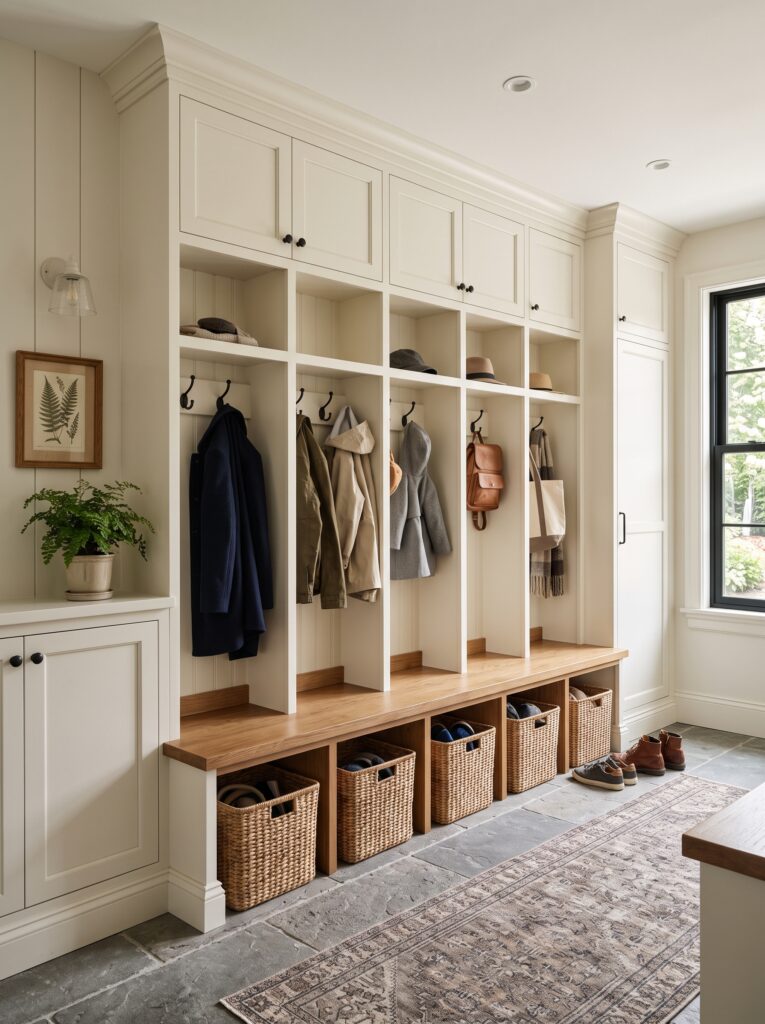
The good news is that a mudroom does not have to look like a purely functional utility space. With thoughtful storage, attractive materials, comfortable seating, and carefully selected decorative details, you can create a mudroom that is practical enough for everyday family life while still looking sophisticated and Pinterest-worthy.
Whether you have a dedicated mudroom, a narrow hallway, a small entry from the garage, or simply an unused wall near your back door, there are plenty of ways to create a more organized space.
Why a Well-Designed Mudroom Matters
The mudroom is often the transition point between the outside world and the rest of the house. It is where everyone enters with the things they carry throughout the day.
Because of that, the space needs to handle a surprising amount of activity.
A successful mudroom should provide an easy place for shoes, coats, bags, keys, umbrellas, pet accessories, cleaning supplies, and seasonal items. When everything has a designated location, clutter becomes easier to control.
But organization is only one part of good mudroom design.
The room should also feel connected to the rest of your home’s aesthetic. Natural wood, neutral cabinetry, woven baskets, attractive hardware, and warm lighting can transform a purely functional area into an inviting part of the home.
Start With Built-In Mudroom Storage
Built-in storage is one of the most effective ways to maximize a mudroom.
Floor-to-ceiling cabinetry can use vertical space that would otherwise remain empty. Closed cabinets are particularly useful for items that you do not want visible every day.
Open cubbies are helpful for frequently used belongings. Each family member can have a dedicated compartment for shoes, bags, jackets, or school essentials.
If your mudroom is large enough, consider combining open and closed storage.
For example, use upper cabinets for seasonal items, open cubbies for everyday belongings, and drawers underneath the bench for shoes or accessories.
This creates a storage system that is both functional and visually organized.
Add a Comfortable Bench
A bench is one of the most useful elements in a mudroom.
It provides a convenient place to sit while putting on or removing shoes and can also become an important visual anchor.
A built-in bench is especially effective because it can be integrated with the surrounding cabinetry.
For a more comfortable appearance, add a tailored cushion in linen, performance fabric, or another durable material.
If children frequently use the mudroom, choose washable and easy-care fabrics.
For a sophisticated look, neutral upholstery works beautifully with warm wood cabinetry and woven baskets.
Use Baskets to Control Smaller Items
Not everything needs to be stored behind a cabinet door.
Woven baskets are excellent for organizing smaller items such as scarves, gloves, hats, pet accessories, reusable shopping bags, and seasonal belongings.
They also add texture.
A row of matching baskets beneath a bench can make a mudroom feel more cohesive while hiding visual clutter.
Choose baskets that complement the room’s materials. Natural seagrass, rattan, water hyacinth, and woven rope can add warmth to white or neutral cabinetry.
Install Durable Hooks
Hooks are essential for a practical mudroom.
They provide easy access to coats, bags, hats, umbrellas, and everyday accessories.
For a family-friendly setup, install several hooks at different heights if children use the space.
The hardware itself can also contribute to the decor.
Matte black creates a modern appearance.
Brushed brass feels warmer and more traditional.
Antique bronze works beautifully with rustic or vintage-inspired interiors.
Instead of choosing purely functional hooks, look for designs that feel like intentional decorative details.
Create Individual Zones
If multiple people use the same mudroom, assigning individual storage zones can make organization much easier.
Each person can have their own hook, cubby, basket, or drawer.
This simple system reduces the chance that belongings will end up scattered across the room.
For children, labels can make the system even easier to follow.
Adults may prefer concealed drawers or cabinets for a cleaner appearance.
The important thing is consistency.
Choose the Right Mudroom Flooring
Mudrooms receive considerably more wear than many other areas of the house.
Shoes bring in dirt, moisture, leaves, and debris, so flooring should be attractive but practical.
Porcelain tile is a popular option because it is durable and relatively easy to clean.
Natural stone can create a beautiful high-end appearance, particularly in traditional or luxury homes.
Brick flooring can provide a charming farmhouse or cottage-inspired look.
For a softer atmosphere, use a durable runner or washable rug that can withstand everyday traffic.
Make the Mudroom Feel Like Part of the Home
A common mistake is designing the mudroom as though it belongs to a completely different house.
Instead, repeat materials and colors from nearby spaces.
If your kitchen features warm oak cabinetry, consider using similar wood tones in the mudroom.
If your home has brass hardware throughout, repeat that finish on hooks and cabinet handles.
If your main living areas use warm neutral colors, carry those tones into the mudroom.
This creates visual continuity.
Use Closed Cabinets to Hide Visual Clutter
Open shelving can look beautiful in photographs, but everyday life can quickly make it appear messy.
Closed cabinetry provides a solution.
Use it for anything that does not need to be accessed constantly.
Backpacks, cleaning supplies, sports equipment, extra shoes, seasonal clothing, and household items can all be hidden behind cabinet doors.
This allows the visible portions of the room to remain clean and decorative.
Add a Small Amount of Personality
A mudroom does not need to be completely utilitarian.
A framed botanical print, vintage mirror, ceramic vase, small plant, decorative runner, or attractive wall light can give the room personality.
Even one statement piece can change the atmosphere.
For example, a vintage-style pendant light can make a simple white mudroom feel significantly more elevated.
A patterned runner can introduce color without overwhelming the room.
A framed landscape painting can give a traditional mudroom a more residential feel.
Mudroom Ideas for Small Homes
Not every American home has a large dedicated mudroom.
Fortunately, you can recreate many of the same functions in a small area.
A narrow wall near the garage door can accommodate hooks, a floating shelf, a slim bench, and baskets.
A hallway can be transformed with a shallow built-in cabinet.
An awkward corner can hold a narrow shoe cabinet and wall-mounted hooks.
The key is to think vertically.
Use the wall from floor to ceiling whenever possible.
Mudroom Ideas for Families With Children
Families need storage that is easy to use.
Keep everyday items at accessible heights.
Use labeled baskets for gloves, hats, and accessories.
Create separate hooks for each child.
Include lower shoe storage so children can put their belongings away without assistance.
Avoid making the system overly complicated.
The best organization system is one that family members can realistically maintain.
Mudroom Organization for Pets
Pet owners can also use the mudroom as a dedicated pet zone.
A lower cabinet can store leashes, grooming supplies, towels, and pet accessories.
A washable basket can hold toys.
Hooks can organize leashes and harnesses.
If the space allows, a small washing station can be incorporated into a larger utility area.
Even without major renovations, simply assigning one basket and one hook to pet essentials can prevent them from spreading throughout the house.
Seasonal Mudroom Organization
A mudroom should change slightly with the seasons.
During winter, keep coats, boots, scarves, gloves, and hats easily accessible.
In spring, replace bulky outerwear with lighter jackets and rain accessories.
Summer may require more space for sandals, hats, beach bags, and outdoor items.
Fall brings another rotation of jackets, boots, umbrellas, and layered clothing.
Instead of keeping everything visible year-round, move seasonal items into upper cabinets or labeled storage bins.
Lighting Makes a Big Difference
Good lighting can make even a small mudroom feel larger and more welcoming.
If natural light is limited, combine overhead lighting with wall sconces or under-cabinet illumination.
Warm lighting is generally more inviting than harsh cool lighting.
A decorative pendant can also become a focal point in a larger mudroom.
For smaller spaces, a compact flush mount or attractive wall light can provide sufficient illumination without overwhelming the room.
How to Create a Luxury Mudroom on a Budget
You do not need custom cabinetry everywhere to achieve an expensive-looking result.
Focus on a few high-impact details.
Upgrade cabinet hardware.
Use matching baskets.
Install attractive hooks.
Add a tailored bench cushion.
Choose a quality-looking runner.
Introduce one beautiful light fixture.
Paint the walls in a sophisticated neutral.
These small improvements can make a basic mudroom feel significantly more intentional.
Common Mudroom Design Mistakes
One common mistake is not providing enough storage.
If the room is used by several people, a single row of hooks may quickly become insufficient.
Another mistake is relying entirely on open shelving.
Open storage requires constant visual maintenance.
Poor lighting is another issue. A beautifully designed mudroom can still feel uninviting if it is dark.
Finally, avoid choosing materials based solely on appearance. Mudrooms experience heavy traffic, so durability should always be considered alongside style.
Conclusion
A beautiful mudroom should make everyday life easier while still feeling like an intentional part of your home. The most successful mudroom designs combine practical storage with thoughtful details such as built-in cabinetry, comfortable benches, woven baskets, durable flooring, attractive hooks, warm lighting, and subtle decorative accents. Whether you have an expansive family mudroom or only a small wall near your garage entrance, the same principles apply: give everything a designated home, use vertical space efficiently, hide visual clutter where possible, and choose materials that can handle real everyday life. With the right balance of organization and design, a mudroom can become one of the most functional and attractive spaces in an American home rather than simply a place where clutter collects.
- Afrohemian Dining Room Ideas for a Warm, Collected and Sophisticated Home
- Warm Wood and Black Kitchen Ideas for a Timeless Designer Look
- Small Reading Nook Ideas That Turn Forgotten Corners Into a Cozy Luxury Retreat
- Curated Trinket Shelf Ideas: How to Create a Collected and Personal Home
- Neo Deco Entryway Ideas That Make Your Home Feel Instantly Expensive