
A garden room can transform an ordinary part of your home into a peaceful retreat filled with natural light, greenery, texture, and personality. Whether you have an entire sun-filled room, a small conservatory, a glass-enclosed space, or simply a bright corner that can accommodate plants and comfortable seating, creating a garden-inspired interior can make your home feel more connected to nature.
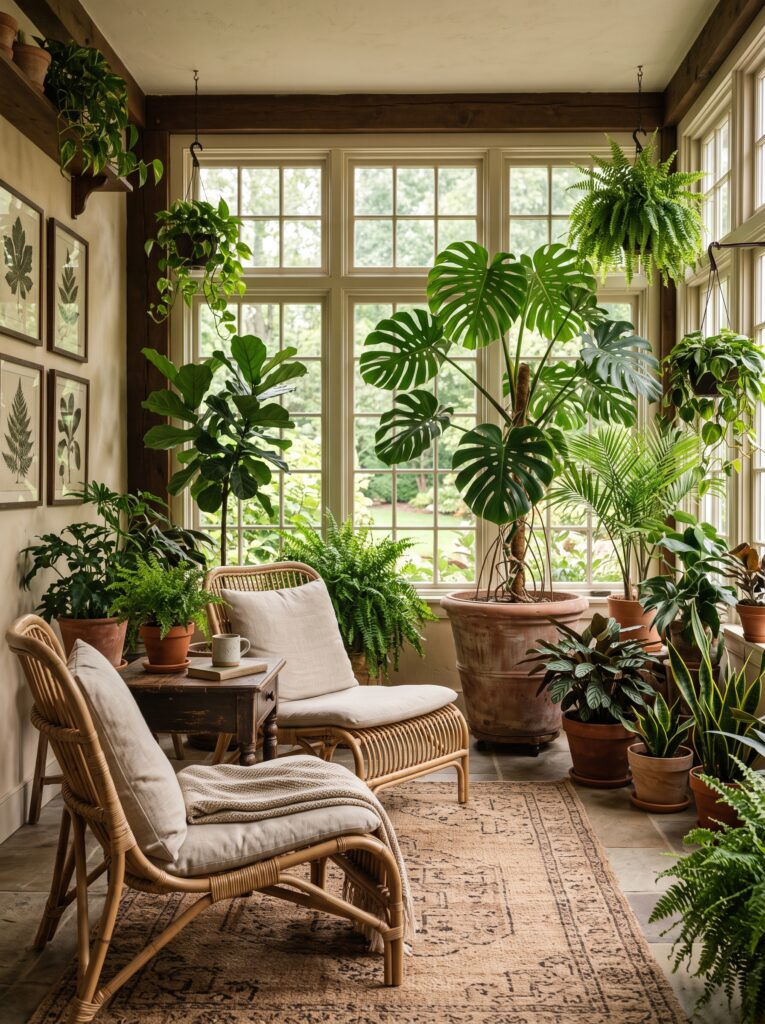
The appeal of garden rooms goes beyond decoration. In a busy American lifestyle, having a dedicated place to slow down, read, enjoy coffee, work on a creative project, or simply sit surrounded by greenery can make a home feel more restorative. Instead of treating plants as occasional accessories, a garden room makes nature part of the room’s overall design.
The best garden rooms do not need to look like greenhouses. They can be elegant, sophisticated, modern, traditional, cottage-inspired, or eclectic. The key is combining greenery with natural materials, comfortable furniture, soft textiles, and thoughtful architectural details.
What Is a Garden Room?
A garden room is an interior space designed around a strong connection with nature.
It may be a dedicated room filled with plants and windows, a conservatory, a glass-enclosed extension, a plant-filled sitting room, or even a small indoor retreat centered around greenery.
Unlike simply placing a few houseplants around your home, a garden room uses plants, natural materials, lighting, furniture, and color together to create a cohesive environment.
The result can feel like a private indoor garden.
Why Garden-Inspired Interiors Feel So Inviting
Natural elements have a unique ability to soften an interior.
Plants introduce organic shapes that contrast beautifully with straight architectural lines.
Wood adds warmth.
Woven materials create texture.
Terracotta introduces earthy character.
Natural linen makes furniture feel relaxed.
Together, these materials create a room that feels less sterile and more connected to the outdoors.
This is especially appealing in contemporary homes where clean architectural lines can sometimes feel cold without softer natural elements.
Choose the Right Location
Natural light is one of the most important factors in creating a garden room.
A room with large windows is ideal because it provides sunlight for both people and plants.
South-facing windows generally receive stronger light, while north-facing spaces may offer softer, indirect illumination.
However, every home is different, and plant selection should always be based on the actual lighting conditions.
If you do not have a naturally bright room, you can still create a garden-inspired space with plants that tolerate lower light and appropriate grow lighting.
The goal is to work with the conditions you have rather than forcing the room to become something it cannot support.
Create Layers of Greenery
One of the easiest ways to make a garden room feel abundant is to vary plant heights.
Place large plants directly on the floor.
Use medium-sized plants on stands or side tables.
Add smaller plants to shelves and window ledges.
Hanging plants can create another visual layer.
This approach makes the room feel more dimensional and natural.
Instead of placing every plant at the same height, create a gentle rhythm throughout the room.
Use Large Statement Plants
A single large plant can sometimes have more visual impact than a collection of tiny plants.
Large-leaf varieties can become architectural features within the room.
Position a statement plant beside a chair, near a window, or in an empty corner.
Choose planters that complement the room.
Terracotta creates a relaxed Mediterranean feeling.
Stone planters feel more substantial.
Woven baskets create warmth.
Minimal ceramic pots work beautifully in modern interiors.
Mix Natural Materials
Plants look especially beautiful when surrounded by natural materials.
Consider combining:
Natural oak
Rattan
Wicker
Linen
Cotton
Terracotta
Stone
Jute
Bamboo
These materials create visual harmony because they share organic textures.
A rattan chair beside a large leafy plant can instantly establish a garden-inspired atmosphere.
A terracotta pot on a wooden side table can add subtle warmth.
A linen sofa can soften the overall room.
Choose Comfortable Furniture
A garden room should not feel like a display area.
It should be somewhere you genuinely want to spend time.
Choose comfortable seating.
A woven lounge chair can create a relaxed resort-like atmosphere.
A small sofa can make the room suitable for conversations.
A cushioned bench can work beautifully beneath a window.
A vintage armchair can add character.
The furniture should encourage you to stay in the space.
Add a Reading or Relaxation Corner
One of the most useful functions of a garden room is creating a dedicated relaxation area.
Place a comfortable chair beside a window.
Add a small side table.
Use a soft throw.
Add a reading lamp.
Keep a few favorite books nearby.
The surrounding plants will create a sense of privacy and calm.
This does not have to be a formal reading room. It can simply be a place where you sit for fifteen minutes with coffee before beginning your day.
Use Botanical Artwork
Plants do not have to be the only botanical element.
Botanical artwork can reinforce the theme.
Vintage botanical prints can work beautifully in traditional homes.
Large-scale botanical paintings can create a dramatic focal point.
Pressed plant artwork can feel more understated.
Even a simple framed leaf print can connect the room visually.
Avoid making every piece of artwork botanical, however. Mixing natural imagery with abstract or vintage pieces can create a more sophisticated appearance.
Introduce Earthy Colors
A garden-inspired room does not have to be completely green.
A warm earthy palette can create a more sophisticated environment.
Consider shades such as:
Warm cream
Sand
Terracotta
Olive
Sage
Muted brown
Soft beige
Clay
Deep forest green
These colors work naturally with wood and plants.
For a lighter appearance, use cream walls and natural furniture.
For a more dramatic room, combine deep green walls with warm wood and brass accents.
Use Window Treatments Carefully
Garden rooms often have significant amounts of natural light.
Lightweight linen curtains can soften the windows while allowing sunlight to filter through.
Sheer curtains can create an especially beautiful atmosphere during the day.
Roman shades provide more structure.
Avoid heavy window treatments if the goal is to maintain a strong visual connection with the outdoors.
The window should remain one of the room’s most important features.
Create a Small Indoor Plant Display
If you do not have enough room for a full garden room, create a miniature version.
Choose one bright corner.
Add a plant stand.
Place three or four plants at different heights.
Add a small chair and side table.
Use a natural fiber rug beneath the arrangement.
This can create a garden-inspired retreat without requiring an entire room.
Use Shelving for Plants
Wall-mounted shelves can become beautiful botanical displays.
Place trailing plants along the upper shelves.
Use medium plants in ceramic pots.
Add books, small sculptures, and handmade objects between the greenery.
This prevents the space from feeling like a plant nursery and creates a more layered interior.
Make the Room Feel Collected
Avoid purchasing every piece from the same collection.
Instead, combine different materials and styles.
A vintage wooden table can sit beside a modern chair.
A rattan basket can hold a contemporary throw.
An antique ceramic vessel can be displayed beside a modern planter.
These combinations create personality.
A garden room should feel like it developed naturally over time.
Add Ambient Lighting
Natural light is important during the day, but garden rooms also need beautiful evening lighting.
Use table lamps with warm bulbs.
Add a floor lamp beside a chair.
Consider small decorative lights near plants.
A sculptural pendant can become a focal point.
Avoid overly bright overhead lighting when creating a relaxing atmosphere.
The goal is warm, layered illumination.
Garden Room Ideas for Small Homes
You can create the same feeling without having a dedicated conservatory.
A bright balcony enclosed with windows can become a plant-filled retreat.
A large bedroom corner can accommodate plants and a comfortable chair.
A home office can incorporate greenery and natural textures.
Even a hallway with good natural light can become a botanical feature.
Think in terms of atmosphere rather than square footage.
Choosing Plants for Your Space
Plant selection should be practical.
Consider how much sunlight the room receives.
Think about temperature and humidity.
Consider how much maintenance you are willing to provide.
If you travel frequently or have a busy schedule, choose plants that are relatively forgiving.
If you have pets or young children, research plant safety before bringing specific varieties into your home.
A beautiful garden room should also be realistic to maintain.
Create a Luxury Garden Room
Luxury does not require filling the room with expensive furniture.
Instead, focus on proportion, texture, and quality.
Choose fewer but better-looking pieces.
Use a substantial natural-fiber rug.
Invest in a comfortable chair.
Select beautiful planters.
Use quality linen textiles.
Add one statement light fixture.
Keep the plant arrangement intentional rather than chaotic.
This creates a sophisticated garden-inspired interior instead of a cluttered plant collection.
Common Garden Room Mistakes
One of the most common mistakes is adding too many plants without considering their individual needs.
Another is using only small plants.
Large plants provide important visual structure.
Choosing mismatched plastic pots can also reduce the overall appearance.
Instead, use a coordinated collection of planters.
Another mistake is forgetting comfortable furniture.
A garden room should be enjoyed, not simply photographed.
Finally, avoid blocking all natural light with excessive greenery.
Plants should enhance the architecture rather than hide it.
How to Keep the Space Looking Fresh
Plants require regular maintenance.
Remove dead leaves.
Clean dusty leaves when appropriate.
Rotate plants if necessary.
Check soil moisture.
Trim overgrown growth.
Clean planters and surrounding surfaces.
A few minutes of maintenance each week can keep the entire room looking healthy and beautiful.
Conclusion
A garden room can become one of the most peaceful and memorable spaces in an American home by combining greenery, natural materials, comfortable furniture, soft lighting, and a thoughtful connection to the outdoors. You do not need a massive conservatory or an elaborate renovation to achieve the look. Even a bright corner with a comfortable chair, several carefully selected plants, a natural-fiber rug, and warm decorative details can create the feeling of a private retreat. The most successful garden rooms balance abundance with simplicity, allowing plants to become part of the architecture while natural wood, rattan, linen, terracotta, and earthy colors create warmth. Whether your goal is a dedicated indoor garden, a relaxing sitting room, or simply a nature-inspired corner, thoughtful garden room design can make everyday life at home feel calmer, more beautiful, and more connected to nature.
- Afrohemian Dining Room Ideas for a Warm, Collected and Sophisticated Home
- Warm Wood and Black Kitchen Ideas for a Timeless Designer Look
- Small Reading Nook Ideas That Turn Forgotten Corners Into a Cozy Luxury Retreat
- Curated Trinket Shelf Ideas: How to Create a Collected and Personal Home
- Neo Deco Entryway Ideas That Make Your Home Feel Instantly Expensive