
A well-organized pantry can completely change the way a kitchen functions. Instead of opening the pantry door and finding mismatched packages, half-used ingredients, crowded shelves, and forgotten food, imagine opening a space where everything has a logical place and the entire room feels calm, clean, and beautifully styled.
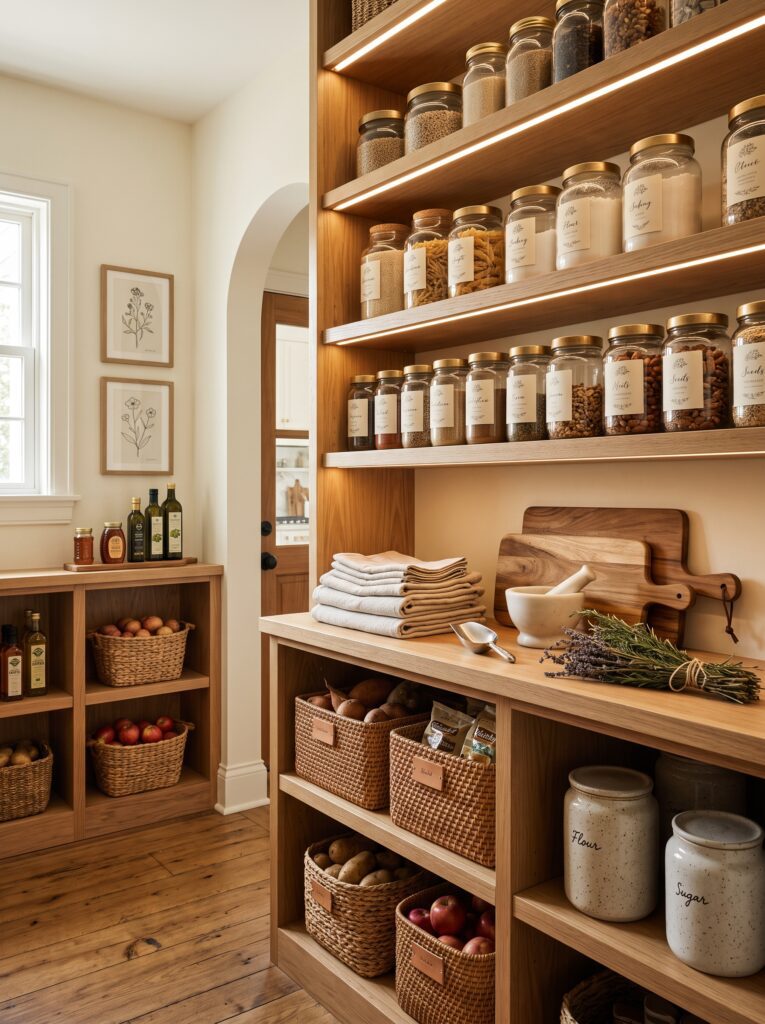
For many American homeowners, the pantry has become more than a simple storage area. It is increasingly treated as an extension of the kitchen, with thoughtful shelving, attractive containers, labeled storage, practical zones, and decorative details that make everyday organization feel luxurious. Whether you have a large walk-in pantry, a compact cabinet pantry, a butler’s pantry, or a small closet beside the kitchen, you can create a system that looks polished while making cooking and grocery organization much easier.
The goal is not simply to make your pantry look good for photographs. A successful pantry should also make everyday life easier.
Why Pantry Organization Matters
A disorganized pantry can make meal preparation unnecessarily stressful. When ingredients are hidden behind one another, it becomes difficult to know what you already have, what needs to be replaced, and what should be used first.
A thoughtful pantry organization system solves these problems by creating visible categories and predictable storage locations.
Instead of searching through multiple shelves for pasta or baking ingredients, you can create dedicated zones.
For example, one section can hold breakfast foods, another can store baking supplies, another can contain canned goods, and another can be reserved for snacks.
When everything has a designated location, maintaining the pantry becomes much easier.
Start by Removing Everything
Before purchasing containers or installing shelves, take everything out.
This is one of the most important steps in creating an organized pantry.
Place all food items on a counter or dining table and check expiration dates.
Discard anything that is expired, stale, damaged, or unlikely to be used.
Then group similar items together.
You may discover that you have multiple packages of the same ingredient because older items were hidden behind newer ones.
Starting with an empty pantry gives you a much better understanding of the space and prevents you from organizing things you do not actually need.
Create Pantry Zones
One of the easiest ways to maintain an organized pantry is to divide it into zones.
A baking zone might include flour, sugar, baking soda, chocolate chips, sprinkles, and baking tools.
A breakfast zone can hold cereal, oatmeal, pancake mix, coffee accessories, and breakfast snacks.
A cooking zone can include pasta, rice, grains, sauces, spices, canned tomatoes, and other frequently used ingredients.
A snack zone can be especially useful for families with children.
A beverage zone can store tea, coffee, sparkling water, drink mixes, and other beverages.
The exact categories will depend on your household, but the principle is universal: group things according to how you actually use them.
Use Clear Containers Strategically
Clear containers can make a pantry look incredibly organized.
They are especially useful for dry goods such as rice, pasta, cereal, flour, sugar, oats, and grains.
Because the contents are visible, you can quickly see what needs to be replenished.
However, you do not need to transfer every single food item into a container.
Doing so can become unnecessarily expensive and time-consuming.
Focus on items that are frequently used, visually messy, or difficult to store in their original packaging.
Add Labels for a Cohesive Look
Labels can make pantry organization much easier.
Simple labels can identify categories such as:
Flour
Sugar
Pasta
Rice
Snacks
Cereal
Baking
Grains
Pet Supplies
The design of the labels should complement your home’s aesthetic.
For a modern kitchen, simple black-and-white typography can look polished.
For a traditional kitchen, understated cream labels can create a softer appearance.
For a farmhouse or cottage-inspired pantry, handwritten-style labels can add charm.
Consistency is more important than the exact style.
Choose the Right Shelving
Good shelving is the foundation of an effective pantry.
Adjustable shelves are particularly useful because they allow you to change the layout as your storage needs evolve.
Deep shelves may appear useful, but they can actually make organization more difficult because items can disappear behind one another.
If you have deep shelving, use pull-out bins or turntables to improve accessibility.
Shallow shelves are often easier to maintain because everything remains visible.
Use Baskets to Hide Visual Clutter
Not every item needs to be displayed.
Woven or fabric baskets are ideal for grouping less attractive packaging.
You can use them for snack packets, reusable shopping bags, kitchen towels, lunch supplies, or miscellaneous items.
Matching baskets create visual consistency.
They also make it easier to remove an entire category from the shelf when needed.
Add Turntables for Small Items
Turntables are particularly useful for sauces, oils, jars, condiments, and small bottles.
Instead of reaching behind several items, you can simply rotate the organizer.
This is a small change that can significantly improve accessibility.
Use them strategically rather than placing them everywhere.
Use Vertical Space
Many pantry shelves leave large amounts of unused vertical space.
Shelf risers can create additional levels for cans, jars, and small containers.
Stackable bins can maximize cabinet height.
Tall items such as cereal containers or bottles can occupy the higher sections.
The important thing is to keep frequently used products between eye level and waist level whenever possible.
Less frequently used items can be placed higher.
Create a Beautiful Walk-In Pantry
If you are lucky enough to have a walk-in pantry, treat it like a small room rather than simply a storage closet.
Warm wood shelving can create a sophisticated look.
Soft lighting can make the space feel more inviting.
A small framed piece of artwork can add personality.
A countertop can provide a convenient place for appliances, food preparation, or grocery organization.
Even a small stool can make the pantry feel more functional.
The goal is to combine utility with the same design language used throughout the rest of the home.
Pantry Lighting Matters
A dark pantry can make even a beautifully organized space feel inconvenient.
If possible, use layered lighting.
A central ceiling fixture can illuminate the room.
Under-shelf lighting can help illuminate individual shelves.
Motion-activated lighting can be especially useful because the lights turn on automatically when the pantry door opens.
Warm lighting can also create a more welcoming atmosphere.
Make the Pantry Match Your Kitchen
The pantry should feel connected to the kitchen.
If your kitchen uses white cabinetry and brass hardware, consider repeating those elements.
If your kitchen has warm oak, use similar wood tones.
If your home has a minimalist aesthetic, avoid excessive labels and decorative objects.
If you prefer traditional interiors, introduce classic hardware, framed artwork, and warm materials.
Visual continuity makes the pantry feel like a deliberate part of the home’s design.
Pantry Ideas for Small Kitchens
A large walk-in pantry is not necessary.
A small cabinet can become highly functional with adjustable shelves, bins, risers, and clear containers.
Use the inside of cabinet doors for narrow storage.
Install small racks for spices.
Use stackable containers to maximize vertical space.
Keep frequently used ingredients toward the front.
The objective is not to create a showroom. It is to make a small amount of space work harder.
Pantry Organization for Families
Families often need dedicated snack storage.
Create a low-access zone where children can safely reach appropriate snacks.
Use baskets for individually packaged foods.
Keep lunch supplies together.
Create a dedicated area for reusable containers, lunch bags, and water bottles.
This can make busy mornings significantly easier.
The organization system should be intuitive enough that every family member understands where things belong.
Create a Baking Station
If you bake regularly, consider creating a dedicated baking zone.
Keep flour, sugar, baking powder, chocolate chips, sprinkles, extracts, and other baking ingredients together.
Use matching containers for frequently used dry ingredients.
Store measuring cups and baking tools nearby.
If your pantry has a countertop, it can become a convenient staging area for baking projects.
Use Decorative Elements Carefully
A pantry does not need to be filled with decoration.
A few thoughtful details can be enough.
A ceramic bowl.
A small framed print.
A wooden cutting board.
A vase of greenery.
A vintage storage container.
These elements add warmth without reducing functionality.
The most attractive pantries usually balance decorative details with plenty of visual breathing room.
Pantry Maintenance Tips
An organization system only works if it is easy to maintain.
When you buy groceries, put new products behind older ones whenever possible.
Regularly check expiration dates.
Wipe shelves every few months.
Refill containers before they are completely empty.
Return items to their designated zones after cooking.
Avoid allowing miscellaneous items to accumulate.
A five-minute reset every week can prevent the pantry from becoming overwhelming again.
Common Pantry Organization Mistakes
One common mistake is buying too many containers before measuring the shelves.
Always measure first.
Another mistake is choosing containers that are difficult to clean.
Pantry storage should be practical.
Over-labeling can also create unnecessary work.
If your household does not need a label for something obvious, skip it.
Finally, avoid organizing according to how the pantry looks in photographs rather than how your household actually uses it.
The best pantry is one that works for your lifestyle.
How to Make a Pantry Look More Expensive
Luxury is often about consistency rather than expensive materials.
Matching storage containers can immediately create a cleaner appearance.
Consistent labels create visual order.
Warm wood shelving adds texture.
Quality hardware can elevate cabinetry.
Good lighting makes the entire room feel more polished.
Even simple white shelves can look sophisticated when everything is organized thoughtfully.
Conclusion
A beautiful pantry is ultimately about creating a storage system that makes everyday life easier while adding visual calm to your home. The most effective pantry organization ideas combine practical zones, clear containers, labeled storage, baskets, adjustable shelving, smart use of vertical space, and thoughtful lighting. You do not need a huge walk-in pantry or an expensive renovation to achieve the look. Even a small kitchen cabinet can become remarkably functional when every category has a logical home. For American homeowners who want a kitchen that feels organized, efficient, and Pinterest-worthy, a thoughtfully styled pantry is one of the most rewarding home improvements because it delivers both everyday convenience and a polished, beautiful appearance.
- Afrohemian Dining Room Ideas for a Warm, Collected and Sophisticated Home
- Warm Wood and Black Kitchen Ideas for a Timeless Designer Look
- Small Reading Nook Ideas That Turn Forgotten Corners Into a Cozy Luxury Retreat
- Curated Trinket Shelf Ideas: How to Create a Collected and Personal Home
- Neo Deco Entryway Ideas That Make Your Home Feel Instantly Expensive