
The modern American kitchen has become much more than a place to prepare meals. It is often the heart of the home—a space for morning coffee, family conversations, entertaining guests, working from home, and everyday routines. Because kitchens are used so frequently, keeping them both beautiful and functional can be challenging. One of the smartest solutions gaining attention in kitchen design is the hidden appliance garage.
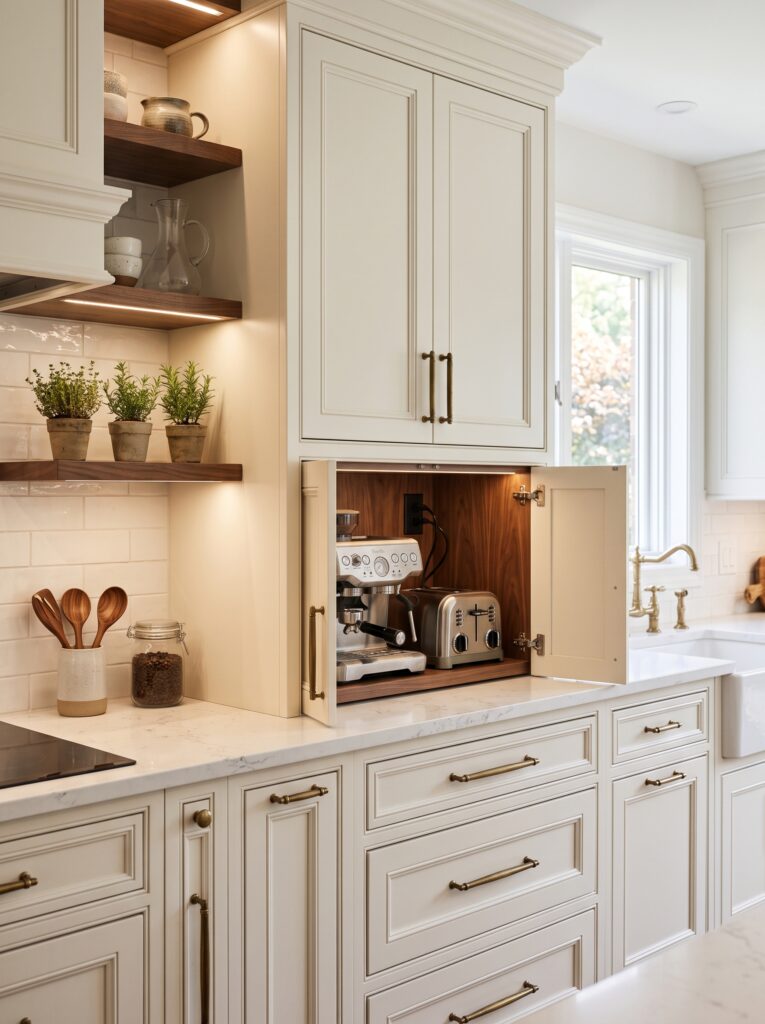
A hidden appliance garage allows homeowners to keep frequently used appliances accessible while concealing them behind cabinetry when they are not needed. Instead of leaving a coffee maker, toaster, blender, or stand mixer on the countertop, these appliances can be organized inside a dedicated cabinet area. The result is a kitchen that looks cleaner, calmer, and more intentional.
What Is a Kitchen Appliance Garage?
A kitchen appliance garage is a dedicated storage area designed to hide countertop appliances while keeping them easy to access.
Unlike traditional cabinets, an appliance garage is usually positioned directly on or slightly above the countertop. The appliance can remain plugged in and ready to use, while a door or panel hides it from view.
Depending on your kitchen layout, an appliance garage can accommodate:
- Coffee machines
- Espresso makers
- Toasters
- Blenders
- Food processors
- Electric kettles
- Stand mixers
- Air fryers
- Rice cookers
- Juicers
- Small baking equipment
The concept is especially appealing to homeowners who love the look of a clean, minimalist kitchen but still rely on several countertop appliances every day.
Why Hidden Appliance Storage Is Becoming So Popular
One of the biggest challenges in modern kitchen design is countertop clutter.
Even an expensive kitchen can look messy when multiple appliances, cords, containers, mail, and cooking accessories are constantly visible.
A hidden appliance garage solves part of this problem by creating a specific location for the appliances you use most often.
Instead of putting your coffee maker away in a lower cabinet every evening, you can simply close the cabinet door.
This creates an immediate visual transformation.
The countertop appears cleaner, while the appliances remain conveniently accessible.
Create a Dedicated Coffee Station
One of the most popular ways to use an appliance garage is to create a hidden coffee station.
A dedicated coffee cabinet can hold:
- Espresso machine
- Coffee maker
- Coffee grinder
- Mugs
- Coffee beans
- Syrups
- Spoons
- Filters
Install electrical outlets inside the cabinet so the coffee machine can remain plugged in.
You can also add a small stone or quartz countertop inside the cabinet for easy cleaning.
When the doors are open, you have a functional coffee station.
When the doors are closed, the entire setup disappears into the kitchen cabinetry.
Choose Cabinet Doors That Match the Kitchen
The most successful appliance garages look like part of the original kitchen design.
Instead of creating a visually separate storage unit, match the cabinet material and finish to the surrounding cabinetry.
For example, a warm traditional kitchen might use:
- Natural walnut
- Raised-panel doors
- Antique brass hardware
A contemporary kitchen might use:
- Flat-panel cabinets
- Matte finishes
- Minimal hardware
- Handleless doors
A transitional kitchen could combine warm white cabinetry with natural wood accents.
The goal is for the appliance garage to visually disappear when closed.
Fluted Cabinetry for a Designer Look
If you want your kitchen to feel more custom and sophisticated, consider using fluted or reeded cabinet doors.
Fluted detailing adds texture without requiring bold colors.
It works particularly well with:
- Natural wood
- Warm white
- Cream
- Soft taupe
- Deep green
- Muted gray
A fluted appliance garage can become an attractive architectural feature rather than simply a storage solution.
Add Interior Lighting
Interior cabinet lighting can make an appliance garage much more functional.
Warm LED lighting can illuminate the workspace and make it easier to prepare coffee or breakfast in the early morning.
Consider installing lighting underneath shelves or along the cabinet sides.
Motion-activated lighting can also be useful because the lights automatically turn on when the cabinet is opened.
This small feature can make a custom kitchen feel significantly more luxurious.
Don’t Forget Electrical Outlets
If you plan to keep appliances plugged in inside the garage, electrical planning is essential.
The cabinet should be designed with appropriate outlets and enough space around appliances for safe operation.
The exact electrical setup should be planned with a qualified professional and according to local building and electrical requirements.
Avoid overcrowding the cabinet with multiple high-powered appliances.
The goal is to create a convenient appliance station—not a cramped storage box.
Use Heat-Resistant Materials
Some appliances generate heat during use.
For that reason, the interior of an appliance garage should be designed with materials appropriate for the appliances being stored there.
A durable countertop surface such as stone or another suitable material can make cleaning easier and provide a stable base.
Make sure the cabinet has enough ventilation for the appliances you intend to use inside it.
This is particularly important for appliances that generate substantial heat.
Make the Cabinet Deep Enough
One common mistake is designing an appliance garage that looks beautiful but is not deep enough for the appliances.
Before finalizing the dimensions, measure everything you plan to store inside.
Remember to account for:
- Appliance depth
- Plug and cord placement
- Door clearance
- Counter space
- Ventilation
- Opening mechanisms
A slightly deeper cabinet can make the station much more practical.
Lift-Up Doors vs. Pocket Doors
The type of cabinet door you choose can affect the functionality of the appliance garage.
Lift-up doors can open upward and keep the countertop area relatively unobstructed.
Pocket doors slide into the sides of the cabinet and can completely disappear when open.
Traditional hinged doors can also work, especially for smaller cabinets.
The best option depends on your kitchen layout and how frequently you use the appliances.
A Hidden Baking Station
An appliance garage does not have to be limited to coffee equipment.
Baking enthusiasts can create a dedicated baking station.
Imagine opening a cabinet and finding:
- Stand mixer
- Measuring cups
- Mixing bowls
- Baking tools
- Flour containers
- Small appliances
A deeper counter inside the cabinet can provide enough workspace for everyday baking.
This can be particularly useful in kitchens where counter space is limited.
Hide the Everyday Breakfast Appliances
Another practical approach is creating a breakfast appliance station.
You could keep your:
- Toaster
- Electric kettle
- Blender
- Coffee machine
together in one concealed area.
This keeps the rest of the kitchen visually clean while making morning routines faster.
The station can be positioned near the refrigerator, pantry, or breakfast area for convenience.
Appliance Garage Ideas for Small Kitchens
You do not need a massive kitchen to use this concept.
In a smaller kitchen, the appliance garage can be built into an upper cabinet or placed at the end of a countertop run.
The key is to prioritize the appliances you use most frequently.
Instead of trying to hide everything, choose two or three appliances that create the most visual clutter.
For example, a compact coffee station could hold a coffee maker, grinder, and mugs.
That small change can make a surprisingly noticeable difference.
Use an Appliance Garage to Create a Minimalist Kitchen
Minimalist kitchens are not necessarily kitchens without appliances.
They are kitchens where appliances and objects have designated places.
A hidden appliance garage supports this philosophy perfectly.
When the kitchen is not being used, the countertops can remain almost completely clear.
This creates the calm, uncluttered appearance associated with high-end minimalist interiors.
Natural materials, simple cabinetry, warm lighting, and concealed storage can make the space feel luxurious without relying on excessive decoration.
Make the Inside Beautiful Too
Even though the appliance garage is usually closed, don’t neglect its interior design.
A beautiful interior can make everyday use more enjoyable.
Consider:
- Matching containers
- Wooden shelves
- Warm lighting
- Coordinated mugs
- Attractive storage jars
- Small trays
- Organized cords
Instead of simply hiding clutter, create a functional mini room inside the cabinet.
This makes the storage system feel intentional.
Combine Hidden Storage With Open Shelving
If you love the look of open shelving but dislike visual clutter, combine the two approaches.
Use open shelves for decorative objects such as:
- Ceramic pieces
- Cookbooks
- Glassware
- Small plants
Then use the appliance garage for functional equipment.
This creates a balance between display and concealed storage.
Hidden Appliance Garage vs. Butler’s Pantry
If your home has a larger kitchen, you may be deciding between an appliance garage and a butler’s pantry.
A butler’s pantry provides significantly more storage and workspace, while an appliance garage is a compact solution that can be incorporated directly into the kitchen.
For many American homes, the appliance garage is more practical because it doesn’t require additional square footage.
It provides some of the organizational benefits of a pantry without creating another room.
How to Make It Look Expensive
A hidden appliance garage can look particularly luxurious when several details work together.
Use quality cabinetry, thoughtful hardware, warm lighting, and durable surfaces.
Natural materials often create a more sophisticated appearance than excessive decorative elements.
For example, warm walnut cabinetry paired with creamy stone and aged brass can create a timeless high-end aesthetic.
The luxury comes from the quality and consistency of the details.
Common Mistakes to Avoid
Avoid designing the cabinet before measuring your appliances.
Do not assume that every appliance can safely operate inside an enclosed cabinet.
Ventilation and heat management are important considerations.
Also avoid making the cabinet too shallow.
Another common mistake is forgetting electrical outlets.
Finally, don’t create a storage cabinet that is so large that it consumes valuable workspace.
The best appliance garage is appropriately sized for the appliances you actually use.
Conclusion
A hidden kitchen appliance garage is a practical design feature that can completely change the appearance and functionality of a kitchen. Instead of choosing between convenience and a clean countertop, homeowners can have both.
By creating a dedicated cabinet for everyday appliances, you can keep coffee machines, toasters, blenders, mixers, and other equipment within easy reach while maintaining a polished and uncluttered kitchen.
Whether you are designing a new kitchen or planning a small renovation, this concept can be adapted to almost any style. From warm traditional cabinetry and natural walnut to sleek modern finishes and minimalist hardware, the appliance garage can be designed to blend seamlessly into the overall space.
For homeowners who want a kitchen that feels organized, elegant, functional, and custom-designed, concealed appliance storage is a small feature with a major visual impact.
- Afrohemian Dining Room Ideas for a Warm, Collected and Sophisticated Home
- Warm Wood and Black Kitchen Ideas for a Timeless Designer Look
- Small Reading Nook Ideas That Turn Forgotten Corners Into a Cozy Luxury Retreat
- Curated Trinket Shelf Ideas: How to Create a Collected and Personal Home
- Neo Deco Entryway Ideas That Make Your Home Feel Instantly Expensive