
A well-designed mudroom can completely change the way a home functions. Instead of becoming a dumping ground for shoes, coats, backpacks, umbrellas, pet accessories, and everyday clutter, a mudroom can provide a dedicated place for everything while still looking beautiful and welcoming. For American homeowners, especially families with busy schedules, thoughtful mudroom ideas can make daily routines easier while adding valuable organization and character to the home.
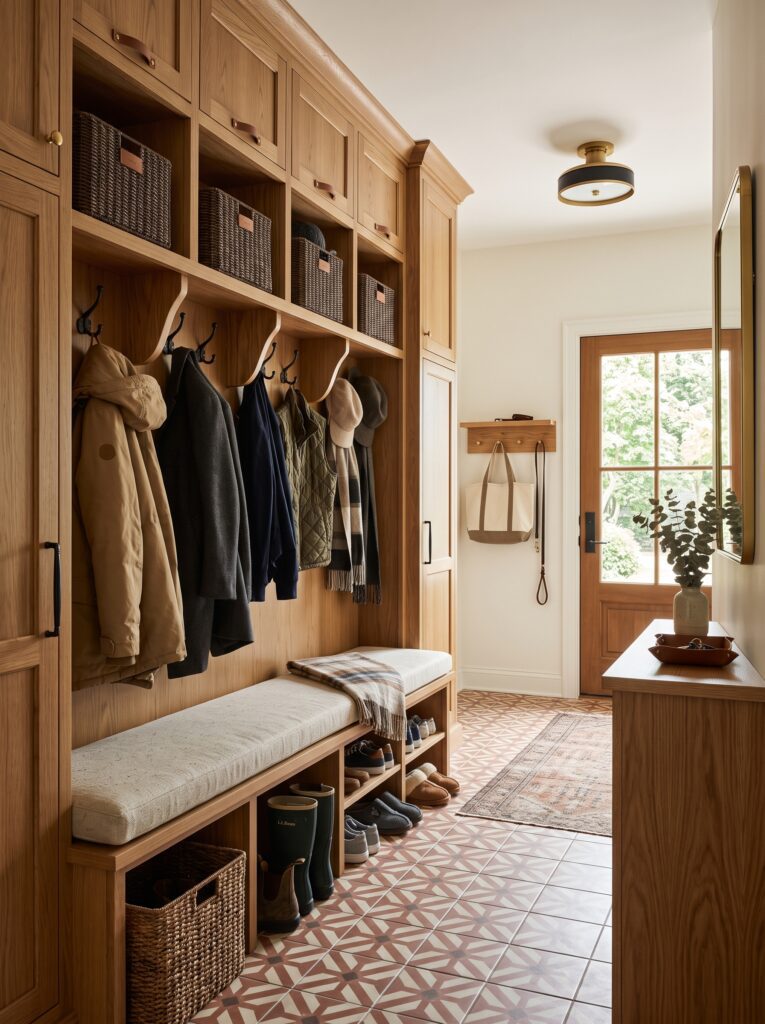
The most successful mudrooms combine practical storage with attractive materials and intentional styling. Built-in cabinets, open cubbies, wooden hooks, woven baskets, comfortable benches, durable flooring, and carefully selected lighting can transform even a small transition area into a polished and highly functional space.
Whether you have a large dedicated mudroom, a narrow hallway near the garage, or a small area beside the back door, you can use these ideas to create a space that feels organized without sacrificing style.
Why a Well-Designed Mudroom Matters
The mudroom is often one of the hardest-working spaces in an American home.
It is where family members take off shoes after coming inside, hang coats during colder months, drop grocery bags, store sports equipment, leave umbrellas, and organize everyday belongings before entering the main living areas.
Because so many activities happen here, clutter can accumulate quickly.
A thoughtfully designed mudroom creates a transition between the outdoors and the rest of the house. Instead of allowing everyday belongings to spread throughout the home, you can give each category its own designated location.
This makes the home feel cleaner and more organized while reducing the amount of time spent searching for everyday items.
Start With Built-In Mudroom Storage
One of the best mudroom organization ideas is to maximize vertical storage.
Built-in cabinetry can make use of wall space from floor to ceiling while keeping the room visually clean.
Consider combining several types of storage rather than relying on one large cabinet.
A practical setup might include:
- Open cubbies for frequently used items
- Closed cabinets for seasonal belongings
- Hooks for coats and bags
- Drawers for smaller accessories
- Lower shelves for shoes
- Baskets for gloves, hats, and scarves
- A bench for sitting while putting on shoes
This combination provides easy access to everyday items while giving less attractive belongings a hidden place.
Create Individual Storage Zones
If multiple people use the mudroom, assigning a dedicated storage zone to each person can make organization much easier.
Each person can have their own:
- Hook
- Cubbie
- Basket
- Shoe compartment
- Small drawer
- Backpack area
This simple system prevents everyone from throwing their belongings into one shared pile.
For children, lower hooks and cubbies make it easier for them to participate in keeping the space organized.
Adults can use higher storage areas for coats, handbags, work bags, and other personal belongings.
The result is a mudroom that supports organization rather than depending on constant cleanup.
Add a Comfortable Mudroom Bench
A bench is one of the most useful pieces of furniture in a mudroom.
It gives you a comfortable place to sit while putting on or removing shoes and can also provide additional storage underneath.
A built-in bench with drawers or baskets underneath is especially practical.
For a softer look, add a neutral cushion or upholstered seat.
If you prefer a more minimalist aesthetic, a simple natural wood bench can provide warmth without making the space feel crowded.
The bench should be wide enough for comfortable use but appropriately sized for the available space.
Use Baskets to Control Everyday Clutter
Woven baskets are both functional and decorative.
They can hide items that would otherwise create visual clutter while adding texture to the room.
Use individual baskets for:
- Winter accessories
- Pet supplies
- Reusable shopping bags
- Sports equipment
- Cleaning items
- Outdoor accessories
- Children’s belongings
Natural wicker, rattan, seagrass, and woven cotton baskets work particularly well with warm wood cabinetry.
For a more organized appearance, choose baskets that are similar in color and style.
Choose Durable Flooring
A mudroom floor needs to withstand everyday traffic.
People often enter this area wearing wet or dirty shoes, making durability and easy maintenance extremely important.
Popular choices include:
- Porcelain tile
- Slate
- Natural stone
- Patterned ceramic tile
- Durable luxury vinyl
- Sealed concrete
A patterned tile can also become a design feature.
If you prefer a more timeless appearance, choose a neutral stone-inspired surface and allow cabinetry and accessories to provide visual interest.
The best flooring is one that looks attractive but can handle the practical demands of the space.
Incorporate Warm Wood
Natural wood can instantly make a mudroom feel more welcoming.
White or cream cabinetry can look beautiful, but too much of a single pale finish may sometimes make a practical storage space feel cold.
Adding natural oak, walnut, or other warm wood tones introduces depth.
Wood can be incorporated through:
- Built-in cabinetry
- Benches
- Floating shelves
- Hooks
- Door details
- Frames
- Small furniture pieces
Warm wood works especially well with neutral walls and woven accessories.
Choose the Right Wall Color
The wall color can dramatically influence the atmosphere of a mudroom.
Soft neutrals such as warm white, beige, greige, taupe, and light mushroom can create a timeless background.
For homeowners who want something more expressive, muted sage green, dusty blue, charcoal, or earthy brown can add personality.
Because mudrooms tend to contain many practical items, a calm wall color can help visually unify the space.
If the room is small, lighter colors can help maintain an airy feeling.
Make Hooks Part of the Design
Hooks are essential in a mudroom, but they do not need to look purely functional.
Choose hardware that complements the rest of the room.
Matte black hooks can create a modern farmhouse or contemporary appearance, while brass or bronze hardware can feel more traditional and sophisticated.
Wooden pegs can provide a Scandinavian-inspired look.
Install hooks at convenient heights for the people using them most frequently.
If children use the mudroom, consider installing lower hooks so they can independently hang their coats and bags.
Create a Dedicated Shoe Storage Area
Shoes are one of the biggest sources of mudroom clutter.
Instead of allowing footwear to accumulate around the entrance, create a dedicated shoe zone.
A low cabinet, open shelving, pull-out drawers, or baskets can all work.
For everyday shoes, open storage may be the easiest because it provides quick access.
For less frequently worn footwear, closed cabinets can create a cleaner appearance.
A washable mat beneath the shoe area can also protect the flooring.
Add a Pet-Friendly Zone
For households with pets, the mudroom can become a highly useful pet station.
A small designated area can hold:
- Leashes
- Collars
- Towels
- Pet food
- Grooming supplies
- Outdoor toys
If space permits, you could even include a small wash station or pet shower.
This prevents pet-related items from spreading throughout the home.
A woven basket near the door can provide a simple solution for leashes and toys without requiring a major renovation.
Design a Mudroom Near the Garage
Many American homes have a garage entry that leads directly into the house.
This area is ideal for a mudroom because it becomes the natural transition point between the car and the interior.
A small garage-entry mudroom can include a built-in bench, several hooks, shoe storage, and overhead cabinets.
Even a wall that is only a few feet wide can become a useful organization station.
The important thing is to design vertically when floor space is limited.
Small Mudroom Ideas
A mudroom does not need to be large.
For a compact space, focus on multifunctional storage.
Try combining:
- A narrow bench
- Wall-mounted hooks
- Floating shelves
- Slim shoe storage
- Small baskets
- Vertical cabinets
Avoid bulky furniture that blocks walking paths.
Using the same wall color for the cabinetry and surrounding walls can also make the storage feel visually integrated.
Mirrors can be useful in small mudrooms because they reflect light and make the area feel more spacious.
Make the Mudroom Feel Like Part of Your Home
Because mudrooms are practical spaces, homeowners sometimes overlook their decorative potential.
You can make the room feel connected to the rest of your interior by repeating colors and materials used elsewhere in the home.
For example, if your kitchen has warm oak cabinetry and brass hardware, carry those elements into the mudroom.
If your home uses soft neutral colors and black accents, continue the same palette here.
This creates visual continuity throughout the house.
Add Simple Decorative Details
A mudroom does not need excessive decoration.
A few intentional pieces can make a major difference.
Consider adding:
- A framed botanical print
- A small mirror
- A ceramic vase
- A woven tray
- A simple clock
- A small plant
- A decorative basket
The key is to keep decorative pieces out of the way of everyday functionality.
A mudroom should still be easy to clean and use.
Improve Lighting
Good lighting is essential because mudrooms often have limited natural light.
A combination of overhead and task lighting works well.
Consider:
- Flush-mount ceiling lights
- Pendant lighting
- Wall sconces
- Under-cabinet lighting
- Motion-activated lights
Warm lighting can make the space feel more welcoming.
If you have built-in cabinets, under-shelf lighting can also make it easier to locate belongings.
Use Labels Strategically
Labels can be particularly useful when several people share the mudroom.
You can label baskets according to their purpose rather than labeling every individual object.
For example:
Hats + Gloves
Dog Supplies
Outdoor Gear
School Items
Shoes
This creates a simple system that everyone can understand.
For a sophisticated appearance, use consistent labels rather than a mixture of different fonts and styles.
Keep Seasonal Items Under Control
Mudrooms can become overwhelmed when every seasonal item is stored there at once.
Instead, rotate belongings throughout the year.
During winter, prioritize coats, boots, hats, scarves, and gloves.
During warmer months, replace these with lightweight jackets, outdoor accessories, beach bags, and summer footwear.
Store off-season items in higher cabinets or another storage area.
This keeps the everyday mudroom much easier to manage.
Create a Luxury Mudroom on a Budget
You do not need a custom designer renovation to make a mudroom look expensive.
Focus on the elements that have the biggest visual impact.
A simple wooden bench can replace expensive built-ins.
Uniform baskets can make open storage look intentional.
Beautiful hardware can elevate inexpensive cabinetry.
A large mirror can create a focal point.
A fresh coat of paint can completely change the atmosphere.
The goal is not to spend more—it is to create visual consistency.
When colors, materials, and storage solutions work together, even an inexpensive mudroom can feel polished.
Mistakes to Avoid in Mudroom Design
One of the biggest mistakes is designing for appearance without considering how the space will actually be used.
A beautiful mudroom becomes frustrating if there is nowhere to put shoes or bags.
Another mistake is not providing enough closed storage. Open shelves are attractive, but too many visible belongings can quickly make the space look messy.
Poor lighting is another common issue.
Finally, avoid using delicate materials that cannot handle everyday wear. A mudroom needs to look beautiful while still being practical.
Conclusion
The best mudroom ideas combine organization, durability, comfort, and style. With the right combination of built-in storage, hooks, baskets, a comfortable bench, durable flooring, warm wood, and thoughtful lighting, even a small entry area can become one of the most useful spaces in your home.
For American families, a well-designed mudroom can make everyday life noticeably easier. Coats have a place, shoes stay contained, bags can be organized, and seasonal accessories remain accessible without spreading throughout the house.
Most importantly, your mudroom does not have to look like a purely functional storage zone. With a cohesive color palette, natural materials, elegant hardware, and a few carefully selected decorative touches, it can feel like a beautiful extension of the rest of your home.
Whether you are planning a complete mudroom renovation or simply looking for affordable ways to improve an existing space, start with the essentials: create a place for everything, maximize vertical storage, choose durable materials, and make the design feel intentional. A practical mudroom can be organized, welcoming, and stylish all at the same time.
- Afrohemian Dining Room Ideas for a Warm, Collected and Sophisticated Home
- Warm Wood and Black Kitchen Ideas for a Timeless Designer Look
- Small Reading Nook Ideas That Turn Forgotten Corners Into a Cozy Luxury Retreat
- Curated Trinket Shelf Ideas: How to Create a Collected and Personal Home
- Neo Deco Entryway Ideas That Make Your Home Feel Instantly Expensive