
A home library can bring an entirely different kind of character to a house. While many modern interiors focus heavily on open spaces and minimal decoration, a thoughtfully designed library creates warmth, depth, personality, and a sense of permanence. It can be a dedicated room filled with bookshelves or simply a small reading corner with a comfortable chair and carefully arranged books.
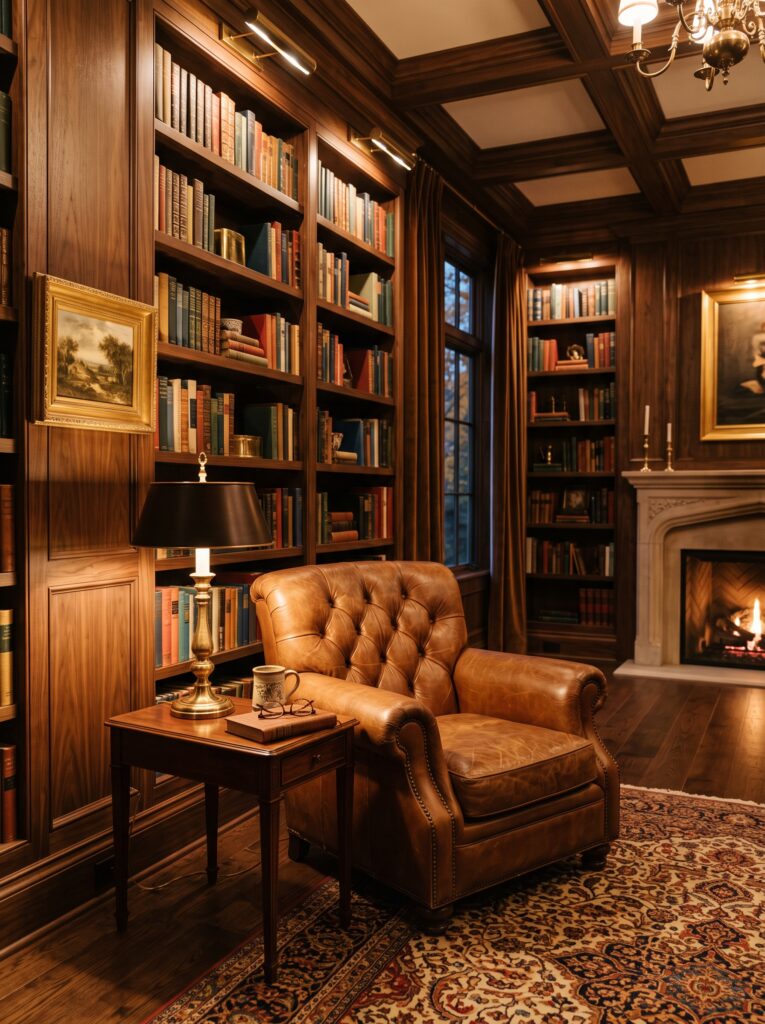
For homeowners who appreciate cozy home decor, traditional interiors, vintage details, and quiet luxury, a home library can become one of the most distinctive spaces in the house.
The beauty of a home library is that it does not need to be enormous or expensive. With the right combination of books, lighting, comfortable seating, warm wood, artwork, and layered textures, even a small unused room or empty wall can become an inviting retreat.
Why Create a Home Library?
A home library is more than a place to store books.
It can become a space where you slow down, read, work, reflect, listen to music, enjoy coffee, or simply spend time away from the distractions of everyday life.
In an age when many areas of the home are designed around technology, a library offers an opportunity to create a quieter environment.
It can also add personality to an otherwise generic interior.
Books naturally make a room feel lived-in. When combined with artwork, vintage furniture, ceramics, rugs, and warm lighting, they create a collected aesthetic that is difficult to achieve with purely decorative objects.
Choose the Right Location
You do not necessarily need a dedicated room for a home library.
Look around your house for an underused area.
Potential locations include:
- A spare bedroom
- A home office corner
- A hallway
- An unused alcove
- A landing
- A large wall
- A space beneath a staircase
- A corner of a bedroom
Even a single wall of floor-to-ceiling bookshelves can create the feeling of a library.
If you have a dedicated room, consider how you want to use it before selecting furniture.
A reading-focused library may require only bookshelves, one or two comfortable chairs, a table, and lighting.
If you also plan to work there, you may want to add a writing desk.
Use Floor-to-Ceiling Bookshelves
One of the most effective home library ideas is to maximize vertical space.
Floor-to-ceiling bookshelves immediately create architectural impact.
They also provide considerably more storage than short bookcases.
Built-in shelving can look especially sophisticated because it appears to be part of the architecture.
If custom cabinetry is outside your budget, freestanding bookcases can still create a similar effect when positioned carefully and painted in a consistent color.
For a classic appearance, consider:
- Dark walnut
- Deep brown
- Warm oak
- Cream
- Soft gray
- Deep green
- Navy blue
The right finish depends on the mood you want to create.
Create a Warm and Moody Color Palette
A library can be an ideal place to experiment with deeper colors.
Unlike a bright kitchen or bathroom, a reading room can embrace a more intimate atmosphere.
Deep green, navy, charcoal, chocolate brown, muted burgundy, and warm taupe can create a sophisticated environment.
If you prefer a lighter library, consider cream, beige, warm white, or soft mushroom.
Dark walls can make bookshelves appear more integrated and can enhance the cozy feeling of the room.
However, if the library is very small or receives limited natural light, balance darker walls with lighter furniture, rugs, or artwork.
Choose Comfortable Seating
A library should be comfortable enough that you actually want to spend time there.
A beautiful chair that is uncomfortable will quickly become decorative rather than functional.
Look for seating with proper back support and enough depth for relaxed reading.
Good options include:
- Leather lounge chairs
- Upholstered armchairs
- Wingback chairs
- Small sofas
- Reading chairs with ottomans
- Chaise lounges
If space permits, two comfortable chairs facing each other can create an intimate conversation area.
For smaller libraries, a single statement chair beside a bookshelf can be enough.
Add a Reading Lamp
Lighting is one of the most important parts of a successful reading space.
A library should have multiple layers of light rather than relying on a single ceiling fixture.
Consider combining:
- Floor lamps
- Table lamps
- Wall sconces
- Pendant lights
- Ceiling fixtures
- Integrated shelf lighting
A warm reading lamp positioned next to the chair can make evening reading considerably more comfortable.
Brass, bronze, black metal, and aged finishes work beautifully with traditional library aesthetics.
Use Warm Wood for Character
Wood is one of the defining materials of classic library design.
Dark walnut can create an old-world atmosphere, while oak gives the space a lighter and more contemporary appearance.
You can introduce wood through:
- Bookshelves
- Desks
- Side tables
- Flooring
- Picture frames
- Decorative boxes
Mixing several shades of wood can work, but try to keep the undertones compatible.
Too many unrelated wood finishes can make the room feel visually disconnected.
Layer a Beautiful Rug
A rug can make a home library feel significantly more comfortable.
It also helps define the seating area and introduce pattern.
Traditional Persian-inspired patterns, vintage rugs, muted geometric designs, and simple natural-fiber rugs can all work beautifully.
If the room contains dark wood furniture, a rug with warm cream, rust, brown, or muted green tones can soften the overall appearance.
For a more modern library, choose a subtle textured rug in a neutral color.
Style Bookshelves Like a Designer
Bookshelves should feel collected rather than perfectly symmetrical.
A common mistake is placing every book upright in identical rows.
Instead, create variation.
Try:
- Grouping books by color
- Stacking some books horizontally
- Leaving small areas of negative space
- Adding ceramics
- Displaying framed photographs
- Including small sculptures
- Adding plants
- Using decorative boxes
The goal is balance.
Do not fill every inch of shelf space.
A little empty space allows individual objects and books to stand out.
Mix Books With Personal Objects
The most interesting home libraries feel personal.
Add objects that actually mean something to you.
These might include:
- Travel souvenirs
- Family photographs
- Antique objects
- Ceramics
- Artwork
- Small sculptures
- Vintage clocks
- Handmade pieces
These objects create a visual story and prevent the room from looking like a furniture showroom.
A home library should reflect the personality of the person using it.
Add Artwork
Artwork can provide an important visual break between bookshelves.
Consider hanging one larger piece above a desk or between shelving sections.
Portraits, landscapes, botanical illustrations, architectural drawings, abstract art, and vintage prints can all work.
For a traditional library, antique-inspired artwork can reinforce the old-world atmosphere.
For a contemporary library, modern artwork can create an interesting contrast with classic bookshelves.
Create a Small Coffee Station
If space allows, a tiny coffee or tea station can make a library even more inviting.
A small sideboard or console can hold:
- Coffee equipment
- Tea
- Cups
- A water carafe
- Small trays
- Decorative jars
This can transform the library into a space where you can comfortably spend an entire morning or afternoon.
Keep the setup simple and visually organized.
Add Greenery
Plants can soften the darker materials commonly found in traditional libraries.
A tall plant beside a bookshelf can add height.
Smaller plants can be placed on shelves.
Trailing plants can introduce movement.
Choose planters that complement the room rather than competing with the books.
Ceramic, stone, terracotta, and aged-metal planters can work beautifully.
Use Curtains to Increase Warmth
Window treatments can dramatically change the atmosphere of a library.
Heavy linen or velvet curtains can create a more traditional and luxurious appearance.
Lighter curtains can keep a modern library bright while still adding softness.
Choose curtains that extend from near the ceiling to the floor when possible. This can make the windows feel taller and give the room a more finished appearance.
Make a Small Library Feel Larger
If your library is compact, use design choices that maximize the available space.
Floor-to-ceiling shelving makes use of vertical space.
A large mirror can reflect light.
Furniture with exposed legs can make the floor feel more open.
Light-colored walls can visually expand the room.
A single comfortable chair may be more effective than trying to fit a complete seating arrangement.
Keep pathways clear and avoid placing too many decorative pieces on the floor.
Create a Library With an Old-World Feel
If you love traditional interiors, embrace materials and details that feel timeless.
Try combining:
- Dark wood
- Brass hardware
- Vintage artwork
- Leather furniture
- Persian-style rugs
- Warm lighting
- Antique-inspired accessories
- Hardcover books
The goal is not to make the room look artificially old.
Instead, combine traditional elements with modern functionality.
For example, a classic leather chair can work beautifully alongside contemporary lighting and modern storage solutions.
Create a Modern Home Library
A library does not have to be traditional.
For a contemporary look, choose streamlined shelves, lighter wood, simple furniture, neutral upholstery, and modern artwork.
Keep decorative objects minimal.
A modern library can also use black, cream, oak, and muted green to create a sophisticated palette.
The result can feel calm and architectural rather than heavily decorative.
Make the Space Multi-Functional
If your home is limited in space, your library can serve more than one purpose.
A reading room can double as:
- A study
- A writing room
- A music room
- A guest space
- A meditation area
- A quiet work zone
Choose furniture that supports multiple activities.
A desk can provide a workspace while a comfortable chair provides a reading area.
A sofa bed can turn a library into an occasional guest room.
The key is to maintain a cohesive design so the room does not feel like several unrelated spaces combined together.
Budget-Friendly Home Library Ideas
You do not need custom millwork to create a beautiful library.
Affordable bookcases can be painted to look more cohesive.
Secondhand furniture can add character.
Vintage chairs can often provide more personality than new matching furniture.
Thrifted artwork, used books, antique-style lamps, and simple ceramic accessories can also contribute to the aesthetic.
Invest in one statement piece if possible, such as a beautiful chair or desk, and keep the rest relatively simple.
Common Home Library Mistakes
Avoid making every shelf completely full.
Avoid choosing furniture purely for appearance.
Do not use lighting that is too cold or harsh.
Avoid mixing too many unrelated colors.
And do not forget to leave comfortable walking space between furniture.
Conclusion
A home library can transform an ordinary corner of your house into a deeply personal retreat. Whether you envision a dark and dramatic reading room filled with walnut shelves and leather furniture or a bright modern library with oak cabinetry and neutral textiles, the most important element is creating an atmosphere that makes you want to stay.
The best home library ideas combine books with comfortable seating, layered lighting, natural materials, meaningful artwork, and personal objects. You do not need an enormous room or an unlimited budget. Even one carefully styled bookshelf and a comfortable reading chair can create the feeling of a private library.
Focus on warmth rather than perfection. Mix old and new pieces, introduce texture, leave some breathing room on your shelves, and choose objects that tell a story. When the space feels personal and comfortable, it naturally becomes more than storage for books—it becomes a destination within your home.
A thoughtfully designed library can offer something increasingly valuable in a busy household: a quiet place to slow down, disconnect, read, think, and enjoy your surroundings. With the right design choices, even a small corner can become an elegant and timeless cozy reading retreat that adds both beauty and character to your home.
- Afrohemian Dining Room Ideas for a Warm, Collected and Sophisticated Home
- Warm Wood and Black Kitchen Ideas for a Timeless Designer Look
- Small Reading Nook Ideas That Turn Forgotten Corners Into a Cozy Luxury Retreat
- Curated Trinket Shelf Ideas: How to Create a Collected and Personal Home
- Neo Deco Entryway Ideas That Make Your Home Feel Instantly Expensive