
Home decor is moving toward interiors that feel more personal, expressive, and collected. Instead of perfectly matching furniture sets and rooms that look as though they came straight from a showroom, homeowners are increasingly looking for spaces with texture, craftsmanship, warmth, and a story.
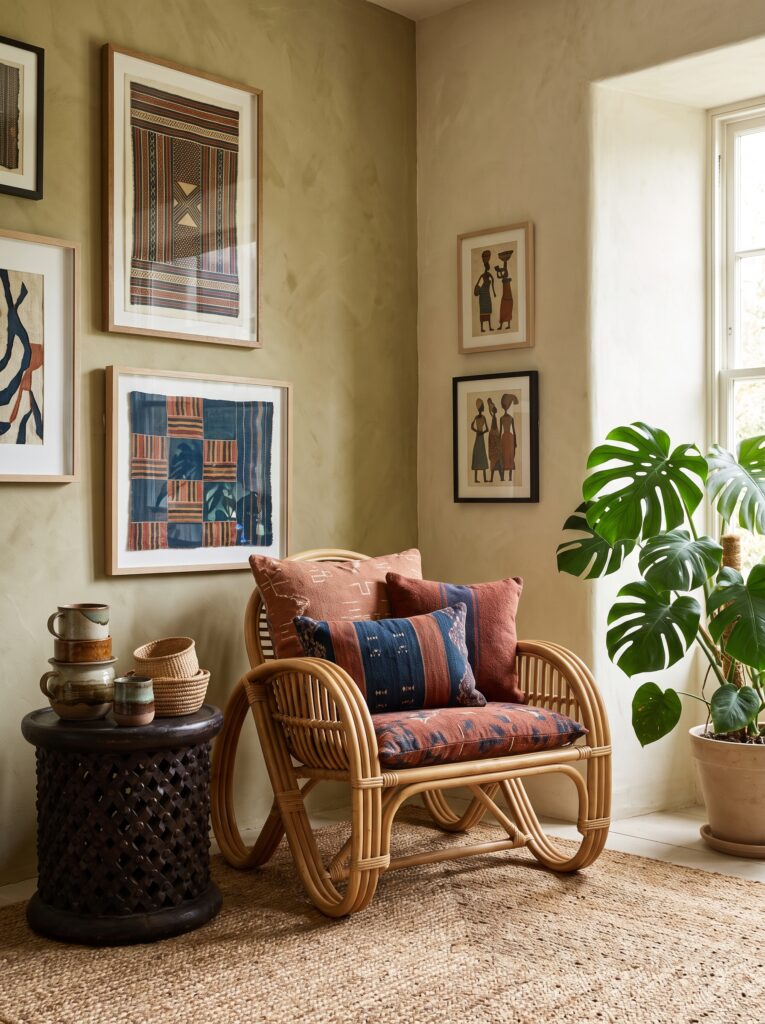
That is where Afrohemian home decor comes in.
This distinctive decorating style brings together natural materials, handcrafted details, expressive artwork, earthy colors, woven textures, sculptural furniture, and globally inspired accents. The result is a home that feels warm and sophisticated while still having personality.
Afrohemian interiors can be especially beautiful when they are approached thoughtfully. The goal isn’t to fill every surface with decorative objects. Instead, it is about creating a balanced environment where natural materials, artwork, textiles, and meaningful pieces work together.
For homeowners in the United States who want something beyond predictable beige interiors, Afrohemian decor offers an exciting way to introduce warmth and individuality without sacrificing elegance.
What Is Afrohemian Home Decor?
Afrohemian decor combines influences associated with African-inspired design and relaxed bohemian interiors.
It often incorporates:
- Natural wood
- Rattan
- Woven baskets
- Handcrafted ceramics
- Earthy textiles
- Sculptural objects
- Expressive artwork
- Rich patterns
- Natural fibers
- Warm neutral backgrounds
- Organic shapes
However, Afrohemian decorating doesn’t have to look heavily themed.
A sophisticated interpretation can use a neutral architectural foundation and introduce character through carefully selected artwork, textiles, handcrafted accessories, and natural materials.
The result can feel modern, relaxed, worldly, and deeply personal.
Why Afrohemian Decor Is Becoming So Popular
Many homeowners are moving away from interiors that feel overly coordinated.
A room filled with identical furniture and mass-produced accessories can sometimes feel impersonal. Afrohemian decorating provides an alternative by emphasizing individuality.
The style allows you to combine different textures and objects while maintaining a cohesive visual foundation.
Natural materials also make the aesthetic easy to integrate into American homes.
A contemporary suburban house, city apartment, townhouse, or traditional home can all incorporate Afrohemian elements without requiring a complete redesign.
1. Start With a Warm Neutral Foundation
If you’re new to Afrohemian decorating, don’t begin by adding dozens of colorful accessories.
Start with the background.
Warm ivory, creamy white, sand, beige, taupe, mushroom, and soft clay tones create a calm foundation.
These colors allow stronger elements to stand out.
For example, a cream wall can provide the perfect background for:
- Dark wood furniture
- Patterned textiles
- Woven baskets
- Sculptural artwork
- Terracotta ceramics
- Rattan seating
The neutral foundation keeps the room sophisticated while allowing the decorative details to provide personality.
2. Introduce Natural Wood
Wood is one of the easiest ways to establish warmth.
Look for furniture with visible grain and organic character rather than overly glossy finishes.
Walnut, teak, oak, and darker wood tones can all work beautifully.
Consider introducing wood through:
- Side tables
- Benches
- Cabinets
- Dining tables
- Stools
- Shelving
- Decorative bowls
- Sculptural accessories
If your room already contains wood flooring, repeat the material through one or two pieces of furniture rather than matching everything exactly.
3. Add Rattan and Woven Materials
Rattan can immediately introduce texture and relaxed character.
A rattan accent chair can become a focal point in a neutral room.
Other possibilities include:
- Woven pendant lights
- Cane cabinet doors
- Rattan baskets
- Woven stools
- Natural-fiber lampshades
- Handwoven trays
The trick is balance.
Using one or two substantial woven pieces often looks more sophisticated than covering every surface in rattan.
4. Use Handcrafted Baskets as Functional Decor
Baskets are both practical and decorative.
Large woven baskets can hold blankets, pillows, magazines, or children’s toys.
Smaller baskets can be placed on shelves or inside cabinetry.
Instead of treating baskets purely as storage, think about their shape and texture as part of the room’s design.
A collection of different sizes can create visual rhythm.
However, avoid overcrowding.
Leave enough space between pieces for each one to be appreciated.
5. Make Artwork a Major Feature
Artwork can completely change an Afrohemian interior.
Rather than decorating every wall with small prints, consider one large statement piece.
Expressive artwork can introduce:
- Color
- Movement
- Cultural character
- Pattern
- Emotional depth
A large piece can also become the visual anchor around which furniture and textiles are arranged.
When choosing artwork, look for pieces that genuinely connect with the mood of your home rather than selecting something simply because it matches a color palette.
6. Layer Textiles
Textiles are essential for creating the relaxed character associated with bohemian interiors.
Layer different materials rather than using one repetitive pattern.
Try combining:
- Linen
- Cotton
- Wool
- Woven fabrics
- Textured cushions
- Patterned throws
- Natural-fiber rugs
For example, a neutral linen sofa can be paired with patterned cushions, a woven throw, and an earthy rug.
The different textures make the room visually rich without requiring bright colors everywhere.
7. Introduce Earthy Colors
Afrohemian interiors often look beautiful with nature-inspired colors.
Consider:
- Terracotta
- Burnt sienna
- Ochre
- Clay
- Olive
- Deep brown
- Sand
- Cream
- Muted rust
- Warm charcoal
These colors work particularly well with natural wood.
If you prefer a quieter interior, keep the walls and major furniture neutral and introduce earthy colors through accessories.
8. Use Pattern With Intention
Pattern can bring tremendous personality to an Afrohemian room.
However, multiple competing patterns can quickly become overwhelming.
Choose one dominant pattern and support it with smaller, quieter textures.
For example, a patterned rug can become the primary visual statement while the cushions remain relatively simple.
Alternatively, a patterned textile can become the focal point while the rest of the room stays neutral.
The goal is visual hierarchy.
9. Choose Sculptural Furniture
Furniture doesn’t have to be purely functional.
Curved chairs, carved wooden stools, rounded side tables, and organically shaped cabinets can add visual interest.
Look for pieces with:
- Rounded edges
- Visible craftsmanship
- Natural materials
- Strong silhouettes
- Handmade character
One sculptural chair can sometimes have more impact than several small decorative pieces.
10. Create a Collected-Over-Time Appearance
One of the most appealing qualities of Afrohemian interiors is their collected character.
The room shouldn’t necessarily look as though everything was purchased on the same day.
Mix newer furniture with vintage-inspired pieces and handmade objects.
For example:
A modern cream sofa can sit beside a vintage wooden side table.
A contemporary lamp can illuminate an antique-style ceramic vessel.
A modern rug can be layered with handcrafted baskets.
This contrast makes the room feel lived-in and authentic.
11. Bring in Handmade Ceramics
Ceramics are an excellent way to introduce subtle artistic character.
Choose pieces with imperfect surfaces, organic shapes, and natural finishes.
You might use:
- Large floor vases
- Small bowls
- Sculptural vessels
- Hand-thrown planters
- Decorative plates
Don’t feel the need to display everything.
Choose a few pieces with enough scale to create impact.
12. Add Plants for Organic Energy
Indoor plants work naturally with the Afrohemian aesthetic.
Large leafy plants can soften architectural lines and introduce a sense of nature.
Consider:
- Fiddle leaf figs
- Bird of paradise
- Rubber plants
- Olive trees
- Snake plants
- Trailing plants
Place them in textured ceramic or woven planters.
The combination of greenery, wood, and woven materials can create a relaxed atmosphere.
13. Create an Afrohemian Entryway
You don’t have to decorate an entire home in this style.
An entryway can be a great place to experiment.
Try a combination of:
- Wooden console
- Large artwork
- Woven basket
- Sculptural lamp
- Natural-fiber runner
- Ceramic vessel
- Greenery
Keep the arrangement relatively simple.
The entryway should feel welcoming rather than crowded.
14. Design a Warm Afrohemian Bedroom
Bedrooms are particularly suited to this aesthetic because natural materials can create a relaxing atmosphere.
Start with a neutral bed.
Layer:
- Linen bedding
- Textured cushions
- A woven throw
- Wooden nightstands
- Warm bedside lamps
- Natural-fiber rugs
Add one expressive piece of artwork above the bed or on an adjacent wall.
Keep the lighting warm and soft to maintain the relaxed mood.
15. Bring Afrohemian Style Into the Dining Room
A dining room can incorporate the style without becoming overly casual.
Consider a substantial wood dining table surrounded by chairs with natural woven or textured details.
Add a simple centerpiece using:
- Branches
- Dried grasses
- Handmade ceramics
- Seasonal foliage
A woven pendant light above the table can reinforce the natural-material theme.
For a more sophisticated look, introduce brass or aged-metal details.
16. Create Contrast With Dark Wood
Dark wood can give Afrohemian interiors a more sophisticated appearance.
Instead of relying exclusively on pale woods, consider incorporating walnut or dark-stained pieces.
Dark wood works particularly well with:
- Cream walls
- Terracotta
- Olive
- Rust
- Natural linen
- Brass
- Woven materials
This creates depth and prevents the room from looking too lightweight.
17. Use Lighting as a Decorative Element
Lighting should contribute to the atmosphere rather than simply illuminate the room.
Woven pendant lights, sculptural lamps, textured shades, and warm table lamps can all reinforce the aesthetic.
Use several smaller sources of light rather than depending on one bright ceiling fixture.
This creates a softer, more intimate environment.
18. Mix Modern and Handmade Pieces
A completely rustic interior isn’t necessary.
In fact, combining modern furniture with handcrafted accessories can create a much more sophisticated result.
Imagine a clean-lined modern sofa with:
- A carved wooden stool
- A woven basket
- A handmade ceramic vase
- A textured rug
- Expressive artwork
The modern foundation keeps the room polished while handmade elements provide character.
19. Avoid Turning the Room Into a Theme
This is one of the most important principles.
Afrohemian decor should feel inspired, not staged.
Avoid purchasing large quantities of accessories simply because they fit the same aesthetic.
Instead, ask whether each piece adds something meaningful.
A room can communicate the style through a few strong elements.
For example:
Neutral walls + dark wood + rattan + expressive artwork + textured textiles
may be enough.
You don’t need every possible bohemian accessory.
20. Keep the Color Palette Connected
When using multiple colors and patterns, repeat certain tones throughout the room.
If your artwork contains terracotta, brown, cream, and olive, introduce those colors subtly through cushions, ceramics, rugs, or accessories.
This creates cohesion without requiring everything to match.
A connected color palette is one of the easiest ways to make eclectic decor look sophisticated.
21. Use Natural Fibers
Natural fibers can provide subtle texture throughout the home.
Consider:
- Jute
- Sisal
- Linen
- Cotton
- Wool
- Rattan
- Seagrass
A jute rug can ground a room.
Linen curtains can soften windows.
Woven baskets can provide storage.
These materials work together naturally because they share an organic visual quality.
22. Create a More Sophisticated Bohemian Home
If traditional bohemian decorating feels too colorful or casual for your taste, take a more refined approach.
Use:
- Fewer accessories
- Larger statement pieces
- Better-quality natural materials
- Warm neutral walls
- Sculptural furniture
- Carefully selected artwork
- Layered lighting
This creates an interior that feels relaxed but still polished.
23. Afrohemian Decor on a Budget
You don’t need to replace your entire home to introduce this style.
Start small.
Replace generic accessories with:
- One woven basket
- A textured throw
- A handmade-looking ceramic vessel
- A natural-fiber rug
- One sculptural wooden object
- A large piece of artwork
You can also rearrange existing furniture.
Sometimes changing the layout and removing unnecessary objects makes the biggest difference.
24. How to Style Shelves
Open shelving provides an opportunity to combine different materials.
Instead of placing rows of identical decorative objects, create groups.
For example:
Books + ceramic vessel + woven basket
or
Artwork + carved object + small plant
Vary the heights and leave some empty space.
This makes the shelving feel curated rather than crowded.
25. Use Mirrors to Add Light
A large mirror can work beautifully in an Afrohemian interior.
Choose a frame with natural wood, aged metal, or an organic shape.
Position the mirror where it can reflect natural light or an attractive architectural feature.
This can make smaller American homes feel brighter and more spacious.
26. Create a Cozy Conversation Area
Afrohemian style works particularly well for relaxed gathering spaces.
Instead of arranging furniture exclusively around a television, consider creating a conversation-focused layout.
A sofa, two accent chairs, a low wooden table, and a textured rug can create an inviting arrangement.
Keep enough space between pieces for comfortable movement.
27. Add Personality Through Meaningful Objects
The best collected interiors contain objects that feel personal.
Travel finds, handmade ceramics, books, artwork, family heirlooms, and vintage pieces can all contribute to the atmosphere.
Instead of buying generic decor simply to fill an empty shelf, give yourself time to collect pieces that genuinely appeal to you.
This creates a home that feels individual.
28. Afrohemian Decor for Small Apartments
This style can work beautifully in apartments because many of its key elements are relatively lightweight and adaptable.
Use a neutral base and introduce personality through portable pieces.
For example:
- Woven baskets
- Rattan chairs
- Textured cushions
- Plants
- Artwork
- Small wooden tables
- Natural-fiber rugs
These items can move with you if you relocate.
29. Make the Style Work in a Modern American Home
Afrohemian decor doesn’t require a historic or exotic-looking house.
A modern American home can incorporate the aesthetic through subtle layering.
Start with the existing architecture.
Then add natural materials, expressive artwork, handcrafted details, and earthy accents.
The result should feel like your home influenced by the aesthetic, not a complete imitation of another design tradition.
30. The Most Important Rule: Let the Room Breathe
Because Afrohemian interiors involve texture and visual variety, negative space is essential.
Don’t cover every wall.
Don’t fill every shelf.
Don’t place accessories on every table.
Allow certain architectural elements and furniture pieces to remain visually quiet.
This contrast gives the more expressive elements room to stand out.
Afrohemian Home Decor Color Combinations to Try
If you’re unsure where to begin, these combinations can provide inspiration.
Cream + Walnut + Terracotta
Warm, sophisticated, and timeless.
Sand + Olive + Dark Wood
Natural and calming.
Ivory + Rust + Brass
Warm and elegant.
Beige + Chocolate Brown + Muted Green
Grounded and sophisticated.
Warm White + Clay + Black
Modern with strong contrast.
Choose one combination as your starting point rather than trying to use every color at once.
Afrohemian Decorating Mistakes to Avoid
A beautiful Afrohemian interior depends on restraint.
Avoid excessive patterns.
Avoid filling every corner with accessories.
Avoid using only artificial-looking materials.
Avoid buying matching sets.
Avoid making every object the same color.
Avoid confusing visual clutter with personality.
Most importantly, avoid treating cultural design influences as superficial decoration. Choose artwork, textiles, and handcrafted objects thoughtfully and respectfully, and prioritize authentic craftsmanship and pieces you genuinely appreciate.
How to Make Afrohemian Decor Feel Luxurious
Luxury isn’t necessarily about expensive objects.
It is often about materials, proportion, lighting, and restraint.
To make Afrohemian interiors feel more elevated:
- Choose fewer but larger accessories.
- Invest in quality natural materials where possible.
- Use warm layered lighting.
- Keep the main color palette controlled.
- Choose substantial furniture.
- Display meaningful artwork.
- Leave negative space.
- Mix vintage and contemporary elements.
- Repeat natural materials throughout the room.
A simple room with beautiful materials can feel much more luxurious than an overcrowded room filled with expensive-looking accessories.
Conclusion
Afrohemian home decor offers a beautiful alternative to overly coordinated interiors. Its combination of natural materials, expressive artwork, handcrafted details, earthy colors, woven textures, and sculptural furniture creates spaces that feel warm, personal, and collected.
The key is balance.
You don’t need to redesign every room or fill your home with bohemian accessories. Begin with a warm neutral foundation, introduce natural wood and woven materials, add meaningful artwork, and gradually layer textiles and handcrafted pieces.
For American homeowners looking for a home that feels less generic and more individual, this decorating approach can provide plenty of inspiration. It works in apartments, suburban houses, modern homes, traditional properties, and everything in between.
Most importantly, let your home tell a story.
The most memorable interiors aren’t necessarily the ones with the most decoration. They are the ones where every material, object, texture, and piece of artwork feels intentionally chosen.
That is what can make Afrohemian decorating feel not only trendy for 2026, but also timeless.
- Elegant Fall Tablescape Ideas Without Pumpkins for a Sophisticated Autumn Home
- The Awkward Corner Makeover: Stylish Ways to Transform Empty Space
- Afrohemian Home Decor: Bold, Natural and Collected Ideas for 2026
- Under-Stair Space Ideas: Smart Ways to Transform an Awkward Corner
- Moody Dining Room Lighting Ideas That Make Every Dinner Feel Expensive