
A beautiful kitchen is not only about countertops, cabinets, and appliances. The spaces behind the scenes matter too. One of the most useful—and increasingly desirable—features in a well-designed home is a walk-in pantry.
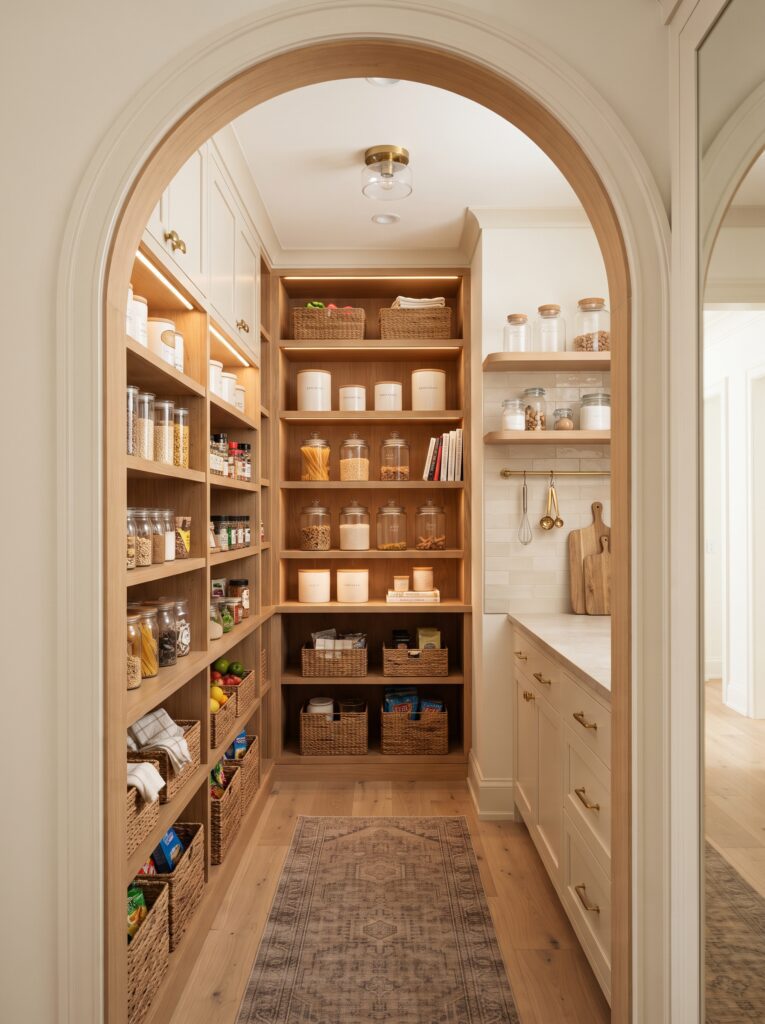
A thoughtfully designed walk-in pantry can make everyday cooking easier, reduce visible kitchen clutter, and give your entire kitchen a more polished appearance. With the right combination of cabinetry, shelving, lighting, organization, and natural materials, even a practical storage room can feel like a luxurious extension of the kitchen.
For homeowners planning a kitchen remodel or simply looking for better home organization ideas, the pantry is worth giving serious attention. Current U.S. kitchen design research continues to show strong demand for dedicated storage and built-in functionality, with pantry storage among the most common features homeowners incorporate into renovated kitchens.
The best part is that you don’t need a huge pantry to achieve a beautiful result.
Whether you have a spacious walk-in pantry, a narrow storage room, or a small kitchen closet, the same principles can help you create a space that looks organized, intentional, and expensive.
Why Walk-In Pantries Are So Popular
Modern homeowners want kitchens that look beautiful but also work hard.
The kitchen often has to accommodate groceries, cookware, small appliances, serving pieces, baking supplies, cleaning products, and countless everyday items. When everything has to remain visible, even a beautiful kitchen can quickly begin to look crowded.
A walk-in pantry solves part of that problem by moving frequently used but visually distracting items out of the main kitchen.
Large appliances can be stored behind closed doors. Bulk groceries can have a dedicated home. Baking ingredients can be grouped together. Extra dishes can be organized on shelves rather than occupying valuable kitchen cabinets.
This creates a cleaner visual environment without sacrificing convenience.
Houzz’s U.S. kitchen research has also highlighted the popularity of built-in storage features, showing that homeowners increasingly prioritize functionality alongside appearance.
That is why today’s pantry is becoming more than a storage room.
It is becoming part of the overall kitchen design.
1. Start With Floor-to-Ceiling Storage
One of the easiest ways to make a pantry feel custom is to use the available vertical space.
Instead of stopping shelves halfway up the wall, consider taking cabinetry or shelving almost to the ceiling.
This provides room for:
- Everyday pantry staples
- Canned foods
- Baking ingredients
- Serving dishes
- Small appliances
- Extra paper products
- Seasonal entertaining pieces
- Bulk household supplies
The upper shelves can hold items you don’t use every day, while the middle and lower sections can remain dedicated to frequently used products.
Floor-to-ceiling storage also gives a pantry a more architectural appearance.
Instead of looking like a collection of shelves placed inside a closet, the room begins to feel intentionally designed.
2. Combine Open Shelving With Closed Cabinets
An entirely open pantry can look beautiful in photographs but may become visually busy in real life.
An entirely closed pantry can be incredibly practical but may lack character.
The solution is to combine both.
Use open shelving for attractive or frequently used items, and closed cabinets for anything that you don’t want visible.
For example, open shelves can display:
- Ceramic bowls
- Glass storage jars
- Wooden cutting boards
- Serving platters
- Woven baskets
Closed cabinets can hide:
- Small appliances
- Cleaning supplies
- Bulk packages
- Extra food storage
- Less attractive household items
This balance makes the pantry feel both decorative and practical.
3. Choose a Warm Cabinet Color
If you want your pantry to feel expensive, color matters.
Instead of defaulting to stark white, consider warmer shades such as:
- Mushroom
- Warm beige
- Taupe
- Cream
- Soft olive
- Muted sage
- Deep brown
- Warm charcoal
These shades work beautifully with natural wood and stone.
A warm palette can also make a small pantry feel more inviting instead of clinical.
For a classic American home, creamy cabinetry with walnut shelves creates a timeless combination.
For a more contemporary kitchen, muted olive cabinetry can introduce color while remaining sophisticated.
For a dramatic pantry, deep brown cabinetry with warm lighting can create an intimate, almost library-like atmosphere.
4. Add Natural Wood Shelving
Natural wood is one of the easiest materials to introduce if you want a pantry to feel custom.
Oak, walnut, and similar warm woods add texture and visual depth.
You don’t necessarily need every surface to be wood.
A pantry with cream cabinets and natural oak shelves can feel much richer than an all-white storage space.
The contrast between painted cabinetry and natural wood also prevents the room from looking too uniform.
Current U.S. interior design trends increasingly emphasize warmth, tactile surfaces, and natural materials, making wood particularly useful for creating a welcoming rather than overly sterile interior.
5. Give Your Pantry a Beautiful Countertop
If you have enough room, add a small countertop.
It can completely change how the pantry functions.
A countertop can become a dedicated place for:
- Coffee preparation
- Baking
- Food prep
- Small appliances
- Grocery unpacking
- Serving preparation
You don’t necessarily need an expensive slab of marble.
Quartz, stone-look surfaces, butcher block, and other durable materials can work beautifully.
For an elevated appearance, pair a warm stone countertop with natural wood shelving and brass hardware.
The result can resemble a small boutique kitchen hidden behind the main kitchen.
6. Use Glass Jars Strategically
Glass storage jars are popular for a reason: they make pantry shelves look instantly more organized.
However, you don’t need to transfer every single grocery item into a jar.
Focus on the products you use frequently.
Good candidates include:
- Rice
- Pasta
- Flour
- Sugar
- Oats
- Cereal
- Baking ingredients
- Dried beans
- Nuts
Uniform containers create visual consistency.
Clear glass also makes it easier to see what you actually have, reducing the chance of buying duplicates.
For a polished look, use simple labels with a consistent font and size.
Avoid turning every container into a decorative statement.
The goal is organization first, aesthetics second.
7. Don’t Ignore the Floor
Pantry flooring is often overlooked.
But because the room is small, the floor can have a surprisingly large visual impact.
Consider:
- Patterned tile
- Natural stone
- Terracotta-inspired tile
- Checkerboard flooring
- Warm wood-look flooring
- Small-scale geometric tile
A patterned floor can add personality without overwhelming the rest of the room.
If your pantry cabinetry is simple, a decorative floor can become the feature.
If the cabinetry is already dramatic, choose a quieter flooring material.
8. Add Warm Lighting
Good pantry lighting is essential.
A pantry can have beautiful cabinets and shelves, but if the lighting is poor, the entire space will feel less appealing.
Instead of relying on one ceiling fixture, consider layered lighting.
Ceiling Light
Choose a simple but beautiful pendant or flush mount.
Shelf Lighting
LED strip lighting can illuminate dark shelves.
Cabinet Lighting
Interior cabinet lights can make deep storage much easier to use.
Accent Lighting
A small decorative fixture can make the pantry feel more like a designed room.
Warm lighting is particularly effective with wood cabinetry, brass hardware, and cream-colored surfaces.
9. Install a Pocket or Sliding Door
If your pantry is located directly off the kitchen, the door becomes part of the visual design.
A traditional hinged door can work, but a pocket or sliding door may be more practical in a smaller layout.
Beautiful options include:
- Natural wood doors
- Glass-paneled doors
- Fluted glass
- Painted shaker doors
- Arched doors
- Vintage-inspired doors
A glass-paneled pantry door can also create a glimpse into the organized interior.
That small visual connection can make the pantry feel like a deliberate architectural feature rather than a hidden utility space.
10. Create Dedicated Zones
A pantry becomes much easier to maintain when everything has a designated category.
Instead of arranging products randomly, create zones.
Baking Zone
Keep flour, sugar, baking powder, cake supplies, and baking tools together.
Breakfast Zone
Group cereal, oats, coffee supplies, and breakfast ingredients.
Cooking Zone
Keep pasta, rice, grains, canned tomatoes, oils, and spices nearby.
Snack Zone
Create an easily accessible section for everyday snacks.
Entertaining Zone
Store serving bowls, platters, napkins, trays, and special glassware together.
Appliance Zone
Give small appliances a dedicated shelf or cabinet.
This zoning system makes grocery shopping and meal preparation easier because you always know where things belong.
11. Build an Appliance Garage
One of the most useful pantry ideas is an appliance garage.
Instead of leaving your toaster, blender, mixer, or coffee machine on the main kitchen countertop, move some of those appliances into the pantry.
If there is enough electrical access, the pantry can become a hidden prep station.
A countertop appliance garage can allow you to use the appliance without constantly moving it.
This keeps the main kitchen visually cleaner while making everyday cooking more convenient.
12. Use Baskets to Hide Visual Clutter
Not everything needs to be displayed.
Woven baskets are ideal for items that don’t look particularly decorative.
Use them for:
- Extra napkins
- Paper products
- Produce
- Reusable bags
- Backstock
- Kitchen linens
- Small packages
Choose baskets in similar materials and colors to maintain visual consistency.
Natural rattan, seagrass, and woven fibers work especially well with warm wood cabinetry.
13. Add a Little Personality
A pantry doesn’t have to be completely utilitarian.
One or two decorative details can make it feel like part of the home.
Consider adding:
- A small piece of artwork
- A vintage-style sign
- A ceramic vase
- A framed botanical print
- Decorative hardware
- A small runner
- Handmade pottery
Don’t overdecorate.
A pantry still needs to function efficiently.
The objective is simply to make the space feel considered.
14. Try Wallpaper for a Small Pantry
Because a pantry is a contained space, it can be an excellent place to experiment with pattern.
A subtle botanical print can introduce softness.
A classic stripe can create a traditional feel.
A small-scale geometric print can make the room feel more contemporary.
A vintage-inspired pattern can give the pantry personality without changing the entire kitchen.
If you are hesitant to wallpaper a large room, the pantry can be a lower-commitment place to try it.
15. Make the Pantry Match the Kitchen
Even though the pantry is technically a separate room, it should feel connected to the kitchen.
You can create that connection through:
- Matching hardware
- Similar cabinet colors
- Repeated wood tones
- Coordinated countertops
- Similar flooring
- Complementary lighting
For example, if your kitchen has aged brass hardware and warm oak accents, repeat those elements in the pantry.
This creates continuity throughout the home.
Small Walk-In Pantry Ideas
Not everyone has a huge pantry.
Fortunately, a smaller pantry can still be beautiful.
If space is limited, prioritize vertical storage.
Install narrow shelves along the walls.
Use pull-out drawers for deep cabinets.
Add shallow shelves to the back of the door.
Use stackable containers.
Keep frequently used products between waist and eye level.
Reserve the highest shelves for seasonal or rarely used items.
A small pantry should be designed around accessibility rather than simply maximizing the number of shelves.
A beautifully organized small pantry can be much more useful than a large pantry with poor layout.
How to Make a Pantry Look Expensive on a Budget
You don’t need a custom designer pantry to achieve an elevated look.
Start with the details people notice first.
Upgrade the Hardware
Replacing basic knobs and pulls with aged brass or another refined finish can instantly change the cabinetry.
Add Wood Shelves
Even a few natural wood shelves can make an inexpensive pantry feel warmer.
Improve Lighting
Good lighting is one of the most noticeable upgrades.
Use Matching Containers
A consistent collection of jars and baskets makes shelves appear more organized.
Add a Runner
A small washable runner can introduce color and texture.
Paint the Walls
A warm neutral or earthy shade can completely change the atmosphere.
Style One Shelf
You don’t need to decorate everything.
Create one beautifully arranged shelf and let the rest remain practical.
Pantry Organization Tips That Actually Work
A beautiful pantry is only useful if you can keep it organized.
Try these simple habits:
Keep duplicates together.
Don’t scatter the same products across multiple shelves.
Put everyday items within easy reach.
Frequently used ingredients should never require a step stool.
Use labels where they genuinely help.
Labels are especially useful for containers that look similar.
Don’t overfill shelves.
Leaving some breathing room makes it easier to see what you have.
Review expiration dates regularly.
A quick seasonal pantry reset can prevent unnecessary waste.
Store bulk items thoughtfully.
Large packages should have a designated area rather than being squeezed onto random shelves.
Keep cleaning products separate from food.
Safety and organization should always come before aesthetics.
Seasonal Pantry Reset Ideas
A pantry can also benefit from seasonal organization.
Spring
Bring forward lighter baking ingredients, entertaining supplies, and fresh pantry staples.
Summer
Create an easily accessible area for grilling supplies, picnic accessories, and quick snacks.
Fall
Make space for baking ingredients, soup supplies, warm spices, and seasonal entertaining pieces.
Winter
Move holiday servingware, baking supplies, and entertaining essentials toward accessible shelves.
A seasonal reset prevents the pantry from becoming a forgotten storage zone.
The Most Important Rule: Design for Real Life
It is easy to create a pantry that looks beautiful in a photograph.
It is harder to create one that remains beautiful after six months of actual use.
Real life should always come first.
If your family buys food in bulk, create appropriate storage.
If you bake regularly, dedicate a baking zone.
If you entertain often, keep serving pieces accessible.
If you rely heavily on small appliances, build them into the pantry.
If you have children, place their everyday snacks where they can reach them safely.
The best pantry isn’t necessarily the one with the most expensive materials.
It is the one that makes your everyday routine easier.
Conclusion
A walk-in pantry can be one of the most valuable upgrades in a well-designed kitchen because it combines organization, storage, and visual simplicity.
With warm cabinetry, natural wood shelving, thoughtful lighting, attractive containers, practical zones, and a few decorative details, an ordinary storage room can become a beautiful extension of the kitchen.
The key is balance. You want enough open shelving to create visual interest, but enough closed storage to hide clutter. You want beautiful materials, but they also need to withstand everyday use. You want an organized space, but it should still feel welcoming rather than overly rigid.
For U.S. homeowners planning a kitchen renovation in 2026, pantry design is particularly relevant because current remodeling research continues to show how strongly homeowners value built-in storage and functional features.
And when you combine practical organization with warm, timeless design, the result is more than a pretty pantry. It becomes a space that quietly improves the entire kitchen.
A well-designed pantry doesn’t just hide clutter—it makes the whole home feel more organized.
- Fireplace Mantel Ideas That Make a Home Feel Collected
- Guest Bedroom Ideas That Feel Like a Boutique Hotel
- Dreamy Sunroom Ideas for a Light-Filled Cozy Home
- Walk-In Pantry Ideas That Make a Kitchen Look Instantly Expensive
- Luxury Home Bar Ideas for a Sophisticated Hosting Space